

The largest digital camera ever built has begun a decade-long mission to photograph unseen corners of the universe, launching one of the most ambitious sky surveys in modern astronomy.
The Vera C. Rubin Observatory, perched on a mountaintop in Chile, has officially started its cosmic survey, AP reported. Over the next 10 years, the observatory will scan the southern sky, taking hundreds of images each night and repeatedly photographing the same regions of space.
Gallery
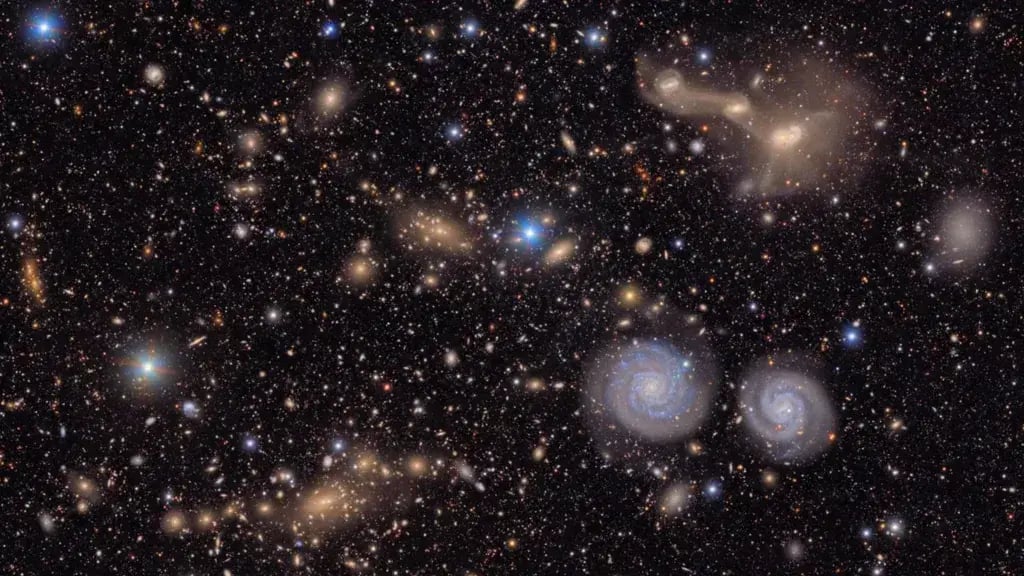
Over the next 10 years, the observatory will scan the southern sky, taking hundreds of images each night
(Photo: RubinObs/NOIRLab/SLAC/NSF/DOE/AURA)
Scientists hope the project will produce an unprecedented census of the universe, mapping billions of stars in the Milky Way and billions of galaxies beyond it. Because the telescope can capture images quickly and return to the same areas again and again, researchers expect it to reveal faint, distant or changing objects that earlier surveys may have missed.
“We’re going to see large numbers of scientists across the world working with this data set, studying the universe in a way that they haven’t been able to before,” said Phil Marshall, the observatory’s deputy director of operations.
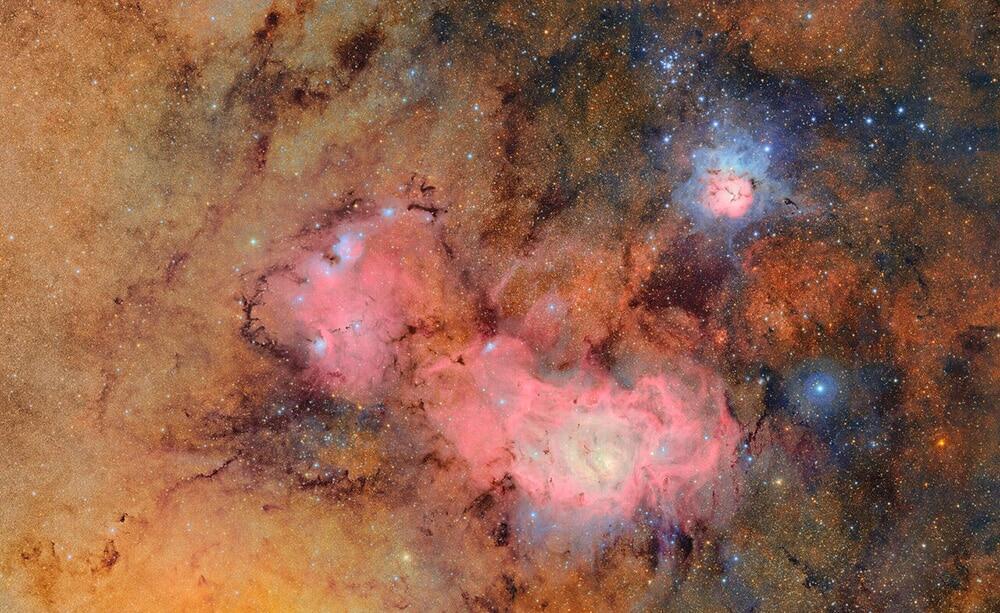
(Photo: RubinObs/NOIRLab/SLAC/NSF/DOE/AURA)
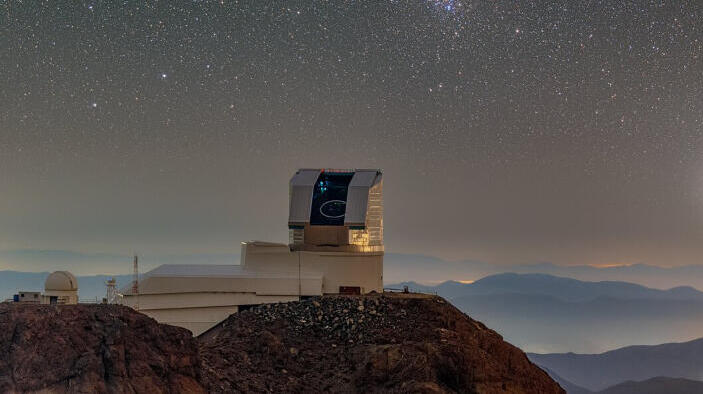
The Vera Rubin telescope atop Cerro Pachón in Chile
(Photo: RubinObs/NOIRLab/SLAC/NSF/DOE/AURA/P. Horálek (Institute of Physics in Opava))
The Rubin Observatory released its first images last year, including colorful views of the Trifid and Lagoon nebulas, located thousands of light-years from Earth. A light-year is nearly 6 trillion miles, or 9.7 trillion kilometers.
Since then, researchers have fine-tuned the observatory’s equipment so it can capture images at the depth and precision required for the 10-year survey. The data is expected to help scientists study how galaxies form, how they cluster across cosmic time and how the universe evolved into its present structure.
Funded by the U.S. National Science Foundation and the U.S. Department of Energy, the observatory is named after astronomer Vera Rubin, whose work provided some of the first compelling evidence that dark matter may exist.
Researchers hope the new survey will also offer clues about dark matter, the invisible material thought to make up much of the universe’s mass, and dark energy, the mysterious force believed to be driving the universe’s accelerating expansion.