

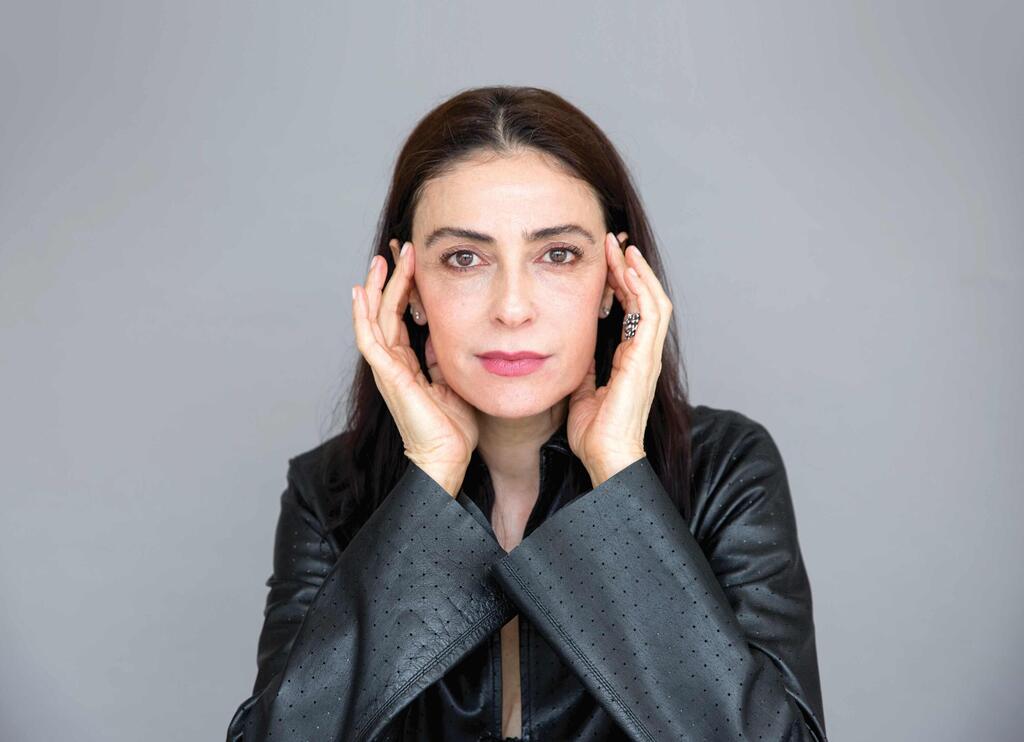
“I move through the world like a slug, always feeling exposed,” says Michal Halali-Edelsburg, who discovered she is autistic at age 57. She recently published a book describing her inner world from within, “Octopus Mimicus.” Halali-Edelsburg, formerly a lawyer and restaurant owner, now focuses on lectures. She presents her personal story and the broader phenomenon it represents: autistic women who have lived entire lives without a diagnosis while constantly striving to appear “normal.”
Halali-Edelsburg, 61, lives in Tel Aviv with her partner, an El Al pilot. In her book, the protagonist Nami narrates in the first person her childhood experiences, her complex relationships and her life as a parent, alongside at times graphic descriptions from the bedroom. The work is less plot-driven and more inward-looking. “This is not a chronological life story or a biography, but a literary work based on experiences from my life, using fictional characters, situations and names. The goal is to illustrate a complex inner world, one that usually remains unseen,” she says. “Everything in the book is exposed, but not everything is biographical. The details themselves are less important. What matters is the prism: what the world looks like through an autistic consciousness, particularly a female one. It’s a different operating system.”
What is considered appropriate?
Many high-functioning autistic women train themselves over the years in the skill of “masking.” They learn what is socially acceptable, conceal what is not and imitate what is. “Many such women know how to mask their symptoms,” says psychiatrist Dr. Yifat Handel. “Over the years they learn to mimic behaviors and understand which of their behaviors appear unusual. In their world there are no games — they are very direct, and that can be perceived as tactless. Over time they learn what is considered ‘appropriate’ and what is not.”
Halali-Edelsburg conveys this experience in her book in various ways. Over the years she saw herself as “jarring,” “impossible,” “a walking dissonance,” “an absurd person with a crookedness who doesn’t know how to be and doesn’t deserve to be.” As a child she felt invisible. “That ostracized girl, tall and thin — an outsider the other children don’t invite to parties,” as she describes herself. “I was never formally shunned, I just didn’t look or speak like the other children at school. Until age 12 I had black hair on my legs and arms and a faint mustache. They called me ‘Olive’ or ‘Giraffe.’” She spent most of her time reading books, climbing trees and caring for animals.
How did that change?
“After years of observing the other girls, at 13, without knowing or understanding what I was doing, on a clear morning — whose details I remember vividly, even though memories from before age 20 are rare for me — I decided to put the strange girl in the closet. I went up to one of the popular girls, pointed at the board the teacher had written on and cursed the teachers. I wanted to be like everyone else. I understood that if I wanted to be like them, I had to speak their language.”
And it worked. From that moment, a new life opened before her, in which she learned how to connect with the world through similar decisions. Yet even within this process of concealment, something different always remained that she could not understand. In the book, she describes an event in which Nami gives a speech in honor of a family member and embarrasses the audience. “Most of the time, my attempt to separate the wheat from the chaff doesn’t work,” she writes. “I have a strong urge, when facing people, that I must restrain, to talk about a wide range of topics. Instead of bringing the audience the treasure, I bring the sand from the bottom of the sea. Everything feels equally important to me.”
'Particularly strange'
Two incidents in adulthood highlighted just how pronounced that difference was and led Halali-Edelsburg to seek a diagnosis after years of questioning. The first was a remark by her partner’s daughter, referred to in the book as Poseidona, who said she was “particularly strange.” “I was hurt, but said nothing,” she writes. “At night I thought she surely did not mean to hurt me, and that people tend to assume I can contain almost anything. I appear to them as having thick skin, a wild person, with either no expression or too much expression on my face.” Later, she came to see Poseidona as someone who brought light into her life. “She entered through the cracks that widened over the years and placed the words before me like an offering.” The second incident occurred after a lecture she gave, when one of the participants told her: “You are a different person, you are different from us.”
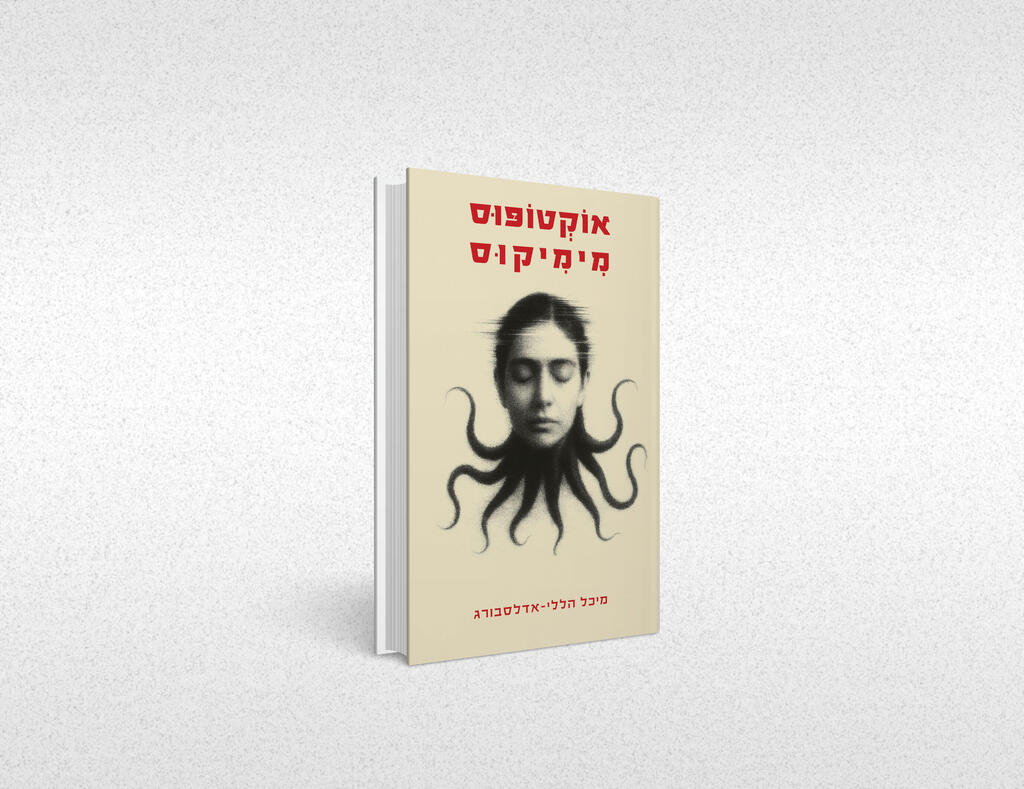
Book cover of 'Octopus Mimicus'
(Photo: Private album)
These moments echoed in her mind. Something about the word “strange” sounded troublingly familiar and prompted her to revisit the sense of difference she had felt as a child, seek a professional opinion and arrive at a discovery that gave a name to her experience. She first took an online test, in which the checkmarks turned into “a river of signs” composing her personality, and later received a formal diagnosis.
Halali-Edelsburg likens the moment of discovery to winning Academy Awards for directing, design, music and leading roles in the film of her life — elements that helped her navigate most of her life without the right label or a true understanding of who she was. As Dr. Yifat Hendel notes: “A diagnosis often brings relief. Women receive an explanation and validation for the difficulties they experienced.” Another metaphor she uses is that of a baby with impaired vision who suddenly sees the world clearly for the first time after being fitted with glasses.
How did those around you react?
“With surprise. ‘Autism? You? Ha.’ ‘You’re normal, empathetic, you make eye contact, you were a lawyer, you’re sociable.’ Later there was an amazing process — a feeling that I could accept myself better, and that my surroundings accept me much more. They understand I have a different brain. But it takes time.”
Thousands of expressions
In “Octopus Mimicus”, Halali-Edelsburg describes her unique relationship with food: “I get excited watching people eat and can look at their mouths with pure pleasure as they chew and savor something I cooked or arranged that enters their body, their blood vessels and their brain,” she says.
“My empathy is stronger than that of most people, so every encounter with people overwhelms me. At a lecture I was asked, ‘What compensates for your flaws?’ I answered: ‘Like a blind person who hears better than others, my brain, without knowing it, has collected hundreds, thousands or more facial expressions, tones of speech, silences.’
What led you to write the book?
“I wrote as a child and knew I would write long before discovering I was autistic. Words have a special power for me. When I speak, I move my hands like an air traffic controller, directing the words so they don’t collide in the airspace.”
Which of your traits do you think are linked to autism?
“For example, my memory works differently and is usually anchored to unusual cues like words or GIFs from series or films. In fact, I don’t remember external events, only those connected to my consciousness.”
Bulimic love
In Halali-Edelsburg’s thinking, as reflected in the book, events and situations are often linked to animals. The “Octopus Mimicus” is a mimic octopus — a creature that lives alone but learns to change tactics and imitate other creatures to protect itself. For her, words can “turn into butterflies” and flicker “like advertisements in Times Square,” falling in love is “crickets jumping in the stomach” and is often short-lived, like “bulimic love,” as she defines it. At one point she considered using a bat to explain her consciousness, but abandoned the idea because bats live in groups, while she is solitary.
“During the coronavirus period, for example, I actually felt quite comfortable,” she says with a smile. “I need people only about 80% of the time, and prolonged interactions exhaust me. Today I know I am autistic, but the feeling is still complex. For some autistic people I am not like them, because I function. I don’t fully belong to any world, but at least today I understand why. And maybe that is the main point: not correction, but understanding.”