


Prof. Yifat Merbl of the Weizmann Institute of Science has been named to Nature’s 10, the journal’s annual list of the ten people who shaped science in 2025, even as she continues rebuilding her laboratory after it was destroyed in the Iranian missile strike on the institute earlier this year.
Merbl, a systems biologist in Weizmann’s Department of Systems Immunology, was recognized for uncovering what Nature described as “an entirely new layer” of the human immune system. Editors called her a “peptide detective” for revealing antimicrobial activity hidden within proteins that cells normally break down and recycle. “She exposed an unfamiliar tier of the immune system concealed in the cell’s waste,” the journal wrote.
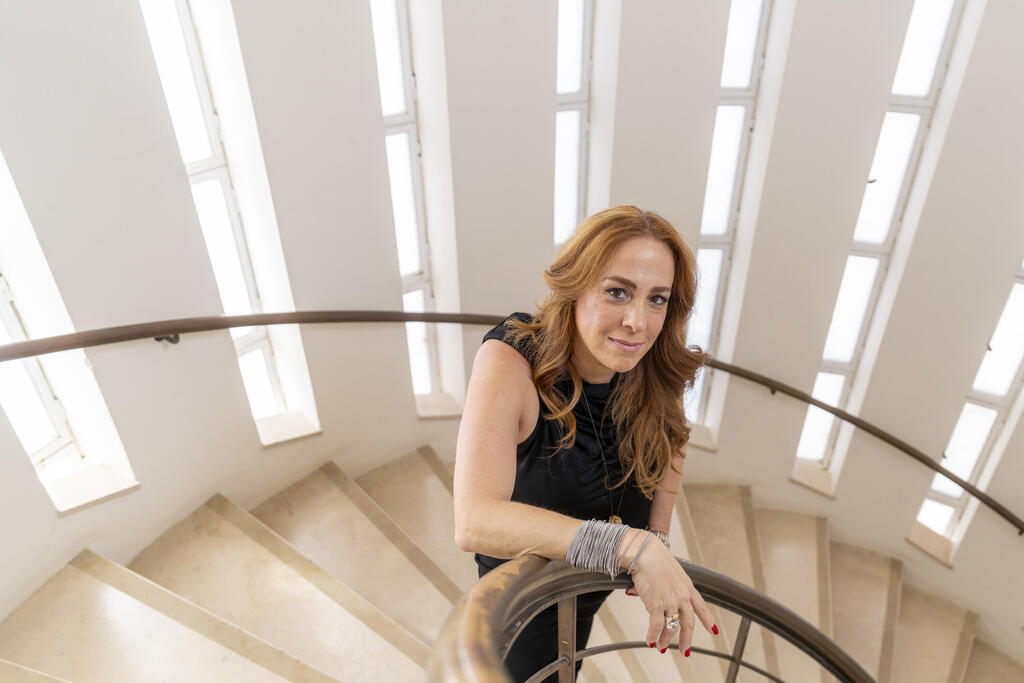
At the core of Merbl’s work is the proteasome, the cell’s recycling machinery. Her team discovered that under certain conditions, the proteasome does more than degrade proteins; it cleaves them into short fragments that function as natural antimicrobial peptides. These peptides, produced continuously as cells break down proteins, help the body fight infection — a finding that could open new therapeutic avenues for patients with weakened immunity, such as cancer patients or organ transplant recipients.
The breakthrough grew from an earlier method developed in Merbl’s lab to investigate how proteasome activity changes during bacterial infection. “The moment we saw that peptide cleavage shifted after infection, we realized we were looking at a new immune mechanism,” said Karin Goldberg, the graduate student who led the project. The team then created an algorithm to scan thousands of human proteins and identify those with hidden segments capable of killing bacteria, resulting in an unprecedented catalog of previously unknown antimicrobial peptides.
Merbl says the discovery holds promise for developing personalized treatments based on natural immune compounds. “In an era of growing antibiotic resistance, finding hundreds of thousands of potential immune peptides doesn’t just expand our understanding of the body’s defenses — it opens the door to innovative, safer therapies grounded in natural mechanisms,” she said.
But the scientific achievement came just months before devastation struck. Three months after the Nature paper was published, an Iranian missile hit the building where Merbl’s lab was housed. She and her family live on the Weizmann campus and were close to the impact zone. “The entire building was damaged, filled with debris and shattered glass,” she told ynet. “Our apartment was hit by the blast wave too. I rushed to the lab — everything was destroyed.”
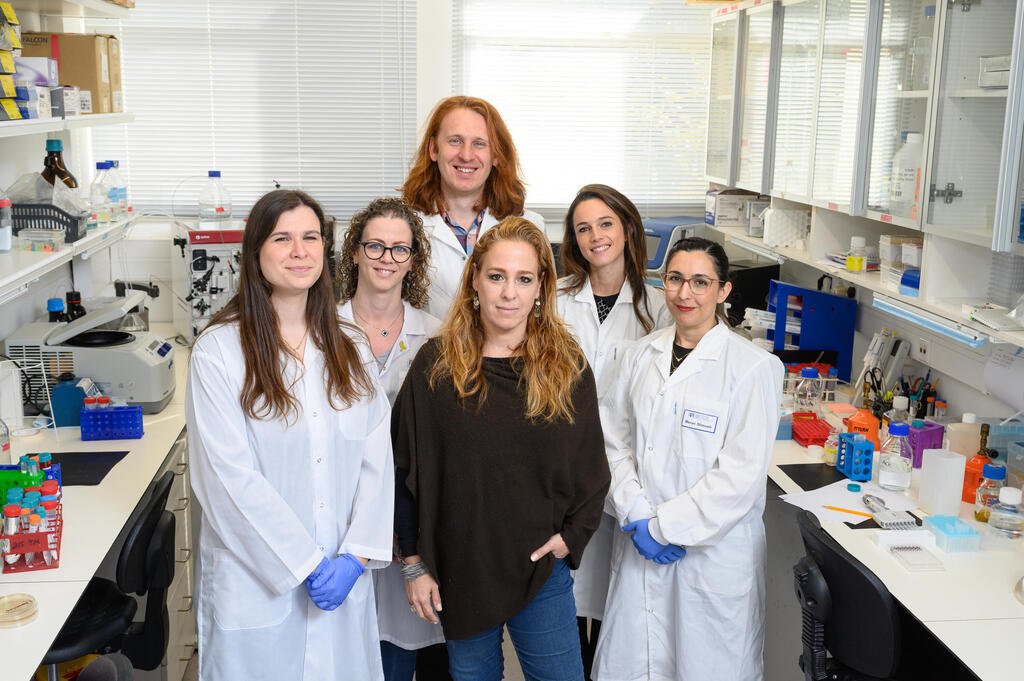
From right, counterclockwise: Dr. Merav Shmueli, Dr. Paola Antonello, Dr. Arseniy Loubov, Einav Lazar, Karin Goldberg and Prof. Yifat Merbl
(Photo: Weizmann Institute of Science)
Merbl and her team worked with Home Front Command officers to salvage samples in the dark after power was cut, rushing to secure freezers and equipment before relocating to another building and starting from scratch. “It was immediate triage — save whatever we could and rebuild,” she said.
She emphasizes, however, that the focus must remain on renewal, not destruction. “Important things are happening here, and Israel has so much to offer the world,” she said. “Weizmann is built on a commitment to advancing humanity. Human capital is Israel’s most precious resource, and it must continue to generate knowledge and innovation.”
Merbl completed her doctorate at Harvard University and earlier conducted her master’s studies at Weizmann — in the very same Wolfson building lab that was later destroyed. She says the institute’s open, curiosity-driven environment made the discovery possible. “It’s remarkable that such research can happen in Israel,” she said. “There are many more secrets hidden in the cell’s ‘trash bins,’ and we are expanding this field significantly.”
Her team’s findings, she adds, may influence far more than one branch of biology. “This has implications across disciplines and diseases. Looking into what cells discard may change how we understand illness — and how we design the treatments of the future.”