

In recent years, a trend increasingly troubling Israel’s health care system has gained momentum: Israeli doctors, including some who have already built reputations and senior status, are beginning to look abroad. Sometimes it is framed as a relocation “for a few years,” and sometimes as a quiet decision never stated aloud. Over the past two years, the phenomenon has intensified following the war. Alongside hundreds of doctors who immigrated to Israel, even more have left and chosen to settle overseas.
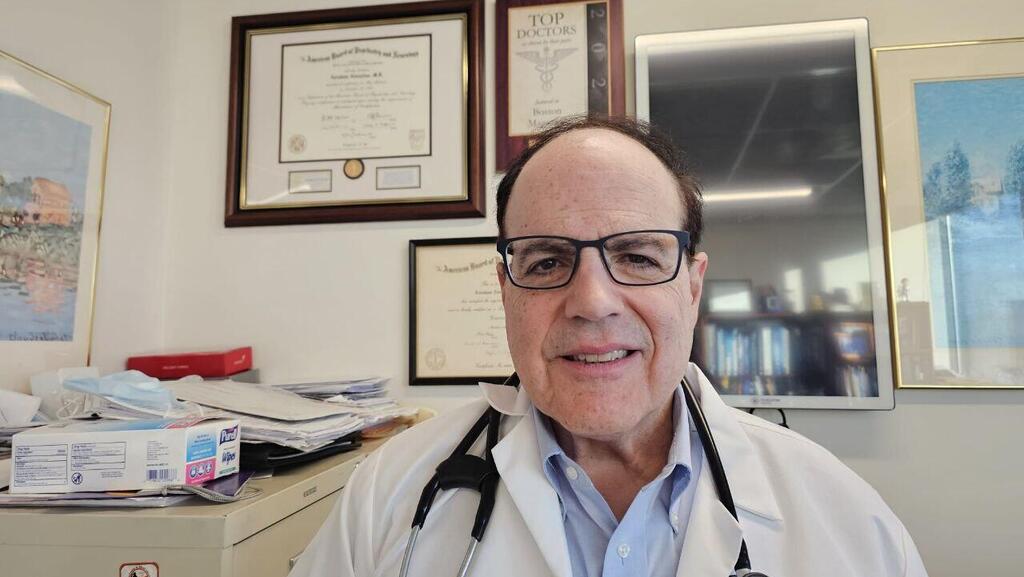
“I see and hear about inquiries from Israeli doctors, some of them quite senior, who are exploring options and testing the waters about moving to the United States,” Prof. Avi Almozlino told ynet. Almozlino is chairman of the neurology department at Newton-Wellesley Hospital in Massachusetts and is among the most senior — and certainly the most veteran — Israeli physicians in the U.S.

For more than 40 years, Almozlino has been an Israeli doctor in the United States. Throughout those years, he considered returning to Israel, and the longing was difficult, but in the end he chose to settle in the U.S. He also volunteers as co-chair of the Israeli American Council, which brings together Israeli communities across the country.
“I’m not angry at Israeli doctors who come to America; it’s a personal choice. For some people, it works,” he said. “You don’t want to stay in Israel and be angry all the time — I don’t think you’d function. I don’t encourage it and I don’t facilitate it, but those who already do it, I try to help if they’re here. We need to be inclusive of those who are already here, regardless of how they arrived. Someone who decided Israel wasn’t right for them and wants to be part of the community — I will certainly include and help them.”
Do you encourage them?
“I don’t encourage it, because it isn’t easy. Life led my wife and me to the U.S. From a Zionist perspective, actively immigrating here as an act of protest, especially if you’re a senior, well-established doctor in Israel, is not the right move in my opinion. On a personal level, coming to the U.S. and starting over is hard. The system is different, the language is different — even the medical language is different. The mentality is different, too. I came here at 28; that made it easier. For someone more mature, the transition is much harder. I know people who came later in life, struggled, and some even returned.”
In fact, Prof. Almozlino never worked as a physician in Israel beyond his internship. His entire career was built in the U.S. “We wanted to return. Twice I was practically on the plane back to Israel. I was in contact with hospitals in Israel, Sheba and Ichilov. They told me, ‘Come back — it will be fine.’ People warned me about the words ‘it will be fine.’ I wanted solid facts, which no one could give me, so we stayed one step short of boarding. That was in my late 30s.”
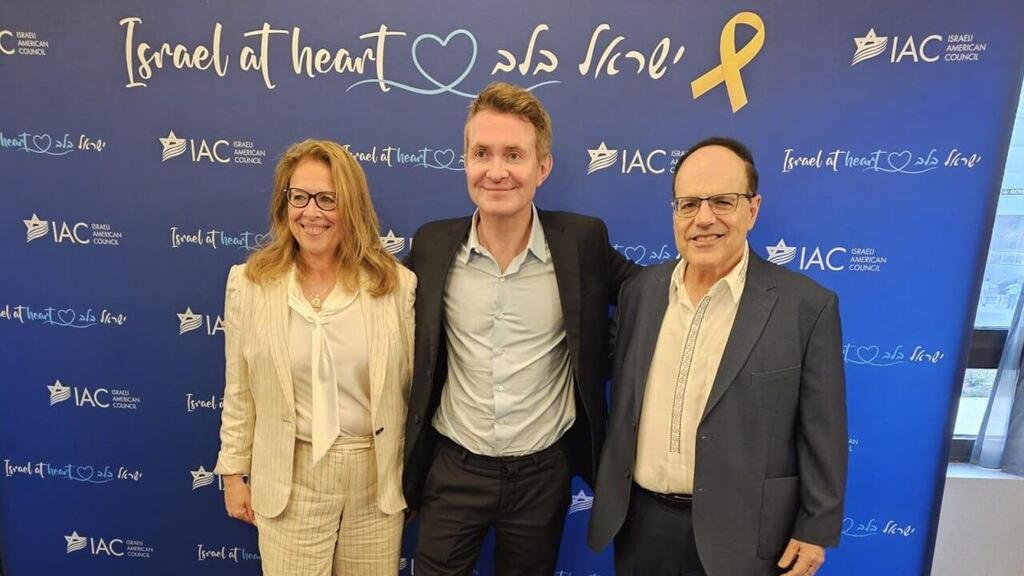
Prof. Avi Almozlino and his wife, Naomi, with journalist Douglas Murray
(Photo: Noam Galai)
For years, he and his wife spent weekends going to yard sales. “We bought things we thought would be suitable when we returned to Israel. We stored them away and they gathered dust, until we realized we probably weren’t going back, and then we sold them at our own yard sale.”
Do you miss Israel?
“Yes, there’s longing, but I allow myself to travel to Israel twice a year. In the early years it was harder because I worked intensely to build my professional standing. Today I make up for it with trips to Israel, ties with Israeli friends and involvement in the IAC.”
Does it weigh on you that you didn’t manage to return?
“Honestly, no. In the early years, yes, and it pushed me toward wanting to return, but it’s a good question I haven’t really thought about. The fact that my son lives there may ease my conscience a bit.”
(Photo: Courtesy)
A neighbor of Ben-Gurion
Almozlino, 70, was born and raised in Tel Aviv and has a distant family connection to Shoshana Arbeli-Almozlino, who served as Israel’s health minister in the 1980s. He grew up two blocks from David Ben-Gurion’s home and, as a child, would see him and be excited like all the neighborhood kids. “They would always bring Ben-Gurion boxes of chocolates, and Paula would take them and hand them out to the neighborhood children so he wouldn’t eat them,” he recalled.
He developed an interest in life sciences in high school and studied in a biology track. He enlisted in the Golani Brigade, but after a herniated disc became a researcher at the induction center. After the army, he studied medicine at Tel Aviv University and completed his internship at Beilinson Hospital.
“At the end of my internship I was newly married. My wife, Naomi, is an architect and a Technion graduate. The stars aligned. She received a scholarship for a master’s degree at Harvard, and I was accepted into a neurology residency at a Boston hospital, one of the best in the world. We decided we wanted to experience the world for a few years. We thought it would last four or five years — and we never went back.
“Israel has excellent medicine and outstanding doctors. I’ve always said I am a product of Israel’s medical education,” he said. “When I arrived in Boston at 28, my English wasn’t great, my manners weren’t exactly American, and I entered a residency program with top U.S. medical school graduates, many from Harvard. What saved me was the medical education I received in Israel. Maybe their English was better, but my medicine was just as good, if not better.”
Almozlino has a son and a daughter, Adam and Julie. His eldest son, Adam, 38, immigrated to Israel. “In December 2020, at the height of COVID, when everyone was isolated, my son, a data scientist, went to Israel for three months, settled in Tel Aviv and fell in love with it. He met a woman, got married a year and a half ago, and has since founded a startup.”
What did you think of his move? Were you jealous?
“I don’t know if jealous is the right word. I was truly happy for him. There’s something about Israel that’s hard to find elsewhere. It felt like closing a circle. I think I’m a Zionist in every fiber of my being, and what better expression of the Zionist idea than having your firstborn make aliyah and fulfill the Zionist dream?”
The empathy is gone
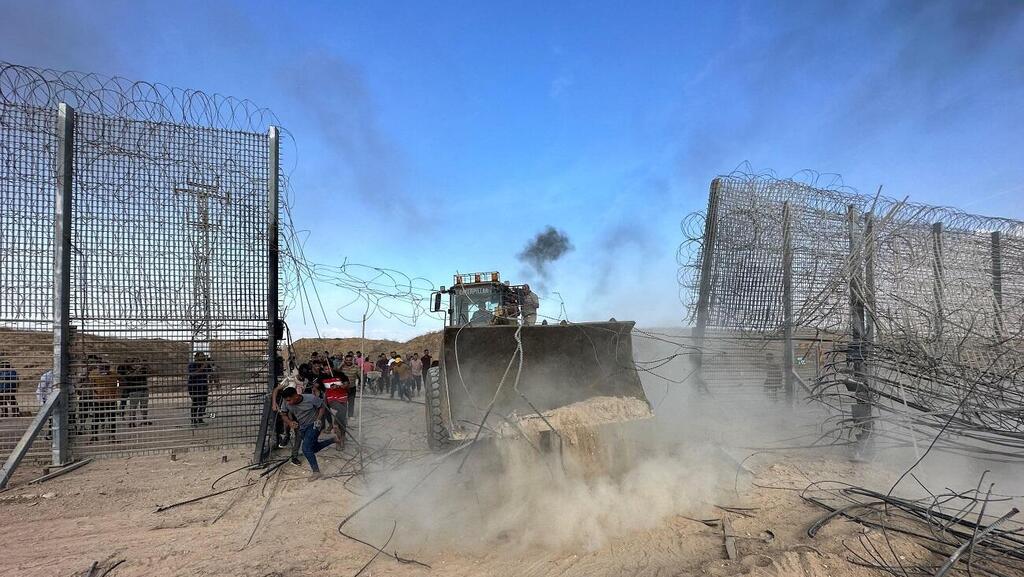
News, images and voices from the October 7 massacre quickly reached across the ocean and caught Prof. Almozlino in the middle of a workday. “It was a very difficult day. I was shocked, like everyone else. That day and in the days that followed, I felt like someone with severe attention issues, because you’re constantly focused on what’s happening in Israel. I was shaken.”
Did you lose friends after October 7?
“In the first days there was full empathy and sympathy, Jewish and non-Jewish. At first, Israel was clearly seen as the victim. People constantly checked that my family was OK. They didn’t even know what the Gaza border region was. As time went on and Israel responded, that faded and the empathy disappeared. Some colleagues — mostly Jewish — and close friends who are naturally pro-Israel stayed with us. No one accused me of genocide, but people stopped wanting to talk about it.”
(Photo: Reuters)
Did you encounter hostility?
“Honestly, no — not professionally, not with colleagues or patients. But among some Jews in the community we meet on Shabbat and pray with — mostly academics from Jewish families — there were those who criticized Israel’s decision-making and conduct of the war. ‘You’re a bit too aggressive,’ they said.”
Did you consider returning to Israel after October 7?
“I’m at a stage in life where I don’t know how much I can change it. I’m still at my professional peak, but when I slow down, I’ll return to Israel for part of the year and hope to contribute medically. Right now, I run a neurology department here and have major responsibilities. I can’t allow myself to spend long periods in Israel.”
Last October, shortly before the release of the last 20 living hostages and the announcement of a ceasefire with Hamas, two articles published in The Lancet and The New England Journal of Medicine sparked outrage in Israel. Among other claims, they accused Israel of genocide and the destruction of Gaza’s health system. What angered many was that Israeli doctors were involved. Prof. Almozlino rejects those claims.
“War is a complicated business, and it’s hard to meet every ideal standard of conduct given the nature of war,” he said. “It’s something to strive for, but hard to maintain consistently. From what I know of Israel and the IDF, I don’t believe the military ever intentionally targeted civilians or had malicious intent. Civilian harm is tragic, but it resulted from the conditions imposed by the enemy, Hamas. Ignoring that fact and blaming those defending you deserves condemnation.”
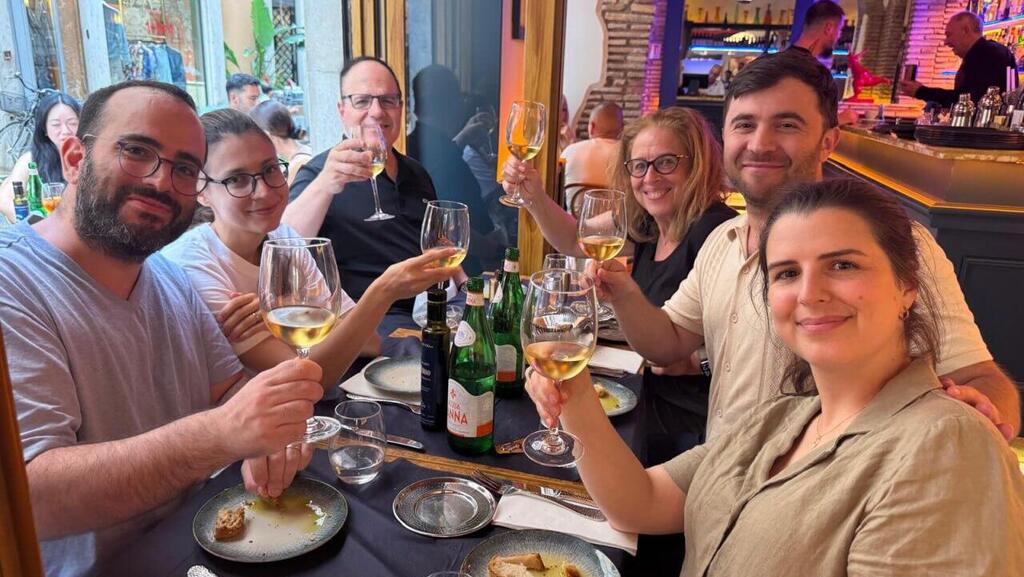
Prof. Avi Almozlino and his family
(Photo: Courtesy)
In the end, you advocate for Israel but live a comfortable life in the U.S. How do you reconcile that dissonance?
“Yes, I live a relatively comfortable life in the U.S.; that’s where life led me. I try to do my part for Israel. Medicine consumes you — you can work 22-hour days — yet I chose to devote time to Israel and to the Jewish and Israeli community here. I believe the historic role of the Israeli American community, as patriotic Americans, is to form a strong, unique bloc that serves as the spearhead of American support for Israel.
“Today, Israeli Americans number between 800,000 and 900,000. The Foreign Ministry defines anyone eligible for an Israeli passport as an Israeli American. That’s about 15 percent of American Jewry. Israeli Americans care more about Israel than many American Jews, and American Jewish support is a key pillar of U.S. support for Israel. Our role is to build a strong, influential Israeli community that strengthens the Jewish-American community’s support — and U.S. support for Israel is essential to Israel’s success and survival.”