

Prof. Debbie Toiber, a molecular biologist in the Department of Life Sciences at Ben-Gurion University of the Negev. She is 48, married with two children and lives in Lehavim in southern Israel.
What do you research?
“We’re trying to understand why we age, to prevent age-related diseases. Over time, we accumulate damage to DNA, which is the body’s "instruction manual". As that damage accumulates, it weakens the system, and instead of doing their jobs, cells are constantly dealing with emergencies and repairs.
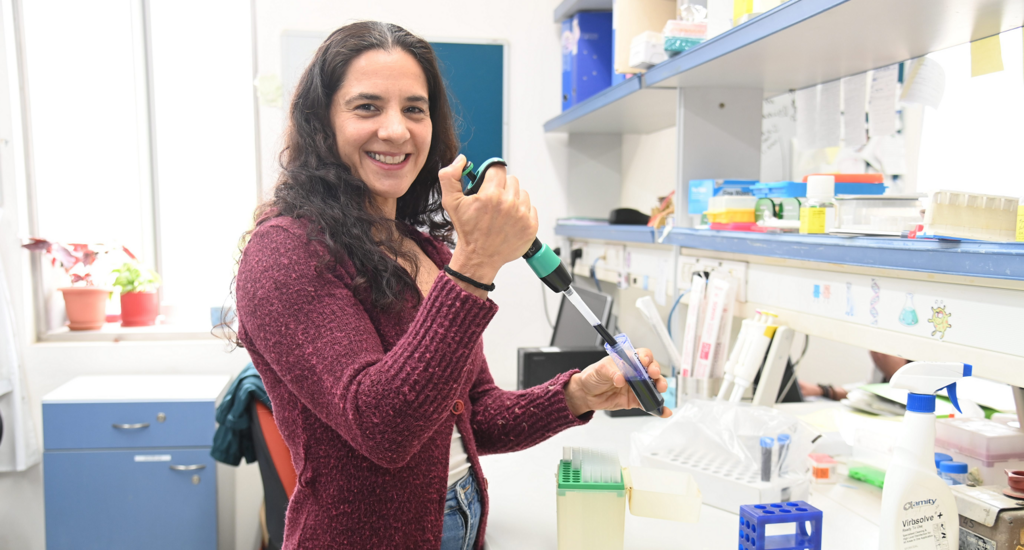
“We can’t prevent this damage because it happens naturally, but we may be able to repair it better and stop the domino effect before disease develops.”
How do you do that?
“I focus on neurodegenerative diseases such as Alzheimer’s and Parkinson’s. Only about 5% of Alzheimer’s cases are genetic; the other 95%, risk rises with age and reaches about one in three among people 80 and older.
“We’re trying to understand what it is about aging that leads to disease, what goes wrong along the way and how to detect that disruption early. We identify trajectories, which are decision points where a cell ‘chooses’ whether to head toward pathological aging or healthy aging. If we detect that early, we may be able to protect the cell and steer it in a healthier, more resilient direction.”
What tools do you use for the study?
“We use chemical reactions in animal models such as worms, flies and mice, as well as in human cells. We have technology that allows us to take a skin cell from a specific person, turn it into a stem cell and then grow, for example, neurons from it to study what happens in the brain.
“To avoid waiting decades, we use models of cells and animals that can’t properly repair DNA damage. In mice, for example, the damage accumulates so quickly that within three weeks they appear old and develop diseases similar to Alzheimer’s.
“In one experiment, we received a cellular sample from a family in which both parents carried a defect in the same DNA repair gene. The parents were unaffected, but children who inherited both faulty copies lived up to age 2. That suggests there is a threshold for how much damage the body can absorb while remaining healthy.”
Does the gene responsible for repair change over time?
“Yes. Early on, we produce millions of copies of it. It repairs damage effectively, but not perfectly. Every day, each cell in our body sustains between 1,000 and 1 million new injuries, and the gene can’t fix them all. As we live longer, the unrepaired damage accumulates. At the same time, levels of the gene decline. We don’t know exactly why, but it likely becomes ‘exhausted’ due to stress signals.”
Can’t it be duplicated?
“When an extra copy is added (as shown in research by Prof. Haim Cohen), mice lived about 10% longer. But to add more, you’d need to reach every cell in the body, and there are millions. Instead of duplicating it, we want to find ways to activate it so it works harder, even if there’s less of it.”
What happens when cells malfunction?
“Cells that aren’t functioning properly can self-destruct to avoid becoming diseased. Cancer, for example, is an age-related disease, and these altruistic cells may self-destruct to prevent becoming cancerous. That may sound good, but if too many cells die, the brain shrinks and we lose tissue.
"Another option is that they become ‘senescent’ cells, while doing half the work and disrupting their neighboring tissues by sending inflammatory signals. In our research, we try to prevent cells from reaching those states.”
Can we prevent this damage?
“We have control over some factors. Studies consistently show that good muscle mass, a diet without processed foods, strong social and family support and sufficient sleep all contribute to healthier aging. We know that a sedentary lifestyle and processed foods increase the risk of accelerated aging. In one experiment, we fed high-fat food to mice with a defect in a DNA repair gene. Their cognitive decline was much worse compared to mice that ate a healthy diet. So even if we don’t know whether our genes are impaired, we can still help ourselves by adopting a healthy lifestyle.”
Do you manage to follow that lifestyle?
“I try to stay active. I always have.”
I suggest you take a group of mice, expose them to sirens every three hours and check their aging after three weeks. It’s reasonable to assume the mental stress we all live with accelerates aging.
“We know stress causes accelerated aging and may result in deteriorating more quickly across many measures, but I believe it’s reversible and can be repaired.
“We’ve recently begun research on PTSD. We’re trying to understand what happens at the molecular level to propose interventions that can prevent that decline.”
What would be a breakthrough for you?
“Identifying the point at which a cell decides whether to move toward disease or remain healthy and then finding a way to push it toward the healthy path.”
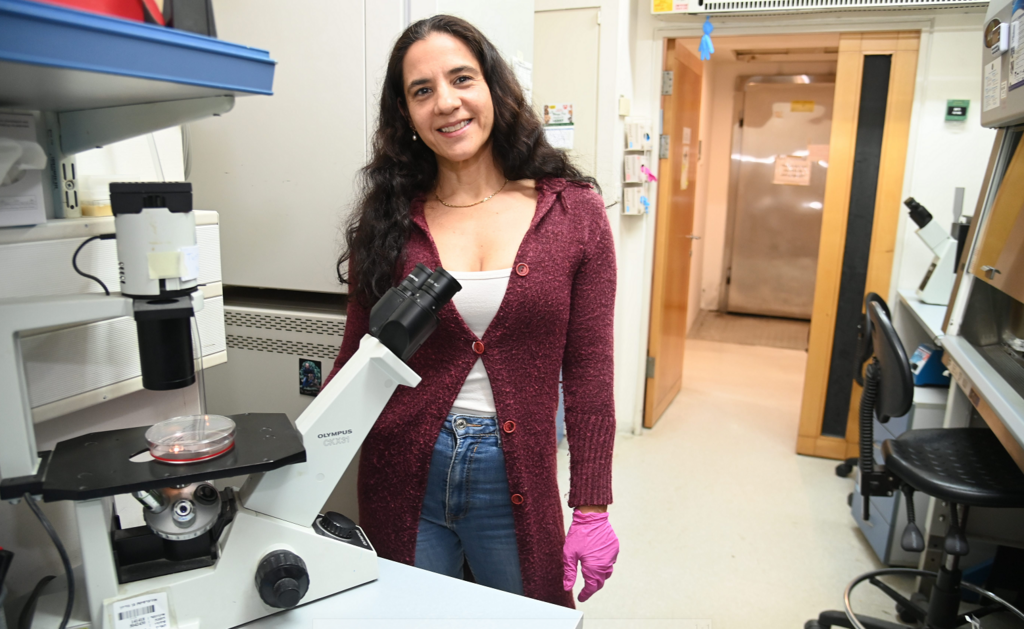
(Photo: Hertzel Yosef)
Do you see a future where a simple blood test can show whether our genes are on a path toward pathological aging?
“Aging isn’t a uniform process. Some people will face cancer, others heart disease, and others Alzheimer’s. The goal is to understand what risks each individual faces and develop personalized treatments to prevent disease, or at least significantly delay it. I’m less interested in living to 150. I want to live healthily, without painful chronic diseases.”
When will your research humans?
“In academia, it’s challenging because it requires massive funding. The options are to work with an existing company, sell the technology or start a company and raise funding. Right now, we’re working with human models and collaborating with Assuta Medical Center to identify Alzheimer’s progression pathways. Once we complete the pilot stage, we’ll consider the next step.”
What drew you to this field?
“I love puzzles. The brain is a huge puzzle, and our memories are what make us who we are. Losing our memories means losing ourselves. Preventing neurodegeneration and age-related diseases helps us remain who we are.”
What trait is especially important for a researcher?
“Resilience, the ability to get back up after setbacks, along with creativity, thinking outside the box and having a partner who supports your career development.”
What would you do with a $1 million grant?
“I would hire more researchers to help advance our projects.”