

February 2020. Donna Gustafson arrived at an emergency room in Australia with suspected dehydration after a long flight. Doctors discovered she had pancreatic cancer. Nine days after returning to the United States, she underwent surgery to remove the tumor. A day before she was supposed to begin chemotherapy, her doctors offered her something entirely different: joining a clinical trial for a personalized mRNA vaccine, months before anyone had heard of mRNA vaccines against COVID-19.
“It was a no-brainer,” she told NBC. “I knew that statistically, the odds were against me.”

Gustafson, now 72 and living in Florida, was the first patient to receive an mRNA vaccine against pancreatic cancer. Six years later, the cancer has not returned. Last year, she climbed Mount Etna in Sicily to celebrate her 50th wedding anniversary.
“I have no limitations on what I can do. For me, it was truly a miracle,” she said.
A highly lethal cancer
Pancreatic cancer is one of the deadliest cancers known to medicine, and also a silent enemy that is usually discovered dramatically late. Fewer than 13% of those diagnosed survive more than five years, and it is the third-leading cause of cancer death in the United States, with numbers rising. There is no routine screening test for early detection, unlike colonoscopy or mammography, and symptoms usually appear only when the disease is already advanced. Only about 20% of cases are operable, and surgery is a necessary condition for taking part in the vaccine trial.
“This is a cancer where nothing has really worked,” Dr. Vinod Balachandran, director of the Olayan Center for Cancer Vaccines at Memorial Sloan Kettering Cancer Center in New York and the leader of the trial, told CNN. “Chemotherapy, radiation, targeted therapy and existing immunotherapies have all mostly failed. New approaches are urgently needed.”
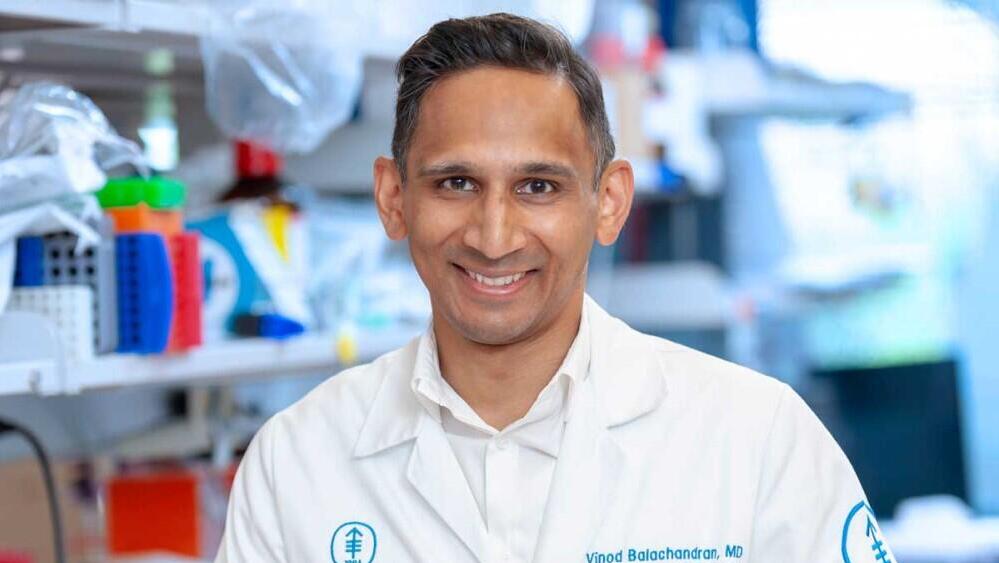
Dr. Vinod Balachandran, director of the Olayan Center for Cancer Vaccines at Memorial Sloan Kettering Cancer Center in New York
(Photo: Memorial Sloan Kettering)
The phase 1 trial, the first of three clinical trial stages, included 16 patients. Eight developed a strong immune response to the vaccine, known as responders, while eight did not. Follow-up data after 3.2 years were published last year in the journal “Nature,” showing that responders had a significantly lower recurrence rate than nonresponders. In recent days, extended follow-up data from the same trial, covering up to six years, were presented at the annual meeting of the American Association for Cancer Research in San Diego.
The gap between the two groups is striking. Seven of the eight responders, or 87.5%, are still alive. By contrast, among the eight patients who did not respond to the vaccine, only two, or 25%, are still alive, with a median survival of 3.4 years. It is important to stress: This is not a new study, but a long-term follow-up update from the same small trial. Still, the evidence that the immune response has lasted six years, and that the patients continue to survive is a significant finding in itself.
Professor Irit Ben-Aharon, director of the Fishman Oncology Center at Rambam Health Care Campus and head of gastrointestinal malignancies at the medical center, said the study is groundbreaking in several respects.
“The first is the point at which the treatment enters the disease timeline, in the ‘adjuvant’ part, meaning in localized disease, after surgery and the chemotherapy that follows,” she said. “This is the sacred window of time to increase the chances of cure and reduce the risk of disease recurrence, which is one of the major problems in pancreatic cancer.”
According to Ben-Aharon, “The recurrence rate, meaning the reappearance of the disease after surgery, is very high, and treating microscopic disease may eradicate the ‘seed of trouble,’ those cancer cells that remain in the body and can cause the disease to recur. The second aspect is the mechanism of action, which is engineered according to the characteristics of each patient’s original tumor. In other words, the vaccine is not produced broadly and generally for some antigen, but for the antigens of the individual patient’s tumor.”
How does the vaccine work?
The vaccine is not designed to destroy existing tumors, but to eliminate cancer cells that remain in the body after surgery and prevent recurrence. After the tumor is removed, it is sent to Germany for genetic analysis. A personalized vaccine is then prepared for each patient, based on up to 20 unique mutations in that patient’s tumor. Those mutations produce foreign proteins called neoantigens, which immune cells can recognize as a threat. After receiving the vaccine, patients also undergo standard chemotherapy.
To understand the vaccine’s mechanism in greater depth, it is important first to understand what mRNA is, a term many remember from the breakthrough COVID-19 vaccines. It is a short genetic code that gives the body’s cells instructions to produce a specific protein. Unlike preventive vaccines, such as the flu vaccine, a therapeutic cancer vaccine is not designed to prevent the disease from appearing in the first place, but to prevent it from returning.
The main challenge is that cancer cells come from the body itself, so the immune system does not identify them as an enemy.
“Our immune system is wired to recognize viruses and pathogens as foreign, so a vaccine teaches it to do something it already wants to do,” Balachandran explained. “By contrast, cancer is us. It is derived from our tissues.”
The idea for this vaccine grew out of a discovery Balachandran published in “Nature” in 2017 about the rare patients who survive pancreatic cancer for years. In their bodies, he found T cells that recognized the cancer and continued circulating in the blood up to 12 years after surgery, evidence that the immune system can remember cancer over the long term.
“The foreign proteins the tumor created, the neoantigens, were successfully detected by immune cells and caused them to attack the cancer,” Balachandran said. “In most pancreatic cancer patients, this does not happen. The tumor ‘hides.’ In long-term survivors, the mechanism worked.”
The study published last year found that the vaccine generated immune cells with extraordinary durability. Their average life span was estimated at 7.7 years, and about 20% are expected to survive more than a decade in the patient’s body. The data presented this week at AACR strengthen that picture, showing that those cells continue to function actively six years after treatment.
What makes the immune response especially effective is cooperation between two types of cells: cytotoxic T cells, or CD8+ cells, which directly attack cancer cells, and helper T cells, or CD4+ cells, which strengthen and prolong their activity.
“We believe an effective cancer vaccine needs to activate both types,” Balachandran said.
‘It came out of nowhere’
Donna Gustafson is not alone. Donald Sarcone, an accountant from Staten Island who was diagnosed with pancreatic cancer six years ago after his wife and daughter noticed he had turned yellow, also took part in the trial. The tumor had blocked his bile duct, a symptom that usually appears only when the cancer is already affecting other organs.
“It was like a bad dream,” he said. “I thought to myself: I’m only 60, I play tennis, ride a bike, take vitamins. It came out of nowhere.”
When he was told he was a suitable candidate for the trial, he did not hesitate.
“I just said: Where do I sign?”
Today he is 67, still plays tennis once a week and travels with his grandchildren.
“There are days when I forget what I went through because I’m healthy and I moved on with life,” he said.
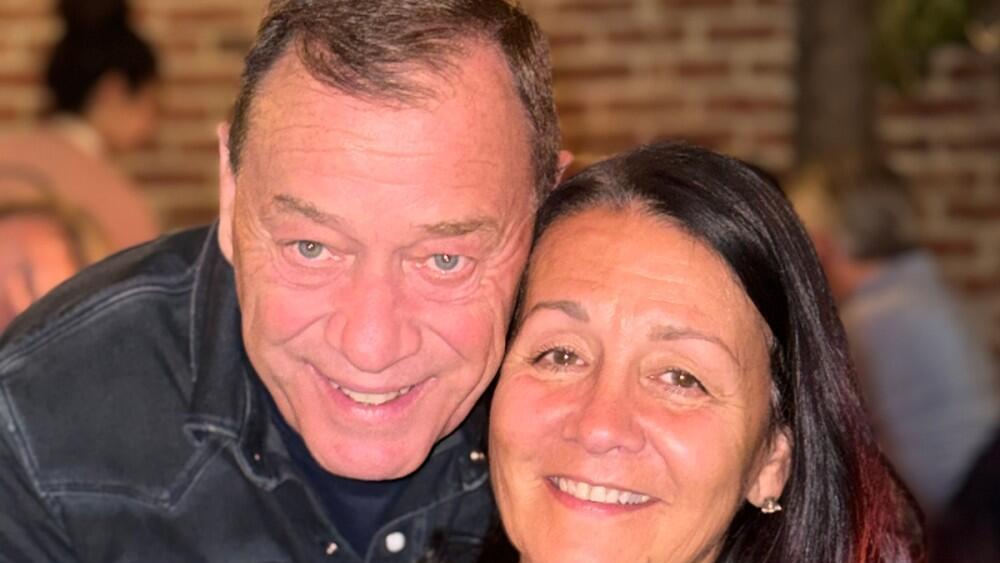
Donald Sarcone
In two patients who responded to the vaccine, the cancer returned. One of them, who had the weakest and shortest immune response, died of pancreatic cancer that recurred locally. The finding strengthens the hypothesis that the strength and duration of the immune response are linked to the clinical outcome, but it also shows that the vaccine is not an absolute solution.
“The most important finding is that those who develop a response to the vaccine live longer than those who do not,” Dr. William Freed-Pastor of the Dana-Farber Cancer Institute, who was not involved in the trial, told NBC. But he added, “The results come from a very small group of patients. More research is needed.”
“There is always a subset of people with pancreatic cancer who survive more than five years, and that is something important to remember with any new treatment,” said Dr. Robert Vonderheide, president of AACR and director of the Abramson Cancer Center at the University of Pennsylvania. “There may be another factor that explains why some patients respond, and also why they survive.”
Ben-Aharon also cautioned against overinterpreting the findings.
“Despite the enormous potential in this therapeutic approach, the road to incorporating it into the standard of care is still long,” she said. “The study was a phase 1 trial in a very small population, 16 patients, and only half of the patients indeed responded phenomenally. Additional studies, in more advanced phases, are needed to examine the method in a larger population, and especially to characterize the patients who developed an excellent immune response and whose disease therefore did not recur, so we can learn how to select the patients best suited to this treatment. The study gives us a great deal of optimism, but cautious optimism.”
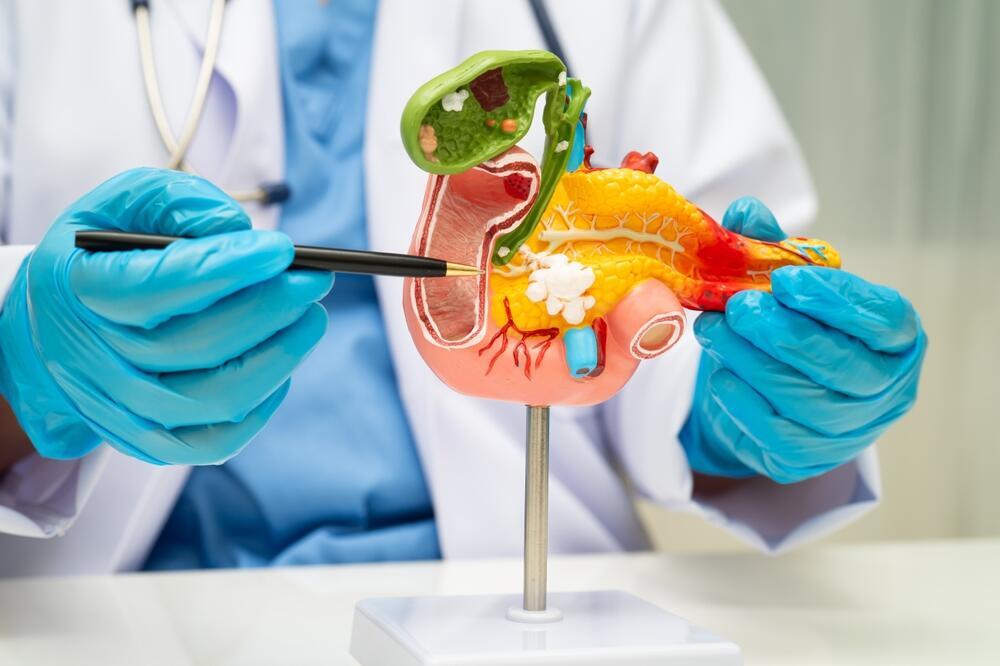
Pancreatic cancer
(Photo Shutterstock)
What happens now?
BioNTech and Genentech have already launched a global phase 2 trial with about 260 patients, which will examine the vaccine’s effectiveness compared with standard chemotherapy. At the same time, cancer vaccine researchers at Memorial Sloan Kettering are working on the ability to produce mRNA vaccines independently within the institute itself, to expand access to trials and reduce dependence on partnerships with pharmaceutical companies.
Another team is working on a universal vaccine that is not personalized, but targets the KRAS protein, which is common in 90% of pancreatic cancers. In a small trial, about 85% of participants developed an immune response to the protein, and a phase 2 trial is expected to begin this year.
“Once we have something that seems effective, cancer cells find a way around it, and the solution is to have as many tools as possible,” Vonderheide said.
According to CNN, the National Cancer Institute recently announced $200 million in funding for innovative cancer vaccines, with mRNA vaccines a central part of the effort. The tailwind comes after a period of uncertainty caused by political pressure over mRNA-related research in the past year.
“We continue to learn how these vaccines work, and there is real belief and determination in the pancreatic cancer research community that we can treat this disease by training the patient’s own immune system,” Balachandran said. “But continued progress requires continued research and testing.”
And Donna Gustafson?
“Now I am grateful every day,” she said. “Every day is wonderful.”