

Nothing stopped Sgt. N from enlisting in the IDF, not even a brain tumor and the complex surgery he underwent shortly before turning 18. For more than a year, he fought to enlist. About two months ago, he completed the basic training in Yahalom, the IDF’s elite special operations engineering unit. Since the start of Operation Roaring Lion, he has taken part in combat in Lebanon, and now he is already aiming for officer training.
“There were moments when I wanted to give up, but after the war broke out, when I saw my friends fighting and heard the stories, I said there was no way I could live in this country and not take part, not serve in the IDF,” says N, 21.
It all began about three years ago, when he suffered from severe headaches.
“I thought it was connected to a busy period. I said I’d give it time and it would be fine,” he recalls.
But the pain only worsened.
“It was during Operation Shield and Arrow, and I remember there was a siren and I couldn’t get out of bed. I felt like someone was pulling me by the head. The first thing I did was check Google to see what it meant. All I saw was information about illnesses, meningitis, a brain tumor, and I understood something was unusual.”
Because of the severe pain, and after he also began vomiting, N and his father went to the hospital. There, he underwent a broad medical evaluation, including a head CT scan. After seeing the results, the medical team asked to perform another CT scan.
“I felt like I was in trouble, like something was wrong if they were doing a second test,” he says.
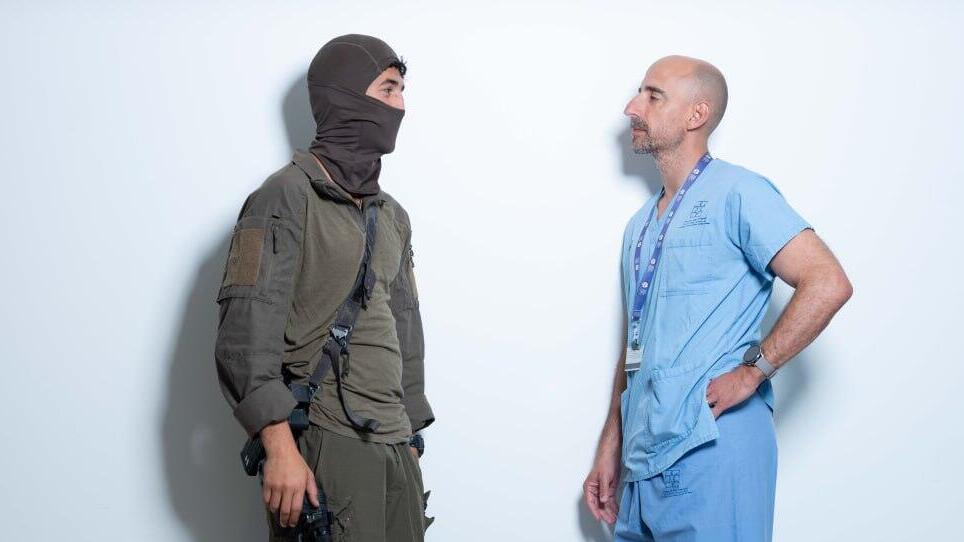
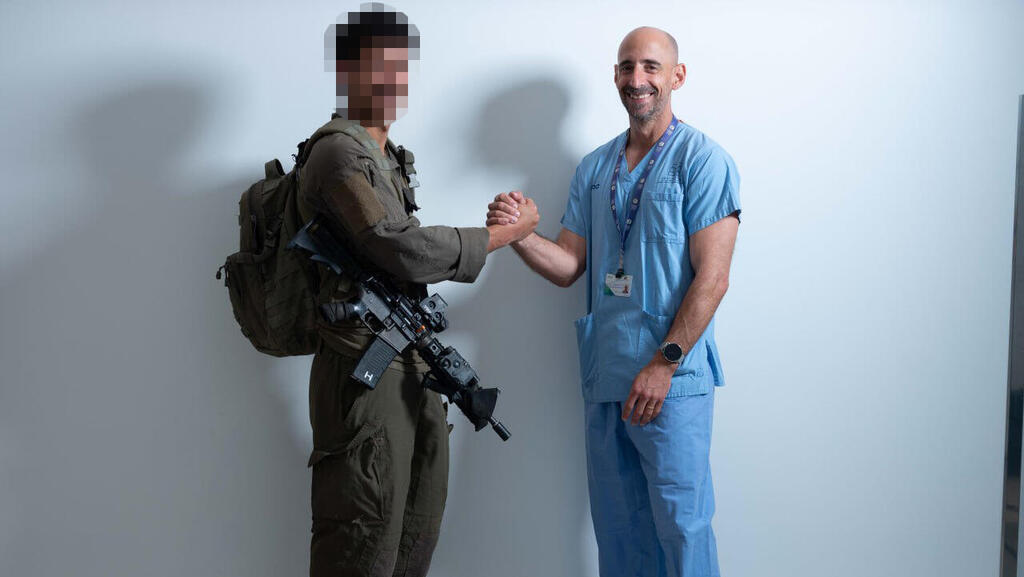
Sgt. N, who enlisted after a brain tumor diagnosis and Dr. Ido Ben-Zvi
(Photo: Yuval Chen)
Several hours later, N was told he had been diagnosed with a brain tumor.
“It was really like in the movies. I remember the whitest room imaginable, a social worker, the head of neurosurgery. I was sure they were about to tell me I had three weeks left to live,” he recalls.
But what worried him most was his upcoming enlistment in the IDF.
“A month earlier, I had finished the Shayetet selection course and was waiting for the results, and I was unbelievably stressed. It was the only thing I could think about.”
After the diagnosis, N was hospitalized at Schneider Children’s Medical Center.
“We saw on the imaging that he had a fairly large tumor in the lower rear part of the brain, which was placing significant pressure on the brain and, without treatment, could become life-threatening,” explains Dr. Ido Ben-Zvi, a senior neurosurgeon and pediatric neurosurgery specialist at Schneider who led N’s treatment.
Doctors believed the tumor was benign, meaning it was not cancerous and did not spread metastases. But it could still be dangerous when it grew in sensitive places, such as the brain.
“The best option was to perform surgery quickly to remove it,” Ben-Zvi says.
The surgery was complex because of the tumor’s location, close to the brainstem, which is responsible for vital functions and basic actions.
“Mistakes in such an operation can carry a very heavy price, and we approach it with awe,” he says.
The surgery lasted about eight hours and ended successfully. When N opened his eyes, “while I was still connected to tubes, I suddenly got a message saying I had been accepted to Yahalom. I said, ‘Fuck, what do I do now?’” he recalls.
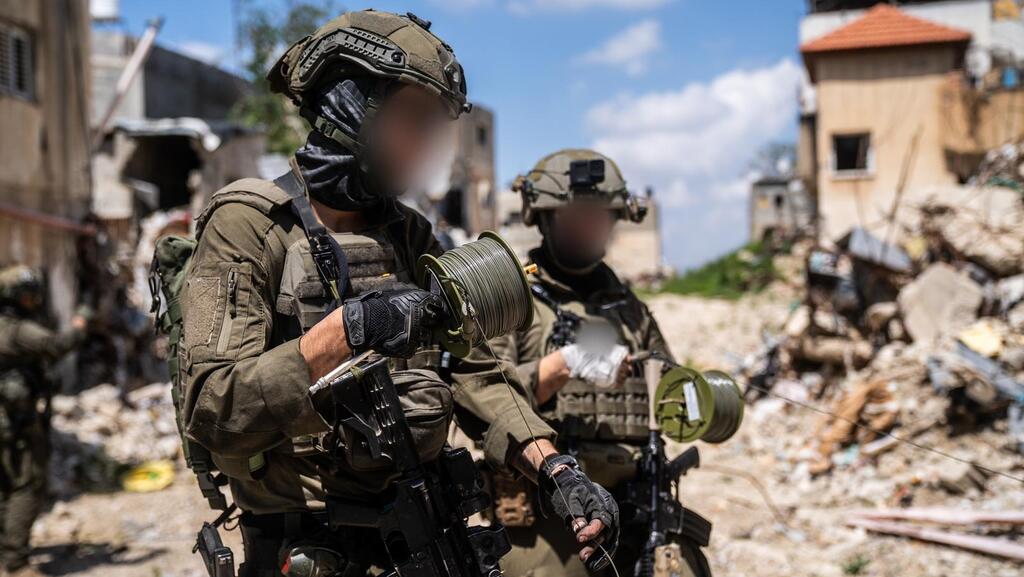
Yahalom troops, IDF’s elite special operations engineering unit
(Photo: IDF)
After an agonizing month, N and his family were told the tumor was indeed benign. From that moment, however, a new battle began: proving to the army that N was fit to enlist.
On his doctors’ recommendation, N first enrolled in a pre-military academy year to “buy time,” while launching a long campaign to persuade army officials.
“There was a doctor who said I wouldn’t be able to enlist. That was the hardest thing I heard, but I said there was no way,” he says.
For a year and a half, N and his father, a former Shayetet fighter, waged a determined struggle with the IDF. It included countless letters, tests, fitness exams and medical opinions.
N says what pushed him most was the war that broke out on October 7.
“My friends enlisted, went straight into combat, and I didn’t. That was hard for me.”
Shortly after the start of the war, he received an update from the IDF saying his assignment to the elite unit had been canceled because of the changes in his medical condition.
“It broke me mentally, and I didn’t know what I would do,” he says.
Ben-Zvi, who accompanied N throughout the process, admits: “At the initial stage, I was very pessimistic. I still didn’t know whether N was fit for all the effort required by the track in a special unit. The area where the surgery was performed is connected to many coordination functions, even the ability to grab objects or walk, and there were many questions about whether he would recover well from all of this.”
But even Ben-Zvi could not ignore N’s tremendous motivation.
“The only thing I heard from him was his desire to enlist. He wasn’t interested in the fact that he had a tumor or what would happen with it.”
A year after the surgery, N underwent an MRI scan that showed no trace of the tumor, and that the surgical area had recovered well.
“We saw that he was really fine, and we began the whole process of preparing documents for the IDF showing that he was in full health and could perform this service,” Ben-Zvi says. “It’s not something I do lightly. At the end of the day, I also see myself as responsible for his well-being.”
A short time later, the IDF informed N that his medical profile had been raised back to 64, with an exemption allowing him to serve in combat roles. But N was not satisfied with that. He continued fighting until he achieved his goal: enlisting in Yahalom.
“I remember the day I got the message that I had been assigned to Yahalom again. I jumped on my mother out of joy. I couldn’t believe it was happening. Suddenly, I understood how much I had gone through to get there.”
In November 2024, after passing five medical committees, N enlisted in the IDF. About two months ago, he completed his training. Immediately after Operation Roaring Lion began, he entered combat in Lebanon.
“I’m happy I got here,” he says. “It was worth the fight.”
Recently, Sgt. N also passed an interview for officer training.
“Why not aim even higher?” he says.
“N’s father updated me all the time, when they succeeded, when he enlisted, sent me pictures of him during the training track,” Ben-Zvi says. “He is simply a kid with insane willpower. At every stage along the way, everyone would tell him it was completely fine if he didn’t enlist, but he didn’t let anything stop him. That is so admirable. I also still serve in the reserves, so it is very close to my heart that he managed to reach combat service in a significant unit.”
“We have no other country, and everyone has to come and give what they can of themselves,” Sgt. N says. “In the end, the army is made up of people, and everyone in the country has to contribute so the country can continue to develop. In recent weeks, I’ve been watching the fight over the draft law, and my stomach turns. Everyone should live according to their faith, but in my opinion, serving really does good for the person as well. You discover things about yourself and strengths you didn’t know you had.”