

When Achi Aharon goes surfing, the rest of the world fades away. He takes off his watch, leaves his cellphone behind and disconnects from everything except the waves in front of him.
“It is something I do for me,” he said. “I disconnect from time, from the messages, the news. Surfing has become very important to me.”
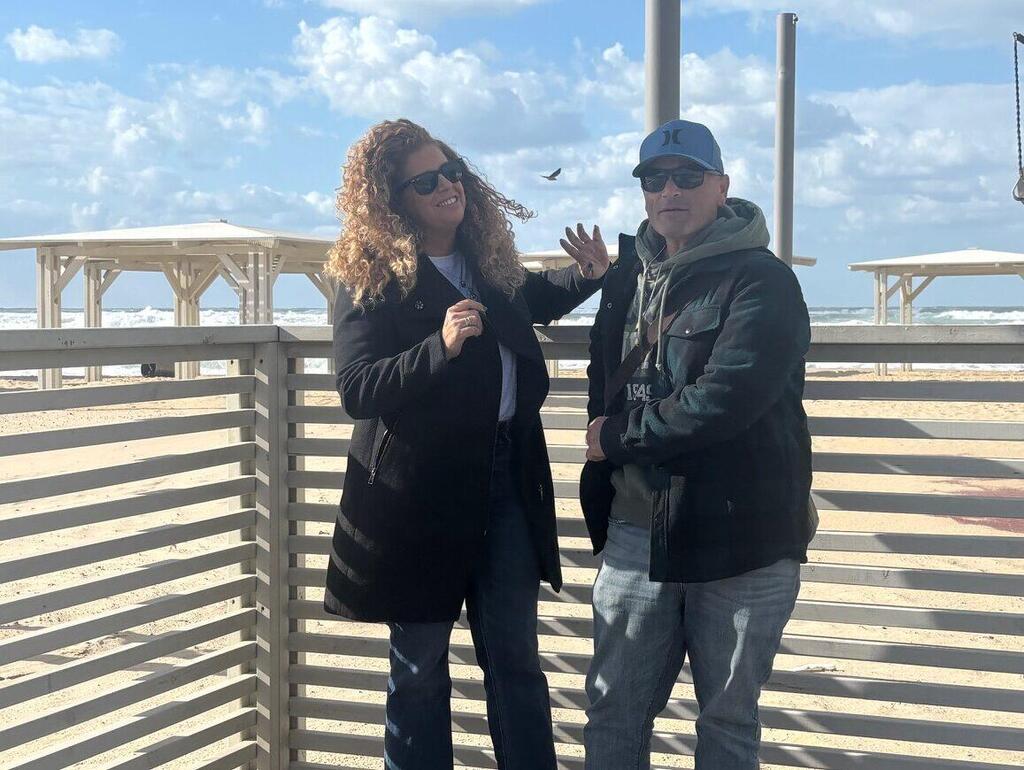
Aharon, his wife Dalit Ram Aharon, and their children survived the Hamas massacre at Kibbutz Nir Oz on October 7, 2023. After being rescued from their ravaged community, they were evacuated to Kiryat Gat and later moved to Karmei Gat, where they are still living today, far from their home. The trauma of that day, combined with long-term displacement, left the family dealing with intense stress and facing challenges they had never known before.
It was during this period that they learned about an emergency program run by HaGal Sheli called “Tools from the Waves,” created for those affected by the Swords of Iron War.
Aharon was the first in the family to sign up. He said he thought it would be fun to catch waves and feel like a kid again. Over time, however, surfing became much more than an escape. He said it gives him strength and allows him to let go.
“I think we subconsciously translate the lessons of the sea into our lives without even noticing it,” he said. “The things we learn, we apply without even thinking.”
Eventually, Ram Aharon joined the program as well. “They once told us that what you’re dealing with in the war is how you deal with reality,” she said. “It is reality. When you start to surf, every time it is different. The water is different, the beach is different and you have to adjust. You fall a lot, and you have to get up. Sometimes you need to fight the waves. But when you succeed, it’s like wow. It gives you so much power.”
She said that many times, she arrives at the beach feeling drained and low on energy. Yet after standing up on the board for the first time, that strength begins to return. “When you finish surfing, you feel you are in another place. You know that you are alive,” she concluded.
The Aharon family is just a small part of a much larger story. Nearly 5,000 people have taken part in HaGal Sheli programs designed for those affected by trauma, and more than 18,000 participants have gone through the organization’s programs overall.
HaGal Sheli was founded in 2012 by CEO Yaron Waksman and pedagogical director Omer Tulchinsky as a pilot initiative for youth at risk. Waksman’s father emigrated from Australia to Israel as a teenager, joined the IDF and later raised his family in Israel.
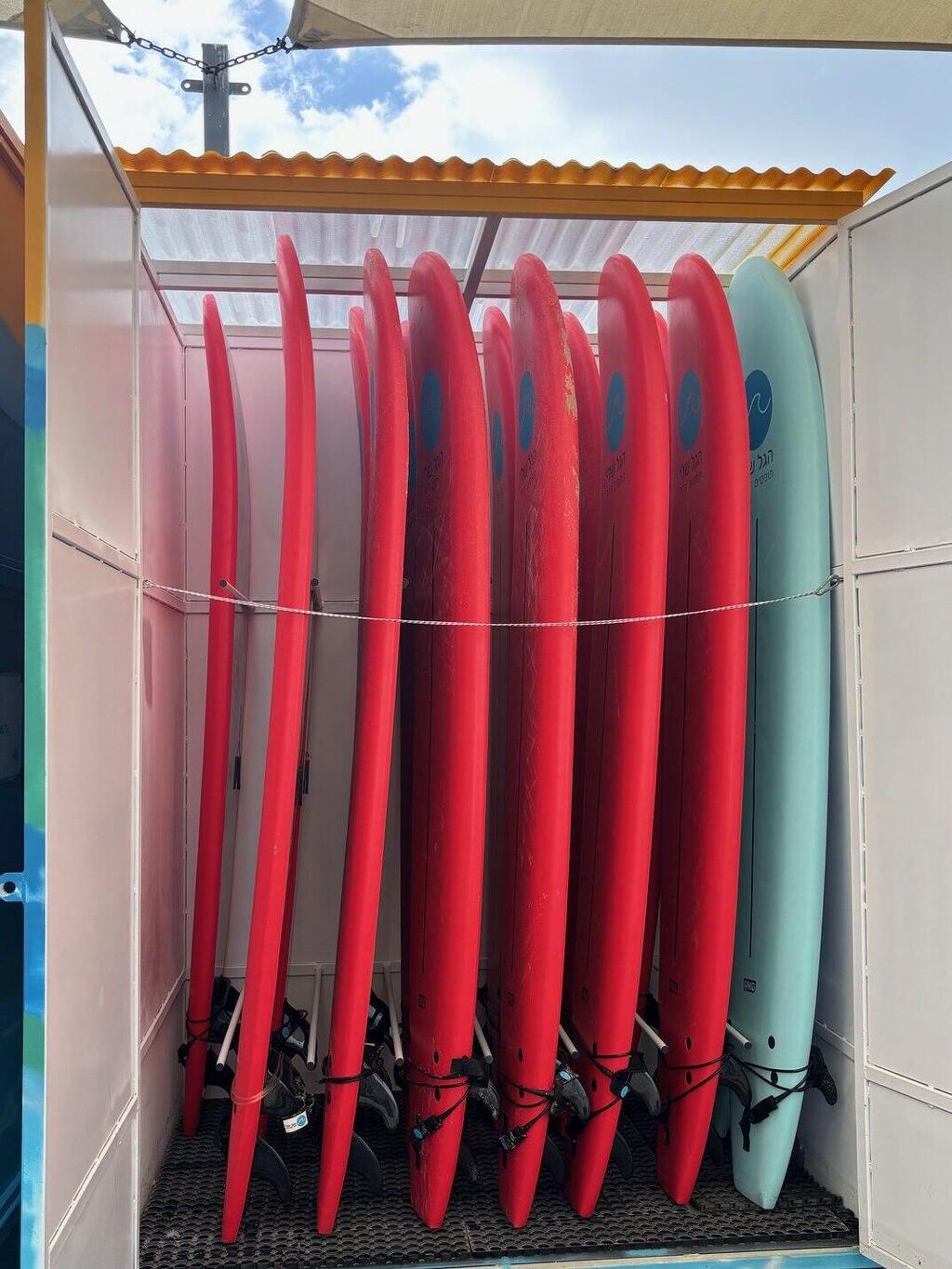
Surfboards at Zikim Beach
(Photo: Maayan Hoffman/The Media Line)
At age 16, Waksman discovered the sea and surfing. “It changed my life,” he said. “Ever since, I just tried to pay it forward.”
Waksman earned a bachelor’s degree in education and a master’s degree in education and management at Tel Aviv University. He later became a certified ocean lifeguard and surfing instructor. That combination of education and experience led him and Tulchinsky to launch their first pilot program.
In the first year, they worked with 10 teenagers who had dropped out of every educational framework, were using and selling drugs and had little connection to authority or structure. The program was offered free of charge in exchange for a commitment to return to school. All 10 participants completed their matriculation exams and went on to serve in the IDF.
Encouraged by the results, Waksman and Tulchinsky quit their jobs, took out loans to buy more equipment and expanded the program. While the focus initially remained on youth at risk, they gradually developed structured curricula for additional populations. These included people with disabilities, special education students and later IDF veterans suffering from post-traumatic stress disorder (PTSD) and other trauma-related symptoms.
HaGal Sheli had already been working with the Defense Ministry rehabilitation program for several years and had built a team of clinical professionals, including psychologists and clinicians, when October 7 happened.
The Sunday after the massacre, the team gathered on a Zoom call. Some staff members had been murdered. Others had been called up to the IDF reserves. Despite the shock and personal loss, they were determined to act and help others. By Monday, they had loaded up surf trucks and mobilized, traveling to evacuated communities located near Israel’s bodies of water.
Waksman said they encountered families under extreme stress. Many had been evacuated and were trying to understand where they would live, how they would make a living and how to manage daily life. In some cases, children were unintentionally neglected as parents struggled to cope. Grief was everywhere. People were mourning family members and friends, and children were faced with impossible choices about whether to attend the funeral of a schoolmate or a close relative.
In some families, the strain caused deep divisions. Teenagers wanted to stay close to their friends, while parents felt the need to keep younger children physically close at all times.
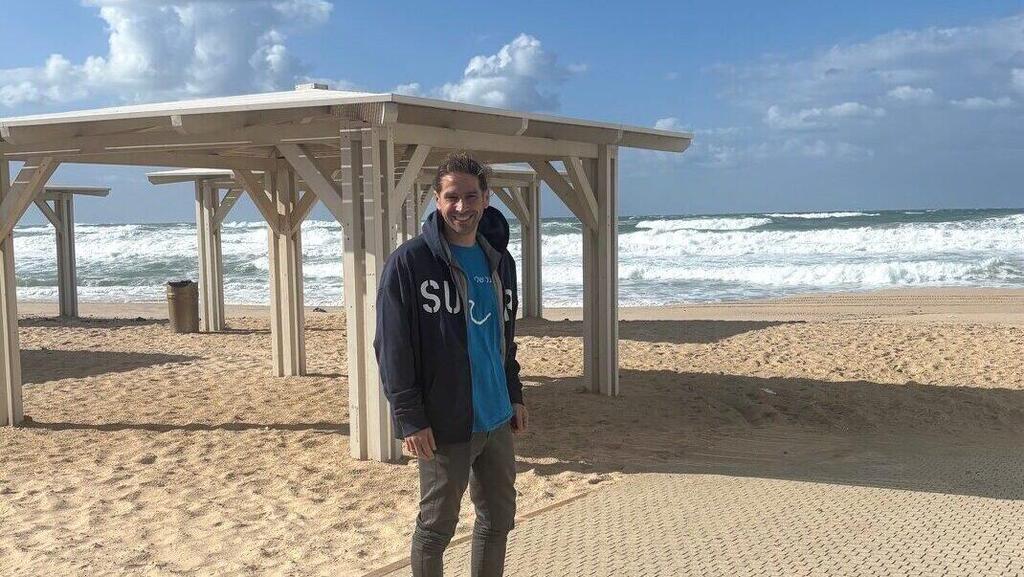
HaGal Sheli CEO Yaron Waksman
(Photo: Maayan Hoffman/The Media Line)
Perhaps most painful, Waksman said, was the loss of trust. On October 7, parents were unable to protect their children from terror. Safe rooms did not provide safety. Some children began questioning why their parents had chosen to live in places that were so vulnerable.
“Trust is something that once it is violated, it is really hard to recover,” Waksman said. “When you create experiences going out to the sea, all of a sudden, you have a common ground. It’s very effective.”
Waksman recalled visiting the displaced community of Kfar Aza, one of the hardest-hit communities, on October 12. There, he met a young girl who was withdrawn, depressed and overwhelmed by loss.
Waksman asked the girl if she wanted to try surfing. She was hesitant but finally agreed. At first, she kept getting knocked down by the waves, and he encouraged her to keep trying. Again and again, she fell. When she was ready to give up, he asked her to try once more.
“I told her, please just close your eyes and visualize the moment that you’re popping out of the water,” Waksman recalled. “I told her, ‘A young girl, an athlete like you, you can do it.’”
She caught the wave, stood up and rode it. When she finished, she turned back toward Waksman with a wide smile. “This moment taught me so many things,” Waksman said. “This girl lost the people that were closest to her, and just a few days afterwards, she could smile.”
They later spoke about what the experience meant to her. She told him she had believed her life was over and that she would never feel happiness again. There was no reason to live.
“We didn’t bring back her family members, and she will live with the pain of that day her whole life,” he continued. “We didn’t solve it. But the fact that she was able to smile, to have a good moment and to understand that she will have a future, that she could someday be happy, even if it was deep inside, was a game-changer.”
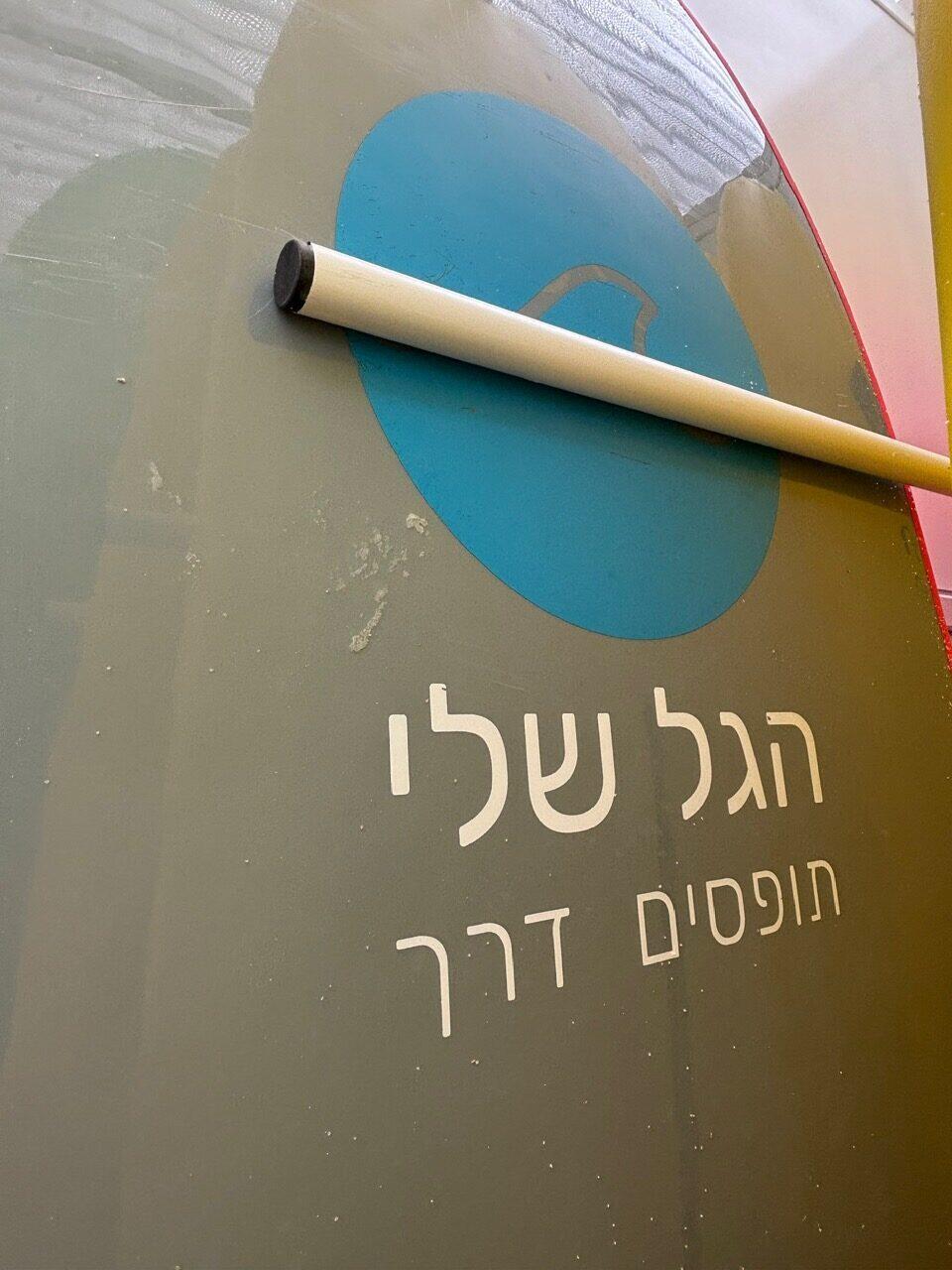
HaGal Sheli
(Photo: Maayan Hoffman/The Media Line)
Another moment stayed with him as well. After finishing the wave, the girl looked back, he said, wanting to be seen. Wanting to feel that someone understood what she was going through during these unbearable days.
“HaGal Sheli creates a community,” Waksman said. “You create these groups where you can cry, where you can share and where you can regain trust and control.”
Following October 7, the program expanded rapidly. Thousands of additional participants joined, including survivors, members of the security forces and released hostages and their families. The central challenge became scaling the program quickly while maintaining professionalism and consistency. Each group is paired with a clinical psychologist, an essential component that requires significant funding. Time and again, Waksman said, the resources came through.
So far, through the emergency trauma program alone, more than 4,000 people have participated across over 380 groups, with demand continuing to grow.
The program now serves people from more than 200 communities across Israel, and Waksman said they are currently working on collaborations with communities abroad to export their model.
About 58% of participants are male, 41% are female and 1% identify as nonbinary. Roughly 80% of participants are Jewish, while 20% are Muslim or Christian Arabs. HaGal Sheli operates in partnership with the ministries of Welfare, Education and Defense; NATAL (Israel’s Trauma and Resiliency Center); and additional organizations.
“The original model goes head, body, head,” Waksman explained. “So, you start with your head, with your mind. You learn something new about the sea. For instance, currents. How do they form? How can I use them to my own benefit? Then we go out and implement it with our bodies. And then we come back and reflect.”
The program follows a structured methodology built around an acronym, SEA. S stands for shifting. Groups meet once a week, but the ocean environment is constantly changing, requiring participants to adapt. E stands for emotion, with a strong focus on identifying, managing and understanding emotional responses. A stands for anchoring, or becoming anchored, both physically and mentally.
The minimum program lasts 15 weeks and follows a multi-step process that can be expanded as needed. It provides real-life coping tools for dealing with life’s challenges, methods that have been tested through careful research and evaluation.
“We would claim that the sea is the ultimate therapy arena because we have no control over the sea,” Waksman said. “It could be stormy. It could be flat. People go to the sea to celebrate, to cry, to do Tashlikh, to be with friends, to think, etc. So, I think it’s a mirror to so many things in our lives.”
Research has begun to support those claims. Ben-Gurion University’s Dr. Maya Leventer-Roberts began studying the program’s impact in 2024 and found significant reductions in symptoms of PTSD. That initial study showed that 81.5% of participants not only reduced avoidance behaviors but also increased their confidence in meeting people, going to new places and forming relationships.
In addition, 75.7% of participants reported a decrease in nightmares, disturbing thoughts and flashbacks. Another 75.4% said the program helped them believe in themselves and in their ability to trust others, challenging common trauma-related beliefs such as feeling guilty or worthless for what happened or viewing the world as inherently dangerous.
A subsequent study the following year produced similarly strong results. Seventy-eight percent of participants reported reduced avoidance behaviors, including decreased use of mind-altering substances, along with increased confidence when interacting with people, visiting unfamiliar places and developing new social connections.
About 80% of participants said the program strengthened their belief in themselves and in others, reduced feelings of guilt and worthlessness and lessened their perception that the world is dangerous. In addition, 63% reported a significant reduction in hypervigilance, startle responses, irritability and concentration difficulties, improvements that had a meaningful impact on daily functioning.
"When you surf, you literally cannot think about anything else, or you’ll get smashed. It really forces you to be here and now."
“People don’t really realize that the main thing about surfing is to meet yourself,” Waksman said. “How do I act when I fear? What happens when I don’t succeed? You get smashed again and again and again and again. It really builds you. You build your character.” He added that there is also value in being in nature and in learning to stay fully present.
“When you surf, you literally cannot think about anything else, or you’ll get smashed,” he said. “It really forces you to be here and now.”
HaGal Sheli has been honored by the president of Israel and was invited to the White House to showcase the program. Today, the organization employs 450 staff members, nearly 30% of whom previously participated in the program in some capacity.
“None of us wanted October 7 to happen, but it happened,” Waksman said. “Now the question is, how do I cope with it? What is within my ability and what isn’t? When you go out to the sea, you get a proportionate perspective on life.”
HaGal Sheli currently operates at 12 locations across Israel. The newest site is at Zikim Beach, which was closed after terrorists infiltrated Israel via its shores on October 7.
Zikim on a cold winter day in January 2026. The waves were wild. Waksman described how the facility, made up of a small number of classrooms and large cabinets for storing wetsuits and boards, was built under rocket fire, with no guarantee it would not be destroyed by the war before it was even completed.
"We talk about 100 surf therapy groups a year, 1,500 participants a year, just on this beach. This is going to be one of Israel’s biggest efforts to rehabilitate their health."
At the time, Zikim Beach was a closed military zone. A special request to the military eventually led to permission to bring in workers to prepare the site for opening. The beach’s reopening was delayed several times, but when it finally opened to the public in late fall, the center was ready to operate.
Zikim Beach now serves residents of the Gaza border region who have returned home, although some still choose to surf in Ashkelon or other areas because of the trauma associated with Zikim. Even so, the site is on track to become one of the program’s largest facilities.
“We talk about 100 surf therapy groups a year, 1,500 participants a year, just on this beach,” Waksman said. “This is going to be one of Israel’s biggest efforts to rehabilitate their health. We talk about 500 surf therapy groups over five years, 7,500 people, and it’s already nearly full with bereaved families, released hostages who come here and reservists and their kids.”
HaGal Sheli’s trauma program is among the largest of its kind in the world. While other initiatives offer elements of surf therapy for veterans and other populations, Waksman said there is nothing quite like the comprehensive model HaGal Sheli has developed.
He said the need is undeniable. The scale of trauma in Israel is at an all-time high since the October 7 massacre. As Waksman put it, “one of our country’s biggest challenges is to address it.”
Even if 100,000 people were to take part in the program over the next decade, he said, it would still represent only a fraction of those who need support.
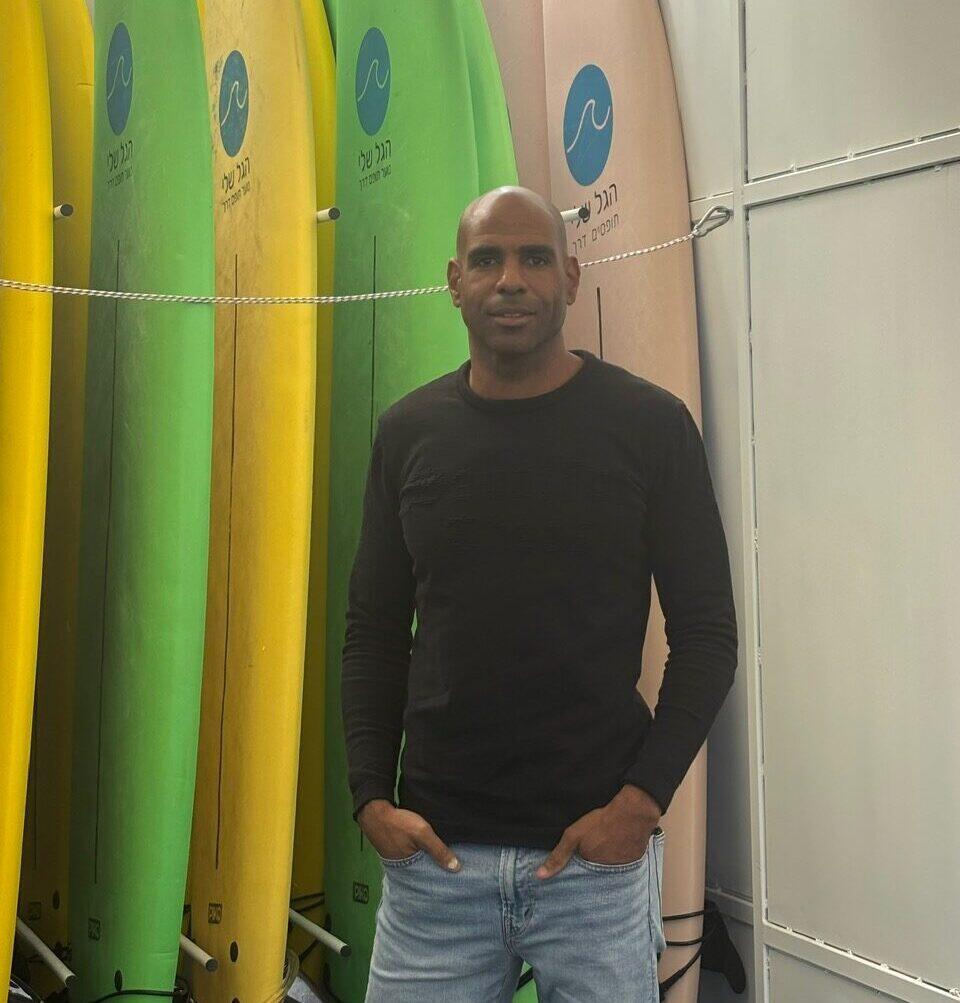
Emmanuel Segev Naftaly
(Photo: Maayan Hoffman/The Media Line)
For Emmanuel Segev Naftaly, the impact has been deeply personal. He survived October 7, but afterward his life came to a halt. He struggled with sleepless nights and could barely get out of bed in the mornings. Then he learned about HaGal Sheli and began waking up early to drive to Bat Yam and enter the cold water.
There, he met other survivors, many of whom were, as he described, “in worse condition than me.”
There were many mornings when he arrived at the beach and did not feel like getting into the water. But after putting on his wetsuit and surfing for the first 10 minutes, something would shift.
One day, he realized that the struggle was not against the cold water, the waves or the fatigue, but against himself, his thoughts and his lack of energy.
“If I am disappointed about something, or mad or whatever, I would find that after 10 minutes in the water, I’m smiling and having fun and I forget what I came with,” Segev Naftaly said. “It’s committing to get out of bed, to drive the whole way, to put on the wetsuit, to understand that I’m getting into conditions that I do not really like right now. The whole thing, from deciding to get out of bed in the morning, starts the whole process of dealing with whatever I have in my head.”