

The number of children and teenagers arriving at emergency rooms in Israel due to suicidal thoughts or attempts has risen sharply in recent years, according to new data released by Schneider Children’s Medical Center of Israel, part of the Clalit Health Services network.
Between 2023 and 2025, the hospital recorded a nearly 60% increase in psychiatric evaluations linked to suicidality among young patients. In 2023, Schneider's ER handled 580 such cases. The number rose to 752 in 2024 and jumped again to 930 in 2025.
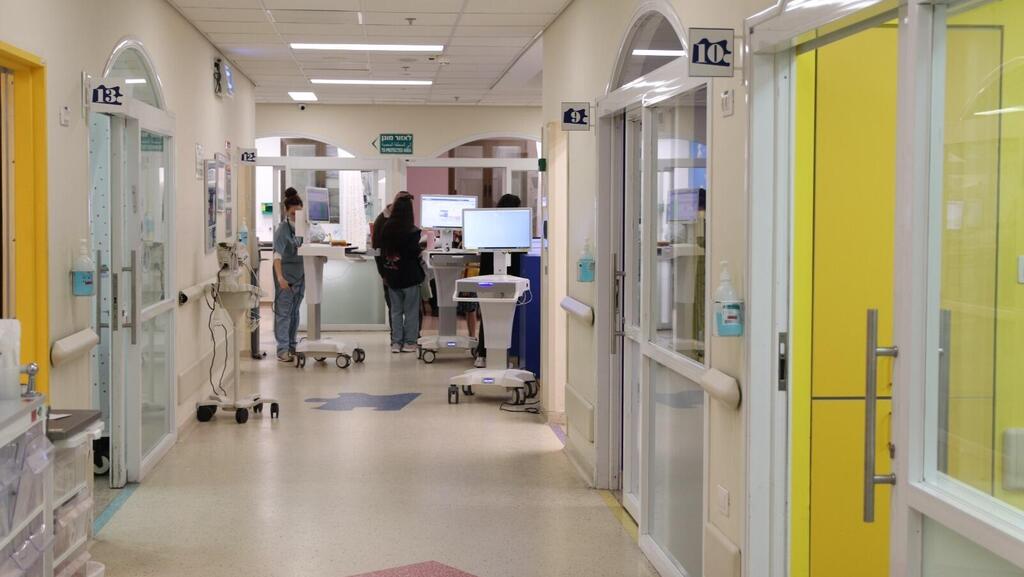
Hospital officials emphasized that the majority of these cases were tied to either suicide attempts or suicidal ideation. The rise also includes a significant increase in the number of patients assessed as being at high and immediate risk.
In 2023, 63 children and teens were classified as requiring immediate intervention. That figure dipped slightly to 49 in 2024 before climbing to 88 in 2025. “In many cases we see young people in distress, but the psychiatric evaluation doesn’t always indicate immediate risk,” said Dr. Noa Ben Aroya, head of the mental health division at Schneider. “But when we do assess them as high-risk, it means we’re very concerned—and the child requires supervision.”
 Dr. Noa Ben AroyaPhoto: Schneider Medical Center
Ben Aroya said the data indicate a clear deterioration. “We’ve never seen numbers like this—such large volumes of children and teens arriving at the ER in severe emotional distress,” she said. Professionals at Schneider noted that similar patterns are emerging at other hospitals across the country, based on conversations with colleagues in the field.
Cases growing more complex
A quarterly analysis of the data underscores the severity of the trend in 2025, with nearly one-third of the cases classified as posing immediate risk occurring in the final quarter of the year. That represents a threefold increase compared with the first quarter.
“The findings highlight the urgent need for a thorough examination of the factors driving this rise, for earlier identification and for a significant strengthening of existing systems to provide comprehensive and accessible care in order to prevent further deterioration,” said Dr. Orit Bar-On, head of Schneider’s clinic for the treatment of depression, mood disorders and suicidal behavior.
Bar-On said suicide is the second most common cause of death among adolescent boys in Israel and the third among adolescent girls, with an annual mortality rate of 6.9 per 100,000 people. In recent years, she said, there has been an increase in reports of nonfatal suicidal thoughts and behaviors among children and adolescents, including suicidal ideation, threats, planning, attempts and non-suicidal self-harm, a trend that intensified after the COVID-19 pandemic.
Today, according to Bar-On , assessment and treatment of suicide risk is the leading reason children and teenagers are referred to psychiatric emergency rooms. About 5% of Israelis ages 14 to 17 report suicidal thoughts, and roughly 1,000 teenagers are referred to emergency rooms each year following suicide attempts, she said. She described suicidality as a phenomenon that comes in waves and is often temporary. “Just as it rises, it can also subside, and intervention by each and every one of us can help someone get through the wave,” she said.
An analysis of the past three years shows the increase in suicide-related emergency room visits has been sharp and consistent. Mental health professionals warn the situation is likely to worsen in coming years without significant national intervention.
“Children and teenagers tend to respond to crises with a delay,” said Ben Arroya. “During the crisis they may appear to be coping, and only later do the difficulties emerge, including suicidality.” She said a similar pattern was seen after the COVID-19 pandemic. “Just before the outbreak of the Swords of Iron war, we were still struggling to cope with and treat the number of children who were ‘COVID casualties.’ Today that sounds almost absurd,” Ben Arroya said. “I expect 2026 and 2027 to be even more difficult years if a serious solution is not found.”
 Dr. Ayelet Schreibman CohenPhoto: Schneider Medical Center
Dr. Ayelet Schreibman Cohen, head of Schneider’s ambulatory mental health unit, said emergency rooms have been seeing more complex cases since the war began. “In the past, referrals were mainly about suicidal statements,” she said. “Today we are seeing more and more children and teenagers suffering severe distress alongside suicidal thoughts.”
‘Don't leave them alone’
Mental health professionals say identifying people struggling with suicidal thoughts requires awareness of warning signs, including a decline in daily functioning, fatigue, lack of energy or enjoyment, social withdrawal, isolation and repeated statements of despair or a sense that life has no value.
Schreibman Cohen said any significant behavioral change should raise concern. “Part of what we assess is how well a person is functioning,” she said. “It is important to understand that with an increase in suicidality and depression, we are also seeing a rise in other disorders, including anxiety, obsessive-compulsive disorder and eating disorders. Identifying these conditions can also help prevent suicidality later on.”
“People must not be left alone with their distress. In the past, people were afraid to ask,” said Ben Arroya. “Today we know beyond any doubt that there is no danger in asking about suicidality. If someone around you seems sad, don’t be embarrassed to ask whether they are also having suicidal thoughts, because sometimes you are the only person who has asked them if they are struggling.”
Ben Arroya stressed that asking the question does not plant the idea. “It will not cause suicidal thoughts if they were not there before,” she said. Suicidal thoughts, she added, are often part of depression, which can be treated with psychological therapy or medication. “If the answer is yes, it’s important to contact the treating physician for advice, or go to the emergency room,” she said. “When in doubt, there is no doubt.”
Distress deepened sharply during the war years
(Photo: Violeta Santos Moura/Reuters)
Against the backdrop of the troubling data, Ben Arroya said an immediate national response is needed, including increased funding for psychiatry and strengthening the public mental health system. “Investment in mental health must be at a level that makes professionals want to work in the public system,” she said. “It is not enough to allocate positions and resources. They must also be allocated wisely.”
Educators and clinicians outside the hospital system are also reporting a significant rise in behaviors signaling distress and suicide risk among children and teenagers. Dr. Yochi Siman Tov, who founded and formerly led the Education Ministry’s unit for coping with crisis, emergency situations and suicidality, warned that Israel is emerging from an extended period of upheaval. “We are coming after two very difficult years of war, which followed shortly after a global pandemic,” she said. She noted that during national or global crises, suicide rates often do not rise and may even decline. “But once the acute phase ends, there is usually an increase in risk behaviors, including suicidal behavior,” she said.
Siman Tov said the state must “think creatively about training semi-professional personnel to help with mild to moderate problems,” noting that the World Health Organization recommended such steps as early as 2016. She also called for expanding programs that encourage direct, open conversations with children and adolescents about suicidality and its prevention. “Open dialogue, alongside making support services more accessible, can help and prevent severe outcomes,” she said.