

Five children have died of influenza in recent weeks. Four were unvaccinated, and one had significant underlying conditions. Despite this, medical teams continue to see unvaccinated children arriving daily in pediatric wards in severe condition with influenza and its complications.
“Every year we hear about heavy illness and children dying of influenza, including healthy children who develop severe complications and die, and yet there is a kind of annual erosion of memory,” said Dr. Diana Tasher, head of the pediatric department at Wolfson Medical Center. “We fail to convince the public that this is a serious disease and that vaccination is needed every year. There are also myths surrounding the vaccine, despite having no basis. We see children in high-risk groups who are hospitalized with influenza every year, and still their parents do not vaccinate them.”

What lies behind this behavior?
“Sometimes it is principled opposition, and sometimes it is simply ‘we didn’t get around to it, we didn’t think about it.’ It’s hard to grasp how a child at risk, after a severe hospitalization, is not first in line to get vaccinated the following year.”
'Very sick, suffering greatly'
Influenza morbidity in Israel has risen sharply in recent weeks. According to data from the National Center for Disease Control at the Health Ministry, last week (through December 20) 545 new positive influenza cases were reported in hospitals. Since the beginning of the current wave, 2,844 patients have been hospitalized with influenza, including 1,067 children.
The increase is also being felt in the community and is classified at a very high intensity threshold. However, Health Ministry data show a mixed trend last week: a slight decline in clinic visits among children and adolescents aged 6 to 18, alongside a continued rise among children and toddlers under age 5 and adults aged 65 and older.
As of Wednesday, five children with influenza were hospitalized at Wolfson, one of them in intensive care. “The flu season started earlier this year compared with previous years, and the disease burden is heavier,” Tasher said. “We are seeing a steep rise in morbidity, with about five children hospitalized every day due to complications. The children are very sick, suffering greatly, hospitalized with shortness of breath, pneumonia, heart inflammation, seizures. The ward is extremely crowded.”
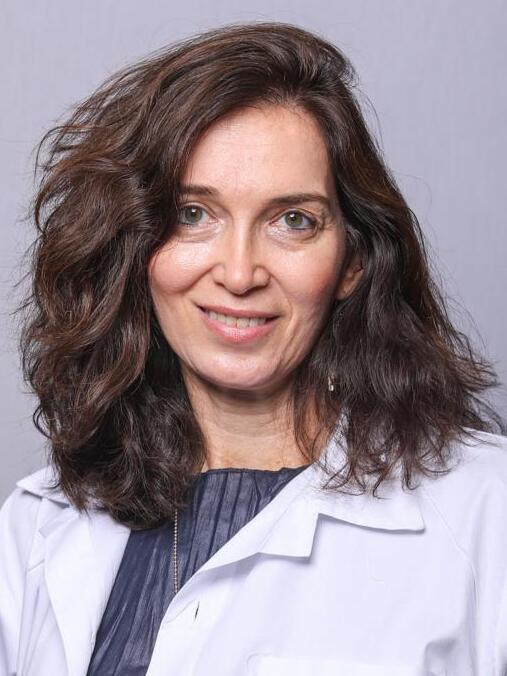 Dr. Dana TasherPhoto: Wolfson Medical Center
Children are infected with influenza more often than adults and are considered a “significant engine of transmission,” meaning they drive the spread of the disease and increase the risk of infecting adults, Tasher noted. Children under age 5 are also at higher risk of severe illness. “Age itself is a risk factor,” she said. “Beyond that, children with underlying conditions — asthma, lung disease, a tendency to seizures, neurological diseases or any other significant condition — dramatically increase the risk of hospitalization.”
She added that broad public education is needed. “Since the coronavirus pandemic, there has been a general decline in public trust in vaccines, reflected not only in lower flu vaccination rates but also in routine vaccines such as measles and others.”
'The wards and ERs are full'
Professor Michal Stein, head of the pediatric infectious diseases unit at the Safra Children’s Hospital at Sheba Medical Center, said the vast majority of children hospitalized with influenza complications are unvaccinated. “Unfortunately, only a minority of children are vaccinated against influenza,” she said.
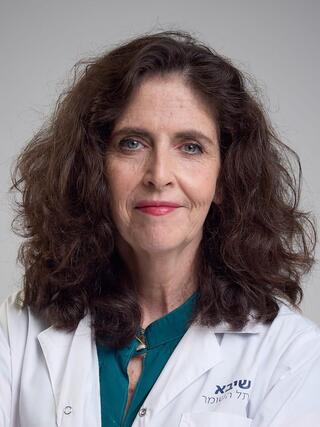 Prof. Michal SteinPhoto: Sheba hospital spokesperson
Influenza this season is compounding the winter disease burden, which includes RSV and, this year, a measles outbreak. “This year, fortunately, thanks to the new RSV vaccine, there are fewer cases, which helps somewhat offset the large number of influenza cases,” Stein said. “Still, the wards and emergency rooms are full, as are community clinics. The medical teams feel the strain and the difficulty.”
Despite the high morbidity, Health Ministry data show that 1,624,523 health fund members have been vaccinated against influenza, just 17% of the population. Only 13% of children aged 6 to 59 months and 11% of children aged 5 to 12 have been vaccinated.
“The main reason is a misconception about what influenza actually is,” Stein explained. “We are used to calling every fever and cold ‘flu,’ so people get confused and think influenza is just a cold. But influenza is a severe viral disease.”
She said influenza is marked by high fever, weakness and muscle aches, and can cause a wide range of complications, both from the virus itself and from secondary bacterial infections that lead to hospitalization. “From vomiting and inability to drink, stridor and asthma attacks, to severe pneumonia, myocarditis, febrile seizures, encephalitis, meningitis, muscle inflammation leading to kidney failure and sepsis. Practically everything written in the textbook, we see in the wards every day. Just this week we treated a child with bacterial meningitis following influenza, and a six-month-old infant with influenza who required resuscitation due to breathing pauses.”
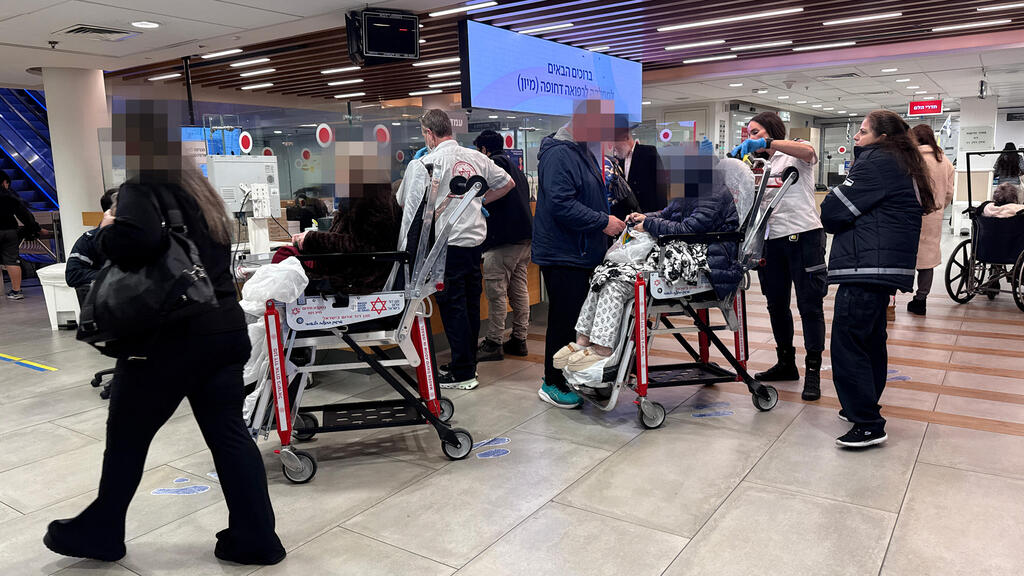
Significant crowding in the Sheba emergency room during the winter illness season
(Photo: Tal Shahar)
Stein noted that the fact the vaccine is not 100% effective also affects public willingness to be vaccinated.
“The vaccine is not perfect and its effectiveness is moderate, but it is important to remember that even when effectiveness against infection is moderate, effectiveness against severe illness, hospitalization and death remains high. The need to vaccinate every year is annoying and burdensome for most people, but it is important to understand that at present there is no other vaccine that can protect against this disease," she said.
Stein encounters parents daily who chose not to vaccinate their children. “When a child is hospitalized, sometimes in serious condition, due to a disease that could have been prevented by vaccination, it is very sad and frustrating,” she said. “Sad because the child is suffering and ill, and frustrating because the suffering, illness and death could most likely have been prevented with a vaccine.
"I truly believe that parents who refuse vaccines think they are doing what is best for their child," she added. "Unfortunately, there is massive exposure to conspiracies on social media. I encourage parents to read information from authoritative sources, listen to expert opinions, and only then make decisions about vaccinations.”