

A healthy two-month-old infant from northern Israel has died of influenza, the Health Ministry reported Wednesday afternoon. Six children have died so far in the current flu wave.
At the same time, an 11-month-old baby girl with measles is in critical condition on an ECMO machine, which replaces heart and lung function, in the pediatric intensive care unit at Hadassah Ein Kerem. The infant was not vaccinated against measles.
The measles outbreak that began in Israel last April has so far claimed the lives of 12 children.
Gallery
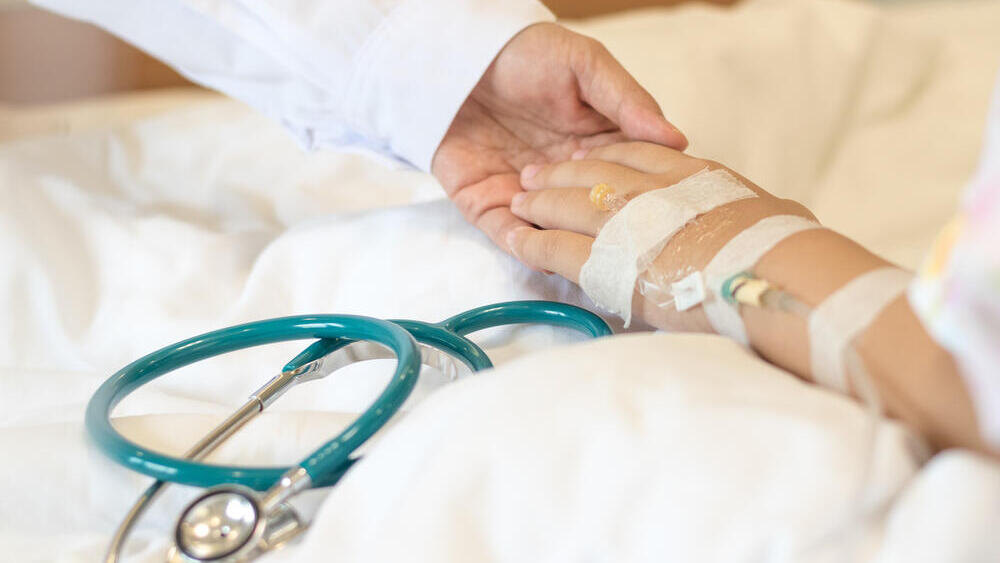
The flu vaccine does not fully prevent infection, but it reduces severity in most cases
(Photo: Shutterstock)
The Health Ministry is urging the entire population to get vaccinated against influenza as soon as possible. Although infants of this age cannot be vaccinated against the flu, vaccinating those in close contact with them provides some protection. The ministry stressed that while the flu vaccine does not fully prevent infection, it reduces severity in most cases. The vaccine is available free of charge through health maintenance organizations.
The ministry also recommends that at-risk populations consider wearing masks in enclosed spaces and at gatherings. It further advises mask-wearing for medical staff and visitors to nursing homes and geriatric facilities.
Influenza is a viral disease that attacks the respiratory system, and a significant wave of illness has been recorded this season. There are three strains of influenza—A, B and C—with strain A responsible for most seasonal flu cases. In Israel, as in many countries worldwide, an early rise in illness has been recorded this year due to a new subtype of influenza A, H3N2 type K.
Unlike a mild cold, influenza can be a severe and even life-threatening illness, particularly for at-risk populations such as those aged 65 and older and people with chronic diseases. Infants and children under age five are at increased risk of developing complications. The main complication of influenza is pneumonia, but more severe complications include encephalitis and worsening of existing chronic conditions.
Data indicate that flu morbidity is gradually declining but remains at a very high level. Dr. Hagar Mizrahi, head of the Health Ministry’s medical division, recently told ynet that “in many seasons we see a sharp increase followed by a clear decline, whereas this year we are seeing stabilization at high levels of morbidity over time. This means there is still significant illness, and at this stage it is difficult to assess how the season will continue.” She emphasized that in such a situation, “vaccination remains relevant and important even now, especially to reduce severe illness and complications among older adults and at-risk populations.”
Infant in critical condition due to measles
Meanwhile, an infant who contracted measles in a community near Jerusalem was evacuated to the hospital Tuesday night after several days of being treated at home. When her condition deteriorated significantly, the family went to the emergency room at Shaare Zedek Medical Center. Shortly afterward, she suffered further deterioration and multi-system failure, requiring connection to an ECMO machine. An ECMO team from Hadassah was called to Shaare Zedek, connected the infant to the device and then transferred her to the pediatric intensive care unit at Hadassah Ein Kerem.
Her condition remains critical, and the ICU team is fighting for her life. “This is a tragic case of very rapid deterioration that required connecting the infant to an ECMO machine," Dr. Uri Pollak, director of pediatric intensive care at Hadassah, said. " I once again urge all parents to vaccinate their children against measles and to follow Health Ministry guidelines that allow for advancing the vaccine schedule, in order to prevent severe and life-threatening illness.”
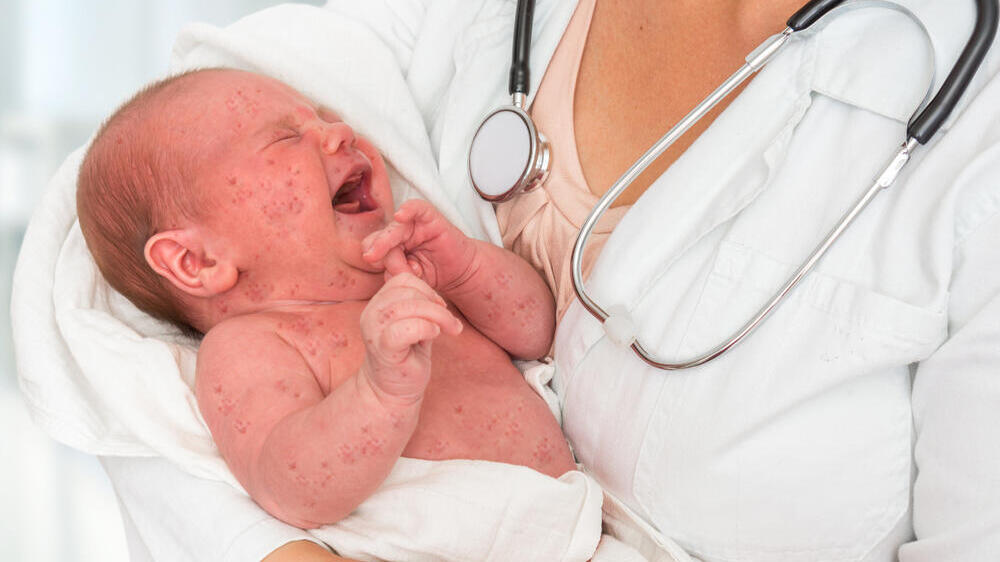
Baby with measles
(Photo: Shutterstock)
Measles is a highly contagious viral disease marked by fever, general malaise, runny nose and rash. Complications include pneumonia, damage to the heart and kidneys, vision loss and involvement of the central nervous system. These complications can be prevented through an effective and safe vaccine that has been proven in many studies and is widely used worldwide and in Israel.
About a week ago, the Health Ministry declared Petah Tikva a measles outbreak hotspot, joining a growing list of cities experiencing significant illness. Additional outbreak centers include Jerusalem, Beit Shemesh, Bnei Brak, Modi’in Illit, Harish, Nof HaGalil, Kiryat Gat, Netivot, the Mateh Binyamin Regional Council, Beitar Illit, Tiberias and Safed.
According to Health Ministry data updated through the end of December, about 2,500 measles cases have been identified to date. However, the ministry believes this reflects underreporting and that the actual number exceeds 10,000 cases. From the start of the outbreak through the end of December, about 800 measles patients were hospitalized.
In light of the increased risk of community transmission, the Health Ministry recommends measles vaccination for infants aged 6 months to 11 months in Petah Tikva, using the measles-mumps-rubella vaccine only. This dose is expected to provide about 70% to 85% protection during the current outbreak but will not count toward routine vaccinations. These children will be vaccinated again with the measles-mumps-rubella-varicella vaccine starting at age one, at least four weeks after the MMR dose.
In outbreak areas, the ministry also recommends advancing the second measles vaccine dose, which is usually given at age six, first grade. The recommendation applies to children up to age six who received the first dose from age one, provided at least three months have passed since the first dose. This dose will replace the one normally given in first grade.