

Israel’s flu season has arrived earlier than expected and appears harsher than last year, with high illness levels reported in both community clinics and hospitals in recent weeks. A 6-year-old boy died of influenza this week at Shaare Zedek Medical Center in Jerusalem, despite being vaccinated about a month earlier. Last week, a 10-year-old girl from the city of Modi’in Illit died after being rushed to the hospital while undergoing resuscitation.
New figures from Maccabi Healthcare Services, Israel’s second-largest health fund with nearly 3 million members, point to unusually strong activity of the influenza virus for this time of year compared with last season. According to the data, about 25% of PCR samples for respiratory viruses taken at Maccabi community clinics in November tested positive for influenza A. During the same period last year, only 5% of Maccabi members tested positive for influenza A, and fewer than 1% of children under 18 were positive.
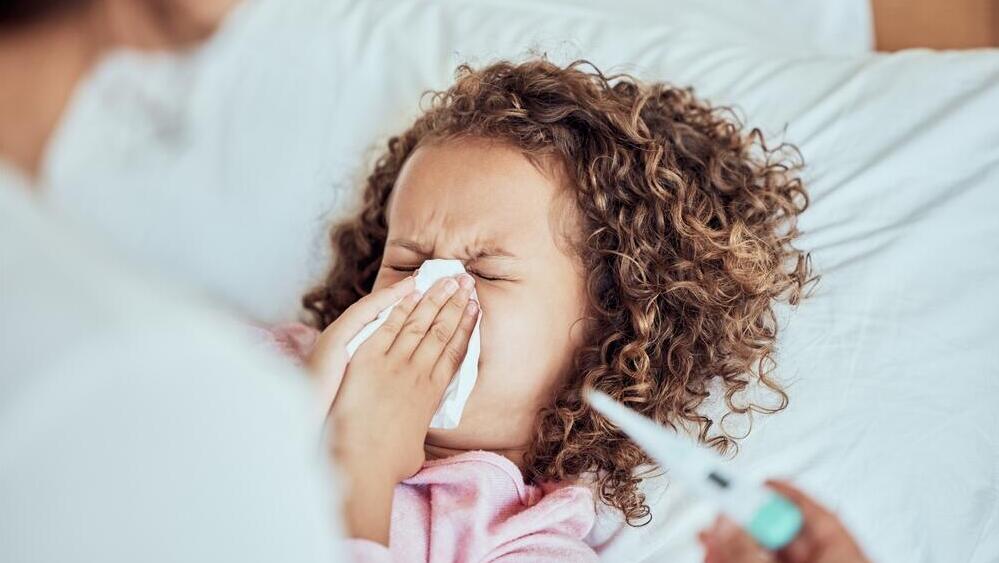
A sharp surge in illness among children and teens, Illustration
(Photo: Shutterstock)
The steepest rise was recorded among children and teenagers. Of all PCR tests taken from preschool-age children (ages 3 to 6) in November, 59% were positive for influenza A. Among school-age children (ages 6 to 18), about 50% of tests were positive.
‘The flu has come significantly earlier this year,’ said Dr. Shirly Shapira Ben-David, head of infectious diseases at Maccabi. She noted that these kinds of numbers are uncommon for November and likely still underrepresent the full scope of illness because not every patient who comes to a clinic is tested with PCR.
Maccabi has offered PCR testing in the community for the past year and a half, a service previously conducted mainly in hospitals. The program gives doctors and patients a clearer picture of viral illness trends, including influenza, enabling more accurate diagnoses and better tailored treatment.
Influenza is a viral respiratory illness with three strains, A, B and C. Strain A causes most seasonal flu cases. The dominant virus currently circulating is A(H3N2), with little activity from influenza B. Shapira Ben-David said that last year’s influenza A and B levels were relatively low, with waves beginning later in the season.
Data from Israel’s National Center for Disease Control show a similar trend. In the week ending November 29, influenza activity continued to rise among both hospitalized patients and in the community. That week, 394 new influenza A cases were reported among patients in 14 general hospitals. Children accounted for 41.4% of hospitalized flu cases, or 163 patients.
From September through the end of November, 26 deaths were recorded among hospitalized patients diagnosed with influenza in those hospitals. The highest death rates were among adults 65 and older, though officials stressed it is not known whether influenza was the primary cause of death in all those cases.
Community indicators are also climbing. The rate of visits to Maccabi clinics for influenza-like illness has crossed the threshold for moderate activity for the first time this season. Clalit Health Services, the country’s largest health fund, has likewise reported rising visit rates, particularly among infants, toddlers and children up to age 18.
‘Every family should get vaccinated’
Despite the unusual figures, Shapira Ben-David said it is still too early to determine whether this will be a more severe season overall. ‘We cannot predict what will happen, but based on current data we are probably still ahead of the seasonal peak,’ she said. ‘Illness levels are very high right now, and in clinics and urgent care centers we are seeing many patients with prolonged illness, high fever and persistent coughing.’
Many people underestimate influenza, she warned, even though it can cause severe complications. Influenza can lead to serious neurological complications in all age groups, she said, describing a previous patient who developed encephalitis after influenza A and never fully recovered.
Vaccination rates remain low. As of December 1, 2025, 1,275,141 people in Israel’s health funds had been vaccinated against seasonal influenza, about 13% of eligible members. That mirrors last winter’s pace. Among adults 65 and older, 45% have been vaccinated, as have 18% of chronically ill patients under 65.
 Dr. Shirly Shapira Ben-DavidPhoto: Ofer Hajayov
‘Vaccination rates are slightly better this year than in previous years, but most of the population still does not get vaccinated,’ Shapira Ben-David said. People should move away from the idea that they can simply ‘get through it’ because vaccination protects not only the individual but also vulnerable groups such as older adults and young children. ‘That is why every family should get vaccinated,’ she said.
She emphasized that vaccine effectiveness is not 100% and depends on timing and whether immunity has had time to develop. Still, she said vaccination is the only tool available to reduce illness and complications. ‘It is important to prevent infection and complications as much as possible, and vaccination is the only way we have. I recommend that everyone get vaccinated.’