

NASA’s new mission, called Carruthers Geocorona, will capture images of Earth’s invisible “halo.” This faint glow comes from the planet’s outermost atmospheric layer, the exosphere, as it shifts in response to the sun. The mission was launched Wednesday night aboard a SpaceX Falcon 9 rocket from Cape Canaveral, Florida.
Understanding the physics of the exosphere is a key step toward predicting hazardous conditions in near-Earth space. Such knowledge is crucial to protecting Artemis astronauts on their way to the moon, as well as participants in future missions bound for Mars.
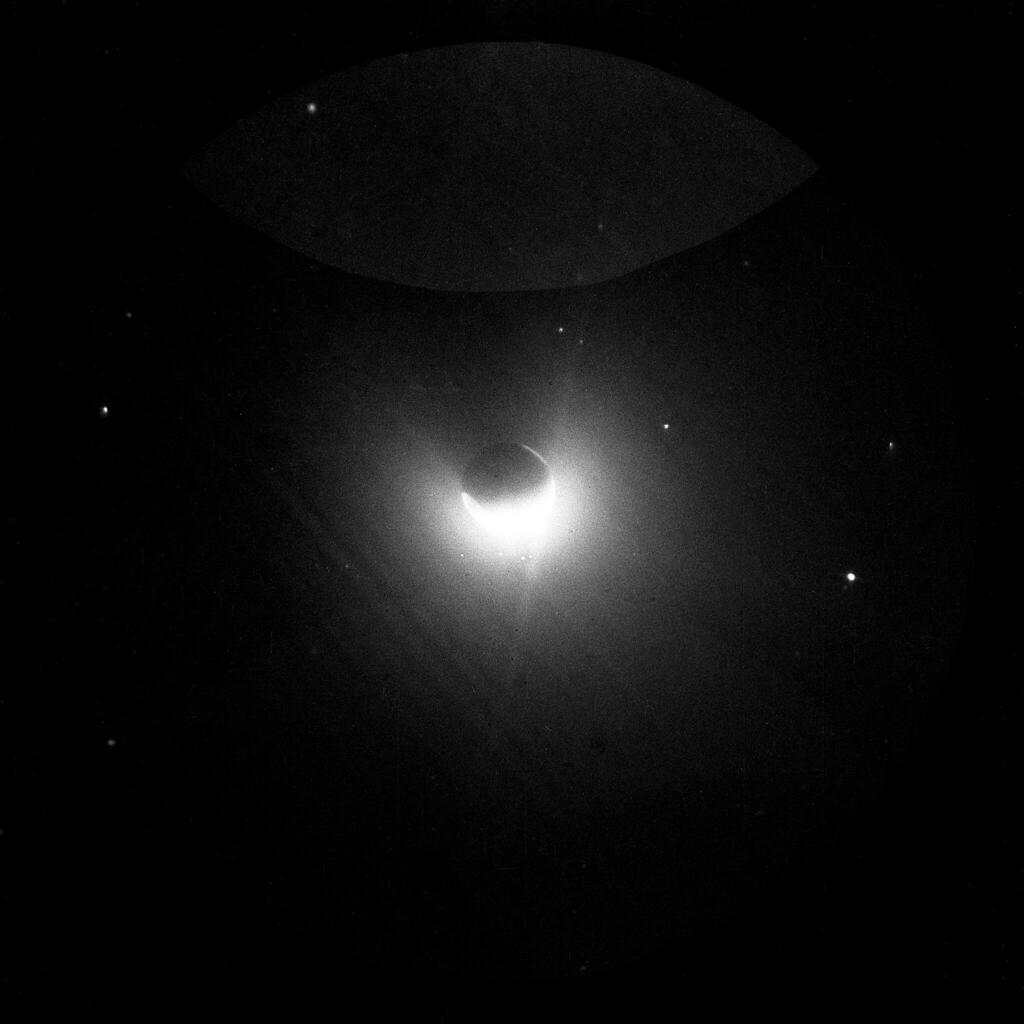
In the early 1970s, scientists could only speculate how far Earth’s atmosphere extends into space. The mystery lies in the exosphere, which begins roughly 300 miles (480 kilometers) above sea level. Theorists believed this layer consisted mostly of hydrogen, the lightest element, which rises so high that its atoms escape into space.
But the exosphere can only be detected through a faint ultraviolet glow produced when sunlight interacts with hydrogen atoms. This glow is called the geocorona. The sun’s radiation excites the hydrogen at a wavelength known as Lyman-alpha, which the atoms absorb and re-emit, scattering sunlight in all directions.
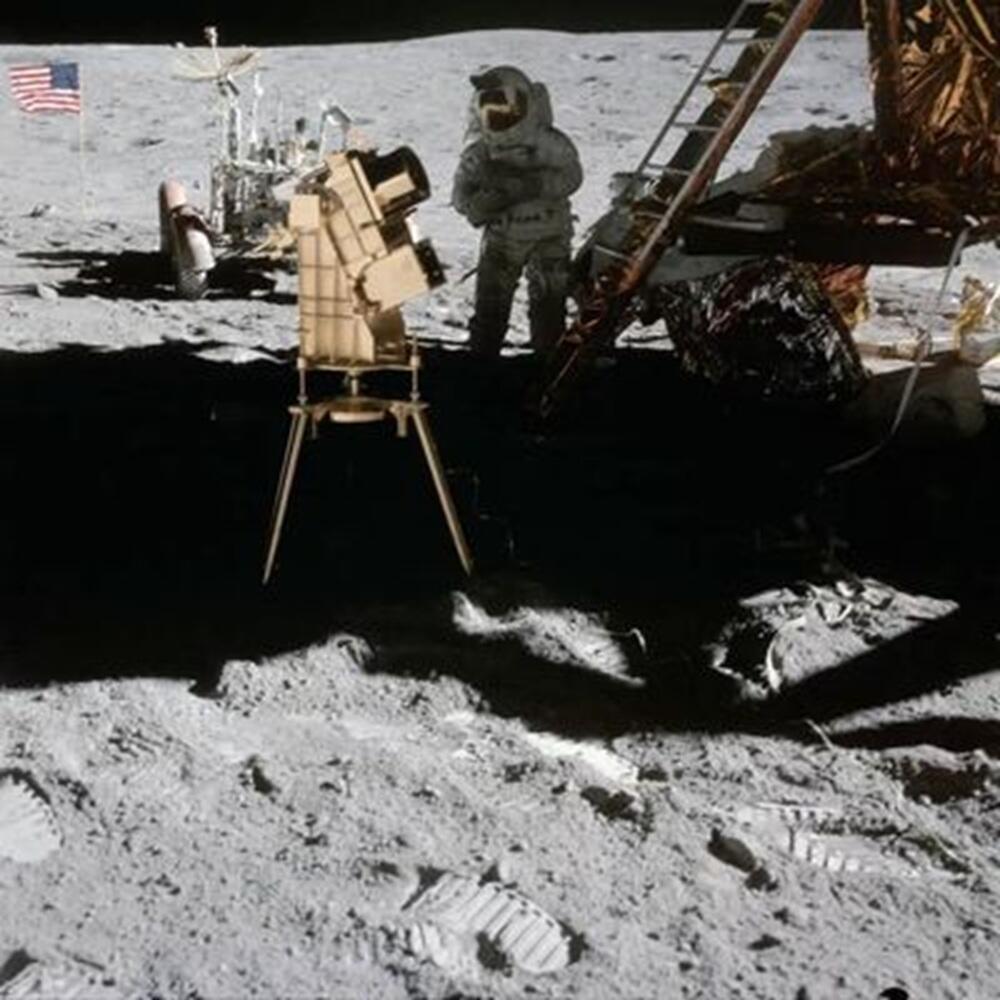
Apollo 16 astronaut John Young on the lunar surface with the camera named for Dr. George Carruthers
(Photo: NASA)
The scientist and engineer, Dr. George Carruthers, set out to see it. After launching several prototypes on sounding rockets, he developed an ultraviolet camera for a one-way journey to space.
In April 1972, Apollo 16 astronauts placed Carruthers’ camera on the Descartes Highlands of the moon, giving humanity its first glimpse of Earth’s geocorona. The images were nothing short of extraordinary, both for what they revealed and what they left unanswered. Today, scientists believe the exosphere extends at least halfway to the moon. But the importance of studying it goes well beyond curiosity about its size.
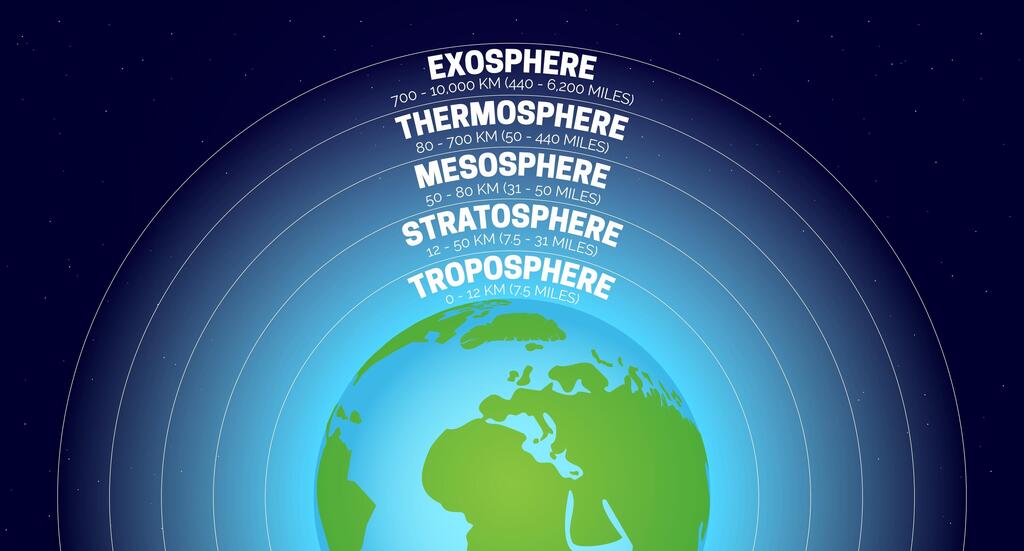
Earth’s atmospheric layers
(Illustration: Angela Cini/Shutterstock)
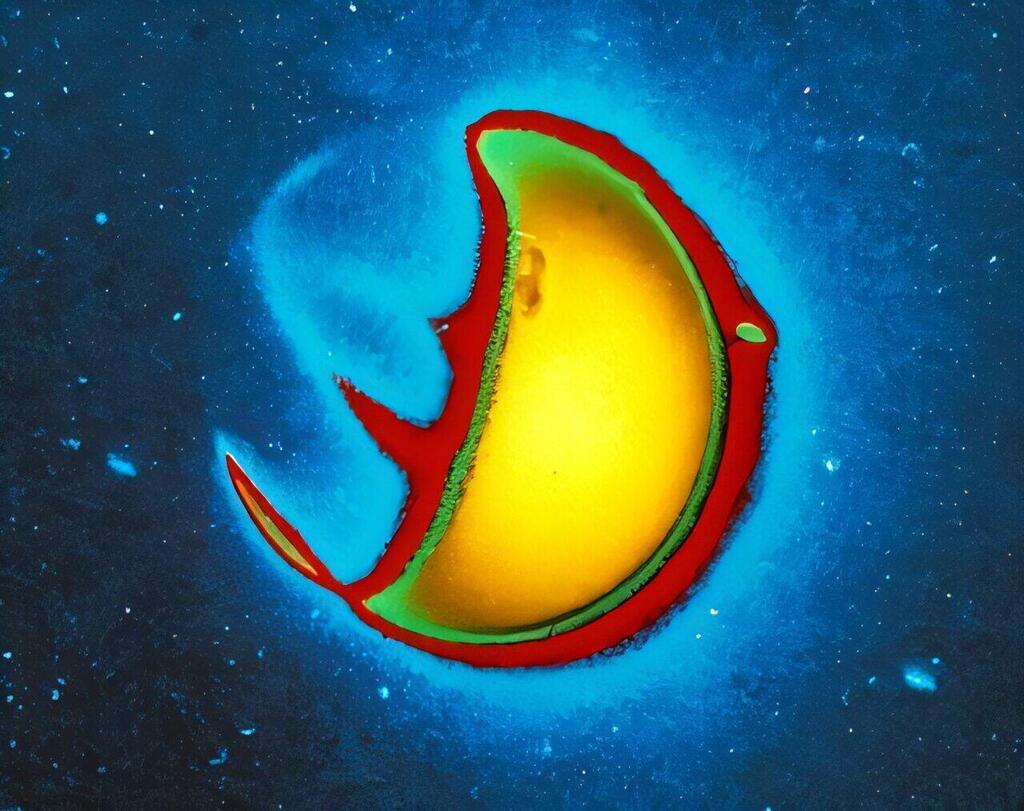
The first ultraviolet image of Earth’s outer atmosphere, the geocorona, captured by the Apollo 16 crew in 1972
(Photo: G. Carruthers (NRL) et al./Far UV Camera/NASA/Apollo 16)
When solar eruptions reach Earth, they strike the exosphere first, triggering a chain of reactions that can culminate in dangerous space weather events. Understanding the exosphere’s response is critical for predicting and mitigating these effects. In addition, hydrogen, the atomic building block of water, escapes through the exosphere. Mapping this escape process could help explain why Earth is rich in water while other planets are not. It may also help identify exoplanets that could harbor water.
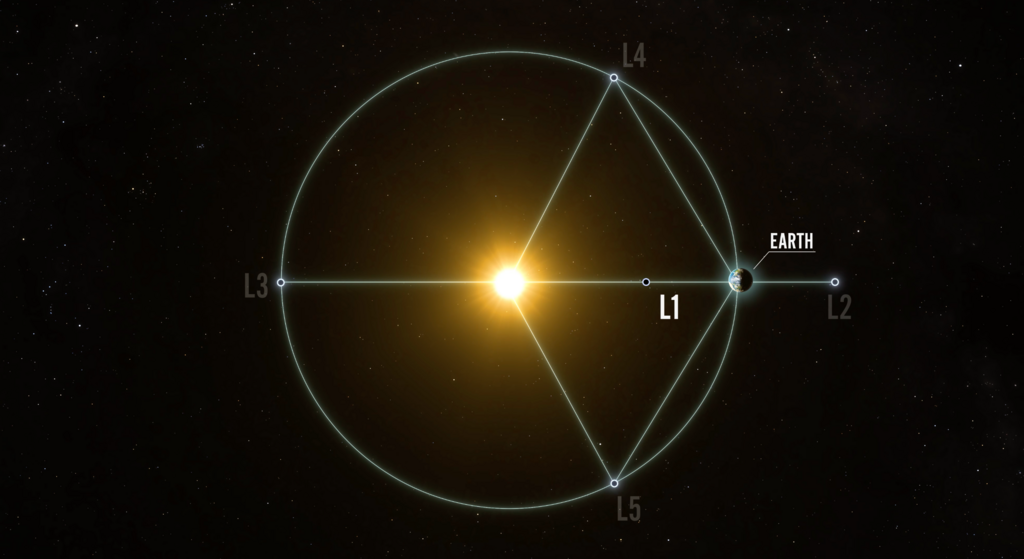
At L1, satellites have an uninterrupted view of the sun, unobscured by Earth or the moon
(Photo: NASA's Conceptual Image Lab/Krystofer Kim)
NASA’s new mission, named after George Carruthers, will record the first continuous video of Earth’s exosphere, revealing its full scope and inner dynamics. “We’ve never had a mission dedicated to exospheric observations,” said Dr. Alex Glocer, a NASA scientist at the Goddard Space Flight Center in Greenbelt, Maryland. “It’s exciting to know we’re about to get these measurements for the first time.”
Weighing 505 pounds (229 kilograms) and about the size of a loveseat, the Carruthers Geocorona spacecraft launched aboard a Falcon 9 rocket alongside NASA’s Interstellar Mapping and Acceleration Probe (IMAP) and the National Oceanic and Atmospheric Administration’s SWFO-L1 space weather monitoring satellite.

Dr. George Carruthers with Barack Obama
(Photo: Charles Dharapak/AP)
Over the next four months, the three missions will travel to Lagrange Point 1, about 930,000 miles (1.5 million kilometers) from Earth. This vantage point offers an uninterrupted view of the sun, unobscured by Earth or the moon. After a month of testing, Carruthers Geocorona will begin its two-year science phase in March 2026.
The spacecraft is equipped with two ultraviolet cameras that will capture both close-range changes near Earth and the full reach of the exosphere farther away. Together, they will map hydrogen atoms as they move through the exosphere and into space. By deepening our understanding of the physics of Earth, the only known life-supporting planet, Carruthers Geocorona may also aid in the search for other worlds where life could exist.