


I sit alone inside a small wooden booth lit with a soft glow, and a gentle warmth begins to wrap around me from within. I’m in a sauna, but not the kind filled with steam or humid air—only two red lamps fixed to the walls of the compact cabin, radiating direct heat.
I surrender to the quiet and the calming music playing in the background as the infrared rays sink into my skin, creating a sense of inner warmth entirely different from anything I’ve felt before.
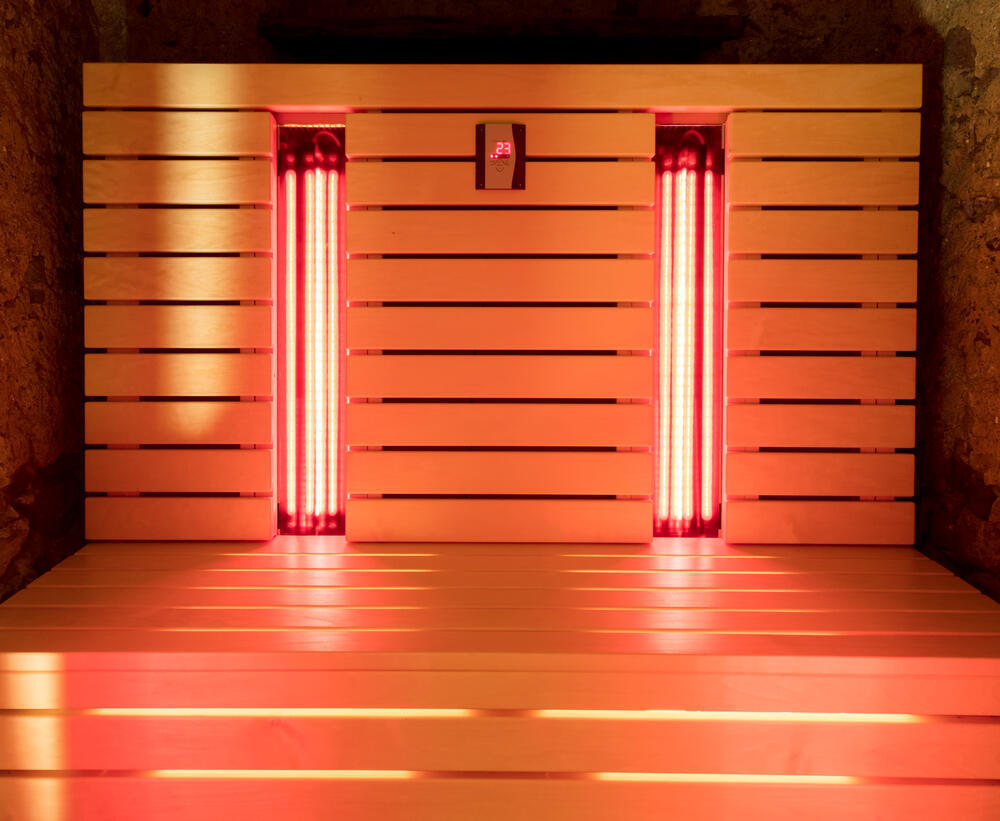
Eventually, I do start to sweat—but it happens differently: not in a flood, not in an overwhelming wave. After thirty minutes, I step out of the booth feeling clear-headed, energized and revived, as if someone pressed a reset button on my body. That’s the experience of an infrared sauna session.
A gift for your health
Sauna use, of course, is nothing new—it dates back thousands of years. In many cultures, especially across Northern Europe, dry heat evolved into a ritual in its own right. In Finland, for example, the sauna is a deeply rooted cultural institution found in nearly every home, serving social, spiritual and therapeutic purposes.
Beyond its cultural foundations, any type of sauna carries a long list of health benefits. Before diving into the advantages unique to infrared saunas, we asked Dr. Dalit Dreman-Medina, a functional and integrative physician, to outline the scientific landscape regarding the physiological and health effects of sauna use.
“There are two major reviews published in recent years,” Dr. Dreman-Medina says. “One of them, from 2018, included 40 clinical studies with roughly 4,000 participants. It showed improvements in vascular flexibility, reductions in blood pressure and enhanced cardiac electrical function. On the psychiatric side, there were decreases in anxiety and depression, improvements in mood and quality of life, and relief in conditions like fibromyalgia, headaches and general fatigue.
 Dr. Dalit Dreman-MedinaPhoto: Lilach Uzan
“One of the standout studies looked at Finnish men who used a sauna four to seven times a week, about 20 minutes per session. The results were unequivocal—a 66 percent reduction in dementia risk and a 40 percent decrease in all-cause mortality.”
And how often does one really need to use a sauna to enjoy measurable health benefits? The answer may surprise you. “A study published last year in Sweden, which included about 1,000 participants ages 25 to 74, also found significant benefits—lower blood pressure, better sleep, fewer aches, more energy and an overall boost in well-being and life satisfaction,” says Dr. Dreman-Medina. “But the big revelation was that participants used the sauna far less frequently—just once to four times a month—and still saw all those benefits.”
It’s hot—very hot—in there
The principle is simple: heat the body, induce sweat, and afterward feel cleansed and released. But over the past decade, the traditional formula has gotten a technological twist with the rise of the infrared sauna, which uses heat waves that penetrate directly into the body and deep into the tissues without warming the air. The method has surged in popularity in the United States, spread to medical centers, integrative clinics and even bedrooms—and is now taking hold in Israel as well.
While Finnish saunas have existed for thousands of years, the infrared sauna is a product of 20th-century innovation. The method originated in Japan, where Dr. Tadashi Ishikawa developed a unique ceramic heater in the 1960s that emits far-infrared radiation (FIR).
At first, the technology was used for medical treatments in hospitals—especially for pain relief, deep-tissue warming and improving blood circulation, without subjecting patients to high external heat. Only in the late 1970s did the first consumer version of an infrared sauna appear, eventually becoming popular in American fitness and wellness centers and later in Europe. Initially considered experimental, it gained legitimacy as research accumulated from the 2000s onward, marking its shift from niche gimmick to a recognized tool in complementary health care.
Infrared sauna
(Photo: Shutterstock)
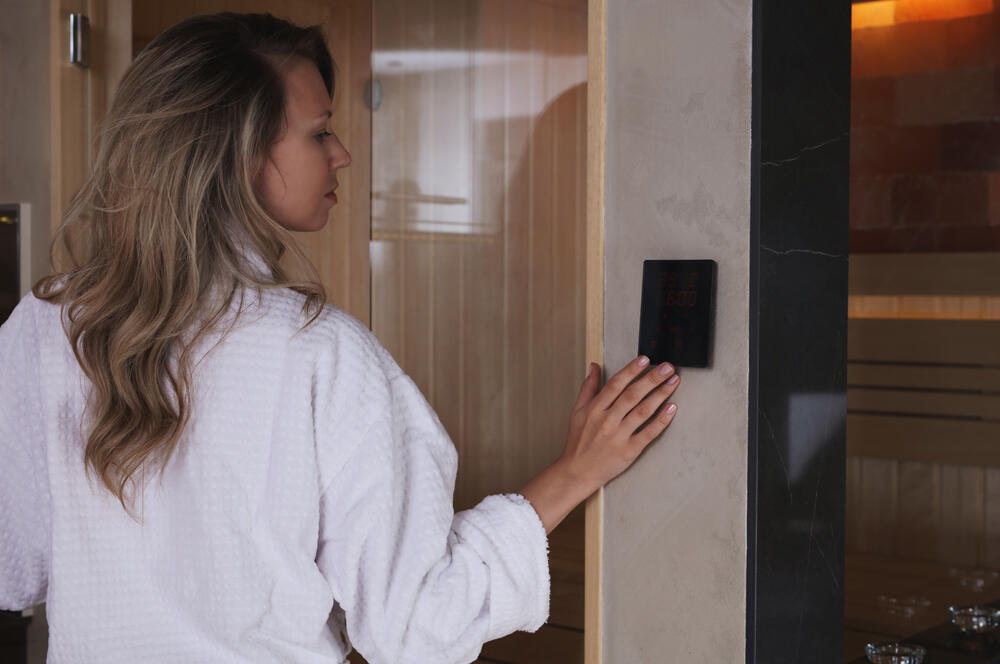
Today, infrared saunas are available not only in clinics and wellness centers but also in compact home units. They are perceived as a “gentler” alternative to Finnish saunas—more accessible for people who are sensitive to high heat, and based on a gradual internal warming process that the body experiences very differently.
“An infrared sauna heats the body directly, instead of heating the air like a traditional sauna,” explains Dr. Dreman-Medina. “This means the overall temperature inside is lower, and the experience is more pleasant and tolerable for many people. Some simply can’t handle the heat of a regular sauna—it’s too limiting. Infrared gives you all the health benefits of a traditional sauna without the feeling of unbearable heat. And because the infrared waves penetrate deep into the tissues, the heating is more targeted.”
But the story doesn’t end there. Beyond the benefits shared with traditional saunas, infrared saunas also offer several unique physiological effects—ones that research has found to be significant.
“Besides comfort and accessibility, infrared saunas have several major additional advantages,” she explains. “One is improved detoxification. In one study, researchers analyzed sweat from people using infrared saunas versus regular saunas and found that toxin levels were higher after infrared sessions.”
Another proven advantage is blood-pressure reduction. “This too was shown to be more effective compared with regular sauna use,” says Dr. Dreman-Medina. She adds that skin health also showed notable improvements: “Infrared increases blood flow and stimulates collagen production. One study found better skin texture and elasticity among people who used it regularly.”

Infrared sauna
(Photo: Shutterstock)
Pain relief is another domain where infrared appears to excel. “Research found that individuals using infrared saunas experienced greater pain reduction—especially in conditions like arthritis and fibromyalgia. And athletes can benefit too: one study showed that those who used an infrared sauna after exercise had less muscle damage and significantly improved muscle function compared to those who used a traditional sauna.”
Indeed, over the past decade, infrared saunas have become a staple in athletic recovery routines, particularly in sports like CrossFit, running, bodybuilding and even yoga. Because the heat penetrates deep into tissues without overwhelming the body, it allows for muscle relaxation, reduced local inflammation and faster recovery—without the physical strain typical of a regular sauna. For an athlete coming off an intense workout, it offers a simple, accessible and soothing way to bring the body back into balance—and sometimes help prepare for the next session even sooner.
What’s your recommendation on frequency? How long and how often should someone use a sauna to gain benefits without overdoing it?
“According to the studies published so far, even relatively low frequency—once to four times a month—can provide significant health benefits,” says Dr. Dreman-Medina. “We can infer from this that moderate use is often enough. But it’s important to remember there is no one-size-fits-all recommendation. Some people are very sensitive or have complex health conditions, and even a minute or two in the sauna can throw their system off balance. So it’s always best to start gently, increase gradually—and, above all, consult a doctor beforehand. Don’t make these decisions on your own.”
Are there groups who should be cautious or avoid using a sauna altogether?
“Some populations need special attention. People with heart disease, for example, may experience drops in blood pressure or dizziness due to the heat—so it’s absolutely essential to consult a physician before using a sauna. The same goes for pregnant women and anyone with a complicated medical history. This is not something to experiment with at home. You go to a qualified professional.”
What do you make of the buzz surrounding saunas? Is this a passing trend or a real therapeutic tool that will stay with us?
“It’s absolutely a real therapeutic tool. If you look at Scandinavian countries, the sauna has been an integral part of life for decades—if not centuries. The results there are very strong, backed by large studies, and the treatment has proven itself again and again. This is a scientifically grounded therapy with extensive research behind it. It’s not just pleasant—it genuinely improves quality of life and health.”
In the United States, for example, infrared saunas are nothing new.
“I brought my sauna from the U.S. in 2010, and even then it was very common. It’s part of doctors’ recommendations—especially in functional medicine. In Israel, as usual, things arrive a bit late. But they do arrive.”
A private sauna at home
And judging by what’s happening on the ground, she’s not the only one sensing the surge. Over the past year, more and more Israelis aren’t just visiting spas and clinics—they’re installing infrared saunas in their homes.
“This whole field has exploded in popularity,” says Yaakov Piamente, North Region marketing manager and sauna installer for Ismor, the official Israeli representative of HotSpring. “At first we sold maybe one or two saunas a year. Today I’m installing three or four a week. The demand has skyrocketed.”
 Yaakov PiamentePhoto: Courtesy
Who’s buying home infrared saunas?
“Everyone. Really—everyone. Older adults, young people, men, women. In recent years, people have begun to understand the health value of a sauna. It helps with relaxation, it’s great for the muscles, and it’s accessible—both in terms of price and ease of use. So yes, people are simply going for it.”
According to him, the main advantage of a home infrared sauna is its accessibility—easy to install and relatively affordable. “It doesn’t use much electricity and doesn’t take up much space. It’s like a two-door wardrobe, about 1.2 meters by 90 centimeters. You plug it into a regular wall outlet, sit down and enjoy. It’s simple.
“With a regular sauna, you usually need a three-phase connection and special preparation. Here—no. It’s light, portable, accessible, no hassle. And the cost is much lower than a large dry sauna. You get all the benefits—at home, on your own time, without going anywhere.”
And speaking of cost—let’s get specific. Piamente explains that prices vary depending on quality and import source. “The price ranges from 12,000 to 24,000 shekels, depending on where it’s imported from. Some bring them from China at even lower prices—but without oversight. I don’t recommend that to anyone. You have no idea what radiators they’re using inside. It’s a device that heats up—you need to know what you’re bringing into your home.”
Where do people usually install them? Surprisingly, not in the bathroom. “You generally don’t put it in the shower—it’s not suited for humidity,” Piamente says. “Most people put the sauna in a spare bedroom. Many customers have kids who’ve moved out, leaving an empty room—and they just use it to put in an infrared sauna.”
And when asked why everyone is suddenly rushing to install one at home, he doesn’t hesitate.
“It’s about quality of life,” he says. “It calms the body—and when you calm the body, you calm the mind too. People are exhausted from the race, the pressure, the noise. They want quiet. A place to cleanse. And the sauna gives exactly that.” He pauses, smiles and adds: “And Israelis? They’re starting to understand it. To understand the value of that quiet. And it’s beautiful.”