


After years of rehabilitation and treatment following an accident at the kindergarten where she was with her children, N. says she is finally beginning to notice a change.
The accident left her with complex regional pain syndrome, or CRPS, as well as post-traumatic stress disorder. Several weeks ago, she began a new treatment at the pain clinic at Sheba Medical Center after hearing about it from Dr. Lior Ungar, who has been involved in her rehabilitation.
Gallery
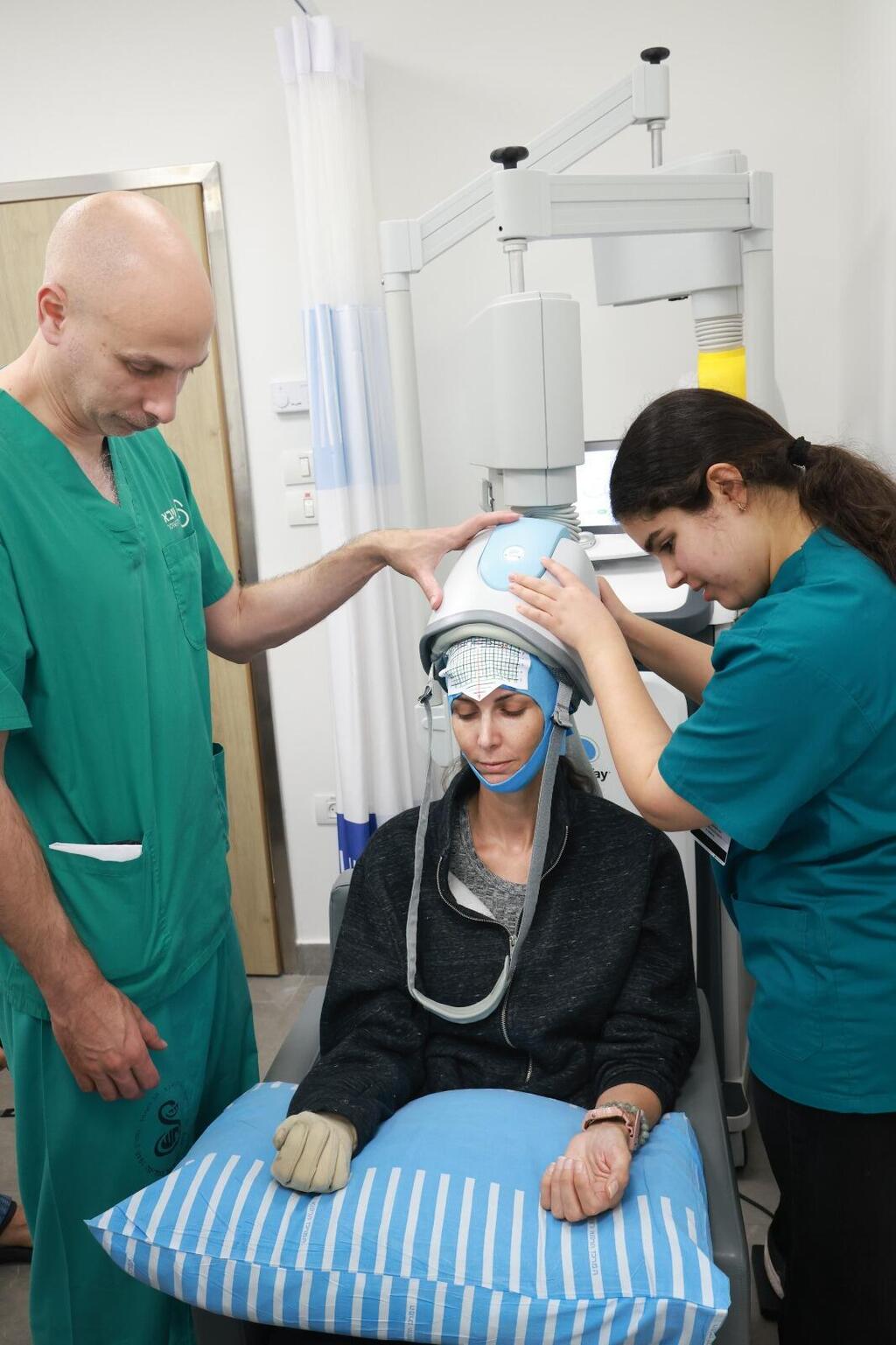
Yakira Ne’eman (right), a national-service volunteer at Sheba’s pain clinic, accompanies patients throughout the treatment series
(Photo: Sheba Medical Center)
“I feel the treatment has helped improve my cognitive abilities and executive functions,” N. said. “Since starting the treatment, the pain and my nervous system’s sensitivity to stimuli have also decreased.”
The treatment, known as deep transcranial magnetic stimulation, or Deep TMS, is being offered at Sheba as what the hospital describes as the first experimental treatment of its kind in Israel for widespread chronic pain.
The noninvasive therapy uses a specially designed helmet placed over the patient’s head. It generates a magnetic field at controlled intensities and frequencies to stimulate deeper regions of the brain.
The aim is not only to reduce widespread chronic pain but also to address symptoms that can accompany it, including difficulty concentrating, memory decline and low mood.
At this stage, the treatment is intended mainly for people with widespread chronic pain who have exhausted conventional treatment options without achieving sufficient relief.
According to Sheba, the technology allows doctors to stimulate two key brain regions in a targeted and combined way. One is the motor cortex, which is involved in regulating and reducing pain signals. The other is the prefrontal region, which is associated with symptoms that can accompany chronic pain, including cognitive impairment and depression.
‘A whole network of brain regions’
The new approach is designed to stimulate several areas of the brain rather than focusing on a single target. Doctors at Sheba hope this could influence both the pain itself and some of the cognitive and emotional symptoms that often accompany chronic pain.
“With chronic pain, we are not dealing with one area of the brain, but with an entire network of regions involved both in the pain itself and in the accompanying symptoms,” said Dr. Lior Ungar, deputy director of Sheba’s neurosurgery department and head of functional neurosurgery and the hospital’s focused ultrasound brain center.
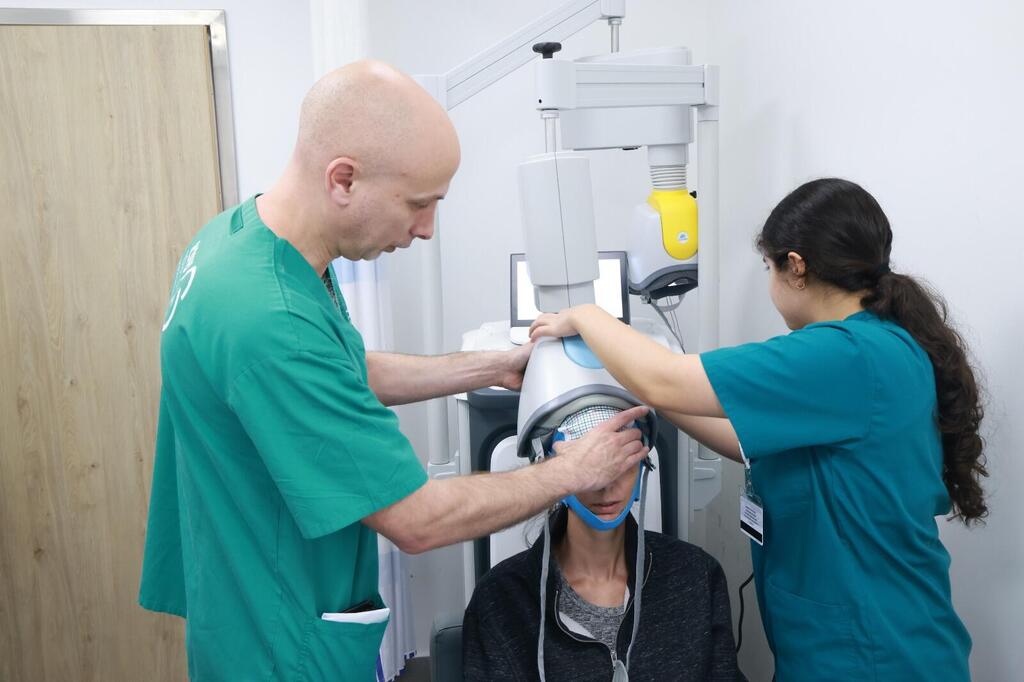
Dr. Lior Ungar: 'A treatment targeting several areas simultaneously may provide a broader response'
(Photo: Sheba Medical Center)
“The brain functions through connectivity between different regions, so a treatment that targets several sites simultaneously may provide a broader response,” he said. “This combination is innovative, unique to Sheba and, at this stage, appears promising for patients with invisible illnesses and symptoms that significantly impair function and quality of life.”
The treatment is currently aimed primarily at patients with widespread chronic pain who have not benefited sufficiently from other therapies. Not every patient, however, is automatically eligible.
“At the moment, we are offering the treatment to patients suffering from widespread chronic pain, mainly those who have exhausted conventional treatment options and have not achieved sufficient relief,” Ungar said.
“Suitability is assessed individually following a medical evaluation at the pain clinic, taking into account each patient’s condition and the standard contraindications for magnetic stimulation.”
Three treatments a week for one month
The treatment program begins with an intensive phase of three sessions a week for four weeks. Patients then move to a maintenance phase consisting of one session a week for one to two months.
“We expect to see improvement after several weeks of treatment, and then continue with weekly maintenance sessions in an attempt to preserve the effect over time,” Ungar said.
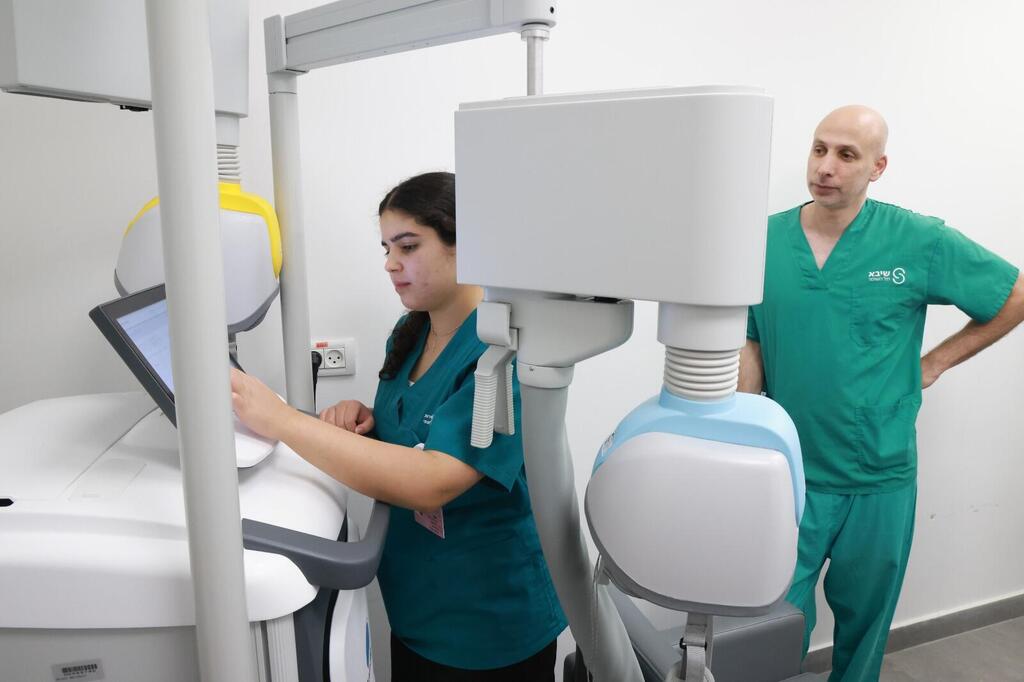
Deep TMS treatment at Sheba Medical Center
(Photo: Sheba Medical Center)
“Our hope is to achieve not only a reduction in pain, but also lasting improvement in cognitive functions such as concentration and memory, as well as mood.”
The treatment sessions are closely accompanied by 19-year-old Yakira Ne’eman, a national-service volunteer at Sheba’s pain clinic. She underwent specialized training with medical-device company BrainsWay, including calibrating the equipment, positioning the magnetic helmet precisely and operating the controlled magnetic pulses that induce electrical activity in deeper brain tissue.
Alongside Ungar and the clinical team, Ne’eman helps manage the daily treatment routine and maintains regular contact with patients throughout the series of sessions.
To assess whether the therapy is having an effect, the team does not rely only on patients’ reports of pain intensity.
Patients complete a series of standardized questionnaires before treatment begins, during the treatment period and after it ends. The questionnaires are intended to provide a systematic measure of changes in pain as well as other aspects of daily function.
Mild headaches and a rare seizure risk
According to Ungar, the most common side effect is a mild headache at the beginning of the treatment series, which usually resolves quickly.
There is also a risk of seizure, although he said such cases are extremely rare.
“Overall, the treatment is considered safe, and it has already been shown to be effective in areas such as depression and post-traumatic stress disorder,” Ungar said. “In pain treatment, we are still at an early stage, but the initial data are encouraging.”
Deep TMS technology is already included in Israel’s publicly funded health basket for treatment-resistant depression and is also available for PTSD treatment through the Defense Ministry.
Sheba stressed that its new use of the technology for chronic pain is not currently being conducted as part of a formal clinical trial. Rather, it is being offered as an experimental treatment under existing medical standards, combining stimulation protocols already used in approved treatment areas involving PTSD and pain.
Patients are also being asked to complete questionnaires so doctors can determine whether a meaningful clinical response is occurring.
Sheba says that depending on the results accumulated over time, the treatment program could eventually provide the basis for a structured clinical study.