

A few years ago, American actor Courteney Cox acknowledged that for a long time, each filler injection seemed small and insignificant on its own. Only when she looked at old photos did she realize how far she had moved away from her natural appearance.
That feeling — that there is always one more small thing to fix and that one more treatment will not hurt — is at the center of a new Israeli study that examined whether, for some women, cosmetic treatments can turn into a pattern with addictive characteristics. The finding, which surprised even the researchers themselves, is especially striking: One in five women in Israel who have undergone cosmetic treatments is at moderate to high risk for an addictive pattern of use.
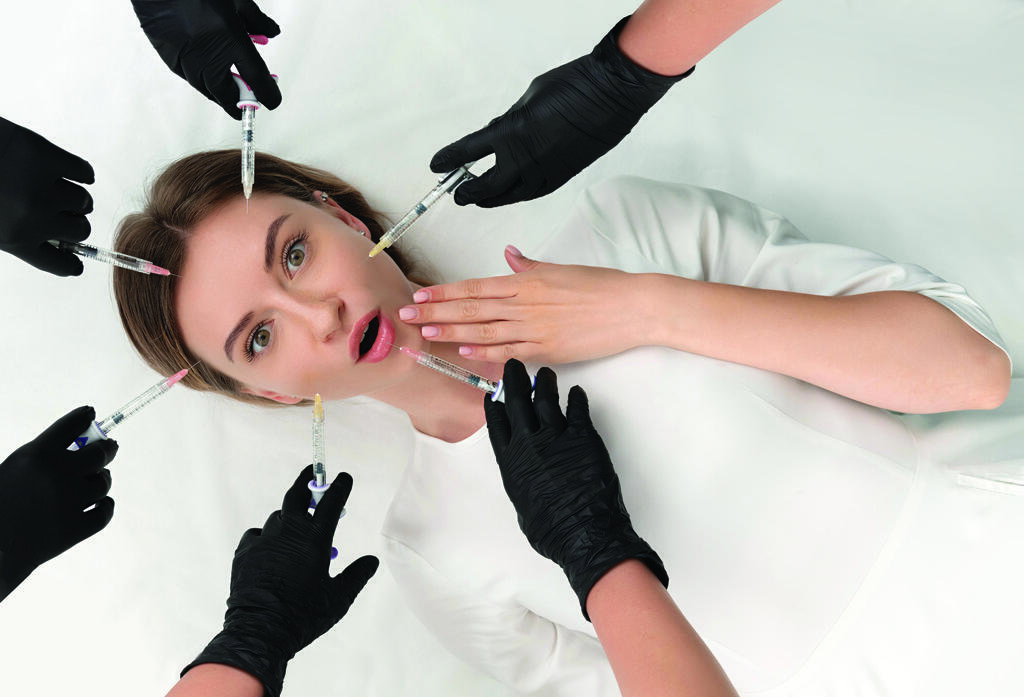
It is difficult to overstate the importance of the study given the sharp rise in the number of cosmetic procedures in recent years. According to the latest published data, some 38 million cosmetic procedures were performed worldwide in 2024, compared with about 34.9 million a year earlier and a cumulative increase of about 40% since 2020. That sharp growth has also led to a shift in the research focus. While past studies tended to focus more on why people seek cosmetic treatments, emphasizing negative body image, social anxiety, perfectionism and body dysmorphic disorder, known as BDD, recent studies have also begun examining whether some patients develop a pattern resembling behavioral addiction: compulsive preoccupation with appearance, short-term satisfaction after the procedure, a growing desire for additional treatments and difficulty stopping despite the costs, risks or repeated disappointments.
The study, conducted by the Hebrew University and the Israel Center for Addiction and Mental Health and recently published in the scientific journal “Journal of Health Psychology,” is unique in its scope and in its attempt to examine the prevalence of the phenomenon in a broad population and identify prominent psychological and social risk factors.
Low body image and social media
“The rise in cosmetic treatments, especially repeated treatments, is visible both in personal circles and in the media and advertising, and we thought it would be very interesting to examine the issue,” says Dr. Vera Skvirsky, a senior researcher, research coordinator and lab director at ICAMH — the Israel Center for Addiction and Mental Health — who collaborated with Dr. Uri Lifshin of the Hebrew University of Jerusalem and their colleagues. “We wanted to examine the psychological risk factors — personal and social — that could be linked to the phenomenon. We did this through a broad online survey of 1,614 women of various ages, from 25 to 71, 710 of whom had undergone at least one cosmetic procedure. The others answered questions on a range of topics, such as body image, cosmetic attitudes and more. The risk of addiction was measured using a questionnaire based on the criteria for addiction defined in the psychiatric diagnostic manual, the DSM.”
What surprised you most in the study?
“I did not believe that so many women — 20% of those who reported undergoing treatments — would be at moderate to high risk for addiction. It is a staggering figure that points to the need for further in-depth research on the issue.”
One of the study’s notable findings was the combined effect of two prominent factors: low body image and problematic use of social media, which further increases the risk of developing an addictive pattern around treatments. Women who were less satisfied with their bodies and also used social media in a more problematic way were more vulnerable to behavior with addictive characteristics around cosmetic treatments. “We found that women with low body image reported more symptoms, as did women with problematic social media use, but the highest vulnerability was found among women who combined the two,” Skvirsky says.
Define problematic social media use.
“We used a questionnaire based on symptoms associated with addiction, such as frequent thoughts about social media, an increased urge to use it, unsuccessful attempts to reduce use, using it to escape problems and negative effects on daily functioning. We did not measure the amount of time spent on social media, but rather the quality of use and its consequences.”
Another surprising finding was that you did not find differences between age groups.
“Indeed, we expected to find a link to age, especially given the media messages surrounding the desire to look younger. However, in the current study, which is only preliminary, we did not find significant differences between age groups. It is possible that the phenomenon also exists among younger women, and future studies should expand the age range.”
What are your recommendations following the study’s results?
“First of all, it is important for us to raise awareness of the issue. Cosmetic treatments have many benefits, but it is important to recognize possible vulnerabilities more clearly. It is important for both patients and professionals to look at the broader picture and identify situations involving frequent returns for treatments or harm to other areas of life. Let’s keep our eyes open on this issue and on the entire culture of beauty.”
Did the results affect you personally?
“The study sharpened the problem for me. So far, I have not undergone treatments. I don’t know what will happen in the future.”
Filters and reality
Dr. Omer Wolf, a plastic surgery specialist and member of the Israel Society of Plastic and Aesthetic Surgery, says he is also surprised by the scope of the phenomenon revealed in the study, but he certainly understands the factors behind it. “If you think about it and take into account all the powerful global phenomena, it really should not be surprising, and it requires us, as doctors, to exercise extra caution in the field.”
Wolf, a senior physician at Shamir Medical Center and the owner of a private clinic for plastic surgery and cosmetic treatments in Tel Aviv, is familiar with the problem. “I often find myself rejecting patients’ requests or stopping patients who cross a certain threshold in their desire to continue improving,” he says. “Even when I have managed to prevent the wrong treatment, and even when I hint that some problems may be better addressed not through a surgeon’s knife or the plastic surgeon’s clinic, I am not sure I have always succeeded in convincing them, because patients’ drive can be very, very strong. Sometimes a patient leaves my clinic after realizing she will not get what she wanted and turns to another doctor, who may not be sufficiently alert or strict.”
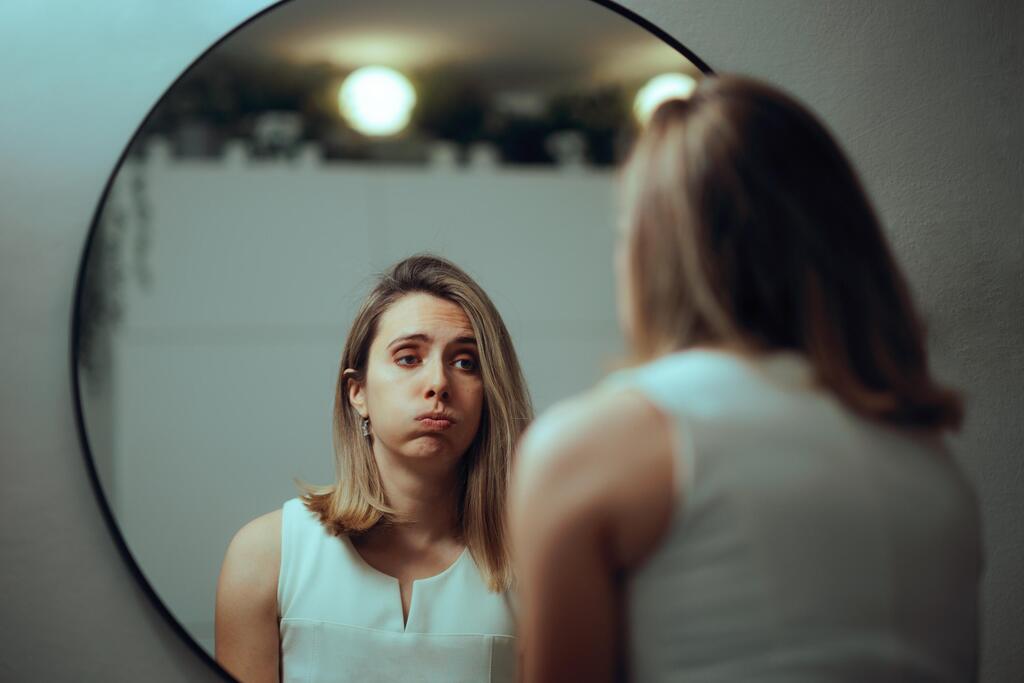
Women who were less satisfied with their bodies tended to report more characteristics of addictive behavior around cosmetic treatments
(Photo: Shutterstock)
How do you know when to stop a patient who appears to be developing signs of addiction?
“It is a two-part test. First, the phenomenon has to be identified — and that is where the doctor’s professionalism is measured: Is the requested treatment right for the patient, and does a problem exist or is it imagined? I always try to ask the potential patient not to speak to me in terms of which treatment she wants to undergo, but rather in terms of what is bothering her and what she wants to improve.
“The second part is to examine the triggers, the motives for the cosmetic treatment: whether it stems from a desire to look better and strengthen self-confidence in a place where there is some objective weakness; whether it comes from a need for personal empowerment and motivation for change while taking responsibility; or whether the demand comes from social pressures, unrealistic concepts originating on social media, a partner with certain preferences and the desire to please that person or remain desirable in their eyes. There have been cases in which I did not feel comfortable with a particular request and referred the patient to consult with a mental health professional. Only after I received confirmation of the authenticity and objectivity of the request, and that the patient’s personality structure would allow her to undergo the procedure, did I agree to move forward.”
How do you feel the impact of social media in the clinic?
“Social media creates artificial external motivations in all kinds of areas of life, including consumerism, the desire to find meaning in life and more. In the cosmetic context, we constantly place ourselves in the display window of social media or view other people through the prism of how they choose to present themselves online — something that, as we know, does not necessarily reflect the truth, but rather an imagined and modeled reality that can create a lot of irrelevant pressure.”
Not to mention the filters that completely change us.
“Filters make all of us look perfect. The internet ostensibly exports a new and different beauty ideal, one that is in a sense dysmorphic — the inflated upper lip, the slanted eyes with the aspiration to resemble cat eyes. None of these belong to normal human anatomy, however beautiful a person may be. These are no longer trends involving the choice of an item, clothing or the right color for the season, but invasive treatments that can create distortion and an unnatural appearance in the best case, and physical damage requiring correction in the worse case.”
What is the most requested procedure?
“Botox injections and fillers. Here, the challenge is that sometimes the treatment does not achieve what is requested. For example, among women seeking to treat signs of sagging with filler, the material adds volume and pushes upward as long as the tissue is young and elastic and can hold that added volume. But at some point elasticity declines, and the amount of filler needed to achieve the same effect keeps growing, to the point that the face looks swollen and pillow-like.
“As for Botox, sometimes, even when it completely paralyzes the muscle, it does not manage to have an effect because the wrinkles are already etched into the skin. Then the request to increase the injected dose can work against us, leading to muscle weakness and even drooping eyebrows, a look that does not add charm or youthfulness. Exaggeration is just around the corner in everything.”
Who is more likely to develop an addictive pattern of cosmetic treatment use?
Risk factors for addiction
Lower body image: This was the most prominent psychological factor in the study. Women who were less satisfied with their bodies tended to report more characteristics of addictive behavior around cosmetic treatments. The finding suggests that for some women, treatment is not merely a targeted improvement of appearance but an attempt to cope with broader dissatisfaction with the body.
Problematic social media use: Women who reported more problematic social media use were found to be at higher risk. This does not necessarily mean many hours in front of a screen, but rather patterns such as difficulty disconnecting, increased preoccupation with social networks, a sense of dependence or harm to daily functioning. The researchers believe that constant exposure to beauty images, filters and social comparison may affect the perception of one’s own appearance.
Weaker feminist attitudes: Women with stronger feminist attitudes were at lower risk for addiction. One hypothesis is that feminist views may help resist social pressures that focus women’s value primarily on their outward appearance and youth.
Factors associated with addiction risk
Lower self-esteem: Women at higher risk also reported lower self-esteem. However, when the researchers examined all variables together, the effect of self-esteem was no longer unique or separate from other factors, especially body image.
Negative attitudes toward aging: The less women accepted the aging process and the stronger their desire to fight signs of age, the greater the link to higher risk. However, this association did not remain significant in the final model after the other variables were weighed.
Less secure attachment style: People who have difficulty developing a stable sense of security in relationships tend to be more sensitive to rejection and criticism and to seek more external validation. In the context of cosmetic treatments, outward appearance may serve as an additional source for strengthening their sense of value and self-confidence. However, in this study, the association did not remain significant when all variables were examined together.