

Ludwig Minelli, the Swiss lawyer who founded the assisted-dying organization Dignitas and spent decades campaigning for the right to die by personal choice, ended his own life through assisted suicide at one of the group’s clinics, Dignitas said. He was 92 and died Saturday, just days before his 93rd birthday.
In a statement and tribute, Dignitas said Minelli “chose to end his life” in a facility he established and described him as a “pioneer and fighter” who devoted himself to defending personal autonomy, especially at the end of life. The organization said it would continue to develop its work in line with his wishes and the cause to which he dedicated his life.
Gallery

Ludwig Minelli, the Swiss lawyer who founded the assisted-dying organization Dignitas
(Photo: Sebastien Bozon/ AFP)
Minelli began his professional life as a journalist, joining the Swiss newspaper “Tat” in 1956 and later serving as the Swiss deputy for Germany’s “Der Spiegel” news magazine from 1964 to 1974. He started studying law in 1977 and completed his degree in 1981, shifting his career toward human rights advocacy.
In the same period, he founded the Swiss Society for the European Convention on Human Rights, a nonprofit focused on promoting awareness of the convention and the protection of fundamental rights. Dignitas said Minelli’s legal philosophy rested on the belief that “the state serves the citizen, not the citizen the state,” and that he defended civil liberties and basic rights “without compromise.”

The family arrives at the “Blue House,” a kind of guesthouse where the procedure itself is carried out
(Photo: Shlomi Wolfner)
Minelli founded Dignitas on May 17, 1998, after a dispute within another right-to-die organization, Exit. At the time, Minelli was legal adviser to Exit’s director, Peter Hollenstein, who proposed that suicide prevention be added to Exit’s mission. After the proposal failed and Hollenstein was removed, Minelli and like-minded colleagues established Dignitas. Dignitas later made suicide prevention a central pillar of its approach.
From its outset, Dignitas was unusual in Switzerland for assisting non-Swiss citizens, helping make the country a global destination for assisted suicide. Since the group’s founding, about 4,000 people from 65 countries have ended their lives with its help, under the full name “Dignitas — To live with dignity — To die with dignity.” Today it and its German sister association together have more than 10,000 members worldwide.

The procedure is carried out in a home-like setting
(Photo: Shlomi Wolfner)
Dignitas said Minelli recognized early that many people who had suffered deeply still wanted to keep living if they could find a quality of life acceptable to them. He argued that trying to talk someone out of suicide was not an effective prevention method. Instead, Dignitas wrote, Minelli believed a person in seemingly hopeless circumstances should be met at eye level and presented with every option to ease suffering, including the ability to end life with professional support, safely and on one’s own terms. The organization said only a small share of seriously ill people who approach Dignitas ultimately seek assisted suicide, and an even smaller number go through with it.
Under Swiss law, assisted suicide is legal as long as it is not carried out for self-serving motives. Unlike euthanasia, the final act must be performed by the person seeking to die. Dignitas has long said its role is to verify eligibility, arrange medical oversight and ensure a controlled, self-directed process.
Minelli’s views were frequently controversial. He argued that assisted dying should be accessible well beyond terminal illness and once described suicide as “a wonderful possibility,” also suggesting that children could be capable of deciding on the issue as young as 9 or 10. He supported allowing advance directives for assisted death in cases such as Alzheimer’s disease, positions that drew sharp criticism from opponents of assisted dying.
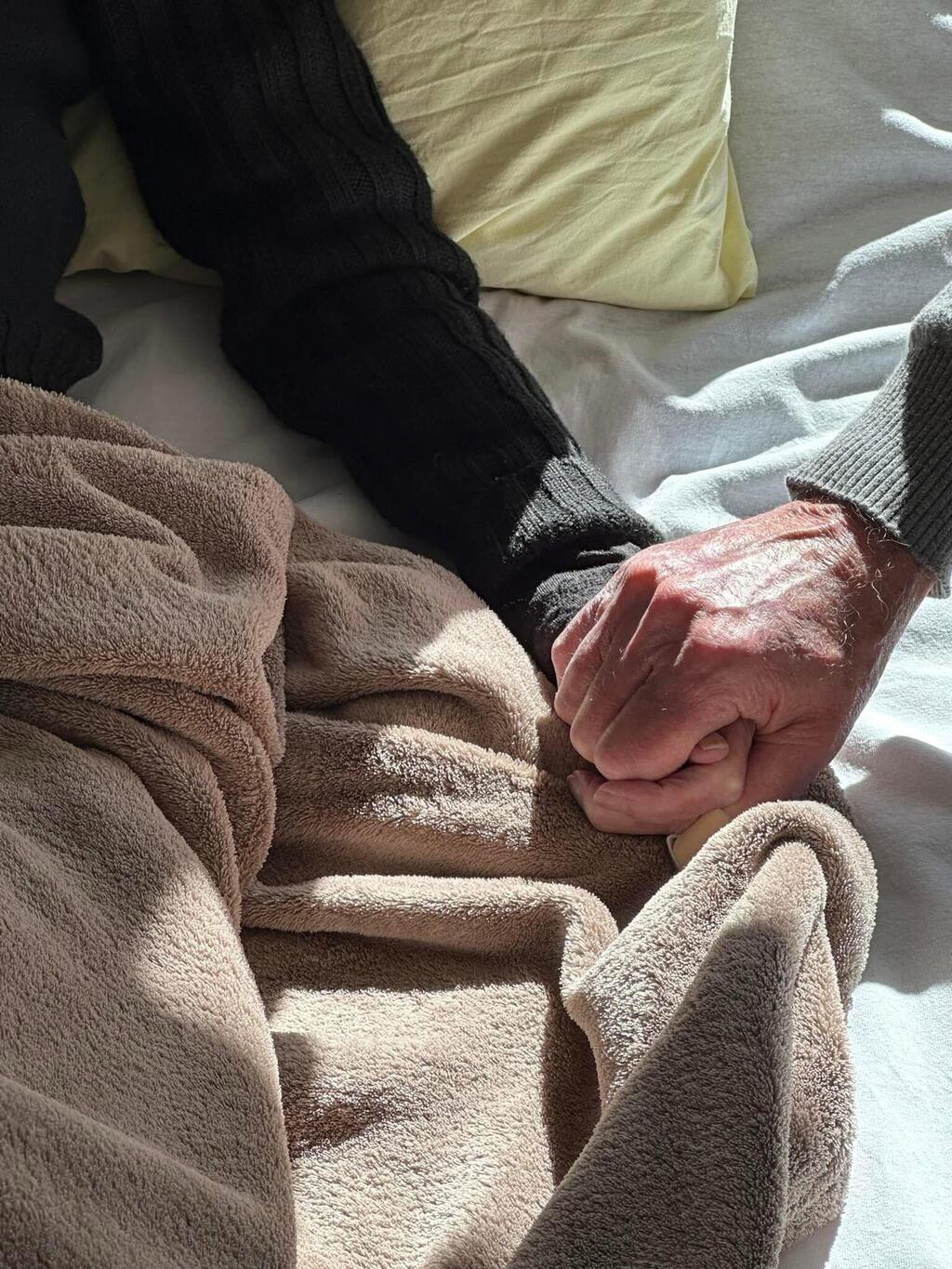
The patient is given a high dose of anesthetic, taken by mouth or through an IV depending on his medical condition, and then slips into a coma until death. Illustration
(Photo: Shlomi Wolfner)
Minelli also faced legal scrutiny over the years, including accusations that Dignitas profited from assisted suicides. He denied wrongdoing and was later cleared in court.
Dignitas credited Minelli with major international legal milestones, including a European court ruling that affirmed the right of a mentally competent person to decide how and when to end life. The organization also backed successful constitutional challenges in Germany and Austria in 2020 that struck down broad bans on professional assistance in suicide.
In Israel, assisted suicide and euthanasia remain illegal. Dignitas data cited by Israeli media show that 146 Israelis traveled to Switzerland for assisted suicide between 1998 and 2023, with a rise in recent years.
Announcing his death, Dignitas said Minelli had expanded the group’s leadership in recent years to ensure continuity. Its staff and volunteers, the organization said, will keep operating in his spirit as an international professional movement fighting for self-determination and freedom of choice in life and at the end of life.