


McKenna West, an Alaska surrogate carrying a baby for a California couple, learned at around 20 weeks of pregnancy that the fetus had hypoplastic left heart syndrome (HLHS), a rare heart defect requiring a series of surgeries after birth.
She claims that, following the diagnosis, the baby’s intended parents asked her to terminate the pregnancy. West refused, traveled to Texas before giving birth and has launched a legal battle that she says is intended to ensure the baby receives life-saving medical treatment.
The intended parents, identified in court documents as Nausheen Gilkar and Omar Ahmed of California, deny asking West to terminate the pregnancy. The dispute eventually reached the courts after Texas Attorney General Ken Paxton intervened, seeking to ensure that the baby would receive medical treatment even if the parents opposed it.
Gallery

West refused to terminate the pregnancy and wanted to ensure the baby received life-saving medical treatment. Illustration
(Photo: Shutterstock)
West said on Megyn Kelly’s podcast that a surrogacy agency approached her and matched her with the couple. According to West, when they discussed the possibility of a medical problem emerging during the pregnancy, the couple made clear that terminating the pregnancy would not be their first choice. But after the baby was diagnosed with the heart defect, West claimed they asked her to have an abortion.
In the podcast interview, West described how she felt about the surrogacy agreement and the dispute that developed after the diagnosis. “I felt very trapped due to this contract. I felt like I had no voice,” West said. “But I knew in my soul, in my heart that I wanted to protect this little boy.”
After the diagnosis, West moved from Alaska to Dallas County, Texas, saying she did so “for protection” and to ensure the baby would be near doctors experienced in treating his condition.
In an interview with the anti-abortion news outlet Live Action, she said it was “scary” to think that, as the woman giving birth, she “may be the one that’s not able to make a decision about the treatment,” The Guardian reported.
The dispute moves to court
Texas Attorney General Ken Paxton formally notified UT Southwestern Medical Center and Children’s Medical Center Dallas that they were legally required to provide the baby with “necessary, life-saving medical care” after birth. He later obtained a court order requiring that the baby receive the necessary treatment.
The court also ruled that Gilkar and Ahmed, rather than West, would be responsible for making medical decisions for the baby, subject to the terms of the order. Paxton’s office alleged that the intended parents had refused to commit to approving the life-saving surgery after birth and said the order was necessary to ensure the baby received treatment.
“The court has made the right decision in immediately acting to protect baby Gabriel’s life and ensure he receives the care he deserves,” Paxton said in a statement released by his office, according to Fox News.
He said his office had used every tool at its disposal to protect the child: "My office utilized every tool at our disposal to protect life, and we will not back down in continuing to support baby Gabriel’s well-being. Every child in our state deserves to be cared for and protected, and that’s exactly what I’ll fight for."
The baby is born and placed with his parents
The baby, referred to as Gabriel by the Texas attorney general and West’s attorney, was born in Texas last Wednesday morning and transferred to a neonatal intensive care unit. He is now in his parents’ custody and receiving medical treatment. The hypoplastic left heart syndrome he was diagnosed with requires a series of surgeries, with the first typically performed in the first weeks of life.
According to Fox News, doctors may soon perform a life-saving operation on the baby. The hospital where the procedure is expected to take place reportedly has a 100% success rate for the surgery.
"Our clients' son was born yesterday morning and he is now in their physical custody while he receives expert medical care at a tertiary care center," attorney Lee Budner, who represents Gilkar and Ahmed, said in a statement to CBS News on Thursday.
He said the courts had rejected West’s attempt to intervene in the baby’s medical care. The parents, he added, “continue to place their baby's health and well-being first, following the advice of the baby's medical team, as they always have and just as any loving parent would."

Children’s Medical Center Dallas, where McKenna West gave birth to the baby
(Photo: AP Photo/LM Otero )
Budner accused West and the Texas Attorney General’s Office of turning the case into a political battle. "As if the heartbreak of his condition were not enough, they are devastated to see their family tragedy transformed into political theater by the Texas Attorney General's office and McKenna West," he said.
He added that the parents are now focused on ensuring the baby receives the medical care he needs and on spending as much time with him as possible.
Following the court orders, West was barred from contacting the child after the birth. Her attorney, Lincoln Davis Wilson, told CBS News that she intends to continue seeking custody. "We are working on challenging those orders of parentage because we think that Texas law makes a woman who gives birth to a child the mother of the child," he said.
Wilson added that aside from the known heart defect, signs regarding the baby’s condition had been positive. He did not disclose where the child was being treated but said he was receiving care “at a facility that has an excellent track record of success in performing it.”
Three surgeries and lifelong follow-up
Dr. Asaad Khoury, director of pediatric cardiology and congenital heart disease at Rambam Health Care Campus, explains that hypoplastic left heart syndrome is a relatively rare condition, affecting about one to three in every 10,000 live births.
In HLHS, key structures on the left side of the heart, including the left ventricle, mitral valve, aortic valve and ascending aorta, fail to develop properly to varying degrees. As a result, the left side of the heart cannot effectively pump oxygen-rich blood to the body.
According to Khoury, in some cases the underdevelopment begins early in pregnancy and may be linked to genetic factors. In others, it progresses gradually during pregnancy due to abnormal blood-flow patterns in the fetal heart. As a result, the defect may not yet be clearly visible on an early anatomy scan and can become more apparent later in pregnancy.
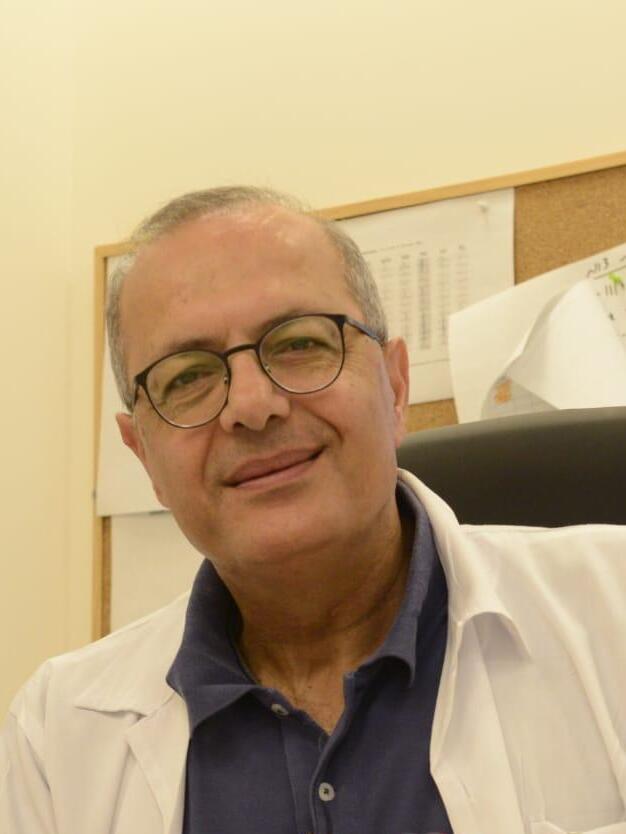 Dr. Asaad KhouryPhoto: Rambam Health Care Campus
From around the 18th week of pregnancy, a fetal echocardiography specialist may identify subtle findings that raise suspicion of the defect, Khoury adds. In such cases, the woman is referred for follow-up and repeat examinations to monitor how the heart structures develop during the pregnancy.
The severity of the syndrome varies from fetus to fetus. In severe cases, the left ventricle, mitral valve, aortic valve and ascending aorta are not developed enough for the left side of the heart to support blood circulation without treatment. Less severe forms also exist, including a condition known as a “borderline left ventricle,” in which the left ventricle is partially developed and its ability to function is limited.
Severe untreated HLHS is fatal after birth. “Without intervention, mortality is 100%, and the baby may die within hours to several weeks,” Khoury said. Today, he added, the condition is diagnosed during pregnancy in nearly 90% of babies. Early diagnosis allows medical teams to prepare for delivery, begin treatment immediately afterward and prevent a sudden deterioration in the baby’s condition.

After birth, the baby was transferred to a neonatal intensive care unit and later placed in the custody of his intended parents. Illustration
(Photo: Shutterstock)
However, when anatomy scans or fetal echocardiography are not performed during pregnancy, the syndrome may be diagnosed only after birth. “A baby like this may develop cyanosis, meaning a bluish discoloration of the skin, rapid and labored breathing, respiratory distress, low blood pressure and a significant decrease in urine output,” Khoury explained. He said these signs may indicate a severe decline in blood flow to the body’s organs and that the baby requires immediate treatment.
How is the syndrome treated?
Once the baby’s condition is stabilized, treatment usually involves a complex course of three surgeries performed at different stages of life. A heart transplant is another possible option, but Khoury said transplants in very young infants are severely limited by the shortage of donor hearts small enough to be suitable.
“The first stage is the Norwood procedure, performed shortly after birth. It is a major and complex operation, with a mortality rate of about 10% to 15%. In the past, the mortality rate was much higher, but even today significant complications can develop afterward,” he said.
The second stage is the Glenn procedure, which Khoury said is performed at around six to eight months of age. During the operation, the superior vena cava is connected directly to the pulmonary arteries, allowing blood returning from the upper body to flow to the lungs without first passing through a heart ventricle.

Children with the syndrome require lifelong cardiac follow-up and medical treatment. Illustration
(Photo: Shutterstock)
The third stage is the Fontan procedure, usually performed between the ages of 2½ and 3. At this stage, blood returning through the inferior vena cava from the lower body is also routed directly to the pulmonary arteries. This completes a circulation in which venous blood returning from the body flows to the lungs without passing through another heart ventricle, while the right ventricle serves as the main chamber pumping blood to the body.
What are the survival rates?
According to Khoury, the 10-year survival once stood at around 50%, but outcomes have improved considerably. “At Rambam, about 90% of the children survive at least to age 10. Some can reach their 30s, 40s and even 50s, and today we are also better able to treat adults living with the syndrome,” he said.
According to Khoury, life expectancy and quality of life after the staged surgeries may be better than those of children who have undergone a heart transplant.
Alongside the improved survival rates, children with HLHS may face lifelong limitations and medical complications. “Their exercise capacity can be significantly lower than that of children with healthy hearts, at about 50% to 60%,” Khoury explained. “As a group, they also have higher rates of learning and developmental difficulties, and about 30% require assistance and support at school.”
Children with the condition need regular medical follow-up and long-term drug treatment, including medications to reduce the risk of blood clots. These treatments can increase the risk of bleeding after an injury or fall.
Some children may also develop complications involving the liver and digestive system. “These complications occur in about 15% of the children,” Khoury said. “Some can be life-threatening, and in severe cases a heart transplant may need to be considered.”
Still, Khoury stressed that the prognosis has improved significantly over the years. “When we started, we were much more pessimistic. Today, we have more reasons for optimism and more tools to help these children live fuller lives,” he said. “I follow about 100 children with the syndrome. They face medical challenges and certain limitations, but overall, many can maintain a reasonable quality of life.”