

Israel plans to require iodine to be added to household table salt in an effort to address widespread iodine deficiency. The requirement will take effect once binding Health Ministry regulations are introduced, which is expected within about two years. It will apply only to ordinary table salt for household use, while coarse salt and specialty varieties will be excluded.
Table salt accounts for roughly 85% to 90% of household salt purchases in Israel, despite the availability of varieties including Himalayan and Maldon salt.
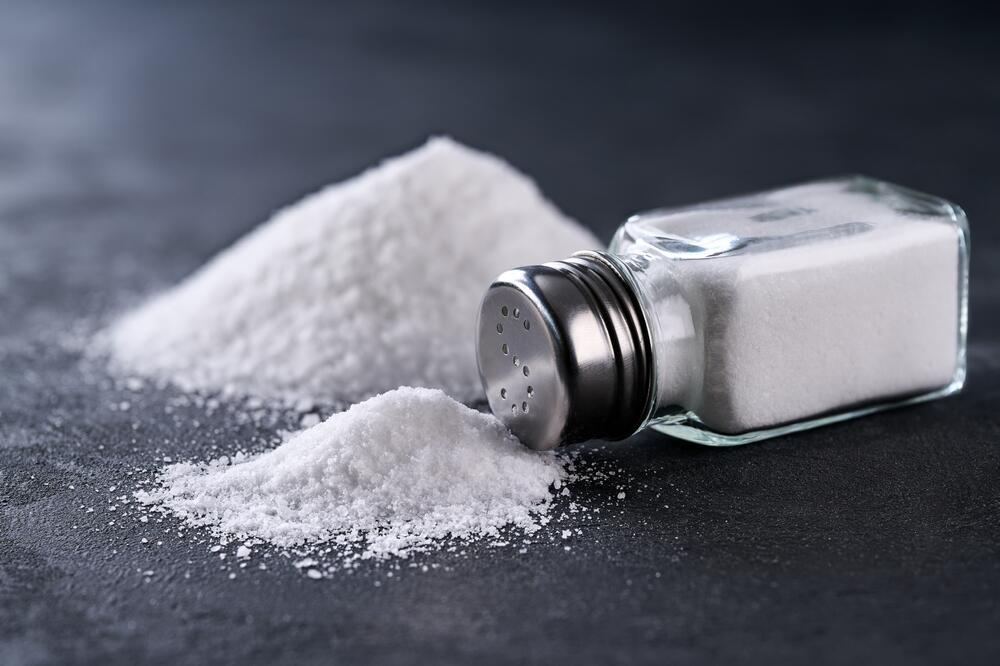
According to the Health Ministry, adding iodine to salt is not expected to raise its price
(Photo: Itor/Shutterstock)
According to the Health Ministry, salt will be fortified with 25 to 45 milligrams of iodine per kg. “This amount is expected to add about 0.045 milligrams of iodine to daily intake, representing 30% of the NRV,” the ministry said, referring to the nutrient reference value used on food labels.
Officials described the planned dosage as conservative and said it could be adjusted as the population is monitored. “The effectiveness of the fortification will be examined alongside population monitoring, allowing us to evaluate the program and adjust the amount of iodine added accordingly,” the ministry said.
The regulations were developed following consultations with experts and a review of international data, according to the ministry. “The measure is intended to improve nutritional status without requiring changes in habits, since salt consumption is considered relatively consistent,” it said.
Price of regulated salt not expected to rise
Iodized salt is already sold in Israel, though it generally costs more than ordinary salt. A 250-gram plastic container of iodized salt sold by Salt of the Earth costs between 5.90 and 10.90 shekels, while a container of the same size with non-iodized salt sells for between 5.90 and 8.90 shekels.
Ordinary table salt and coarse salt are subject to government price controls. The maximum regulated price is 2.09 shekels per kilogram, although some supermarket chains sell it for around 1.80 shekels.
Salt sold in plastic containers is not price-controlled and can cost two to four times as much. Specialty, seasoned and fortified salts are also not subject to price controls. The Health Ministry said requiring iodine in table salt is not expected to increase the regulated price.
Iodized salt does require more careful storage. Moisture or unsuitable packaging can reduce the effectiveness of the iodine, which is why the regulations will include requirements governing packaging and stability. Consumers will be advised to keep iodized salt sealed and dry after purchase.
Why iodine deficiency matters
The move follows evidence of iodine deficiency among Israelis, with children and pregnant women considered particularly vulnerable. Dietary iodine comes from foods including eggs, fish and dairy products, as well as drinking water. But Israel’s growing reliance on desalinated water has sharply reduced the amount of iodine available through drinking water.
Iodine is essential for the production of thyroid hormones, which play a key role in growth, development and metabolism.
Deficiency can have serious health consequences, including cognitive and neurological impairment, an increased risk of stillbirth and infant mortality, congenital abnormalities, goiter and hypothyroidism.
Switzerland was the first country to introduce iodine fortification of salt through legislation. Mandatory programs now exist in more than 124 countries as a measure to prevent nutritional deficiencies. Studies found that in countries where salt was fortified with iodine, rates of miscarriage, goiter and deaf-mutism declined.
The Health Ministry said surveys conducted in Israel in 2016 and 2021 found that 62% of school-age children and 85% of pregnant women were below the minimum level recommended by the World Health Organization, indicating widespread iodine deficiency and a significant public-health nutrition problem.
Asked about people with high blood pressure and others who are advised to limit sodium intake, the ministry stressed that iodine fortification does not alter existing recommendations to restrict salt consumption. The aim, officials said, is to prevent iodine deficiency without encouraging higher overall salt intake.