


Do formula-fed babies really sleep better? Many parents are convinced they do, and some choose to stop breastfeeding, or to combine breastfeeding with formula, in the hope that their baby will start sleeping through the night.
But a new Japanese study, one of the largest of its kind, presents a different picture: Breast-fed babies during the first 6 months of life were less likely to have fewer than 11 hours of sleep at age 1 compared with babies who were fed only formula.

Babies who received breast milk during their first six months were less likely than formula-fed babies to sleep fewer than 11 hours a day at age 1. The findings were published in the European Journal of Clinical Nutrition.
The World Health Organization recommends exclusive breastfeeding for the first six months of life because of its many proven benefits, including protection against infections and support for healthy development. Still, the perception that breastfed babies sleep less or wake more often at night remains common among many parents.
The question also has health significance. Previous studies have found that shorter sleep duration in infancy is associated with obesity, behavioral problems and lower cognitive performance later in life. Adequate sleep during this period is therefore considered an important part of healthy physical and mental development.
More than 82,000 mothers and babies
To examine the link between infant feeding method and sleep duration, researchers analyzed data from the Japan Environment and Children’s Study, or JECS, one of the world’s largest birth cohort studies. The study included 82,918 mother-infant pairs.
When the babies were 6 months old, mothers were asked to report in questionnaires how they had fed their children during the first half-year of life.
Based on their answers, the babies were divided into four groups: babies fed only formula, babies breastfed for less than six months, babies breastfed throughout the full six months while also receiving formula supplementation, and babies exclusively breastfed for the first six months.
When the children reached age 1, parents completed another questionnaire reporting their daily sleep duration. In line with recommendations from the U.S. National Sleep Foundation, babies who slept fewer than 11 hours a day were defined as having insufficient sleep duration.
 Dr. Shani PeledPhoto: Maccabi Healthcare Services
Dr. Shani Peled, a hematologist and pediatric specialist with Maccabi Healthcare Services in Israel’s northern district, says the study adds an important layer to existing knowledge, but its findings should be interpreted with caution.
“For years, findings have been inconsistent,” she explains. “Some studies have shown that breastfed babies wake more often at night, especially in the first months, while others have found no significant differences over time. The current study is very large and based on a broad population, so it adds important statistical weight, but it still shows a statistical association, not proof of causation. In other words, it cannot be said that breastfeeding ‘causes’ longer sleep, only that a link was found between the two in the population examined.”

Exclusively formula-fed babies were more likely to have short sleep than breast-fed babies
(Photo: Shutterstock)
Peled says the association may be linked to several possible biological mechanisms, including melatonin and tryptophan in breast milk, breastfeeding’s role in the maturation of the baby’s biological clock and its effect on the microbiome. For now, however, these remain possible explanations, not proven causes.
“Infant sleep is shaped by many different factors and cannot be explained by feeding method alone,” she says. “Breastfeeding is recommended and has proven health benefits, but it does not guarantee better sleep, just as formula does not necessarily lead to longer, uninterrupted sleep. That is why it is important not to draw sweeping conclusions from this study or make sleep the main factor in deciding how to feed a baby.”
Breastfeeding linked to longer sleep
Across all groups that received breast milk, researchers found a lower risk of short sleep compared with babies who were fed only formula. Among babies fed only formula during the first six months of life, 12.2% had short sleep at age 1. The rate fell to 10.2% among babies breastfed for less than six months, 9.7% among those breastfed for the full six months while also receiving formula, and was lowest, 8.8%, among babies exclusively breastfed for six months.
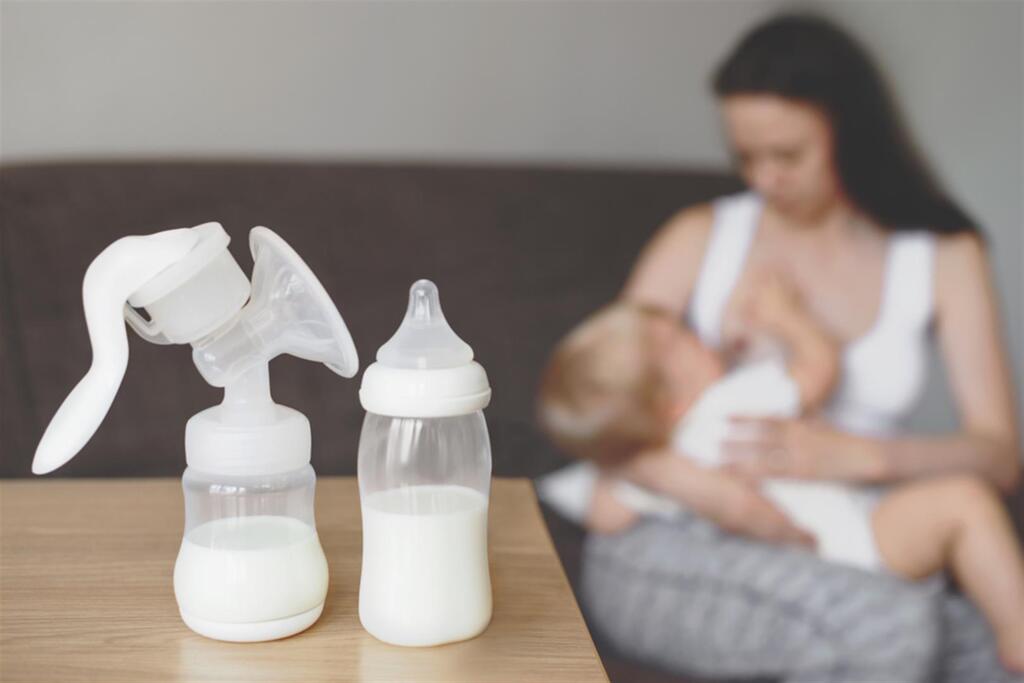
The longer the duration of breastfeeding, the lower the risk of short sleep at age 1
(Photo: Shutterstock)
Even after researchers adjusted the data for a wide range of maternal, infant and environmental factors, babies who were exclusively breastfed for six months were 23% less likely to sleep fewer than 11 hours a day at age 1 compared with babies fed only formula.
The study also found a graded association: the longer the duration of breastfeeding, the lower the likelihood of short sleep.
Possible mechanisms behind the link
The researchers proposed several possible biological mechanisms that may help explain the findings. While the nutritional composition of formula remains largely constant, the composition of breast milk changes and adapts to the baby’s evolving needs.
One possible explanation involves melatonin, a hormone that helps promote sleep and improve sleep quality. At night, melatonin is secreted into breast milk and may help establish the baby’s biological clock and support healthy sleep-wake cycles. Because newborns produce only small amounts of melatonin themselves, melatonin in breast milk may contribute to the development of healthier sleep patterns.
Breast milk also contains tryptophan, an amino acid used to produce melatonin, and previous studies have shown that its concentration is higher at night. The researchers also noted the gut-brain axis, the communication system between gut bacteria and the brain. Breastfeeding is known to support the development of a healthy infant gut microbiome, and it is possible that differences in gut bacteria between breastfed and formula-fed babies may also influence the development and quality of sleep cycles.

What really affects a baby’s sleep?
(Photo: Shutterstock)
Why did the formula-and-sleep myth develop?
Sleep deprivation is one of the greatest challenges for parents of babies, so many look for ways to help their infant sleep longer at night.
According to Karin Attias, a well-baby clinic nurse, certified lactation consultant and founder of a social initiative to encourage breastfeeding, one common belief is that switching to formula improves infant sleep. The new study joins a series of studies that challenge that assumption.
Attias says the findings are also consistent with previous research showing that breastfeeding mothers sleep about 30 to 45 minutes more in total at night and report better sleep quality. “The belief that formula-fed babies sleep better comes from differences in how the body digests food,” Attias explains. “Breast milk contains human-source protein that is optimally suited to the baby’s body and is easily digested.
"By contrast, protein that comes from cow’s milk is biologically suited to a calf, so the baby’s digestive system has to work harder to break it down and digest it. I always explain to parents that it is a little like the tired feeling after a heavy Shabbat cholent meal.”
 Karin AttiasPhoto: Yuli Shomlo
Still, she emphasizes that in practice there is no simple link between feeding type and sleep quality. “Each baby’s sleep patterns are influenced by a combination of many factors, not only by the type of food they receive,” she says. “Even if some babies sleep longer after eating formula, that does not necessarily mean it is ideal.”
According to Attias, the lighter sleep often seen in breastfed babies may actually be an important protective mechanism. “Studies show that breastfeeding reduces the risk of sudden infant death syndrome, or SIDS, by about 50%, partly because it allows the baby to wake more easily in cases of breathing distress, rather than remain in sleep that is too deep,” she says.