

The baobab (Adansonia digitata), known as the "African tree of life," is one of the world's most remarkable and resilient trees. Among its many attributes is its ability to survive for thousands of years in the arid African savanna.
Its uniqueness lies in its fruit, which is the only fruit in the world that dries naturally on the branch. As it ripens, the fruit's pulp transforms into a white, nutrient-rich powder without the need for industrial processing.
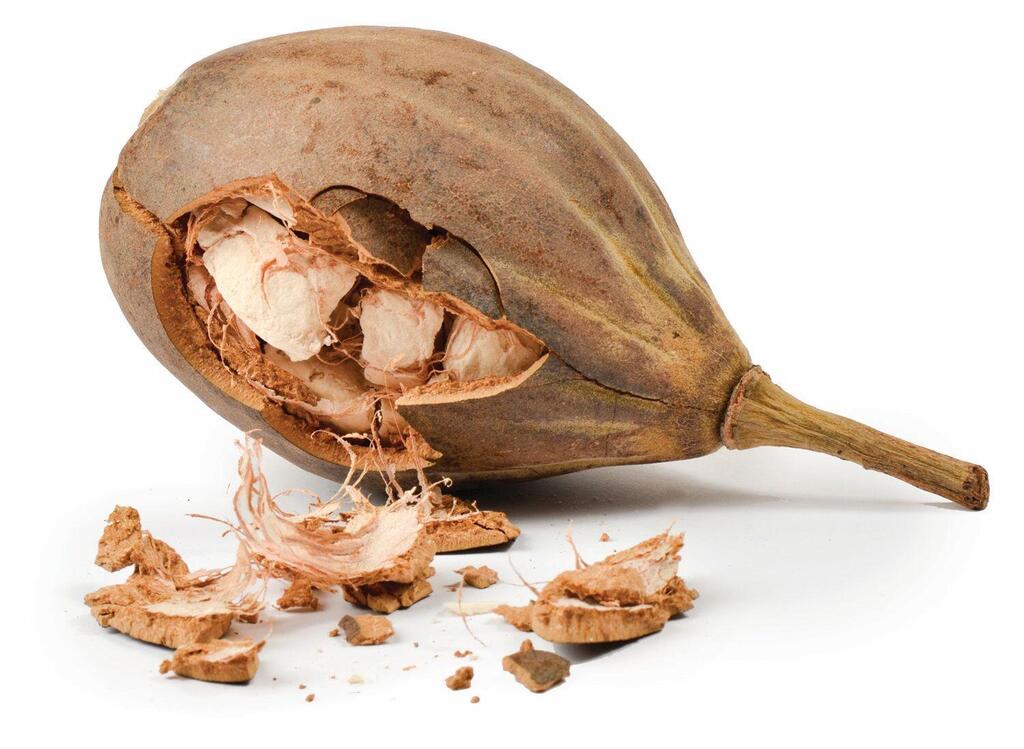
The baobab
(Photo: Shutterstock)
According to Western medicine:
Baobab fruit is considered a prebiotic powerhouse. It contains about 50% dietary fiber, half soluble and half insoluble, which supports the growth of beneficial gut bacteria and promotes digestive health.
Thanks to its high fiber and polyphenol content, baobab may help slow the absorption of sugar into the bloodstream, producing an effect similar to the blood sugar-balancing properties attributed to carob.
It is considered one of the richest natural sources of vitamin C, containing several times more than an orange, as well as potassium and magnesium, which are essential for heart muscle function and healthy blood pressure. Its soluble fiber may help lower cholesterol levels and increase feelings of fullness.
According to traditional medicine:
In Africa, various parts of the baobab tree have been used for centuries as traditional remedies for severe digestive disorders, high fever and anemia.
In folk medicine, the fruit is regarded as a cooling, strengthening food that helps the body cope with exhaustion and exposure to extreme climatic conditions.
Traditional herbal medicine also made use of the tree's bark and leaves for dressing wounds and treating skin inflammation and infections.
How is it used?
Baobab is naturally available as a dry powder that can be added to smoothies, yogurt and porridge, as well as gluten-free baked goods such as breads and cookies. It can enhance their nutritional value without significantly altering texture or flavor.
Caution
Baobab should be introduced gradually into the diet to help prevent bloating or digestive discomfort. Pregnant and breastfeeding women should avoid consuming it.
People with diabetes who take blood sugar-lowering medications should monitor their glucose levels, as baobab fruit may affect blood sugar.
Note: Anyone considering the use of medicinal herbs or herbal supplements should consult a physician and ensure that the product does not interact with medications or affect medical conditions or clinical indicators.
The author is a clinical dietitian and herbal medicine practitioner.