

Nicole Vignola, a cognitive neuroscientist, cannot forget the first time she held a human brain in her hands. It was during her neuroscience studies at the University of Bristol, but beyond the scientific curiosity, she experienced a formative moment.
“It was an awe-inspiring experience,” she writes at the start of her bestselling book, “Rewire,” which is being published this month in Hebrew translation as “Rewiring the Brain” by Kinneret Zmora-Bitan Dvir publishing house. “When I placed my thumbs on the temporal lobe, I thought: Am I touching the moment when this person fell in love? The saddest moment of his life? The event that changed his life forever?”
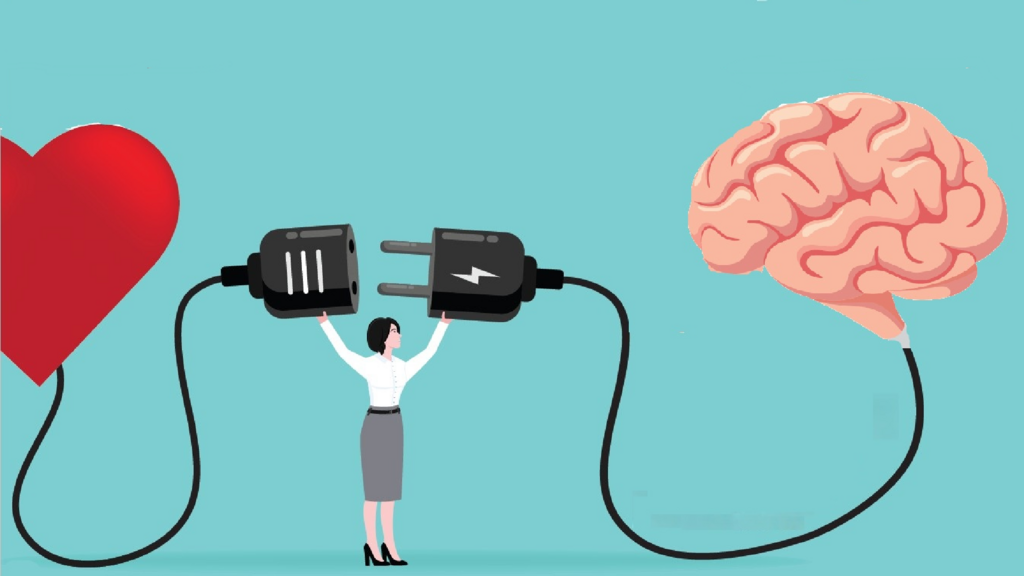
At that moment, she says, she internalized that the brain is not only an organ that manages the body. It is the biological record of life itself. And if our brain was shaped by what we have experienced until now, Vignola argues, it can also change through what we choose to do from now on.
That is also the central thesis of her book. For years, scientists believed that the adult brain was an almost fixed organ, but research in recent decades on neuroplasticity, or brain flexibility, has shown that it continues to change throughout life. Vignola takes these findings one step further: The brain does not change through willpower or a moment of inspiration, but through repetition. Every thought, emotion or action that repeats itself strengthens the neural pathways responsible for it, and therefore old patterns can also be replaced, with patience and consistency, by new ones.
Vignola, 34, has become a prominent figure on social media in recent years. She has spoken openly about a complex childhood, a late ADHD diagnosis and the loss of her father, and in recent years has built a community of hundreds of thousands of Instagram followers through videos that translate complex research into practical tools. Women’s Health magazine even called her “Instagram’s favorite brain expert.”
Her book is also written in a highly practical way, focusing on practices that can help us “organize” the brain anew in order to change habits, reduce stress and strengthen behaviors that benefit us. But beyond the practical advice, the book also offers several intriguing insights that challenge entrenched ideas about how our brain works.
Dopamine: Not the happiness hormone, but the engine of motivation
How to rewire the brain’s reward system and enjoy the process
One of the most talked-about neurotransmitters is dopamine, which for years has been branded as the “happiness hormone” or the “feel-good hormone” — a substance released after an achievement or success that makes us feel good. But the picture is more complex. Studies show that dopamine’s main role is not to produce happiness, but to motivate us to act: It is connected to the expectation of reward, the search for a goal, learning and the motivation to achieve it.
Vignola explains that, in this sense, dopamine rewards us not only for the achievement itself, but mainly for the feeling of anticipation and progress toward it. That is why we sometimes experience greater excitement while planning a vacation than when we are already on it. According to her, after the goal is achieved, the reward system resets and dopamine levels drop in order to prepare the brain for the next challenge and renew the drive to search, learn and move forward.
The brain loves reward, Vignola stresses, but it is important to understand what kind of reward we are teaching it to seek. Immediate rewards such as scrolling on social media, watching short videos or eating ultra-processed food provide the brain with quick satisfaction, but they may accustom it to seeking easy and readily available stimuli.
By contrast, activities that require investment and effort, such as physical exercise, acquiring a new skill or making progress on a long-term project, teach the reward system to connect effort with a sense of achievement and satisfaction. If we teach the brain to find satisfaction in the progress itself, not only in the result, we will strengthen the neural pathways through which the dopamine system operates and encourage more stable motivation over time.
Therefore, according to Vignola, rewiring the brain is a process of retraining: Every time we choose effort over immediate satisfaction, we strengthen the neural pathways that support our long-term goals.
To maintain a balanced dopamine system and avoid overstimulation, she recommends paying special attention to the moments when we “open the day.” Habits such as immediately catching up on the news or flooding the brain with content as soon as we wake up may push us into an ongoing search for small stimuli and rewards throughout the day.
Instead, she suggests starting the day with actions that create a calmer and more intentional foundation — movement, daylight, breathing or one meaningful task. That way, we consciously choose what our reward system will focus on from the start of the day, instead of allowing external stimuli to dictate it.

Cognitive neuroscientist Nicole Vignola
(Photo: Henrique Veldhoen)
Mental capital: The resource the brain wastes without us noticing
How to protect cognitive energy so we can change
Our brain needs resources of attention and cognitive energy in order to think, make decisions, learn and regulate emotions. Vignola stresses that, alongside managing our time, it is important to manage our mental resources, which are inherently limited: not only to ask what we are doing, but where we are directing the brain’s attention and energy.
One can think of it as mental capital — an internal currency we spend throughout the day. Every decision, shift between tasks or emotional confrontation requires an investment from the brain. When this resource is wasted on overload and distractions, we have less strength left for deep thinking, creativity and learning.
One of the most significant “thieves of mental capital” today is our cellphone. The problem is not only the number of minutes we spend in front of the screen, but the fact that the phone has become present at almost every moment of our lives — during work, during rest and even in moments when the brain is supposed to process information and recover. The very need to check, respond, decide whether to answer or ignore — all these add a small but cumulative burden on the cognitive system and make it harder for it to remain focused and go deep.
Therefore, one of the important principles in rewiring the brain is not only to create new habits, but also to design an environment that allows them to happen. Placing the phone out of reach, setting screen-free times and creating spaces where attention is not scattered, Vignola emphasizes, are not only acts of self-discipline, but a way to preserve our mental capital and direct it toward what truly matters.
BDNF: The growth protein that allows the brain to change
How physical activity activates a biological mechanism that strengthens learning, memory and neuroplasticity
Physical activity contributes to the brain in many ways, and is considered one of the strongest natural stimuli for creating change in the brain. Studies have found that regular physical activity — both aerobic activity and strength training — promotes neuroplasticity, meaning the brain’s ability to create new connections, strengthen existing neural pathways and adapt to changes throughout life.
In addition, studies have found a link between regular physical activity and increased gray matter volume in important areas connected to learning and memory, including the hippocampus — a brain region involved in the creation and retrieval of memories.
One of the mechanisms that explains how physical activity affects the brain is the release of myokines — signaling proteins produced mainly in muscle cells during physical activity and acting as a kind of “messenger” between the muscles and other organs in the body, including the brain. These proteins affect processes connected to brain health, including support for the growth and maintenance of nerve cells, protection of the nervous system and preservation of synaptic connections — the junctions where nerve cells communicate with one another.
Studies also point to a connection between physical activity and improvement in mood indicators, a reduction in symptoms of anxiety and depression and strengthened mental resilience.
One of the central players mediating the effect of physical activity on the brain is BDNF, or brain-derived neurotrophic factor — a protein from the family of neurotrophic growth factors that is sometimes called “fertilizer for the brain.” BDNF plays a central role in creating new connections between nerve cells, strengthening existing synaptic connections and supporting the survival of nerve cells. In other words, it is one of the mechanisms that allows the brain to learn, remember and change.
When we exercise, especially during aerobic activity, the presence of BDNF in the brain increases, creating optimal conditions for neuroplasticity and learning. This is one of the reasons physical activity is not only a tool for improving physical fitness, but also a direct way to support the brain’s ability to rewire itself.
According to Vignola, the body and brain are not separate systems: Every movement we make is also a message to the brain that strengthens its ability to adapt and change.
Walking: The simple way to reset the brain
How bilateral rhythm helps the brain process information and reduce stress
Physical activity is important in general, but walking, Vignola argues, has an additional unique advantage. Beyond its contribution to the body, the bilateral eye movement that occurs naturally while walking may help the brain process emotions, reduce intrusive thoughts and ease feelings of stress.
The idea is similar to the mechanism behind EMDR therapy, in which side-to-side eye movements help process memories and emotions, especially after trauma. Studies indicate that these eye movements activate the brain’s frontoparietal network, which is involved in attention, planning and problem-solving. When this network is active, it competes for the brain’s resources with the amygdala — the center for processing fear and threat — thereby reducing the intensity of the emotional response and allowing clearer, more measured thinking.
According to Vignola, this phenomenon occurs in any movement that moves us forward. When we perform activities such as walking, and to some extent also running and cycling, though their intensity is sometimes too high, the world passing before us activates the frontoparietal network and reduces activity in the amygdala. This helps us process our problems without the anxiety usually associated with them, analyze our thoughts rationally and gain a new perspective. Sometimes, even if you do not consciously think about your problems, the brain will still process them unconsciously.
Walking does not replace therapy, Vignola emphasizes, but it can be a simple daily tool for rewiring the brain while strengthening mental resilience. The benefit grows even more when walking is done in nature: Studies show that spending time in a green environment reduces stress levels, improves attention and concentration and helps with emotional regulation. In other words, if movement is training for the brain, nature is the environment in which it recovers.
10 ways to train the brain to change
- Start by identifying the trigger: Do not try to change the habit before you understand what activates it. Ask: What happened just before? What did I feel? How did I respond?
- Create space before an automatic response: When emotion floods you, pause for a few breaths and name what you are feeling. This will allow the decision-making areas of the brain to activate.
- Do not eliminate a habit. Replace it: The brain does not like an empty space. Prepare an alternative behavior in advance: a short walk instead of scrolling on the phone, a glass of water instead of snacking, a phone call instead of emotional eating.
- Start small, very small: One minute of meditation, five minutes of walking or one page of reading is better than ambitious goals that cannot be sustained over time.
- Do not turn a slip into a failure: Missed a day? Just return. Do not let one day become surrender.
- Change the language you use when speaking to yourself: Instead of “I have no discipline,” say: “Until now, this is how I acted.” Instead of “That is who I am,” try: “I am learning a new pattern.”
- Prepare the brain for change: Make sure to get sleep, physical activity, daylight, breathing and reduced stress to allow change.
- Practice the change in your imagination as well: Before a difficult conversation, workout or challenge, imagine yourself succeeding as well as the possible obstacles and the way to handle them.
- Think less about the goal and more about identity: Instead of saying, “I want to start exercising,” say: “I am a person who takes care of my health.” Choose small actions that strengthen that identity.
- Make the new habit easy to perform: Place your sneakers by the door, prepare breakfast the night before or schedule a regular time for the activity in your calendar.
This article first appeared in “La’Isha” magazine.