

The connection between mental distress and physical health has long been recognized, and it is taking on new urgency during wartime. Last month, a powerful explosion shook the home of Ofra Reit-Barkai, 78, from Kfar Saba, before she could reach a nearby shelter. Shortly afterward, she felt a sharp pain in her chest. When it did not subside, she was rushed to Meir Medical Center with suspected heart attack symptoms. Tests later revealed that she had not suffered a heart attack, but rather a condition known as “broken heart syndrome,” a cardiac disorder triggered by extreme emotional stress that can be life-threatening.
Reit-Barkai was treated with medication typically used for heart failure and was discharged home about a week ago in good condition. “I had never heard of this syndrome before,” she told ynet. “I’m sure there are people experiencing loss or stress like this who feel these symptoms but don’t know what is happening to them, including those whose homes were destroyed in the war. I hope this information reaches the right people.”
In the following video: this is how the heart looks during broken heart syndrome
The heart during broken heart syndrome


Reit-Barkai has lived alone for years and usually heads to a nearby shelter when she hears a siren. But about two weeks ago, in the early hours of the morning, she did not hear the alert. “Usually there is advance warning. I have a shelter near my house, so I have time to prepare. I walk slowly and within a minute I’m there,” she said. “But this time it was a rainy night, the windows were closed and there was no warning. I didn’t hear the siren at first.”
When she eventually noticed the siren from outside, she rushed to leave the house, but as she opened the door, a loud explosion erupted. “It was like a blast over my head, as if I stepped on a mine. It was terrifying. A deafening noise, the whole house shook,” she said.
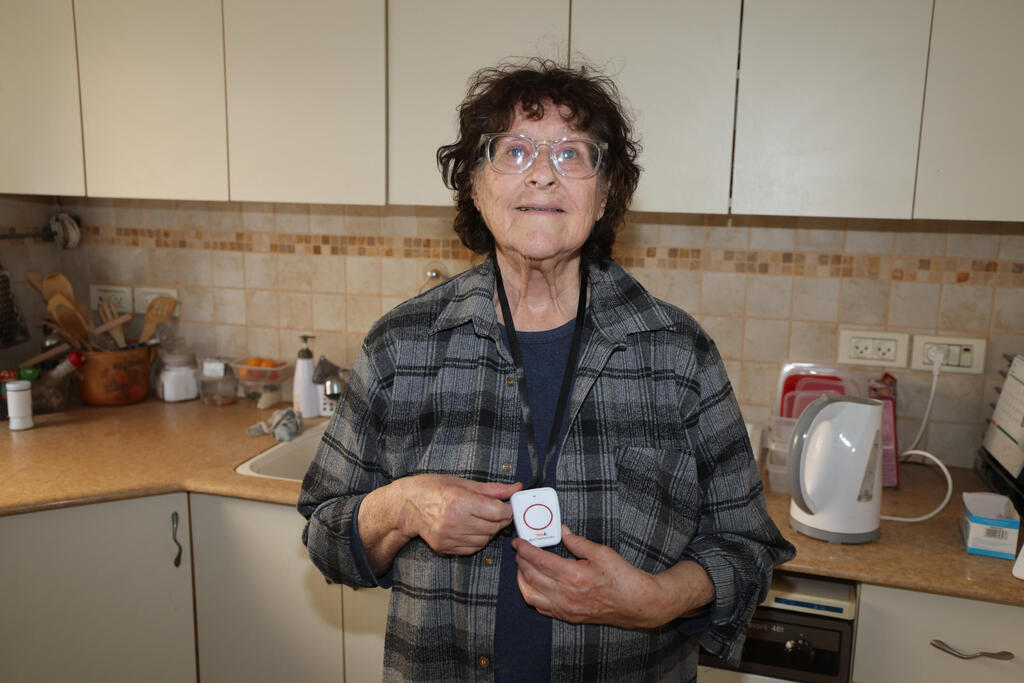
She quickly retreated to an inner room that had previously served as a makeshift protected space, where she began to feel chest pain. “I felt like someone threw a stone into my heart,” she said. Prone to anxiety, she keeps a sheet by her bed explaining the differences between a panic attack and a heart attack. “When it was possible to move, I started reading it to check myself, to see which group I belonged to,” she said.
“I realized I didn’t have an increased heart rate or pain in my arm, so I waited another 20 minutes. I also checked my blood sugar and blood pressure. The readings were a bit high, but not significantly.” When the pain persisted, she called her daughters, who alerted emergency services. She was taken to Meir Medical Center. “I felt like I was outside my body. I didn’t react to what I was going through. I stayed very calm,” she said. “Since the symptoms didn’t match a heart attack or anxiety, I thought it might just be mild excitement and that I would be discharged quickly after routine tests.”
'Since I saw the symptoms didn’t match a heart attack or anxiety, I thought it might just be mild excitement, that I would stay at the hospital briefly for routine tests and be discharged home.'
“When there is suspicion of a heart attack, we act immediately,” said Dr. Hana Vaknin-Assa, head of the catheterization unit at Meir Medical Center, who treated Reit-Barkai. She was taken for urgent coronary catheterization, but the findings told a different story. “The arteries were completely normal, with no evidence of blockage,” Vaknin-Assa said.
After ruling out a blocked artery, doctors suspected broken heart syndrome, a condition in which the heart muscle suddenly weakens, significantly reducing its pumping ability, without any arterial blockage.
Vaknin-Assa explained that the syndrome closely mimics classic heart attack symptoms, but unlike a heart attack, blood flow to the heart muscle remains intact. The condition has a distinctive signature on heart ultrasound. “In this case, we injected contrast material directly into the left ventricle during the catheterization, and what we saw confirmed the diagnosis,” she said.
More common in women
Vaknin-Assa said broken heart syndrome typically develops following severe emotional stress, such as job loss, divorce, the death of a loved one, war, or even major positive events. “In Ofra’s case, she told me she was at home during a siren without warning, unsure whether she could reach the shelter. Then there was a loud and frightening explosion. That likely triggered the syndrome,” she said.
The condition, first described in Japan in the 1990s, is also known as Takotsubo syndrome, named after a Japanese pot used to trap octopuses, due to the shape the heart’s left ventricle takes during the episode. It is believed to result from a surge of stress hormones such as adrenaline, which disrupt heart function.
About 2% of patients arriving at emergency rooms with symptoms of coronary artery disease are ultimately diagnosed with this syndrome. It is more common among women, especially after menopause. “Despite growing awareness, we still don’t know why some people develop the syndrome and others do not. In about 30% of cases, we cannot identify a clear trigger,” Vaknin-Assa said. Treatment typically involves medications used for heart failure.
Dr. Vaknin-Assa: 'The good news is that within two to four weeks, heart function returns to normal. However, the syndrome must be taken seriously. It is important to adhere to medication and follow-up, as there is also a risk of recurrence.'
“In a classic heart attack, especially when treatment is delayed, a blocked artery can cause permanent damage to heart muscle,” she said. “In broken heart syndrome, the condition is usually reversible.” “Within two to four weeks, heart function often returns to normal. But it must be taken seriously.” She added that mortality rates are now known to be similar to those of heart attacks. “This is not a benign condition. Patients need proper treatment and follow-up, as there is also a risk of recurrence.”
Vaknin-Assa noted an increase in cases in recent years. “I cannot rule out that the accumulation of events in the country, their intensity and duration, may be a risk factor. People should not ignore symptoms such as chest pain or shortness of breath and should seek immediate medical care,” she said.
After her diagnosis, Reit-Barkai was hospitalized in the cardiac intensive care unit for monitoring and treatment. Within days, her heart function improved, and she was discharged home in good condition. “I feel fine,” she said. “They installed monitoring devices and an emergency alert button. I told my daughter I feel like I’m in an electrical lab. It’s something you have to get used to.”
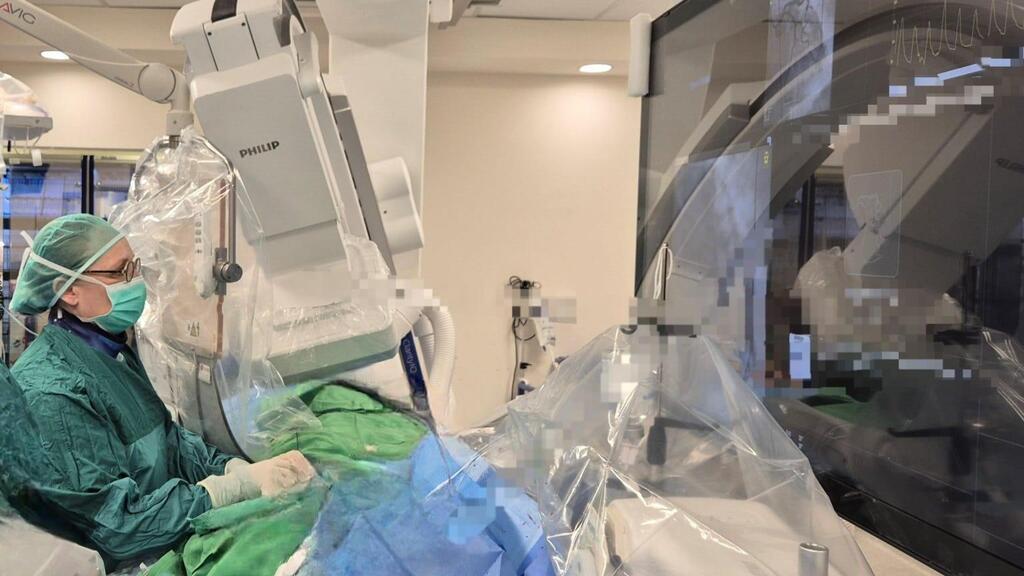
Dr. Hanna Vaknin-Assa, head of the catheterization unit at Meir Medical Center, during a procedure
(Photo: Meir Medical Center)
She said the war and her experience highlight the need for a national response for people living alone, particularly older adults. “There is not enough attention from authorities and the government to this population, people who have to deal with situations like this without immediate help,” she said. “My children are around me, but there needs to be an organized system that knows who lives alone and needs support.”