

How often do children and parents hear the phrase "The child isn't living up to their potential" or "You have the potential to achieve more"? What does that actually mean?
A baby inherits genetic material from their parents that provides an initial set of predispositions and abilities. But a child's true potential develops over time through the constant interaction between genetics and the environment in which they grow up: the stimulation they receive, their relationship with their parents, their education and the opportunities that come their way. In other words, a child's "potential" is not fixed at birth but is a dynamic product that continues to take shape throughout childhood.
Are there cases where children fail to reach their potential?
As a brain development researcher, I have devoted considerable attention to this question, particularly in relation to the acquisition of reading skills and the development of reading difficulties. I chose to explore this subject because I personally know children and adults who struggle with reading, and I understand just how profoundly such difficulties can affect a child, both academically and in terms of self-perception. Most reading difficulties we are familiar with stem from genetic differences that make reading challenging, as in dyslexia, or arise secondarily from other conditions that also have genetic origins, such as attention deficit hyperactivity disorder (ADHD), epilepsy and autism. But as noted, genetics are only part of the picture. Exposure to books and being read to from infancy also play a major role in developing reading skills.
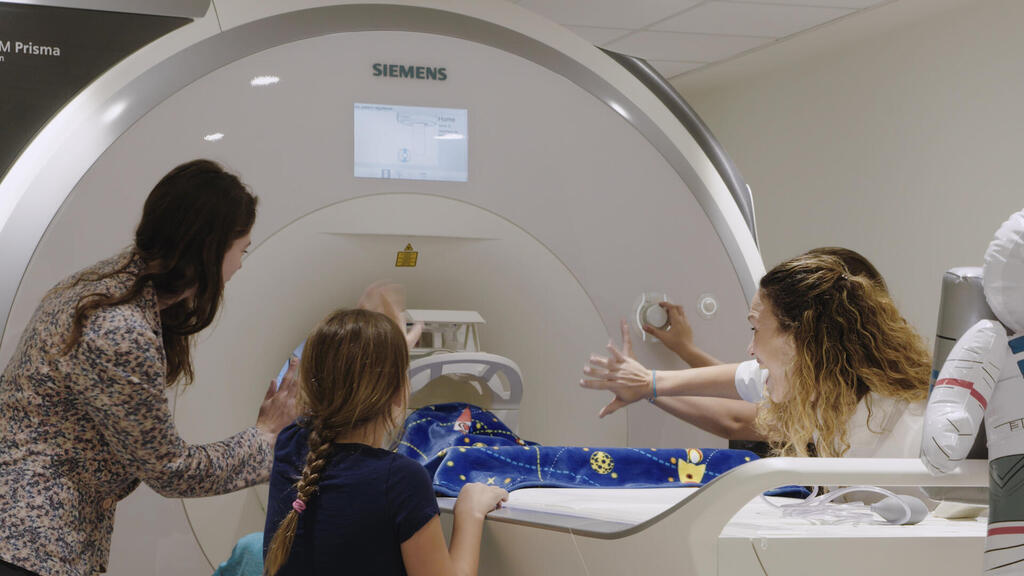
For years, my research group has been examining how the brain regions that must work together during fluent, automatic reading develop in children who speak Hebrew, Arabic and English. This system is known professionally as the "reading fluency network." We study it using medical tools such as magnetic resonance imaging (MRI) and electroencephalography (EEG), which measures the brain's electrical activity, in both children who struggle with reading and those who do not. Our goal is to develop interventions that improve reading through targeted training of the different regions within a child's brain reading network.
About a decade ago, one of the leading recommendations for children who struggled with reading was simply to "read more books." Today, the situation appears more complicated. Children are reading less and spending more time in front of screens. I often observe parents and children in doctors' waiting rooms, neighborhood stores or simply at cafes and restaurants, and I see more and more young children with their eyes glued to smartphones or tablets. It is hard to miss. This sight raises many questions for me, including whether extensive screen exposure at an early age constitutes a form of "environmental noise" that could affect brain development and, in turn, a child's ability to reach their potential.
In a series of studies, we examined how screen exposure affects the developing brain and uncovered several findings that concerned me both as a mother and as a researcher. Among children ages 3 to 5, greater screen exposure was associated with less optimal organization of nerve fibers in the brain. These fibers function like "cables" that carry electrical signals between different brain regions. When they are less organized, information may be transmitted less efficiently. We still do not know for certain whether these changes persist into later life, and that is one of the questions we continue to investigate.
We also found that among children ages 4 to 6, brain activity associated with thinking skills was less efficient in the presence of a mobile device, even when the child was not using it directly. In another study, children ages 6 to 8 showed considerably greater demands on their attention systems when reading text on a computer screen than when reading from an ordinary sheet of paper. This is an active and rapidly expanding field of international research, with dozens of studies published each year. It is also driving regulation and legislation concerning children's use of mobile devices. The unique contribution of our research lies in examining these effects directly in the developing brain, rather than relying solely on observable behavior.
As the mother of a 2-year-old daughter, I began wondering whether my own smartphone use might also interfere with her development. It turns out that it can. In a study involving parents and children ages 2 to 4, we found that synchronization, or shared attention, between the parent's and child's brains decreases when a mother looks at her phone for just a few seconds while reading a story with her child. To our surprise, we also discovered that shared attention decreases when a story is read to a child from a tablet rather than a book, apparently because of the child's interest in the tablet itself during the reading session. This form of environmental noise troubled me deeply, particularly because young children are exposed to it during the critical period of brain development from birth to age 5.
Then the war began, bringing with it an entire series of new forms of environmental noise: parental anxiety, children's anxiety, moving between homes and disruptions to daily routines that became chronic. Prolonged exposure to war, it turns out, is also a form of "environmental noise," not in the literal sense of sound, but in the broader sense of a continuous burden on the developing brain. This includes repeated sirens and emergencies, disrupted routines, less time for reading and learning, and sometimes relocation or evacuation from home.

Associate Professor Tzipi Horowitz-Kraus
(Photo: Nitzan Zohar, Technion Spokesperson’s Office)
In a recently published study, we measured the number of war-related events experienced by children ages 6 to 14, including sirens and emergency situations. We compared these children with a group of children of the same age who had participated in our studies before the war. The children underwent MRI scans to examine their brain activity, along with a series of assessments measuring their thinking and reading skills.
We found that children who had experienced numerous war-related events showed brain activity characteristic of heightened vigilance and arousal, less efficient sensory processing, meaning a reduced ability to receive and process stimuli such as sound, touch and visual information, and lower thinking and reading abilities compared with the control group. It is important to emphasize that the effects of any single factor cannot be completely isolated. The sirens, disruptions to routine, anxiety and reduced reading time all likely contribute to the pattern we observed. That is precisely why we refer to cumulative "environmental noise" rather than a single cause.
In all these studies, we combine several complementary research tools: magnetic resonance imaging (MRI), which allows us to examine the brain's structure and patterns of activity; EEG, which measures the electrical activity of brain cells with extremely high temporal resolution; and behavioral assessments that evaluate children's actual reading, attention and thinking abilities. Combining these methods allows us not only to identify associations between environmental exposure and children's abilities, but also to understand the brain mechanisms underlying those associations and how the different factors interact to influence children's reading fluency.
These findings raise numerous questions. Does the developmental stage at which environmental disruptions occur matter? Do they affect certain groups of children more than others? Can the effects be reversed? And if so, how? Can we objectively identify different levels of impact using brain research tools?
So what can parents do today? If a decade ago the prevailing recommendation was simply to "read more books," I now believe the answer is more complex, but no less practical. Parents should make time to read together with their children, without electronic devices nearby, including their own phones. They should provide children with a quiet environment, free from the accumulation of environmental distractions, particularly during the critical early years of life. And when clear difficulties emerge, they should seek assessment and targeted intervention as early as possible, focusing directly on the brain regions responsible for reading.
That is precisely the goal my research team and I have set for ourselves: to translate our understanding of the developing brain into practical tools that can help children and parents here and now.
- Associate Professor Tzipi Horowitz-Kraus heads the Educational NeuroImaging Group at the Faculty of Education in Science and Technology and the Faculty of Biomedical Engineering at the Technion – Israel Institute of Technology. Research group website.