

On the day his fourth daughter was born, Asher Adler, then 41, was diagnosed with rectal cancer, joining a troubling statistic that concerns physicians: a rise in young patients with the disease. “I’m a young, healthy man,” says Adler, now 45, a resident of Leshem in western Samaria who works at a hatchery. “My parents and family are healthy. Until the diagnosis I lived a normal life. I served in the army and had no health issues.”
About four years ago, Adler began suffering from abdominal pain and a persistent urge to use the bathroom. During one visit, he noticed a reddish, mucous-like discharge and rushed to his family doctor, who referred him to a specialist. The earliest appointment was two months later. The specialist performed a manual exam and said he felt nothing unusual but recommended a colonoscopy.
Gallery

Asher Adler. Diagnosed with rectal cancer at 41, on the day his fourth daughter was born
(Photo: Yair Sagi)
The procedure was scheduled for February 22, 2022, a date Adler will never forget. “My wife went into labor, and because I was in the middle of the colonoscopy prep, which requires staying near a bathroom, I couldn’t accompany her to the hospital,” he recalls. His mother-in-law replaced him while he went to Rabin Medical Center’s Beilinson Hospital for the test.
When he awoke from sedation, he heard a nurse calling out to patients whose results were normal. Then she called his name and said the doctor would speak with him.
He was taken to a private room, where the doctor who performed the colonoscopy was waiting. The physician told him that a suspicious finding had been detected during the exam and that a sample had been taken for biopsy and sent to the lab.
“Imagine what was going through my mind,” he says. “All I wanted was to get to my wife at the hospital and maybe still make it to the delivery. But it didn’t happen. I missed the birth by 10 minutes and had to hide the cancer news and pretend everything was fine in front of my wife, who had just given birth to our fourth daughter.”
The study that saved his life
Adler was referred for a series of tests and imaging scans, and even before the biopsy results arrived he was sent to the Davidoff Center for Cancer Treatment and Research at Rabin Medical Center.
“From the very first meeting I felt the oncologists were concerned about my condition,” he says. “When all the test results came in, I understood why: I was diagnosed with a stage 3 malignant tumor in the rectum.”
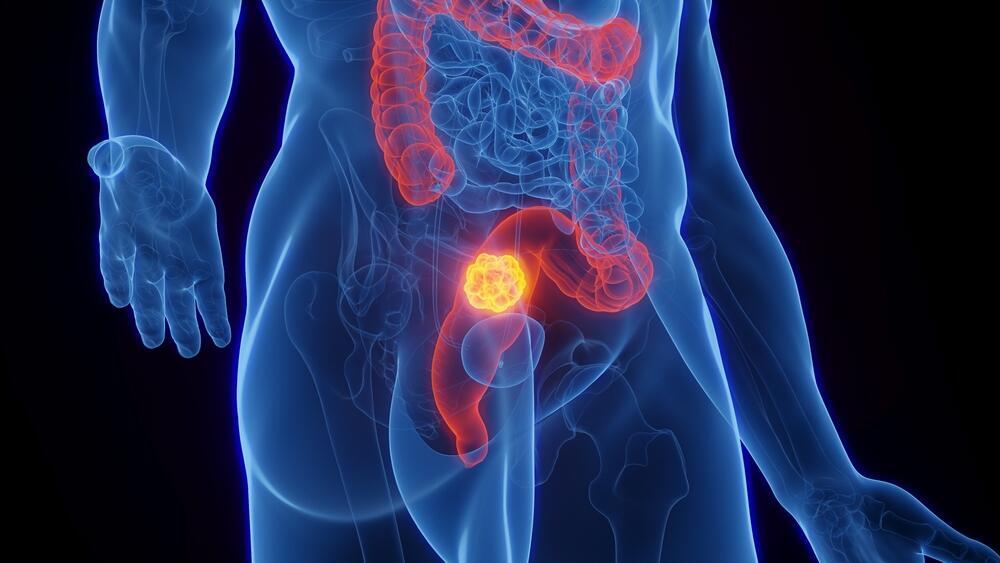
Rectal cancer is considered aggressive and accounts for about a quarter of colorectal cancer cases
(Photo: Shutterstock)
The treatment plan tailored to his condition included consecutive local radiation sessions and oral chemotherapy, which did not significantly disrupt his daily routine. “I scheduled the radiation for late afternoon so I could work in the mornings and help at home with a newborn,” he says. “What hurt most was seeing my poor mother accompanying me, a cancer patient, to radiation treatments. Isn’t it supposed to be the other way around? That really twisted my heart.”
At the end of the 28 daily radiation sessions prescribed for him, Adler was asked whether he wanted to participate in a clinical trial. After learning the details, he agreed.
In August 2024, an article by Ron Krissy published in Ynet revealed a trial of a novel treatment for rectal cancer patients led by Prof. Baruch Brenner, head of the Oncology Department and the Gastrointestinal Oncology Unit at the Davidoff Center at Rabin Medical Center. The protocol combined aggressive chemotherapy, radiation and immunotherapy.
The results showed that the combined treatment eliminated cancer in 65% of participants, making surgery unnecessary for those patients. The small-scale study included 29 patients, and in 20 of them the tumor disappeared. “It is preliminary and requires further follow-up studies, but the positive data point to real therapeutic potential, and that is definitely a light at the end of the tunnel,” Prof. Brenner said.
 Prof. Baruch BrennerPhoto: Private album
Adler says participation in the trial required PET-CT scans every two months and ongoing chemotherapy and immunotherapy. “I received chemotherapy once every two weeks and it knocked me flat,” he says. “When I recovered, I made sure to stick to a healthy diet and even tried hyperbaric oxygen therapy. But what really did the job was taking part in the study, which ultimately saved my life.”
“The clinic is crowded with young patients”
Rectal cancer, which develops in the last 15 centimeters of the large intestine, accounts for about a quarter of all colorectal cancers and is considered aggressive. About 800 new cases are diagnosed in Israel each year, a figure that has remained relatively stable overall.
“But in recent years, my colleagues and I in Israel and around the world have been witnessing a troubling phenomenon: rising incidence of the disease among young men, something we did not see in the past,” Prof. Brenner says. “In the absence of updated data from the National Cancer Registry, we do not yet have solid numerical proof, but that is the clear impression in our clinic.”
“In the fairly recent past, the benches in breast cancer clinics were full, while in our clinic you would occasionally see only older men,” he says. “Today, unfortunately, we have caught up. The benches in the rectal cancer clinic are also crowded with young men.”
One of them is G., 36, a 36-year-old software engineer and father of two who was diagnosed last February. “I maintain a healthy lifestyle that includes regular exercise and playing soccer once a week.”
About a year ago, he began experiencing intermittent, vague abdominal pain unrelated to anything he had eaten, along with an urgent need to use the bathroom, severe constipation and bloody discharge.
Both his family doctor and a proctologist attributed his symptoms to hemorrhoids. Unconvinced, he used his private insurance to expedite a colonoscopy. “They found a 4-centimeter tumor in the rectum. I was in shock,” he says. “I don’t smoke or drink, I maintain a normal BMI, so where did this cancer come from?”
After treatment at the Davidoff Center with radiation and oral chemotherapy, he completed therapy in October. The disease has regressed, but he continues to suffer significant side effects, including neuropathy, burning pain that makes sitting difficult and partial loss of bowel control.
Game-changer
As oncological knowledge has advanced, physicians have sought to avoid surgery for rectal cancer whenever possible, particularly in younger patients. “In rectal cancer among young patients, we are seeing lower cure rates and metastasis to the lungs,” Prof. Brenner says. “In addition, the lower the tumor is located, the greater the risk that the patient will lose the anus, which can significantly impair quality of life.”
“Until recently, the standard of care that had been in place for more than 20 years continued, involving preoperative chemotherapy and radiation, after which all patients were required to undergo surgery. About eight years ago, evidence began to emerge supporting two new approaches. One was adding further chemotherapy, which increased the rate of complete tumor disappearance. The second was introducing a new treatment, immunotherapy. These are biological drugs that activate the immune system to fight cancer cells.”
Prof. Brenner says he was the first to recognize the therapeutic potential of combining the two approaches, calling it a game changer. “Under the conventional treatment, the cancer disappearance rate was about 15%. I hoped the results of the small study I conducted would double that rate, and I was very surprised and pleased by the record we reached: 68% disappearance,” he says.
Randomized studies conducted in China supported the findings, prompting the Israeli physician-researcher to travel abroad to raise funding. German partners were the first to join the effort in a significant follow-up study that will include 134 patients, 20 of them from Israel.
“This is the first study of its kind in the Western world, and the only one with real clinical significance,” he says.