


In 1991, a woman and her partner entered an MRI scanner and had sex in the name of science. More than three decades later, the images captured during that experiment, which reshaped medical understanding of human anatomy during intercourse, continue to draw attention and debate in the medical world.
The unusual study marked one of the most unconventional experiments in the history of medical imaging.
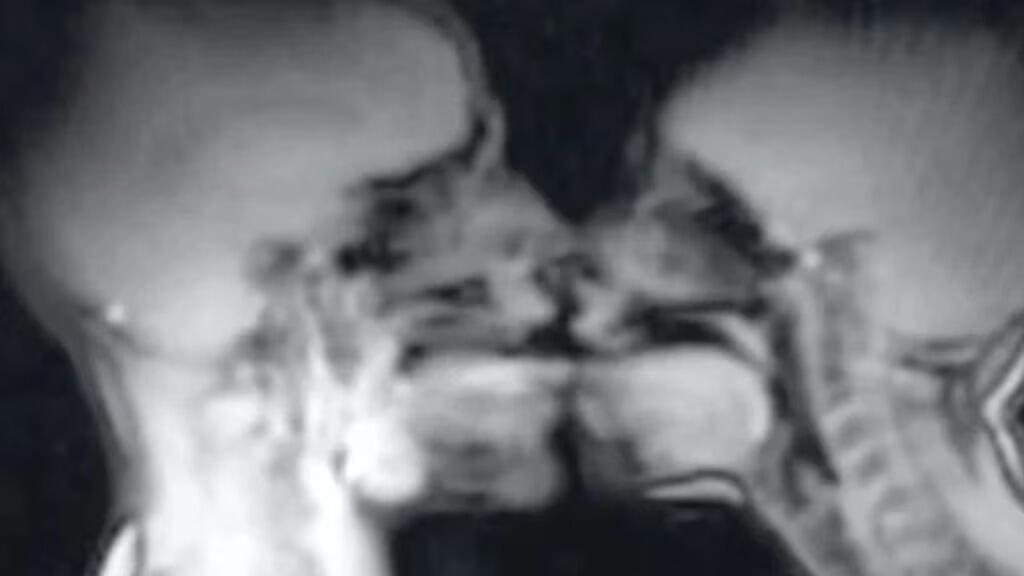
Prof. Ida Sabelis and her partner Joep were a young Dutch couple who never imagined they would find themselves having sex inside an MRI machine as part of a groundbreaking scientific study. They happened to know the right people at the right time. Their close friend, Dutch scientist Menno Victor “Pek” van Andel, wanted to answer a basic question that had barely been studied: what the anatomy of sexual intercourse actually looks like from the inside.
He asked the couple to take part. To his surprise, they agreed.
Inside the narrow, noisy MRI scanner, the couple were instructed to maintain a fixed position while the system captured a series of relatively slow scans lasting several seconds each. The conditions were far from comfortable, but the results were clear. For the first time, medicine could observe in real time how sexual organs align and function during intercourse, documentation that had never previously existed.
Following the initial experiment, researchers conducted a structured study that systematically examined the anatomy of sex using MRI technology. Volunteers aged 18 and older took part in 13 scans involving eight couples and three women, imaged both during intercourse and during sexual arousal without penetration.
All scans were conducted in the missionary position, and participants were free to stop at any point. None did.
The findings, published in 1999 in the British Medical Journal, challenged a number of long-held medical assumptions. One central discovery overturned the centuries-old belief that the penis moves in and out of the vagina in a straight line, a depiction found in early anatomical illustrations, including a famous 1492 drawing by Leonardo da Vinci.
The MRI images showed a very different reality. During erection, the penis curves inside the woman’s body and adapts to her anatomy in a natural motion that does not cause pain. Researchers likened the shape to a boomerang. They also discovered that about one-third of the penis consists of a “root” that remains inside the body even when flaccid, a fact previously unknown to medicine.
Unexpected findings emerged regarding the female body as well. During sexual arousal without penetration, researchers observed the uterus shifting upward and the front wall of the vagina lengthening. Contrary to earlier theories, there was no increase in uterine volume. These observations contradicted classical anatomy textbooks and highlighted how much medical knowledge about female sexuality had long been based on assumptions rather than direct observation.

(Photo: shutterstock)
The mystery of the filling bladder
Another surprising finding was that in all 13 cases, the woman’s bladder filled rapidly during intercourse. Researchers have yet to reach a definitive explanation. Van Andel suggested it may be “evolution’s way of encouraging women to urinate after sex to prevent urinary tract infections,” though he stressed this remains a theoretical idea without scientific proof.
“In every final scan, we saw a large, full bladder, even though most women had used the restroom before entering the MRI,” he said.
Although the article was published on Christmas Eve in 1999, when most researchers were on holiday, it became one of the most read and cited papers in the journal’s history. In 2019, 20 years after publication, BMJ editors singled it out as one of the most unusual and influential studies the journal had ever published.
More than 26 years later, the article is still read by thousands each month and remains among the most popular papers in the journal’s history.
In recent years, the story has found new life on social media. A TikTok video featuring the MRI images sparked astonishment, with users questioning how two people fit inside such a narrow machine and noting how loud MRIs are. “How is there room?” one user asked. “Anyone who’s had an MRI knows how intense it is,” another wrote.
An MRI machine
(Photo: shutterstock)
Sabelis addressed the reactions herself in a recent interview on the podcast “What Was It Like.” “The magnets are very, very loud, but we managed,” she said.
She also said she never expected the experiment to have such a lasting impact. “This was one of the first MRI machines, so capturing the images took time,” she said. “From the next room, they told us to stay in the same position for maybe a minute. It was quite funny.”
Originally, the plan was to image the couple in the missionary position, but the dimensions of the machine made that impossible. Instead, they squeezed into the narrow tunnel and adopted a spooning position. “It wasn’t romantic,” she said. “It was more an act of love and scientific duty. Luckily, we didn’t suffer from claustrophobia.”
Sabelis participated out of ideology as well. An advocate for women’s rights, she wanted to advance medical understanding of the female body, a field she said had been dominated for centuries by male assumptions. “When I saw the images, it was a moment of ‘oh, this is how we really fit together,’” she told Vice in 2019.
When imaging meets intimacy
Dr. Arnon Makori, head of imaging at Assuta Medical Centers and a specialist in diagnostic radiology, said the study was far more than a provocative anecdote. It marked a turning point in demonstrating how medical imaging could reveal physiological processes in real time.
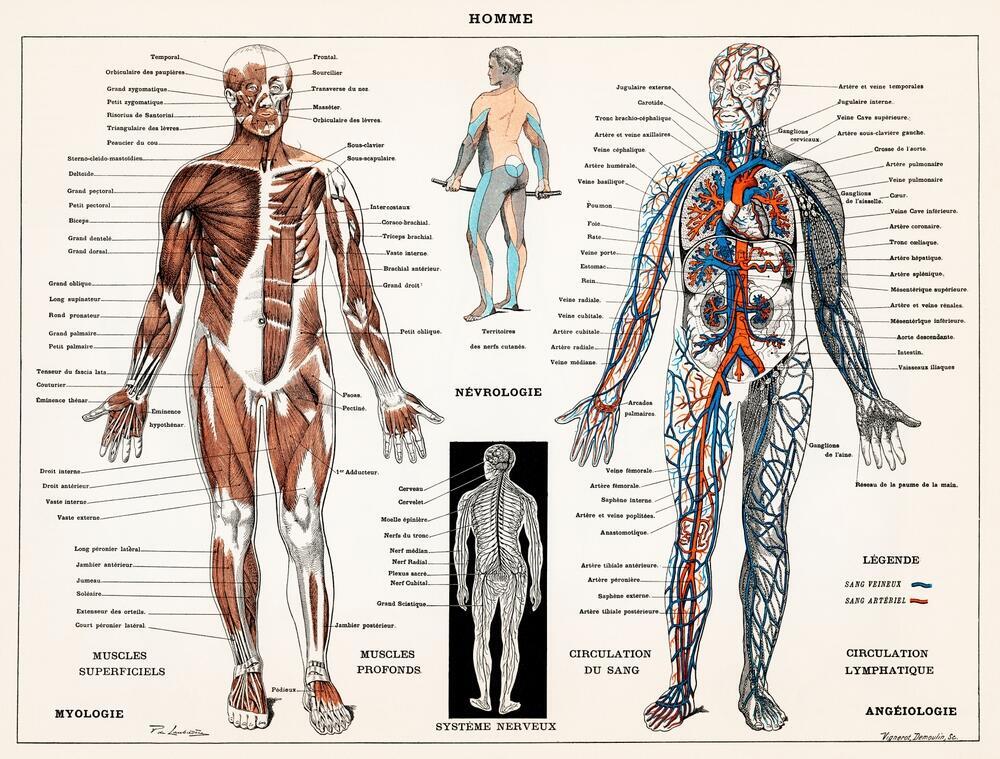
An old anatomical diagram. The experiment’s results challenged the anatomical assumptions of the time
(Photo: Shutterstock)
“This was a rare case where technology penetrated an area considered almost impossible to document for centuries,” he said, changing fundamental perceptions of human anatomy and bodily function during intimacy.
Makori noted that MRI technology entered clinical use only in the mid-1980s. “This study demonstrated functional imaging,” he said. “MRI allows us to see how organs work in real time. Today, we use it for the heart, fetal movement, bowel loops, joints and brain tissue. At the time, this was revolutionary.”
He emphasized the courage of both the researchers and the volunteers. “They had to lie together inside a narrow MRI scanner and perform under laboratory conditions. That’s a real challenge,” he said. “The scientific audacity, recruiting people and convincing them to do this, is not self-evident.”
Asked whether such a study would face ethical barriers today, Makori said all modern research must be approved by an ethics committee. “The researcher must show that the benefit outweighs the discomfort,” he said. “In this case, with full consent, I see no ethical barrier. It opened a window into a physiological process that had never been observed or described in medical literature.”
More than 30 years later, the experiment continues to reshape medical textbooks and fuel curiosity about the intersection of the body, sex and science.