

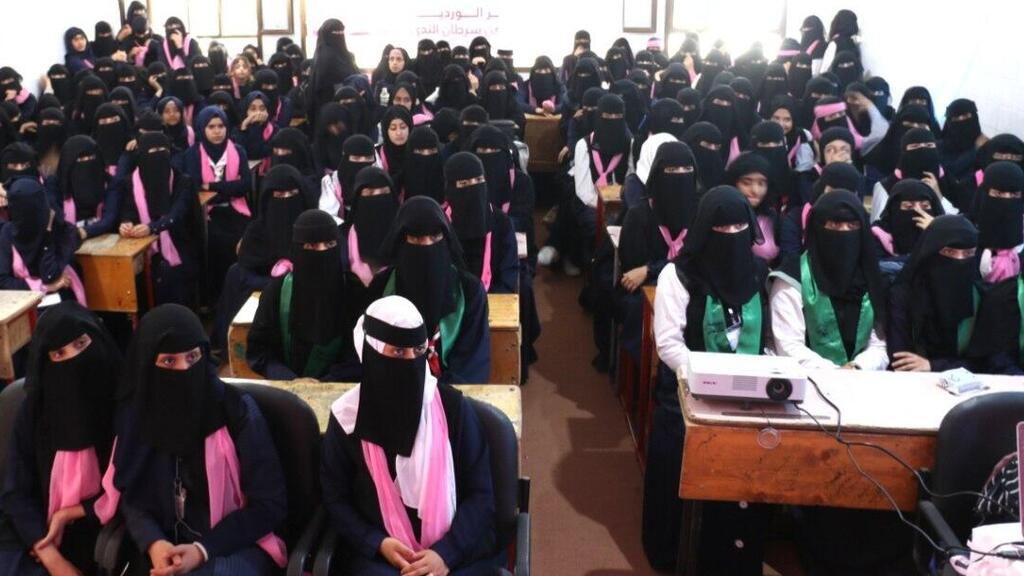
Across the Arab world this month, one cause has brought nations together: the fight against breast cancer. From Beirut to Damascus, Amman to Riyadh, women took to the streets wearing pink scarves and hijabs to mark Breast Cancer Awareness Month and urge early detection amid rising mortality rates.
In Lebanon, Health Minister Rakan Nassar al-Din—a doctor affiliated with Hezbollah—launched a nationwide campaign under the slogan, “You’re 40, don’t think twice, get a mammogram.”
(Video: Lior Sharon)


Lebanon revives campaign after six-year break
According to local media, it was the first such initiative in six years, following a series of national crises: the economic collapse, the 2020 Beirut port explosion, the COVID-19 pandemic and the latest conflict with Israel.
At the campaign launch, the minister announced that all Lebanese women can receive free mammograms at both public and private hospitals partnered with the Health Ministry through the end of the year.
A recent study in the medical journal The Lancet found that between 1990 and 2023, Lebanon recorded the world’s steepest increase in cancer incidence and mortality. It also projected that by 2050, Lebanon could lead the world in cancer-related deaths, with an 80% rise. The report sparked national debate and criticism of the government’s handling of the health crisis.
Nassar al-Din dismissed the report’s conclusions, saying, “The data used in The Lancet is not based on available scientific evidence. There are no accurate statistics on cancer deaths in Lebanon, so the projections may be exaggerated or misleading.”
Syria joins in, despite sanctions and medicine shortages
In Syria, the new government also marked the awareness month under the slogan, “Your awareness is life.” Health Ministry official Alaa Arksousi told state TV that breast cancer accounts for 25–30% of all cancers among Syrian women, emphasizing the importance of early screening and prevention. She added that free mammograms are available, though the country faces ongoing shortages of cancer drugs due to international sanctions hampering imports.
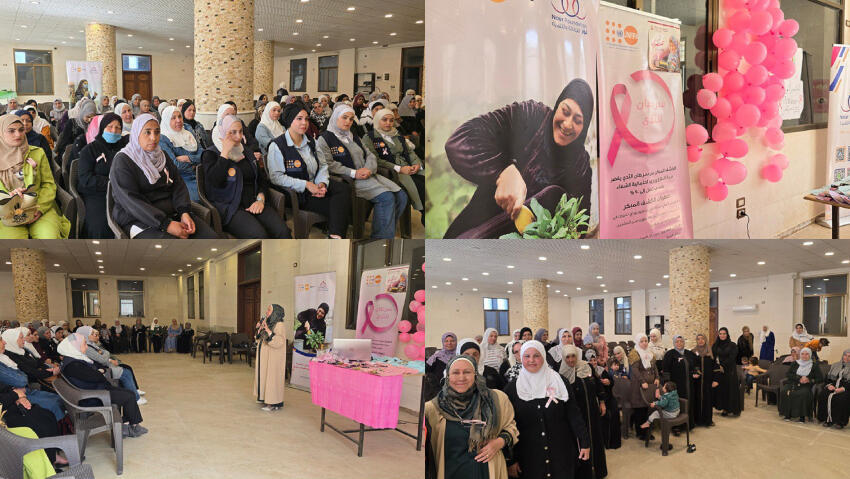
Breast cancer awareness month in the Arab world: Syria
State-run Syrian news agencies covered awareness marches, seminars, and lectures held across multiple provinces. In Homs, a large rally drew hundreds of participants. Abdel Karim Amreen, a member of the Syrian Cancer Society, said the goal was to “raise women’s awareness of early detection,” while one marcher told reporters, “This is how we get people’s attention in the streets.”
The previous Assad regime knew the disease firsthand. First Lady Asma al-Assad was diagnosed with breast cancer in 2018 and recovered, only to reveal in May 2024—shortly before Syria’s political upheaval—that she had leukemia. Two weeks ago, a Die Zeit report on her secret life in Russia described her condition as “critical.”
Regional momentum: Jordan, Saudi Arabia, and Yemen
In Jordan, Princess Ghida Talal, cousin of King Abdullah and chairwoman of the King Hussein Cancer Center, launched a national awareness campaign under the slogan, “You matter most—get checked.” In a video shared online, she urged women, “All I ask of each of us is to break the barrier of fear and hesitation and go get screened immediately.”
Saudi Arabia also held lectures and community events to promote early testing, while in Yemen, Houthi-affiliated media reported similar initiatives despite mounting evidence that the rebels’ internal disputes have disrupted hospital operations in areas under their control.
Despite war, sanctions, and political rifts, October’s campaigns offered a rare moment of unity across the Arab world—where pink ribbons, headscarves, and slogans of empowerment symbolized not only hope but defiance in the face of hardship.