


Humans have always searched for fast ways to lose weight. Once food stopped being a matter of survival and became abundant, the body turned from a natural given into the center of an ongoing struggle. And humans, being clever creatures, have always looked for shortcuts.
Out of this ancient battle emerged countless diets. Some are sensible and scientifically grounded. Others are trendy but largely harmless. And then there are those that crossed a clear line, testing just how far we are willing to go to achieve the coveted figure. How far? Very far. Here are five of the most extreme diets in the world. Read, and stay away.
Before diving in, we spoke with Limor Tal-Poni, chief dietitian at Maccabi Healthcare Services, to explain what healthy weight loss actually looks like. “A balanced diet is based on varied, non-extreme eating, with an emphasis on vegetables, fruits, whole grains, legumes, quality proteins and healthy fats,” she explains. “Instead of trendy and dangerous diets, whose extremism can lead to nutritional deficiencies, metabolic disorders and even long-term damage, the recommendation is to build habits that can be maintained over time and are tailored to health status, daily routine and personal preferences.” She adds: “To ensure a safe, personalized and evidence-based process, it is advisable to consult a physician or a dietitian.” Ready? It is time to take a look at the dark side of diet culture.
The tapeworm diet: when weight loss became a deliberate infection
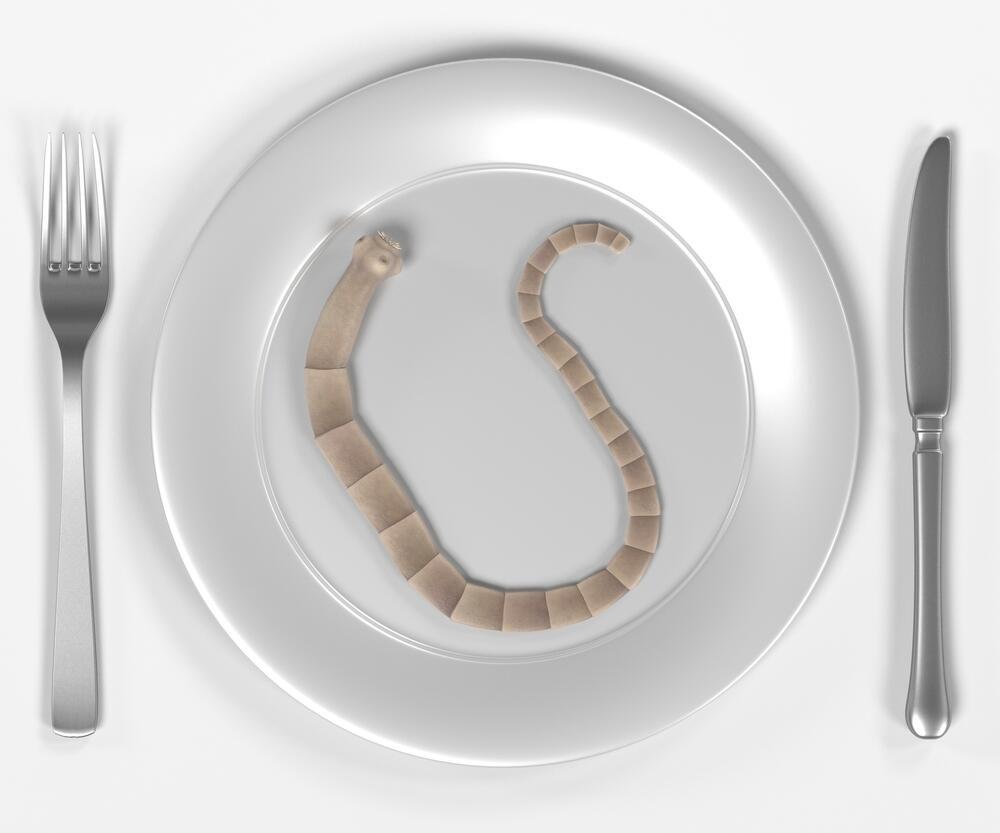
The idea sounds almost satirical. Why suffer through dieting and calorie restriction when you can simply let a parasite do the work for you? What a brilliant hack. The tapeworm diet, one of the most extreme and dangerous weight-loss methods ever devised, is based on deliberately infecting oneself with a parasitic worm in the hope that it will mature in the intestines, absorb some of the calories and lead to effortless weight loss.
For those less familiar with biology, tapeworms are flat parasites that can grow up to nine meters long. They attach themselves to the intestinal wall and feed on the host’s nutrients. The roots of this practice lie in the late 19th and early 20th centuries, a period when extreme thinness became a cultural ideal, particularly among women. At the time, so-called tapeworm pills were sold in Europe and the United States. These dubious over-the-counter products promised rapid weight loss and were marketed as legitimate medical solutions, long before the full health implications of parasitic infections were understood. Once the desired weight was achieved, users would take an anti-parasitic drug intended to kill the worm, which would then be expelled from the body.
The assumption that the worm will “eat the excess calories” completely ignores biological complexity and the risks involved. What risks, for example? Tapeworm infection can cause abdominal pain, diarrhea, malnutrition, vitamin and mineral deficiencies, anemia, inflammation of the membranes surrounding the brain, dementia and general weakness.
The myth surrounding the diet gained cultural traction through the long-standing rumor that opera singer Maria Callas achieved her dramatic weight loss by infecting herself with a tapeworm. Later historical and scientific reviews, however, found no solid evidence to support this claim. If she was infected at all, it was most likely due to consuming undercooked meat rather than a deliberate attempt to lose weight.
For a more contemporary reference, viewers can turn to the critically acclaimed 2025 body-horror film “The Ugly Stepsister,” which tells the story of Cinderella’s less attractive stepsister and the horrific things she does to her body to meet her sibling’s beauty standards. Among them, unsurprisingly, is the deliberate ingestion of a tapeworm. The scenes are graphic and deeply unsettling.
In any case, the assumption that the worm will simply “eat the extra calories” ignores biological complexity and the serious risks involved. Tapeworm infection can cause abdominal pain, diarrhea, malnutrition, vitamin and mineral deficiencies, anemia, inflammation of the membranes surrounding the brain, dementia and general weakness. In more severe cases, particularly with certain species, life-threatening conditions can develop, including cysts in the brain, eyes or internal organs. A small price to pay for weight loss, right?
The expert says: “This was a dangerous trend,” Tal-Poni says. “The tapeworm diet is based on deliberate infection with an intestinal parasite and is therefore not considered a safe therapeutic tool. Studies show that tapeworm infections can cause malnutrition, anemia, vitamin and mineral deficiencies, abdominal pain and diarrhea, not healthy weight loss. In cases involving ingestion of Taenia solium eggs, larvae may cause neurological damage and even risk of death. My professional recommendation is to avoid this diet entirely.”
The HCG diet: the pregnancy hormone that promised to erase fat
In the 1950s, a British physician named Dr. Albert T.W. Simeons proposed an idea that sounded almost magically simple: using the pregnancy hormone HCG, human chorionic gonadotropin, to make the body shed excess fat without hunger.
HCG is produced during pregnancy, initially by the embryo and later by the placenta. It helps maintain the uterine lining and sustain pregnancy. It is also used in pregnancy tests and, in certain cases, in fertility treatments.

The HCG diet
(Photo: Shutterstock)
So how did it turn into a weight-loss diet?
During a visit to India, Simeons observed pregnant women who were consuming very low-calorie diets yet still giving birth to healthy babies. He hypothesized that HCG enabled the body to break down maternal fat stores to nourish the fetus despite limited food intake. From there came the leap: if HCG helps mobilize fat during pregnancy, perhaps it could be artificially harnessed for weight loss.
To implement his theory, Simeons designed a strict protocol. Participants received daily doses of HCG, typically via injection, while adhering to an extremely restrictive diet of about 500 calories per day. What could possibly go wrong? What initially sounded like a physiological breakthrough quickly became one of the most controversial diets of all time. Over the years, a handful of studies attempted to show some benefit of HCG for weight loss, but the overall scientific conclusion was clear. A comprehensive 1995 review published in the British Journal of Pharmacology found no reliable evidence that HCG contributes to weight loss, affects satiety or accelerates fat breakdown. In plain terms, the hormone itself does not do what it was claimed to do.
Major health authorities later echoed this conclusion. In 2012, both the American Dietetic Association and the US Food and Drug Administration stated that the HCG diet is no more effective for weight loss than the severe calorie restriction it involves. The risks, however, are very real. Combining hormone use with a 500-calorie-per-day diet can lead to extreme fatigue, dizziness, fainting and hair loss. There is also a significant risk of nutritional deficiencies and, in some cases, metabolic and physiological damage that may be irreversible, even when the limited food consumed is considered “healthy.”
The US Food and Drug Administration, followed by Israel’s Health Ministry, ruled that the use of the hormone HCG for weight loss is illegal and issued explicit warnings to the public about the risks associated with its use.
So why did so many people report losing weight? The answer is far simpler and far less mysterious. Almost any diet that involves an extreme calorie deficit will lead to rapid weight loss, especially one limited to 500 calories a day. But that loss comes not only from fat, but also from fluids and muscle mass. Once the diet ends, weight tends to return quickly, sometimes surpassing the starting point.
In recent years, the HCG diet has also taken on a clear legal dimension. As its popularity grew in the early 2000s, regulatory scrutiny intensified. The FDA, followed by Israel’s Health Ministry, ruled that using HCG for weight loss is illegal and issued explicit warnings to the public. In short, the HCG diet is not scientifically supported, offers no real advantage for weight loss and is prohibited by law. More than enough reason to leave it in the past.
The expert says: “The HCG diet combines extreme calorie restriction of about 500 calories a day, which studies associate with increased risk of nutritional deficiencies, heart rhythm disturbances, gallstones and electrolyte imbalances,” Tal-Poni says. “Reported side effects include severe fatigue, depression and headaches. Clinical guidelines emphasize that HCG is approved only for limited medical uses and is not approved or recommended for treating obesity or weight loss.”
The cotton ball diet: starving to death, literally
If there is one example that shows how far people are willing to go to avoid eating, the cotton ball diet is among the most extreme. The idea is simple. Swallow cotton balls or similar materials before meals so they expand in the stomach, take up space and create an artificial feeling of fullness. Less room for food, fewer calories and, supposedly, weight loss. Eating, in other words, is overrated.
Unlike other diets, this one involves no meal plan, no habit change and no nutritional balance. It is an attempt to bypass the hunger mechanism entirely. Cotton is not digestible, provides no nutritional value and has no effect on metabolism. It simply sits in the stomach, creating temporary fullness that is often accompanied by pain, nausea or discomfort. The body feels full, but receives none of what it actually needs.

The cotton ball diet
(Photo: Shutterstock)
The use of non-food substances to suppress appetite is not tied to one specific era and has never been documented as a legitimate medical diet. It tends to surface in cultural contexts where thinness becomes an extreme ideal. Sometimes it has a name, sometimes not, but the principle is the same: fill the stomach with anything except food. Public awareness of the practice grew about a decade ago, when Bria Murphy, daughter of actor Eddie Murphy, spoke in interviews about a dangerous trend she said was common in the modeling world. According to Murphy, young models swallowed cotton balls soaked in juice to curb hunger and maintain low weight, under relentless pressure to meet rigid appearance standards.
Even when weight loss does occur, it is the result of a severe calorie deficit, and as with any extreme diet, the cost can be high: extreme fatigue, dizziness, reduced concentration, impaired daily functioning and, at times, the development of disordered eating patterns that can persist long after the attempt to lose weight has ended
It is not difficult to understand the risks. Cotton does not break down in the digestive system and can accumulate, leading to intestinal blockages, severe pain, constipation and medical emergencies requiring urgent intervention. Suppressing hunger in this way worsens nutritional deficiencies, weakens the body and can cause lasting damage to digestive health. Even when weight loss occurs, it comes at a steep price. Extreme fatigue, dizziness, poor concentration and impaired daily functioning are common. In many cases, such practices also contribute to disordered eating patterns that persist long after the attempt to lose weight has ended. In short, anyone considering this approach likely needs psychological support, urgently.
The expert says: “The cotton ball diet is described as dangerous eating behavior similar to eating disorder patterns, not as an evidence-based weight-loss treatment,” Tal-Poni says. “Swallowing non-digestible materials can cause intestinal blockages, severe pain, vomiting and the need for surgical intervention, as documented in medical reports. Beyond surgical risk, suppressing hunger this way worsens malnutrition and can lead to severe deficiencies in essential nutrients and long-term damage to the digestive system. I view this as a red flag for an eating disorder requiring psychological and medical intervention, not a safe weight-loss strategy.”
Detox and cleanse diets: a truth that is harder to swallow
Few concepts in the wellness world have dominated public discourse like the word “detox.” Green juices, juice fasts, cleanse days, cleansing teas, herbal supplements and even enemas all rely on the same enticing promise: the body is full of toxins, and only a deliberate cleansing process can restore it to health. The idea is far from new. Its roots go back to the 19th century, when modern medicine was still in its infancy and theories about toxin accumulation were widespread. Later, particularly from the 1970s onward, New Age and alternative health movements adopted modernized versions of detox diets, emphasizing raw foods, juices and herbal remedies.
Diets based almost exclusively on liquids can lead to deficiencies in protein, essential vitamins and minerals, drops in blood sugar levels, extreme fatigue, dizziness, headaches and impaired concentration.
The major breakthrough into the mainstream came in the 2000s, with the rise of wellness culture and social media, which turned detox into a visually appealing, highly marketable product.
This is where the gap between promise and reality becomes clear. Physiologically, the human body already has an efficient and sophisticated detoxification system operating around the clock. The liver, kidneys, digestive tract and lungs work continuously to break down and eliminate waste and toxins. When these systems fail, it is a serious medical condition requiring medical treatment, not a cleanse.
In many cases, the initial results look impressive. Rapid weight loss, a sense of lightness and sometimes mild euphoria are common. But these effects stem mainly from fluid loss, depletion of glycogen stores and severe calorie restriction, not from actual detoxification.

Detox
(Photo: Shutterstock)
Why, then, do people often report feeling better? Part of the answer is simple. Temporarily cutting out ultra-processed foods, alcohol and sugar can ease digestive strain and improve overall well-being. But this improvement is not due to toxin removal. It is the result of eating more simply, an effect that can be achieved without fasting, juices or unnecessary risk.
The health costs can also appear quickly. Liquid-based diets may lack protein, essential vitamins and minerals, leading to low blood sugar, extreme fatigue, dizziness, headaches and impaired concentration. The use of enemas or laxatives as part of cleansing routines can disrupt electrolyte balance. Detox diets also tend to create a problematic relationship with food, encouraging cycles of extreme restriction followed by abrupt return to normal eating. This often leads to rapid weight regain and feelings of failure.
The expert says: “There is no evidence that detox diets improve toxin elimination or lead to sustained weight loss, and short-term loss is largely due to severe calorie restriction and fluid loss,” Tal-Poni says. “Studies examining rigid dietary restriction show increases in stress hormones such as cortisol, which may promote overeating and weight gain later. Detox diets can be low in protein, energy, vitamins and minerals, sometimes to the point of severe deficiencies and even death in extreme cases. “There have been reports of severe hyponatremia, dangerously low sodium levels, linked to commercial detox programs, illustrating the risks of excessive fluid intake combined with enemas or laxatives. Any extreme diet can be particularly dangerous for people with diabetes, heart disease or for pregnant women. Some commercial products have also been found to contain harmful ingredients.”
Dry fasting: when even water becomes the enemy
If intermittent fasting has gone mainstream and avoiding food has gained social approval in the name of health, dry fasting takes the idea one step further, and far too far. This practice involves abstaining not only from food but also from all liquids. No coffee, no tea, no water. Nothing. Sometimes for 24 hours, sometimes 48 hours or longer. To its proponents, this is the deepest and purest form of fasting. To medicine, it is deliberate dehydration.
There are no controlled studies showing any benefit of dry fasting for weight loss or for “detoxification,” but there are numerous warnings about its risks, particularly for people with kidney disease, heart problems, diabetes, a tendency toward low blood pressure or a history of eating disorders.
Dry fasting is not a new concept. In traditional forms, it appears in religious fasts such as Ramadan, where food and drink are avoided from sunrise to sunset but resumed at night. The modern wellness version, however, goes far beyond this framework. In wellness and biohacking circles, dry fasting is marketed as a “total fast” that supposedly activates deep cleansing mechanisms, accelerates fat burning and resets the body. Supporters argue that in the absence of external water, the body produces “metabolic water” by breaking down fat, thereby speeding weight loss and detoxification. While it is true that small amounts of water are produced through metabolic processes, they are not a substitute for fluid intake, especially during prolonged fasting, physical exertion or heat exposure.

Dangerous diets: the dry fasting diet
(Photo: Shutterstock)
Medically, the consequences can include reduced blood volume, increased blood viscosity, strain on the kidneys and electrolyte imbalance. There are no controlled studies showing benefits of dry fasting for weight loss or detoxification, but there are many warnings about its risks. These risks are particularly significant for people with kidney disease, heart conditions, diabetes, low blood pressure or a history of eating disorders. Any weight loss that occurs is not due to metabolic magic. As with other extreme diets, it is primarily the result of fluid loss and severe calorie deficit. The weight typically returns quickly once drinking and eating resume, often accompanied by bloating and physiological stress that worsen the overall experience. Despite this, dry fasting continues to attract followers. Some report mental clarity, lightness or a sense of control over the body. Such sensations are also common in mild dehydration and sudden shifts in blood sugar and fluid levels. Subjective feelings are not proof of health, and may instead signal that the body is under stress. In practice, dry fasting lacks solid scientific support and can cause harm before any imagined benefit is felt.
The expert says: “Complete avoidance of fluids for 48 hours is defined as moderate to severe dehydration, with risk of harm to multiple body systems,” Tal-Poni says. “Studies show that lack of hydration can lead to low blood pressure, impaired cerebral blood flow, reduced concentration, decreased mental clarity, confusion, mood changes and headaches. “The kidneys are particularly sensitive to fluid deprivation. Dehydration reduces blood flow to the kidneys and can cause acute kidney injury, increasing the risk of kidney stones and chronic damage if such episodes recur. The recommendation is to avoid dry fasting and ensure regular fluid intake, even if choosing a controlled form of intermittent fasting.”