


Longevity medicine has become one of the most talked-about fields in health in recent years. Biological age tests, epigenetic clocks, experimental drugs and lifestyle changes all promise to identify the pace of aging, slow it down and perhaps delay some of the diseases that appear later in life. But most of those efforts begin only at age 40, 50 or 60, after decades of biological changes and accumulated damage have already taken place.
Now, an international group of researchers is proposing a fundamental shift in where the aging story begins. In a new article published over the weekend in Nature Health, the researchers argue that if medicine truly wants to influence the aging trajectory, it may need to start tracking it much earlier: before pregnancy, during development in the womb and in the first years of life.

The article was signed by several leading names in aging and preventive medicine, including Prof. Tzipi Strauss of Safra Children’s Hospital and Sheba Medical Center’s Longevity Center, Prof. Steve Horvath, one of the pioneers of epigenetic clocks, Prof. Brian Kennedy, Prof. Thomas Rando and Prof. Evelyne Bischof.
They also announced the establishment of Prosper, an international consortium designed to study aging as a lifelong trajectory that begins in the earliest stages of life and continues into adulthood.
Starting long before age 50
For Strauss, director of longevity at Sheba, the connection between pediatrics and longevity research grew out of a clear gap. Pediatrics closely tracks growth and development at the beginning of life, while longevity medicine usually enters the picture only decades later.
“The field of longevity entered public awareness over the past decade, and especially in the past two years, but the focus was on older ages,” she said. “It began with people in their 50s and 60s, then moved down a little to age 40, and there are even discussions about age 35, but there was almost no looking beyond that.”
For her, connecting pediatrics with longevity research was almost obvious. “I have been a pediatrician and neonatologist for 25 years and I run a department. One day a week I am in the neonatal intensive care unit, I still do shifts and I am active in the field,” Strauss said. “At one longevity conference, I was asked to speak about longevity in pediatrics. As far as I know, I am the only pediatrician in the field. It gave me the option to look at the studies and at what we know from a slightly different perspective.”
That perspective led Strauss to reexamine how the beginning of life may affect the aging process. “What we know, but what had not been sufficiently translated, is that there are studies around the world looking at epigenetic age and methylation changes, a chemical change in DNA that affects gene activity, that already occur in the womb,” she said. “This is something that has existed since the early 2000s.”
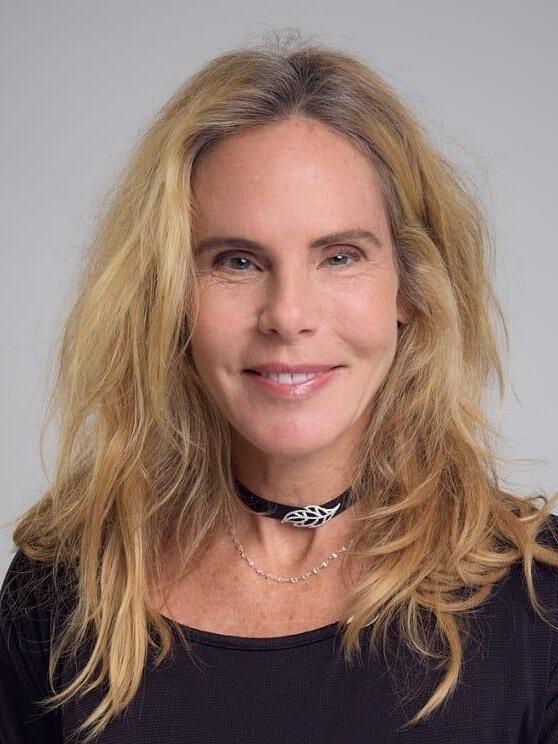 Prof. Tzipi StraussPhoto: Sheba Medical Center
One striking example of the shift in understanding involves babies born small for their gestational age. In the past, the goal was to help them quickly catch up in weight through a high-calorie diet. Rapid weight gain was generally seen as a treatment success. Only later did researchers begin asking whether the pace of that gain might carry a long-term health cost.
“We used to load them with a lot of calories so they could catch up,” Strauss said. “Everyone was happy when the baby reached a normal weight, because parents love chubby babies. Only later was it found that there are changes at the genetic level that can later cause metabolic syndrome, when those same babies developed high blood pressure, diabetes and cardiovascular problems 30 years later.”
That is only one example. The possible link between early-life conditions and future health is not limited to infant nutrition. The mother’s health during pregnancy may also influence a child’s risk of developing disease later in life.
“It is known that babies born to mothers with gestational diabetes have a higher chance of developing diabetes and obesity later in life,” Strauss said. “We also know that babies born to mothers with high blood pressure during pregnancy, preeclampsia, have an increased risk of developing high blood pressure later in life. The data are familiar to us, but the perspective is different. We did not think in terms of longevity.”
This leads to the central question behind the new consortium: Can researchers identify, at the very beginning of life, a trajectory that increases the risk of disease, and intervene before disease appears in adulthood?
“This is where we are essentially setting the trajectory, what will happen in 20 or 30 years,” Strauss said. “My partner in founding the consortium, Prof. Evelyne Bischof, and I recruited some of the best international experts in different fields, including gynecologists, neonatologists and, of course, longevity experts such as Prof. Steve Horvath. Everyone we spoke to and showed the idea to saw and understood the importance of looking at longevity from a young age.”
The imprint that appears at birth
Until now, much of the knowledge in this field has relied on long-term follow-up studies. Researchers examined babies and children, then checked decades later which of them developed metabolic diseases. But in recent years, the development of epigenetic clocks has allowed researchers to ask whether pregnancy and early-life conditions leave a measurable biological imprint.
“For example, studies from Korea examined the epigenetic age of babies right after birth among mothers who ate a healthy diet with enough vitamin D, omega-3 and so on, and found that they had a biological age matching their age or younger,” Strauss said. “That was compared with women who had a less healthy diet, including junk food and processed food, whose children had a more advanced age by several months. And this was right at birth.”

The beginning of life affects adult health
(Photo: shutterstock)
Another area being studied is sleep in the first years of life. Beyond its importance for brain development and a child’s functioning in the present, researchers are trying to understand whether early sleep habits may also leave a long-term biological mark.
“Sleep is very critical,” Strauss said. “The whole issue of the circadian rhythm is important. Only around 3 to 4 months does the circadian clock, the daily biological clock that regulates sleep and wakefulness, among other things, become established for day and night. This is a very important stage for development and also for epigenetic changes.”
According to Strauss, studies have found that children under age 4 who sleep less than 10 hours have a greater tendency toward obesity and diabetes, more metabolic disease and more attention disorders. Other studies have also shown that sleep disturbances in babies and children affect the immune system and brain development.
Even seemingly simple data collected in childhood may take on new meaning when examined across decades. One example is BMI. In the first year of life it rises naturally, then falls as the child grows taller. Later, around ages 6 or 7, it rises again.
“There are studies that found that a child whose BMI rises before age 6 or 7 will have more metabolic diseases in the future,” Strauss said. “There are many studies and very specific works that followed people from infancy until age 30, even 40.”
For now, however, there is a problem. Medical follow-up for children is not currently built to connect those early findings with their health decades later. Monitoring during pregnancy and infancy is relatively frequent early on, but it focuses mainly on the child’s current condition and development.
“If you look at well-baby clinics, in the first two and a half years of life, what we call the first 1,000 days, there is very precise follow-up,” Strauss said. “After that there is a checkup at age 6, age 8, vaccinations and a little early puberty monitoring, and that is it. There is no real follow-up.”

Does the path to diabetes begin in infancy?
(Photo: shutterstock)
The gap, she said, is not only that medical monitoring becomes less frequent as the child grows. Even when important information is collected during pregnancy, infancy and childhood, it is not always connected into a single medical trajectory that continues throughout life.
“Pediatricians like me knew the effects of some processes on later life, but we did not think about them in terms of aging, or understand the changes in the genetic code that could affect quality of life later on,” she said. “We treat only children and stop around age 18. Gynecologists treat only the woman, even though there are effects on the baby, and internists look at the present without thinking about what happened in childhood.”
The consortium wants to replace that division with a continuous, multidisciplinary view that links pregnancy, childhood, adulthood and aging. “That is why gynecologists, pediatricians, longevity physicians, public health experts and algorithm experts are sitting together and looking at all this with multidimensional insights,” Strauss said.
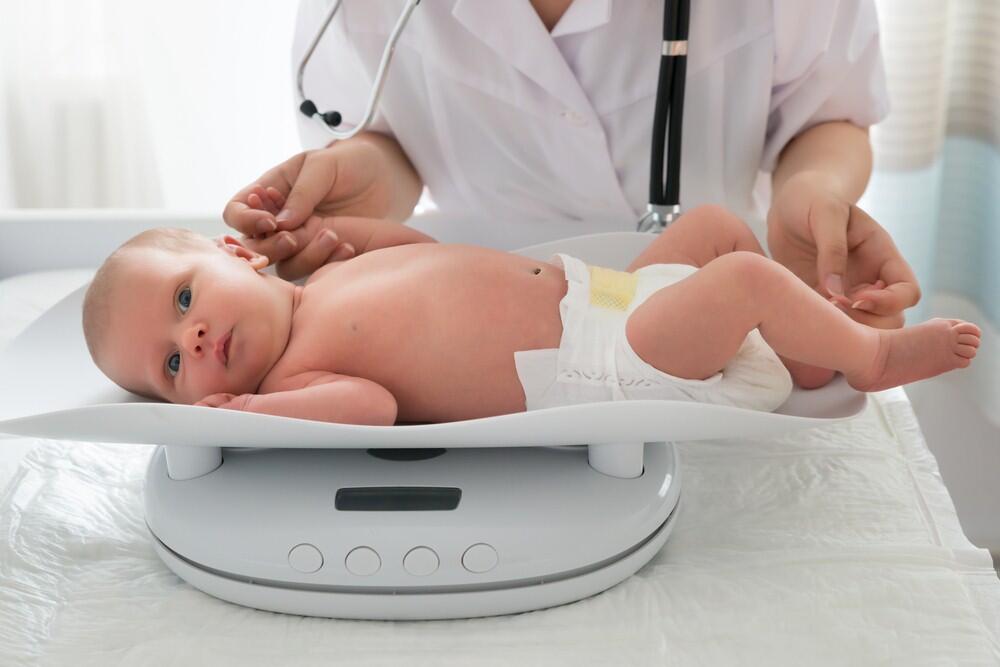
Well-baby clinic. Precise monitoring only up to a certain age
(Photo: shutterstock)
Reaching peak potential
One of the concepts the consortium seeks to promote is “peakspan,” the point at which a person reaches their highest level of physical, metabolic and cognitive function. While most longevity discussions focus on preserving function in old age, this approach begins with an earlier question: Does every child ever reach their full functional potential?
“Each person’s peak point is very individual,” Strauss said. “Our goal is to understand in which systems we can bring that person to where they should be, because in the end, a baby or child is supposed to reach their peak and prevent those declines. That is one of the things we want to validate.”
The premise behind the initiative is that intervention while the body is still growing and developing may be more significant than an intervention that begins only after decades of life. Children are not small adults. Their systems are constantly maturing, which may also make them more flexible.
“The beauty with babies and children is that if we prevent these epigenetic changes, we can change the trajectory,” Strauss said. “They have flexibility that allows this. The changes we make are very significant.” Still, she stressed that this does not cancel the importance of lifestyle changes later in life.

The next challenge is developing biological clocks adapted for children
(Photo: shutterstock)
“There is no doubt that if you start exercising at age 40 or 50, it will have an effect,” she said. “But it is much more meaningful when we start at a young age, and as early as possible, to prevent those epigenetic changes along the same trajectory that, in 30 years, we may suffer from because we did not sleep well at a young age.”
To turn the idea into a practical medical system, researchers will need to develop tools capable of distinguishing between normal development and a trajectory that signals future risk. But most existing biological clocks were developed for adults and are not adapted to children, who are constantly growing.
“There are almost no biological clocks for children,” Strauss said. “There are studies, but they are not sufficient and they have not been validated. When looking at children and biological clocks, the focus is on pace, because children are developing and growing. We need to adapt that and find the right biomarkers so that we can test a child and a baby over the years.”
The future vision is to add more checkpoints to existing pediatric follow-up, so that doctors can examine not only current development but also long-term health trajectories. “Already in the first year of life, I look at how much the baby sleeps, what the baby’s nutrition is and monitor weight more closely,” Strauss said.
Later, the vision is for monitoring stations to include environmental stimulation, sun exposure, time spent outdoors and measures related to mental health, bone and muscle mass and cardiovascular risk. “The goal is for us to be able to examine a baby and child over the years and see when a risk factor begins to appear,” Strauss said. “If the assessment is that this is a trajectory that could lead to metabolic syndrome, that is the moment to stop and make a change before the biological and genetic imprinting occurs.”

The goal is to add more monitoring checkpoints for children throughout life
(Photo: shutterstock)
What cannot yet be promised
Alongside the ambitious vision, the article raises many questions that still have no answer. It is not yet clear which early markers can truly predict aging and disease decades ahead, whether changing those markers will actually improve health, or what the right intervention is at every age.
The use of children’s biological information also raises questions of privacy, anxiety and medical labeling, especially when it involves predicting risk for a disease that currently has no proven prevention method.
There is also concern that placing emphasis on pregnancy could put excessive responsibility on mothers. But the researchers point to a much broader picture, including the health of both parents before conception, social and economic conditions, environmental exposures, the health system and the environment in which the child grows. The womb may be an important biological window, but it does not operate in a vacuum and does not determine on its own how a child will age.

Extending healthy years is already possible. Extending lifespan is not yet proven
(Photo: shutterstock)
Above all, there is the biggest question: Could beginning this early not only improve lifelong health, but also extend life itself?
Strauss emphasized that longevity medicine still cannot promise that. Current tools mainly focus on improving healthy life years, meaning the period during which a person lives without significant illness and maintains function.
“Even at my center today, for everyone who comes in and undergoes an assessment, I can promise that I will add 10 healthy years,” Strauss said. “That is what we know how to do today through nutrition, sleep and exercise. But we have still not proven that we extend lifespan.”
The hope is that starting earlier may eventually make it possible to go one step further. “Maybe if we start at a younger age, we will also be able to extend lifespan, but we are not there yet,” Strauss said. “We will know that later.”