


We check our phones dozens, sometimes hundreds, of times a day. They are with us at work, at school, on the road, at dinner and even in the moments before we go to sleep. For years, research focused mainly on the effects of screen time on sleep, concentration and mental health. But in recent years, a growing body of evidence has suggested that prolonged screen use may also affect the body itself.
Neck pain, strain on the spine, eye fatigue, rising rates of nearsightedness and even hand pain have all been linked in recent years to the long hours we spend in front of phones and computers. So how concerned should we be, and what has actually been proven by research?

Until a few years ago, neck pain was associated mainly with older adults. Today, however, growing numbers of young people are arriving at orthopedic clinics with the same complaints.
“As spine surgeons, in recent years we have been seeing more and more young people coming to clinics with severe neck and upper back pain, and the common denominator among them is simply hours spent in front of screens,” said Dr. Shachar Vider, a senior physician in the Spine Surgery Unit at Rambam Health Care Campus. “The term ‘text neck’ is no longer just an expression. It is a real problem.”
Nearly 27 kilograms of pressure on the neck
To understand exactly what happens to the neck during phone use, researchers from the unit recently conducted a study published in the Journal of Spine Surgery. The researchers recruited young, healthy volunteers and took real-time X-rays as they held their phones and texted, both while standing and sitting, to examine how neck angles changed from a neutral position during screen use.

Prolonged phone use has been linked to strain on the neck, eye fatigue and pain in the hands
(Photo: Shutterstock)
The study found that the most significant strain occurred in the upper part of the neck. “While normal age-related degeneration usually occurs in the lower part of the neck, the X-rays of young people while texting showed that the most pronounced changes and strain occurred in the upper neck, at the junction between the base of the skull and the first vertebrae,” Vider said. “We are essentially creating a new kind of degeneration at a younger age.”
 Dr. Shachar Vider Photo: Courtesy
The study also examined differences between using a phone while sitting and while standing. “Sitting and texting is the worst combination,” she said. “We found that the distortion in the angles and the strain on the cervical vertebrae were much worse when the volunteers were sitting and texting than when they were standing. When we sit, we have a natural tendency to slump forward, the body loses awareness of its posture and the neck absorbs the entire load.”
According to Vider, bending the head while using a phone significantly increases the load placed on the spine. “When the head is upright, it weighs about five kilograms. But based on the measurements we analyzed in the paper, once we bend the neck forward at a 60-degree angle to look at a screen, the effective load on the spine rises to nearly 27 kilograms. You can imagine the strain the discs and muscles have to sustain for hours.”

Experts explain which harms linked to screens are already backed by research and which are still under review
(Photo: Shutterstock)
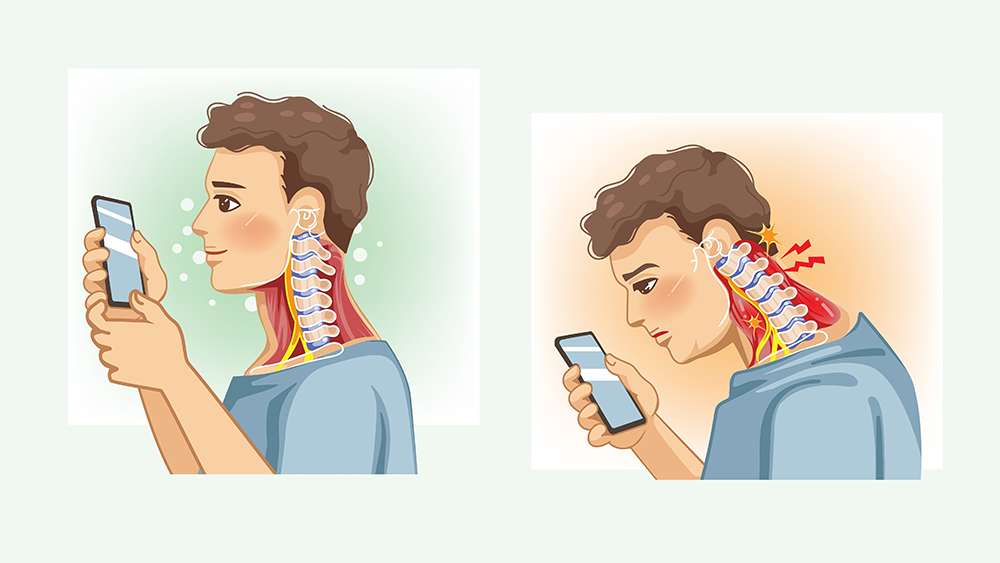
Bending the head while using a phone significantly increases the strain on the spine
(Photo: Shutterstock)
Still, she stressed that there is no need to give up the phone. “The good news is that this can be addressed without throwing away your phone. My biggest tip is simply to raise the phone to eye level instead of lowering your head toward it. And if you are sitting and writing a long message, lean back and rest your elbows on the table or armrest. That will automatically raise the phone and reduce the strain on the back of the neck.”
Are screens damaging our eyes?
Many people are convinced that long hours in front of phones and computers cause irreversible eye damage. But according to Dr. Elinor Megiddo-Barnir, head of the Cataract Service at Sheba Medical Center’s Eye Institute, the reality is more complicated.
 Dr. Elinor Megiddo-Barnir
Photo: Sheba Medical Center
Dr. Elinor Megiddo-Barnir
Photo: Sheba Medical Center“There is a connection between screen use and eye health, but it needs to be described accurately,” she said. “Today, the strongest evidence regarding the rise in nearsightedness, or myopia, particularly among children, points not only to screen use itself but to a broader set of lifestyle changes: more time spent doing close-up work, fewer breaks to look into the distance and, above all, less time spent in daylight and outdoors.”
She said recent studies and reviews, including documents from the International Myopia Institute, show that spending time outdoors reduces the risk of children developing myopia.
“The likely explanation is exposure to higher levels of light, its effect on dopamine release in the retina and the encouragement of looking into the distance rather than prolonged close-up focusing.”
So why do our eyes burn after hours in front of a screen?
One of the most common complaints among people who spend long hours looking at screens is burning, dryness or blurred vision after prolonged use.
“It is important to distinguish between temporary discomfort and long-term damage,” Megiddo-Barnir said. “What we see every day in clinics is computer vision syndrome, also known as digital eye strain. It includes dryness, burning, temporary blurred vision, headaches, difficulty focusing and sometimes neck pain as well.”
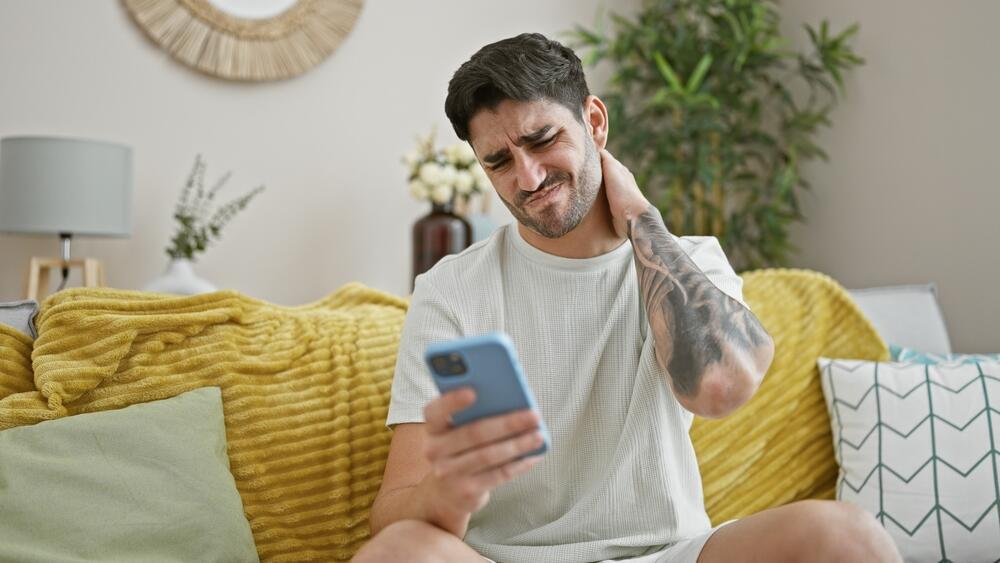
Experts stress: The problem is not the screens themselves, but the way we use them
(Photo: Shutterstock)
She said the symptoms usually stem from reduced blinking, prolonged focusing effort, unsuitable lighting and working at too short a distance.
“In most cases, this is a reversible condition that does not cause permanent damage to the eye. However, among children and adolescents, many hours of close-up work and prolonged screen time, especially when they come at the expense of outdoor activity, have been linked to an increased risk of developing and worsening myopia. That is why clear preventive recommendations are warranted.”
Three simple recommendations
According to Megiddo-Barnir, there is no need to avoid screens, but they should be used more wisely. Her recommendations are:
Spend more time outdoors: Encourage children to spend time outside every day, preferably at least one to two hours in daylight.
Take planned breaks: Follow the 20-20-20 rule — every 20 minutes, look at something about 20 feet, or six meters, away for 20 seconds.
Create a proper work environment: Position the screen at eye level or slightly below it, maintain an appropriate viewing distance, ensure comfortable lighting, blink frequently and treat dry eyes when necessary.

Digital eye strain is one of the most common complaints among screen users
(Photo: Shutterstock)
“There is no need to be afraid of screens, which are already an inseparable part of our lives and will continue to play a major role in the future,” she said. “But we do need to learn how to use them more properly: combine screen use with time outdoors, take breaks during close-up work and reduce, as much as possible, long uninterrupted periods in front of a screen.”
Hands also pay the price
Long hours in front of screens do not affect only the neck and eyes. The hands are also required to repeat the same movements over and over — typing, scrolling and gripping — and hand surgeons report seeing more patients, including young people, with overuse syndromes.
Here, too, however, it is important to distinguish between what research has already established and what is still being investigated.
 Dr. Matan Sherf Photo: Sheba Medical Center
“Smartphone and computer use does change the way we use our hands, and in the hand clinic we see many patients, including young people, with overuse syndromes,” said Dr. Matan Sherf, a senior hand surgery specialist and director of the Microsurgery Center in the Department of Hand Surgery and Limb Salvage at Sheba Medical Center.
“These mainly include pain at the base of the thumb, inflammation of the thumb tendons, known as De Quervain’s tenosynovitis, wrist pain and sometimes other overuse conditions.”
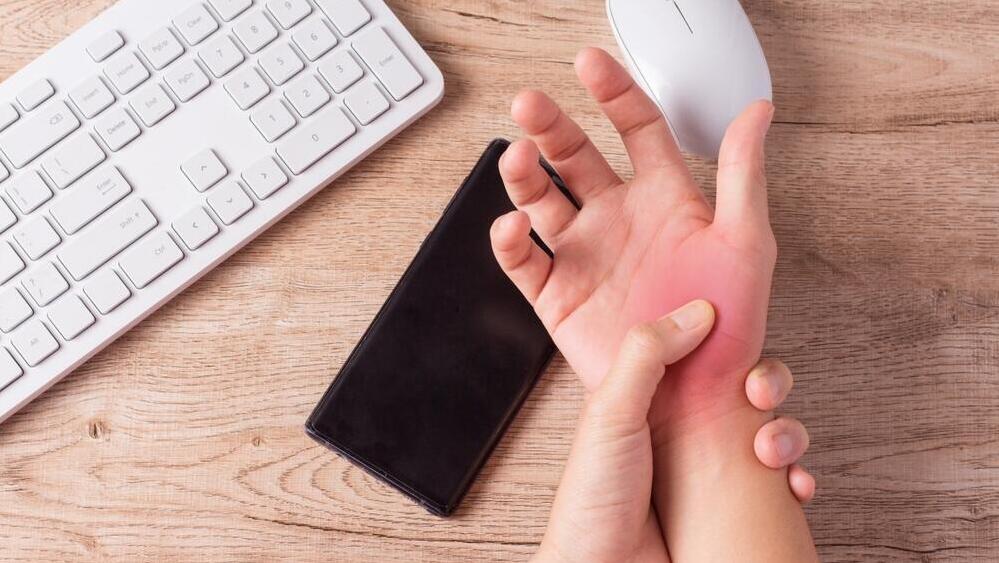
The hands, too, may suffer from overuse syndromes as a result of prolonged phone use
(Photo: Shutterstock)
He stressed, however, that not every case of hand pain is necessarily caused by phone use. “There is a tendency to attribute almost every hand pain to smartphones, but the reality is more complex. The medical literature has still not shown that the phone itself causes a significant decline in grip strength or irreversible damage to muscles and tendons. What we do know is that prolonged use, repetitive movements and many hours without variation in movement can lead to overuse syndromes.”
The indirect effects, he said, may be just as significant. “Young people today spend many hours in front of screens, sometimes at the expense of physical activity and manual activities that develop strength, coordination and fine motor skills. It is a biologically plausible hypothesis, but there are still no studies proving a direct causal link.”
When should you get checked?
According to Sherf, there are several warning signs that should not be ignored. “Signs that require attention include pain that appears regularly while using a phone or computer, numbness in the fingers, weakness that interferes with daily functioning or difficulty gripping objects.”
In most cases, he said, the problem can be prevented before it becomes chronic. “These problems can be prevented by taking short breaks during work, changing position, avoiding holding the phone in the same position for long periods, exercising regularly and incorporating strengthening and stretching exercises for the hand and forearm.”
Ultimately, the message from all three experts is similar: The problem is not the technology itself but the way we use it.
Phones, computers and screens are not going to disappear from our lives, nor is there any reason they should. Rather than avoiding them, it is better to adopt healthier habits — raise the screen to eye level, take regular breaks, spend more time outdoors, stay physically active and vary your movements.
“The problem is not the technology itself but the way we use it,” Sherf said.