


Can the way we sit affect our emotions and the decisions we make? A new study conducted at McGill University in Canada found that participants who sat upright performed better on a risk-taking task and reported more positive emotions than those who sat hunched over or those in a control group.
The study, published in the British Journal of Psychology, involved nearly 200 members of the McGill University community. Prof. Jorge Armony of the university’s departments of psychiatry and psychology was the study’s senior author. The idea for the research was conceived by graduate student Soren Wainio-Theberge, one of the paper’s co-authors.
Gallery
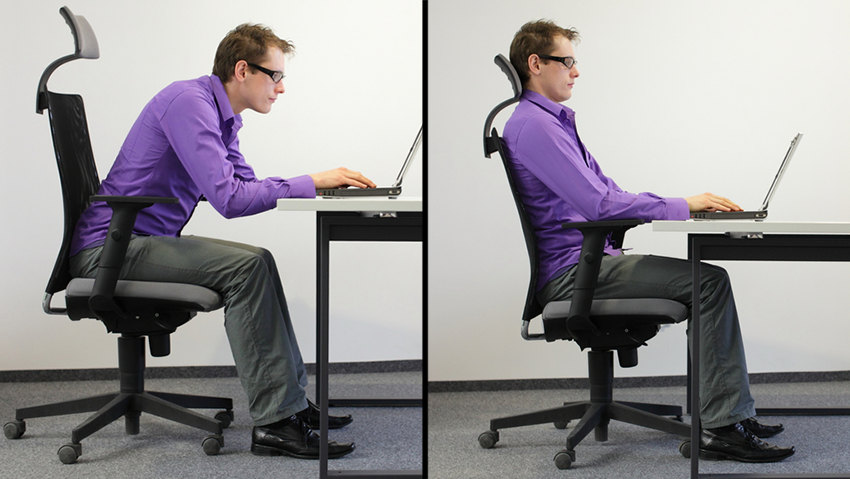
The link between sitting posture, mood and decision-making
(Photo: Marcin Balcerzak/Shutterstock)
Participants did not know their posture was being influenced
After initial tests in front of a computer screen, participants were asked to complete another task on a tablet. Researchers presented it as a test of a mobile application. For some participants, the tablet was placed on a stand atop an adjustable table in a way that encouraged them to sit upright. For others, the tablet was placed on a lower table, prompting them to lean forward.
The participants then completed a task designed to measure risk-taking. They could accumulate rewards by inflating a virtual balloon, but if the balloon burst, they lost everything they had earned. Participants who sat upright took greater risks and also tended to earn greater rewards.
Armony said the results suggested the participants were not simply behaving more impulsively, but were taking risks more effectively. In a questionnaire accompanying the task, participants in the upright group also reported significantly stronger feelings of pride, an emotion associated with positive mood.
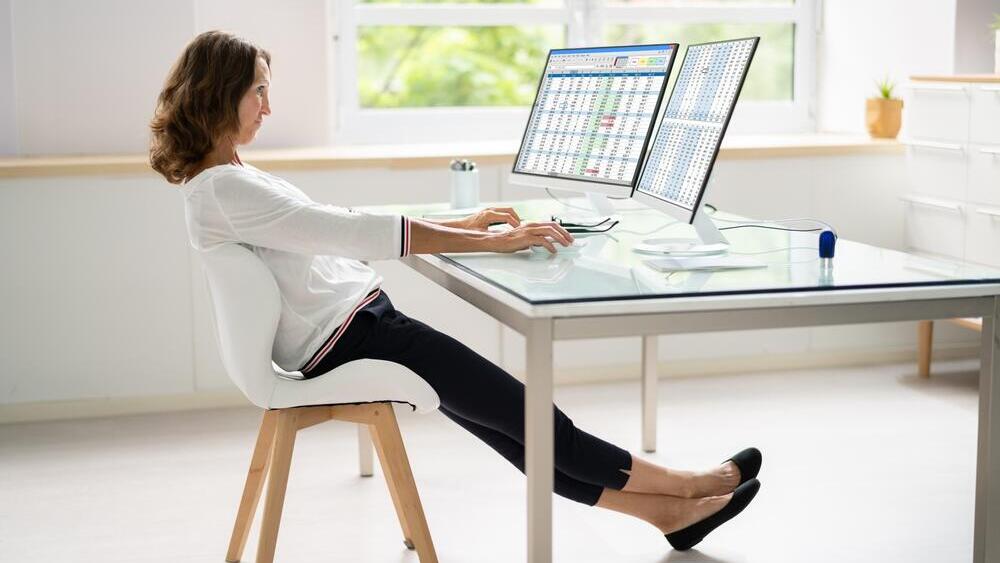
Researchers influenced participants’ posture through the placement of the tablet and the height of the table
(Photo: Shutterstock)
The researchers did not tell participants how to sit. Instead, they indirectly influenced their posture through the positioning of the tablet and table. In interviews conducted after the experiment, most participants said they had not noticed the manipulation.
The method helped address criticism of earlier research on “power poses” — namely, that participants may have been responding to researchers’ expectations rather than to the posture itself. The researchers also used video software to measure neck angle and determine whether participants had in fact adopted the intended posture. Earlier studies often did not measure posture in this way.
‘The body and mind are not entirely separate systems’
Gal Samoocha, a clinical psychologist with Maccabi Healthcare Services, explained that the study belongs to a field known as embodied cognition.
“The field examines the relationship between the body and mental processes such as emotions, thoughts and decision-making,” Samoocha said. “The central idea is that the body and mind are not entirely separate systems, and that certain physical states can influence our emotional experience and the way we interpret the world.”
According to Samoocha, some unconscious processes are not always directly accessible to us but can nevertheless affect our feelings and behavior. Various studies have found, for example, links between physical experiences and emotional states.

'The body and mind are not entirely separate systems'
(Photo: Shutterstock)
“When people think about the future, they have been found to tend to lean forward, while when recalling the past they tend more often to lean backward,” Samoocha said. “There are also studies showing a connection between experiences of social rejection and physical sensations, such as perceiving the surrounding environment as colder. In other words, an emotional experience can also be translated into a bodily experience.”
Another example concerns the connection between feelings of cleanliness and moral experience. According to Samoocha, when people think about an immoral act or experience moral discomfort, they may feel a stronger urge to clean themselves or engage in hygiene-related behavior, as though there were a connection between a psychological sense of having “clean hands” and the desire to become physically clean.
Improvement in self-esteem
When it comes to posture, Samoocha said it is important to distinguish between claims that a particular position alone can immediately change someone’s mood or make them more confident and the broader understanding that the body can influence how people experience themselves.

Participants who sat upright took greater risks and also tended to earn higher rewards
(Photo: Roman Samborskyi/Shutterstock)
“Even if someone adopts an upright posture, projects confidence or behaves in a way that expresses competence, it may influence how they feel internally,” Samoocha said. “This also connects with principles familiar from cognitive behavioral therapy, or CBT, according to which changes in behavior can subsequently affect thoughts and emotions. Sometimes, when a person behaves more confidently, their internal sense of confidence changes accordingly.”
The connection between the body and a person’s sense of self may also be reflected in broader habits. According to Samoocha, someone who begins exercising, taking better care of themselves, investing in their physical well-being and changing their habits may experience improved self-esteem and overall mental well-being.
Despite the study’s intriguing findings, Samoocha stressed that the field should be approached cautiously.
“The main message is that the body and mind are in constant interaction, and there is scientific support for the idea that they influence one another,” Samoocha said. “At the same time, it is important to wait and examine the strength of the findings and whether they can be replicated, rather than conclude that a simple action such as changing posture alone can resolve emotional difficulties or dramatically alter decision-making.”