


During intense combat, the mission is clear and the mind is occupied. But when the fighting subsides and routine begins to return, a void can open in which emotions, memories and thoughts that had been pushed aside begin to surface.
Against that backdrop, a senior official in the IDF’s mental health system sought to explain a recent succession of suicide cases among service members. “A period when the war declines in intensity is a period when distress can surface,” he said.
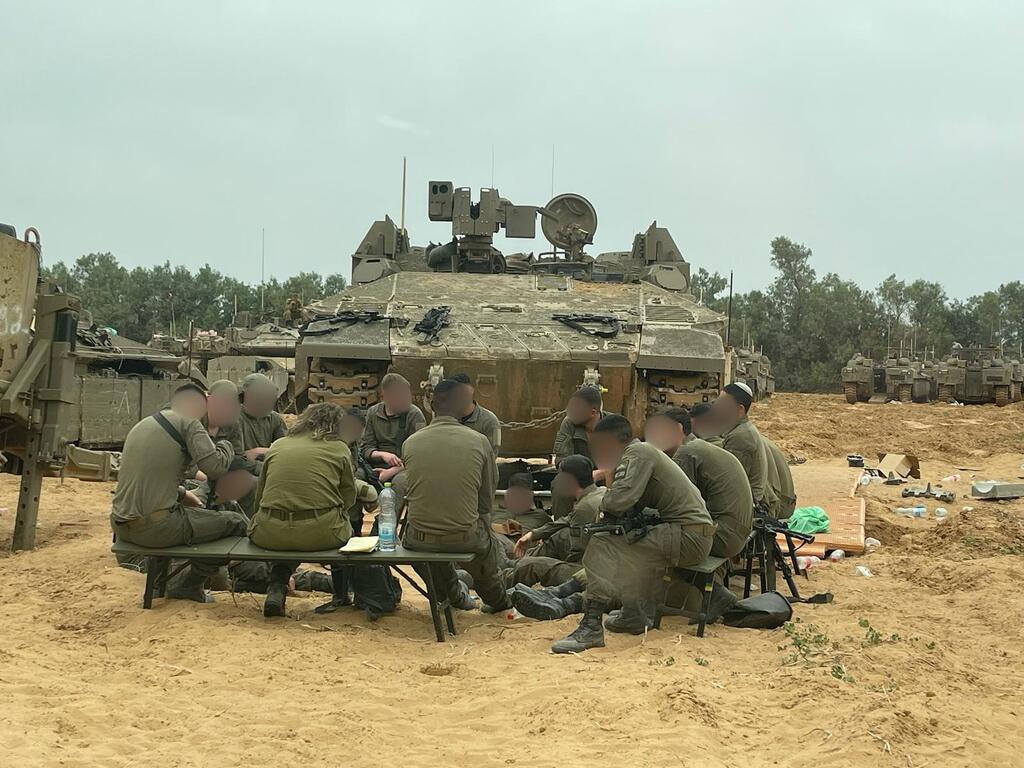
“People can be in two different states, doing or being. When we have a role, we have clear missions and objectives. When that changes and we return to a kind of routine, the sense of purpose is less clear and there is time to turn inward. Emotions, thoughts and memories emerge that we did not have time to deal with while we were occupied with doing.”
The distress he described does not necessarily indicate post-traumatic stress disorder. “When a person chooses to take their own life, it almost always comes from a place of illness,” the official said.
Every such death represents an individual tragedy, he stressed, but he argued that the recent succession of cases does not in itself indicate a broader trend.
“Every case is deeply distressing, but this is a statistical distribution. It does not accumulate in a linear way,” he said.
When several cases occur close together, the military examines whether there is any connection between them, he said. Every death outside operational circumstances is investigated by the Military Police Criminal Investigation Division, while a committee headed by a brigadier general convenes to examine the case, draw conclusions and identify lessons for the future.
‘The person who saw him was his commander’
According to the IDF, most service members who died by suicide had not previously approached military mental health professionals, making early recognition of warning signs a critical part of prevention.
“The person who saw him was his commander, the people serving alongside him in the unit,” the official said. “That is why we are investing heavily in practical tools for identifying distress and conducting a conversation.”
Part of that effort is a recently developed artificial intelligence tool that the IDF plans to introduce shortly. It is designed to train commanders and fellow service members to hold conversations with soldiers showing signs of distress.
“There is a gap between how capable people think they are of having this kind of conversation and what they actually do in practice,” he said.
The tool will supplement an online training program that every service member is now required to complete every six months, rather than once a year as previously required. The requirement also applies to reservists.
Another established suicide-prevention measure is making treatment more accessible. “If these people reach those who can help them, there is a high probability that we can prevent the tragic outcome,” the official said.
The IDF operates a 24-hour telephone line staffed by military mental health officers and available to all service members at *6690.
According to the official, waiting times for appointments with mental health officers are constantly monitored across units. The average wait is nine days, while the maximum in frontline units is 14 days. Soldiers in acute distress receive an immediate response.
The IDF’s mental health system has been reinforced throughout the war and now includes about 1,500 career personnel, reservists and civilian military employees.
About a year and a half ago, the military also created a new position, a mental health assessment specialist, staffed by soldiers in mandatory service who assist mental health officers, including by processing preliminary information.
A fourth training class for the role began last month, and the IDF is also preparing to launch an academic-track program under which participants will earn degrees in social work before returning to serve as military mental health officers.
Reducing access to weapons
Another critical part of prevention is reducing access to lethal means that service members could use to harm themselves.
“That is an inherent complexity in the IDF, all the more so during wartime,” the official said.
Alongside examining ways to reduce exposure to weapons, the military is exploring whether technology could be incorporated into personal firearms to prevent their use in a suicide attempt.
“We are examining whether technological measures can intervene in the weapon itself so that it will prevent gunfire intended for self-harm,” he said. “Such gunfire has certain physical characteristics, such as the angle and the way the weapon is held. It is a very significant technological challenge, and we are still working on it.”
In 2022, Armored Corps soldier Gadi Amit Isaacs died by suicide. His parents, Richard and Lisa, have since campaigned for clearer procedures for soldiers who return home carrying military-issued weapons.
“Gadi wasn’t suicidal. He wasn’t dealing with PTSD,” they previously told Yedioth Ahronoth. “He was a happy, social kid with plans for the future. There needs to be a clear protocol for what happens when a soldier comes home with a weapon and reaches an extreme situation.”
The issue is not new. According to the senior mental health official, the IDF carried out a major review in 2006 aimed primarily at reducing soldiers’ access to weapons, a policy change he said led to a sharp decline in suicides.
From the early 1990s until that year, he said, about 40 soldiers died by suicide annually. “Soldiers in rear-echelon positions, for example, stopped taking their weapons home,” he said. “Reducing exposure to weapons to the minimum necessary is essential.”
The dilemma over publication
The official also addressed criticism of the IDF for not proactively announcing individual suicide cases in the way it announces the death of a soldier killed in combat. “I think we are the only organization in Israel that proactively publishes its suicide data at the end of every year,” he said.
He argued that annual publication allows the military to examine the figures and compare them with equivalent periods, while each death must first be fully investigated before its circumstances can be determined.
Professional literature has documented a relationship between the way suspected suicide cases are reported and the risk of imitation. “I support public discussion of mental distress and suicide,” the official said. “It helps because it gives people in distress legitimacy to see that they are not unusual. The fact that the media discusses the phenomenon is positive, provided that it is done professionally.”
Careless reporting, however, can cause real harm, he said. “A service member who sees the picture and identifies characteristics similar to their own can conclude that if this person chose that particular solution, perhaps that is the solution for me as well,” he said. “Often, the story also takes on a tragic, heroic dimension. That is very dangerous and can encourage additional suicide cases.”

IDF’s ‘You’re Not Alone in This’ campaign
About a year ago, ynet revealed that the IDF had decided to reassess the fitness for service of reservists recognized by the Defense Ministry as having more than 30% disability related to mental health. “We know that among people suffering from PTSD there is a direct connection between repeated exposure to military service and a worsening of their condition,” the official said.
“As a military, we want to make sure the service member is fit for the mission: that they will not freeze in a dissociative state when orders are being shouted over the radio, that they will not erupt in rage at their commander, and that we are not harming them by calling them up.”
“Just as I would not send someone who broke a vertebra in their back on a march carrying 70 kilograms before sending them to an orthopedist, the same principle applies here.”
Until now, service members themselves were responsible for reporting changes in their medical condition. Under the new system, relevant information is transferred directly from the Defense Ministry’s Rehabilitation Department to the IDF. “A lot of the time, it simply doesn’t happen,” he said of self-reporting.
Responding to criticism over medical confidentiality, the official said the transfer of information by the Rehabilitation Department was permitted under provisions allowing information to be shared when necessary for “continuity of care.”
According to him, most service members who appealed decisions concerning their fitness were ultimately approved to continue reserve duty.
“But it is done with judgment,” he said. “I recognize that for many reservists dealing with PTSD, military service has a very important role in their lives. Functional continuity and preserving their identity are important, but it has to be done thoughtfully.”