

Women preparing to give birth are exposed to an endless stream of information about choosing a changing table, stroller, clothes and other essentials for the first days with a newborn. Amid all those preparations, breastfeeding is often viewed as something natural and intuitive. The expectation is that everything will happen on its own immediately after delivery, but many women discover that reality is more complicated.
Pain, difficulty latching, restlessness during feeding and a clear preference for one side are just some of the common challenges. These difficulties are often accompanied by feelings of frustration, guilt and concern that something is not going as it should.

It is important to understand that breastfeeding difficulties are not a sign of failure. They are a common challenge and, in many cases, can be eased by correctly identifying the factors affecting both the mother and the baby and by receiving appropriate support.
One factor that can affect breastfeeding, but is discussed less often, is the baby's physical experience during childbirth itself. Even after a completely normal delivery, some babies may develop a preference for one side or have limited neck movement, which can affect breastfeeding and warrant a professional evaluation.
For a newborn who is just learning to breastfeed, coordinating sucking, swallowing and breathing is a complex task. When a baby appears to "prefer" one side, it is not a conscious choice. In many cases, the baby is simply seeking the most comfortable position, where physical tension is reduced.
What should parents watch for?
Several signs may indicate that it is time to consult a professional:
- Difficulty latching onto the breast.
- Discomfort during breastfeeding or a consistent preference for one side.
- Limited movement and difficulty turning the head to one side.
- Body language suggesting tension during feeding, including arching the back or stiffening the body.
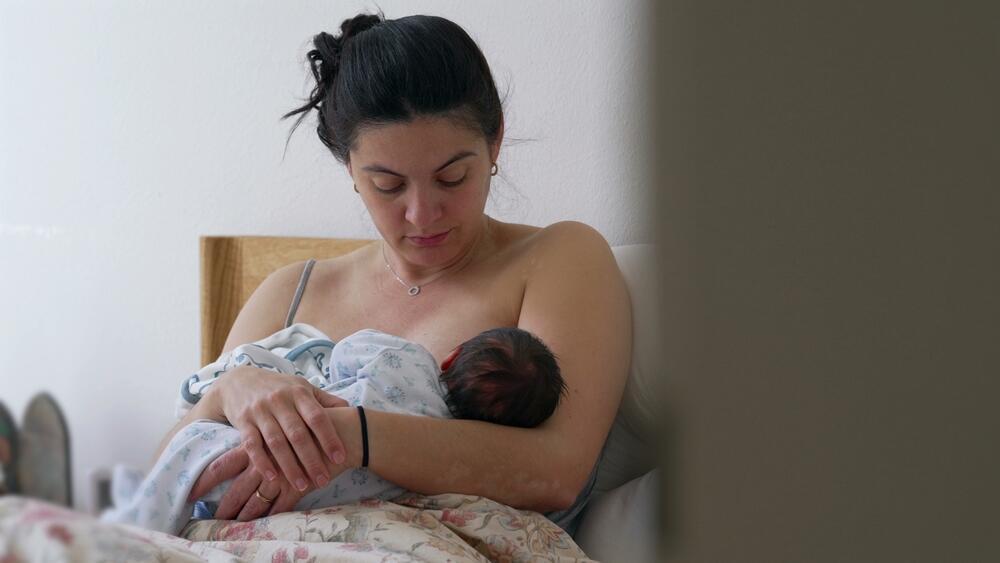
For a newborn who is just learning to breastfeed, coordinating sucking, swallowing and breathing is a complex task
(Photo: Shutterstock)
When several of these signs persist over time, it is important not to assume they will resolve on their own. Breastfeeding and feeding difficulties usually stem from a combination of factors rather than a single cause, making professional guidance advisable.
In many cases, the key is a broad support network involving multiple professionals. Lactation consultants, maternal and child health clinics, pediatricians and other healthcare providers can help identify the source of the problem and tailor the appropriate care.
In recent years, awareness has also grown of the potential contribution of complementary approaches, including osteopathy for infants, as part of a broader support system for mothers and babies. Osteopathic treatment for infants is based on gentle, precise manual touch aimed at "listening" to the baby's tissues, identifying tension and movement restrictions and gently relieving those areas of strain.
I have seen cases in which tension in a baby's neck or jaw was released, allowing the baby to move more freely, turn the head more easily in both directions and feel more comfortable during feeding.

Breastfeeding and feeding difficulties usually stem from a combination of factors
(Photo: Shutterstock)
When a lactation consultant focuses on breastfeeding technique, a physician confirms that everything is medically normal and an osteopath addresses the baby's physical tension, a comprehensive support system is created that can help restore parents' sense of calm and confidence.
At the same time, it is important to remember that breastfeeding difficulties cannot always be overcome. Some mothers seek professional advice, try different approaches and invest significant effort, yet breastfeeding remains impossible or simply is not the right fit for them or their baby.
Even in those cases, there is no place for feelings of guilt. The way a baby is fed does not define the quality of motherhood, and choosing what is best for the mother, the baby and the family is both appropriate and legitimate.
World Breastfeeding Week is intended not only to encourage breastfeeding but also to remind mothers that no one should have to face these challenges alone. When breastfeeding does not go as expected, asking for help is not a sign of failure but a natural part of the process. In many cases, a combination of professional support, emotional guidance and a shared focus on the needs of both mother and baby can turn a difficult experience into a calmer, safer and more positive journey for the entire family.
The author is head of osteopathy at Maccabi Tivi, the complementary medicine division of Maccabi Healthcare Services.