

Lung cancer claims more lives worldwide than any other type of cancer. But the fight against it does not begin in the treatment room. It begins much earlier, at the moment the disease is detected. Lung cancer treatment has advanced dramatically in recent years, but the chances of success depend largely on when it is diagnosed: The earlier the disease is detected, the greater the likelihood of treating it successfully. Alongside the development of new treatments, an equally important race is underway to find ways of identifying cancer in its earliest stages, before it causes significant symptoms.
Lung cancer is not a single disease but is divided into two main groups: non-small cell lung cancer, or NSCLC, the most common type, and small cell lung cancer, or SCLC, which is considered more aggressive. Smoking is the main risk factor, but the disease can also develop in people who have never smoked, including as a result of exposure to secondhand smoke, air pollution, radon gas or hazardous substances in the workplace and, in some cases, genetic predisposition.
Gallery
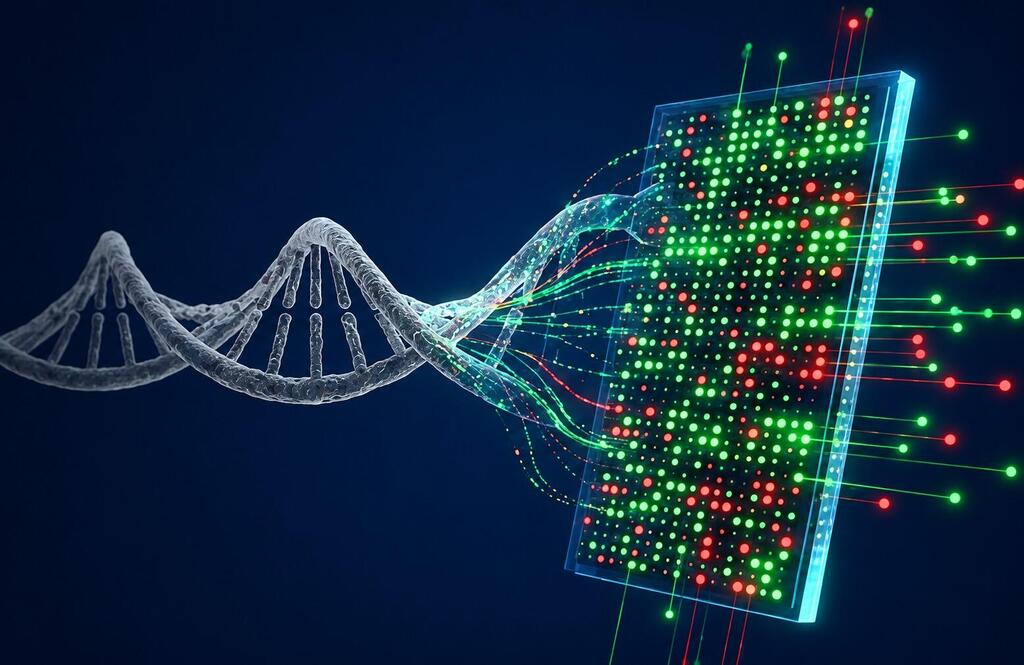
Instead of sequencing the DNA, the method uses light to read its chemical 'fingerprint'
(Photo/Graphic: Tel Aviv University)
One of the greatest challenges in confronting lung cancer is that it can develop silently in its early stages, without symptoms. When symptoms do appear, they may include a persistent cough, shortness of breath, chest pain, coughing up blood or unexplained weight loss. This is one reason the disease is often discovered only at stages 3 or 4, when treatment is more complex.
Treatment options include surgery, radiation, chemotherapy, targeted therapies, immunotherapy and combinations of these approaches. The choice of treatment depends on the type of tumor, the stage of the disease and the patient’s individual characteristics.
Detecting cancer through the blood
The main tool currently available to doctors for the early detection of lung cancer is low-dose CT screening. The test has already been shown to reduce mortality, but its benefits come at a cost: It is expensive, and in many cases a suspicious finding ultimately proves benign. Along the way, patients may undergo additional tests and sometimes even biopsies or invasive procedures that, in retrospect, turn out to have been unnecessary.
Against this backdrop, another promising field has developed in recent years: the "liquid biopsy." Instead of reaching the tumor and taking a sample from it, researchers try to identify the traces it leaves in the blood. They do so by examining cell-free DNA, which circulates in the bloodstream and is released, among other sources, by cancer cells.
 Prof. Yuval EbensteinPhoto: Tel Aviv University
The idea sounds simple, but the existing technology is not. Most tests in the field are based on DNA sequencing, an advanced, expensive and complex process that also requires suitable computing infrastructure. This led to the question at the heart of our research: Could meaningful biological information be extracted from the same blood sample in a simpler and less expensive way, making such tests far more accessible?
To answer that question, we developed a different way of reading the information contained in DNA at Tel Aviv University. Instead of sequencing it, our method uses light to detect a cancer signature, at less than one-tenth the cost of a sequencing-based test. At the heart of the method is a chemical process we developed that attaches light-emitting molecules to cancer-related changes in DNA. The signals they produce can be read and analyzed using a specialized DNA chip developed for lung cancer.
The study grew out of a broad collaboration among researchers from Tel Aviv University’s School of Chemistry and Department of Biomedical Engineering, JaxBio Technologies, Bnai Zion Medical Center, the English Hospital in Nazareth, Sheba Medical Center and Bar-Ilan University. The findings were published in the journal npj Precision Oncology.
The tumor’s chemical 'fingerprint'
The method we developed does not search for a single genetic marker or a specific mutation. Instead, it looks for an entire pattern, a kind of chemical "fingerprint" of the tumor created by a combination of sites associated with cancer.
The process begins by extracting cell-free DNA from a blood sample and labeling it with a fluorescent substance. The DNA is then placed on a specialized chip and scanned using optical technology. The result is a pattern of illuminated dots resembling a QR code. A computational model reads the pattern and attempts to determine whether it contains the signature associated with lung cancer.
The study included 103 people: 51 lung cancer patients and 52 healthy control subjects. After training the model, we developed a signature based on 170 regions of the genome. We then tested it in a blinded analysis of a separate validation group that the model had not previously encountered.
The results were encouraging. Among patients with stages 2 through 4 lung cancer, the test correctly detected 93.1% of cancer cases, a measure of its sensitivity. At the same time, it correctly classified 90.3% of the healthy participants, a measure of its specificity. The test was also able to distinguish between the two main subtypes of lung cancer.
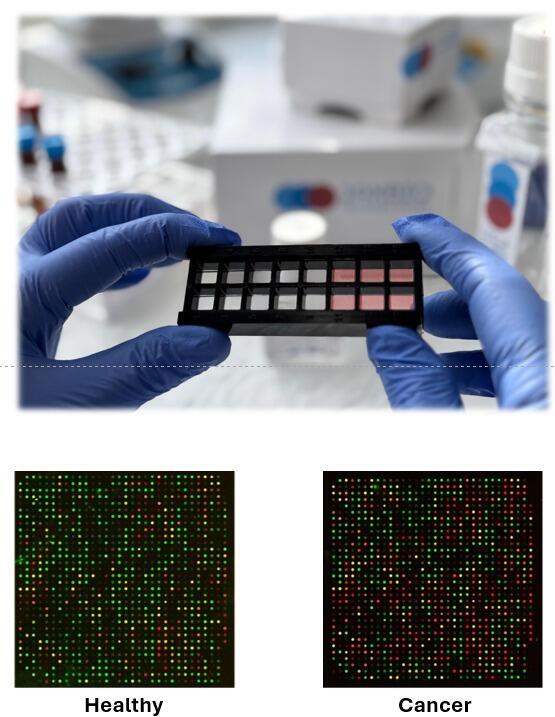
The new test detects light patterns in blood samples that are characteristic of lung cancer. Bottom right: a participant with cancer. Bottom left: a healthy participant
(Photo/Graphic: Tel Aviv University)
But diagnosis is only one point along the way. We also wanted to examine whether the same biological "fingerprint" might one day provide information about the question that concerns every patient during treatment: Is the treatment working?
The study offered an initial indication that it might. In a patient who responded to treatment, the DNA signature changed and became more similar to the signature found in healthy participants. By contrast, the signature changed very little in a patient who did not respond to treatment.
This is an intriguing finding, but at this stage it remains only a preliminary indication. The result is based on a very small number of patients, so no broad conclusions can be drawn from it. Larger studies will be needed to determine whether the method could eventually be used to monitor patients’ responses to treatment.
A simpler, faster and more accessible blood test
It is important to state clearly that the test we developed is not intended to replace CT scans and is not yet ready for routine medical use. To reach that point, we will need to validate the findings in larger studies, test the method in diverse populations and determine how effective it is at detecting the disease in its earliest stages.
The reason for optimism is not that the process is complete, but that the direction appears promising. One of the approach’s main advantages is its combination of simplicity, speed and low cost. The test can currently be completed within two to three days at a cost of about $60 per sample.
Should further studies confirm the findings, the test could eventually be used alongside imaging as a complementary tool, helping diagnose lung cancer earlier and perhaps assisting doctors in monitoring whether treatment is working.
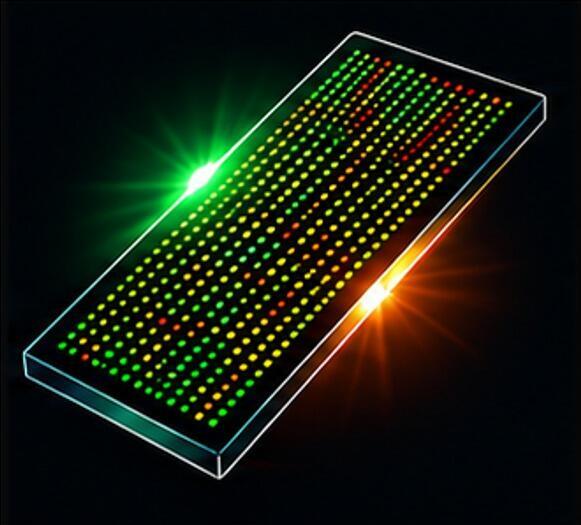
The test is still in the research stage and is not currently intended for routine medical use
(Photo/Graphic: Tel Aviv University)
That, in essence, is our vision: to make blood tests for cancer diagnosis more accessible, faster and less expensive without compromising accuracy. The goal is not to replace existing tools but to give doctors an additional layer of biological information to support their decision-making. In the future, a simple blood test could provide information that currently requires far more complex and expensive technology.
JaxBio Technologies was established with the university to advance the technology toward medical use. The company has raised $12 million and is now conducting clinical trials of the test at several hospitals in Israel and Europe.
The road from a scientific discovery to a tool used in the clinic remains long, and further studies will need to show that the approach is accurate, reliable and useful under clinical conditions. Should we succeed, we could expand the options available for diagnosing and monitoring lung cancer patients and make them accessible to many more people.
Sometimes the greatest medical breakthroughs are not born of more complex technology, but of the ability to obtain the same information in a simpler and more accessible way.