


Thousands of people in the United States have fallen ill in recent months with a parasitic infection of the digestive system. Now, after weeks of epidemiological investigation, health authorities have identified the source of the outbreak: chopped iceberg lettuce grown in Mexico and supplied to Taco Bell locations in five U.S. states. How did the parasite spread, and what does it mean for the vegetable drawer in your refrigerator and the way you handle leafy greens? ynet explains.
The outbreak, caused by the microscopic parasite Cyclospora cayetanensis, has made 2026 a record year for Cyclospora illness in the United States. An investigation by the U.S. Centers for Disease Control and Prevention and the Food and Drug Administration led to a single supplier of iceberg lettuce from Mexico. Following the findings, Taco Bell said it would stop using lettuce from that supplier, while Taylor Farms removed from the U.S. market all iceberg lettuce originating in central Mexico.
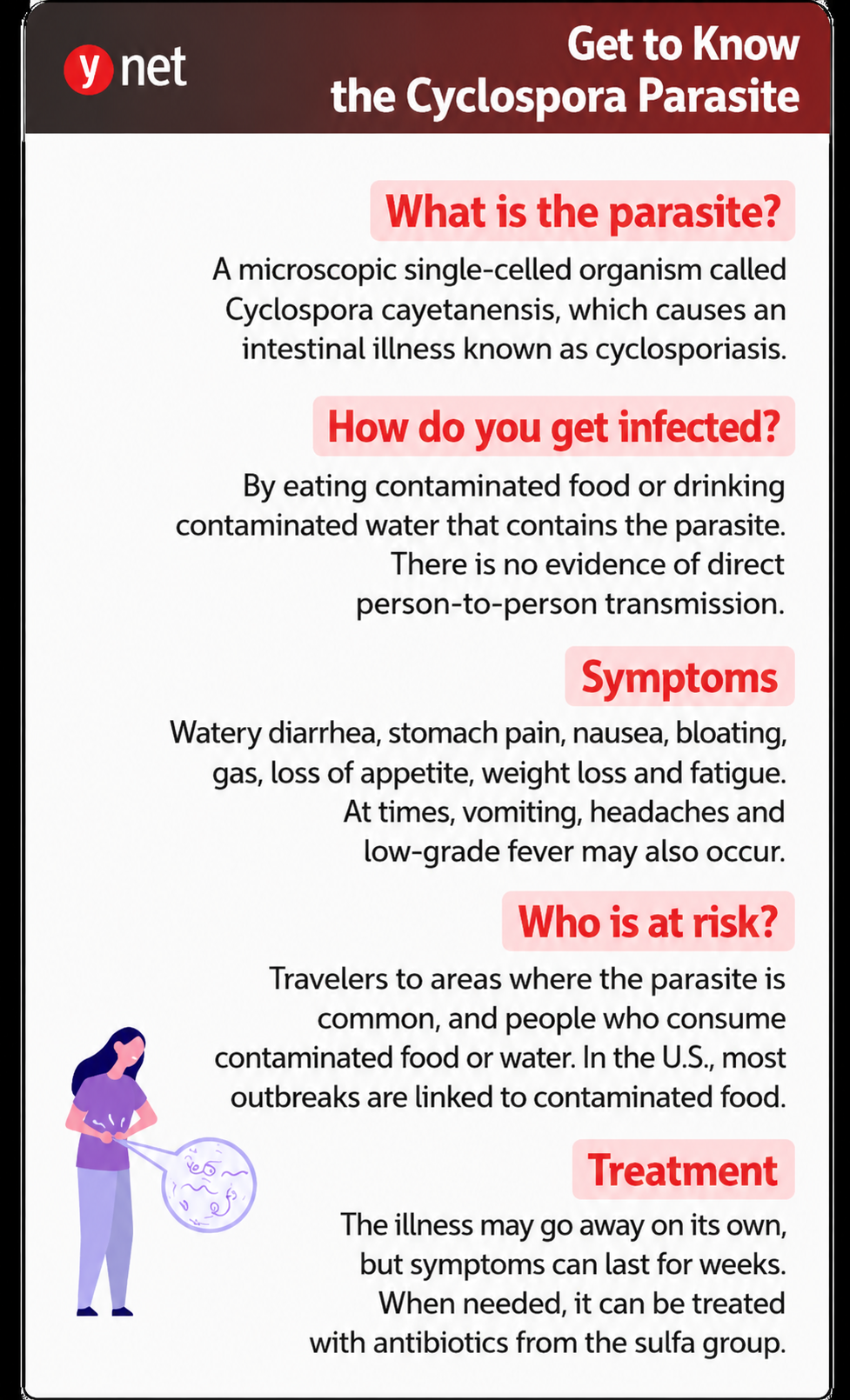
According to the latest CDC data, 1,644 people in five states were infected with Cyclospora and reported eating at Taco Bell, with illnesses beginning between May 13 and July 13. Of those, 94 required hospitalization, and no deaths were reported. But that cluster is only part of a much broader wave: This year, authorities have already received reports of more than 6,700 confirmed or suspected cases of the illness across the United States, compared with about 2,700 cases in all of 2025.
The parasite is transmitted through food or water contaminated with feces and can cause watery diarrhea, abdominal pain, nausea, fatigue and weight loss. Although the current outbreak is not connected to Israel, it raises a question relevant to nearly every household: Do we really know how to properly wash, store and prepare lettuce, cilantro, parsley and other leafy greens?
 Professor Nadav DavidovichPhoto: Danny Machles, Ben-Gurion University of the Negev
Experts say there is no reason to fear eating leafy greens or remove them from the menu. Still, the outbreak in the United States underscores the importance of proper kitchen hygiene and careful handling of vegetables, from purchase to plate.
Where can vegetables become contaminated?
The Cyclospora outbreak in the United States illustrates that even vegetables considered healthy and safe can become contaminated at various stages along the way from the field to the plate.
“Fresh vegetables are an agricultural product that can become contaminated throughout the supply chain — from the field to the packing plant,” said Professor Nadav Davidovitch, head of the health policy program at the Taub Center and a faculty member at Bar-Ilan University’s medical school.
According to Davidovitch, contamination can occur at different stages of growing and production, including through irrigation with reclaimed water used in agriculture, contact with animals or unclean hands. Therefore, he said, even products that look clean or come in packaging are not entirely risk-free. Davidovitch added that, beyond proper washing at home, it is important to maintain the cold chain as continuously as possible, from the moment vegetables are bought until they are stored in the refrigerator.
At the same time, Dr. Sigal Frishman, Clalit Health Services’ chief hospital dietitian, stressed that the outbreak should not lead people to avoid leafy greens.
“They are one of the healthiest components of the diet,” she said.
Leafy greens, she said, are rich in dietary fiber, folic acid, vitamins A, C and K, antioxidants and minerals that contribute to heart, digestive and immune system health.
“The key is not to stop eating them, but to know how to handle them properly.”
How to clean lettuce properly
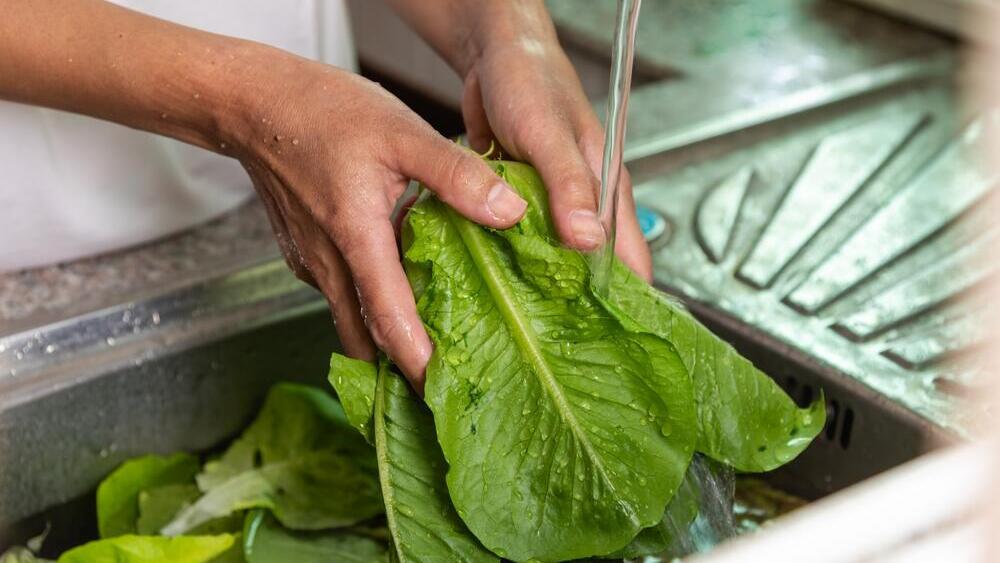
Davidovitch said one common mistake is simply running the leaves briefly under water. A quick rinse is not enough, he said, and it is recommended to soak the leaves for several minutes in a bowl of cold water while moving them around in the water.
“The shaking motion helps release soil residue and microscopic particles from the leaves,” he said.
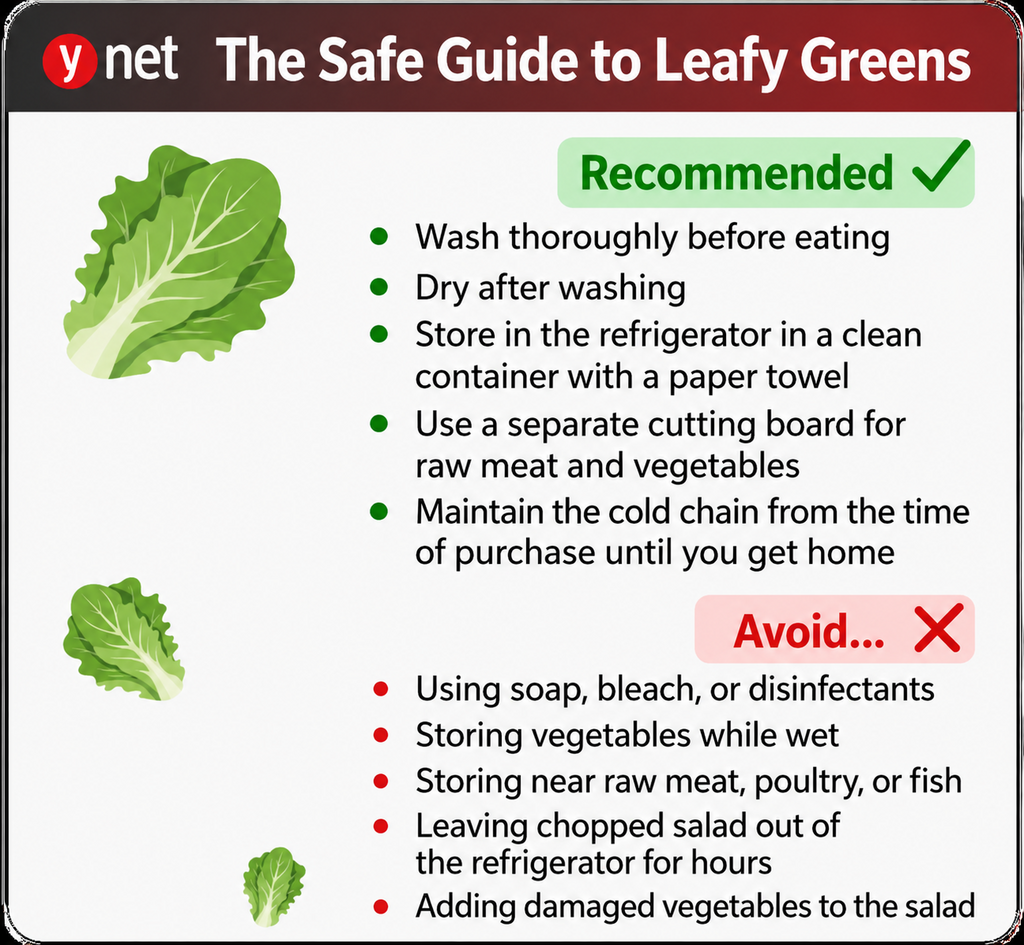
After washing, he recommends drying the leaves thoroughly with a salad spinner or paper towels, especially if they are not meant to be eaten immediately.
“Excess moisture can encourage bacterial growth and speed up spoilage,” he said.
 Dr. Sigal FrishmanPhoto: Rami Zarnagar
On one point, the two experts agree: There is no need to use soap, diluted bleach or other household disinfectants to clean leafy greens.
“They do not necessarily improve food safety and may leave unwanted residue,” according to Frishman.
What about bagged lettuce?
Davidovitch said a whole head of lettuce has a certain safety advantage because the outer layers provide natural protection and can be removed before the inner leaves are thoroughly washed. By contrast, he said, cutting the leaves during industrial processing creates wounds in the leaf tissue through which bacteria can enter and multiply.
In addition, if some of the leaves in a bag are contaminated during production, the contamination can spread to the rest of the leaves. Therefore, he said, even when the package says the product is “washed and ready to eat,” washing it again at home can add another layer of safety, especially for at-risk populations.
Frishman takes a slightly different approach. She said washed and packaged lettuce can be a safe choice as long as it is produced under proper quality control, kept refrigerated and consumed before its expiration date.
“There is no need to rewash lettuce labeled ‘washed and ready to eat,’ unless the package has been open for a long time or the leaves do not look normal,” she said.
Mistakes many people make at home
According to the experts, many mistakes that can increase the risk of food contamination happen in the home kitchen.
Davidovitch said one common error is storing leafy greens while they are wet inside a sealed bag, which accelerates spoilage and encourages bacterial growth. He also warned against storing vegetables next to raw meat, poultry or fish that could drip and contaminate them, and against using the same cutting board for raw meat and vegetables without thoroughly disinfecting it between uses. In addition, he recommends not reusing the vegetables’ original bag once it has been opened, but instead transferring the contents to a clean storage container.
Frishman pointed to another common mistake: washing all the vegetables immediately after buying them and putting them in the refrigerator while they are still wet. She said it is better to wash vegetables close to the time they are eaten or, alternatively, to dry them thoroughly before storing them.
She recommends keeping lettuce in a sealed container with a paper towel to absorb excess moisture, and replacing the towel when it becomes wet. Cilantro and parsley, she added, keep well when gently wrapped in a dry paper towel and placed in a bag or container in the refrigerator, or when their stems are placed in a glass with a little water and loosely covered with a bag.
Other mistakes that can harm food safety, she said, include leaving chopped salad at room temperature for hours or adding damaged vegetables to the salad bowl.
When should you see a doctor?
Infections originating in leafy greens, including Cyclospora, salmonella and E. coli, usually cause gastrointestinal symptoms. Still, there are situations in which medical evaluation is recommended.
Davidovitch said warning signs include diarrhea lasting more than several days, especially bloody diarrhea, fever accompanying digestive symptoms, vomiting that makes drinking difficult and could lead to dehydration, and signs of dehydration such as extreme dry mouth, decreased urination, dizziness or a rapid pulse.
He also stressed that special vigilance is needed when it comes to children, older adults and people with weakened immune systems, because their symptoms can worsen quickly.
Frishman also emphasized the importance of extra caution among at-risk groups, including pregnant women, transplant recipients and people with weakened immune systems. For them, she said, it is especially important to carefully wash, dry and properly prepare leafy greens at home.