

More than 2,000 Israelis have been injured while rushing to bomb shelters since the start of Operation Roaring Lion, according to Health Ministry data, highlighting a growing but often overlooked risk during missile attacks.
Among them is Yitzhak Pinto, 66, from Kiryat Ata, who was injured in the middle of the night while running to his mamad, a reinforced safe room standard in Israeli homes.
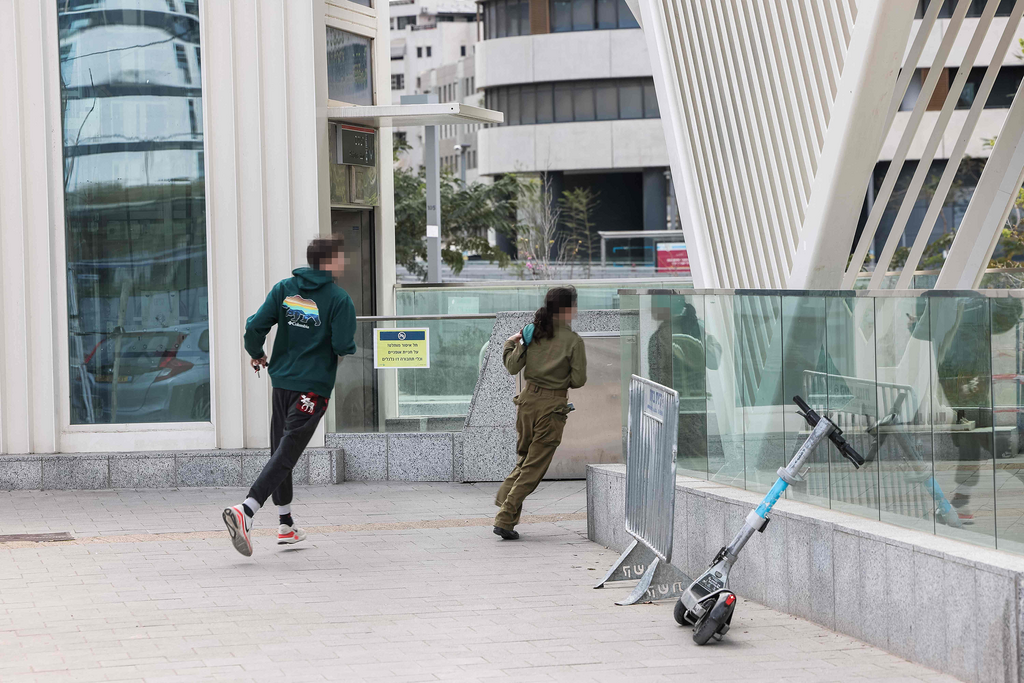
“At 1 a.m., my wife and I suddenly heard a siren. I jumped out of bed — my body got up, but my head hadn’t woken up yet,” Pinto said. “After three steps I slipped. Luckily not on the stairs. My family tried to help me up, but it was impossible. I understood something was wrong.”
Paramedics from Magen David Adom evacuated him to Rambam Medical Center in Haifa, where doctors diagnosed a hip fracture. He underwent surgery to stabilize the bone with an intramedullary nail and was discharged after two days to continue rehabilitation at home, as hospitals work to reduce inpatient loads during the war.
“I need a walker. Without it I can’t move,” Pinto said. “My wife has to help me shower. My life has completely changed. Sometimes the pain feels like 200 out of 100 — I scream and cry.”
He is not alone. Between the start of the operation and March 30, 2026, 2,138 people were evacuated to hospitals after being injured on their way to protected spaces. Five were seriously wounded, 2,119 sustained light to moderate injuries and 13 were treated for acute anxiety. All severe injuries were among people age 70 and older.
A new study conducted at Rambam Medical Center sheds further light on the trend. Researchers analyzed 174 cases of falls and orthopedic injuries recorded between October 2024 and June 2025, when northern Israel faced frequent rocket fire from Lebanon and Iran.
The findings show that 88% of injuries occurred inside the home, typically along the route to a safe room. Only 4.6% took place in public areas such as streets or sidewalks and 7.5% at workplaces.
“The hallway to the safe room can be just as dangerous as the threat outside,” said Dr. Yaniv Keren, deputy director of the orthopedic division at Rambam, and Dr. Yosef Plachi, an orthopedic resident who helped lead the study.
Researchers found that 57.5% of injuries were blunt trauma, including bruises and contusions. However, 34.5% involved fractures, some severe. About 17% of patients required open orthopedic surgery, including fracture fixation and joint replacement, while 6% underwent minimally invasive procedures. Overall, 21% were hospitalized.
The most common injury sites were the neck (24.1%), followed by the back (16.7%), wrist (13.2%) and knee (12.1%).
“The injury pattern fits forward falls,” Plachi said. “People lose balance, try to break the fall with their hands and fall forward, transferring the load to the neck, back and upper limbs. In older adults, this can result in complex fractures that often require surgery and prolonged rehabilitation.”

(Photo: Ilana Curiel)
The study also found that sirens occur throughout the day, with peaks in the early morning and evening — times when people are getting out of bed, leaving the house or moving around at home.
“Sirens happen during the most routine moments — getting out of bed, stepping out of the shower or walking through a dark hallway,” Plachi said. “People jump up suddenly, run barefoot, sometimes in the dark, through cluttered spaces — and that’s exactly where we see the falls.”
Sigal Bartner, 55, from Karmiel, slipped while running to her safe room during an evening siren.
“It takes a second and a half to get from the living room to the safe room, but I slipped and fell on my back,” she said. “I was alone. When I got up, I saw my left hand was completely crooked. I immediately understood something was very wrong.”
She went to Rambam’s emergency room, where doctors diagnosed a wrist fracture. She later underwent surgery to stabilize the bone with a plate and screws.
“I’m a very active, independent person,” she said. “Suddenly needing help with basic things — tying my hair or opening toothpaste — is not simple. I woke up at 3 a.m. from the pain. I felt like I was seeing stars.”
Another patient, Ronit, 65, fractured her arm while running to shelter during a yoga class.
“I took a few steps and suddenly fell flat,” she said. “My wrist went one way and the bone shifted out of place. It was a terrible sight.”
Researchers say certain groups are at higher risk. Women over 50 are more prone to osteoporosis, which weakens bone density and increases the likelihood of fractures. Chronic conditions also play a role: about 42.5% of patients had metabolic diseases such as diabetes and 26.4% had cardiovascular conditions.
“These conditions can affect balance, blood pressure and muscle strength,” Keren said. “A person with diabetes or heart disease may not be able to transition quickly from sitting to running when a siren sounds.”
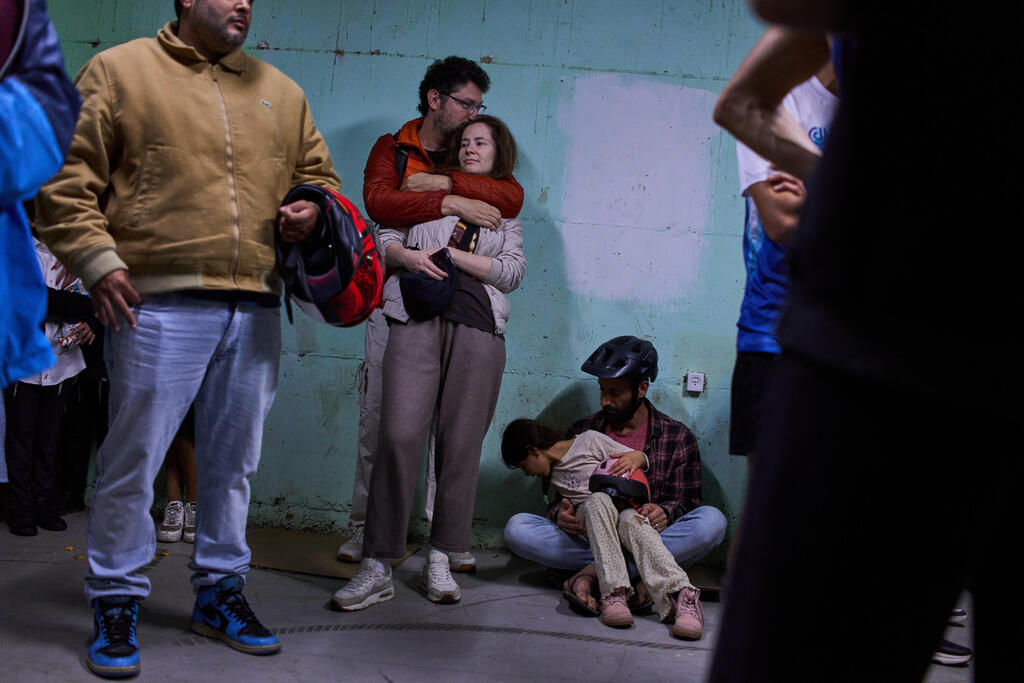
(Photo: AP Photo / Oded Balilty)
Despite advance warnings sometimes issued before missile fire from Iran, Keren said injuries persist. “People still run in panic. Even the warning itself can trigger stress.”
Doctors emphasize that Israelis should continue to follow Home Front Command guidelines and reach protected spaces in time, but urge steps to reduce fall risk.
Recommendations include clearing hallways of obstacles such as loose rugs and furniture, ensuring proper lighting — including night lights — and wearing closed, non-slip footwear. Families with elderly members or people with chronic conditions are advised to create a “home protection plan” that prioritizes controlled, steady movement rather than rushing.
“The war will eventually end, but the damage from these falls can last for years,” Keren said. “We cannot prevent the sirens, but we can make the way to the safe room safer.”
Pinto, still recovering at home, offered similar advice: “When there’s a siren, take a moment to orient yourself, then walk to the safe room. There’s no need to rush. People get up in panic — but you have to stop, sit for a second and calm down. Don’t run.”