

Yael, 36, a mother of two with a demanding job, had felt for months that something had changed. She was more tired than usual and found it harder to concentrate during meetings. Workouts that had once come easily became difficult, and by the end of each day she felt completely drained.
She went to her family doctor and was sent for blood tests. Her hemoglobin was normal at 12.5 grams per deciliter, and her ferritin level, 24 nanograms per milliliter, was not marked as abnormal. Her doctor explained that she was not anemic and that her iron stores were within the laboratory’s normal range. Yael went home frustrated. Her tests might have been normal, but her fatigue had not gone anywhere.

Her experience, and the frustration that comes with it, is familiar to many patients. It is precisely the problem addressed by new guidelines issued this month by the American Society of Hematology, or ASH, which recommend higher ferritin thresholds for diagnosing iron deficiency in several groups.
Fatigue can come before anemia
Iron plays a central role in producing hemoglobin, the protein in red blood cells that carries oxygen. But that is only one of its functions. Iron is also needed for cellular energy production, muscle function, nervous system activity and the production of neurotransmitters.
When the body begins to lose iron, it first draws on its stored reserves. The most commonly used blood marker for estimating those stores is ferritin, a protein that stores iron mainly in the liver, spleen and bone marrow.
Anemia develops later in the process, once iron stores have already been significantly depleted. Before that happens, iron deficiency may be associated with fatigue, difficulty concentrating, headaches, reduced exercise capacity, hair loss and even unusual symptoms such as restless legs or cravings to eat non-food substances such as chalk or ice.
Those symptoms are not specific to iron deficiency and can have many other causes. But significant iron deficiency can produce symptoms even when a person is not anemic.
How the old ‘normal’ range may have missed cases
The idea that iron deficiency should be identified and treated before anemia develops is not new. The problem has partly been the reference ranges used by laboratories.
Many laboratory ranges were derived from testing populations considered generally healthy without necessarily establishing that everyone included had adequate iron stores. Some may themselves have been iron deficient, pushing the lower boundary of the supposedly “normal” range too low.
That can create cases like Yael’s, in which a relatively low ferritin level is not flagged by the laboratory even though it may meet a clinical definition of iron deficiency.
The major change in the new guidelines is the move away from relying only on a statistical laboratory reference range and toward a clinical decision threshold, a value intended to help physicians decide when further evaluation or management may be warranted.
ASH says higher ferritin cutoffs should make it easier to identify iron deficiency that previously went unrecognized. For different populations, the recommendations are:
Adults without inflammation: Iron deficiency should be diagnosed at a ferritin level of 30 ng/mL or lower, rather than the previous cutoff of 15. Under that threshold, Yael’s ferritin level of 24 would meet the diagnostic criterion for iron deficiency.
 Dr. Merav Barzilai Photo: Meir Cohen
For adults with signs or symptoms associated with iron deficiency or continuing risk factors, a ferritin level of 50 ng/mL or lower may also be appropriate for diagnosis and management decisions.
Menstruating women and adolescents: The recommended threshold is also 30 ng/mL or lower. When there is heavy menstrual bleeding or other abnormal uterine bleeding, symptoms consistent with iron deficiency, additional risk factors, planned surgery or plans for pregnancy, a threshold of up to 50 ng/mL may be appropriate.
Pregnancy: The recommended diagnostic cutoff is 30 ng/mL or lower. For pregnant people who are already anemic, with or without additional symptoms or risk factors, a ferritin level of up to 50 ng/mL may be appropriate in diagnosing iron deficiency and guiding management.
The guidelines specifically recommend against using the older cutoff of 15 ng/mL to rule out iron deficiency during pregnancy.
Children aged 9 months to 4 years: The recommended threshold rises from 12 to 20 ng/mL, with the aim of identifying deficiency earlier rather than waiting until anemia or developmental problems appear.
When ferritin can be misleading
Inflammation complicates the picture. Ferritin is also an acute-phase protein, meaning its level can rise during inflammation. Infection, inflammatory disease, cancer, kidney disease and other chronic illnesses can therefore push ferritin upward.
In such cases, a ferritin result that appears normal, or even high, does not necessarily rule out iron deficiency. For adults with inflammation, the new guidelines therefore advise looking not only at ferritin but also at transferrin saturation, or TSAT.
If ferritin gives an indication of how much iron is stored in the body’s “warehouse,” TSAT helps show how much iron is available in the bloodstream for tissues and red blood cell production.
In adults with inflammation, iron deficiency may be considered when TSAT is below 20% or ferritin is below 100 ng/mL, interpreted in the context of the underlying condition and the full clinical picture.
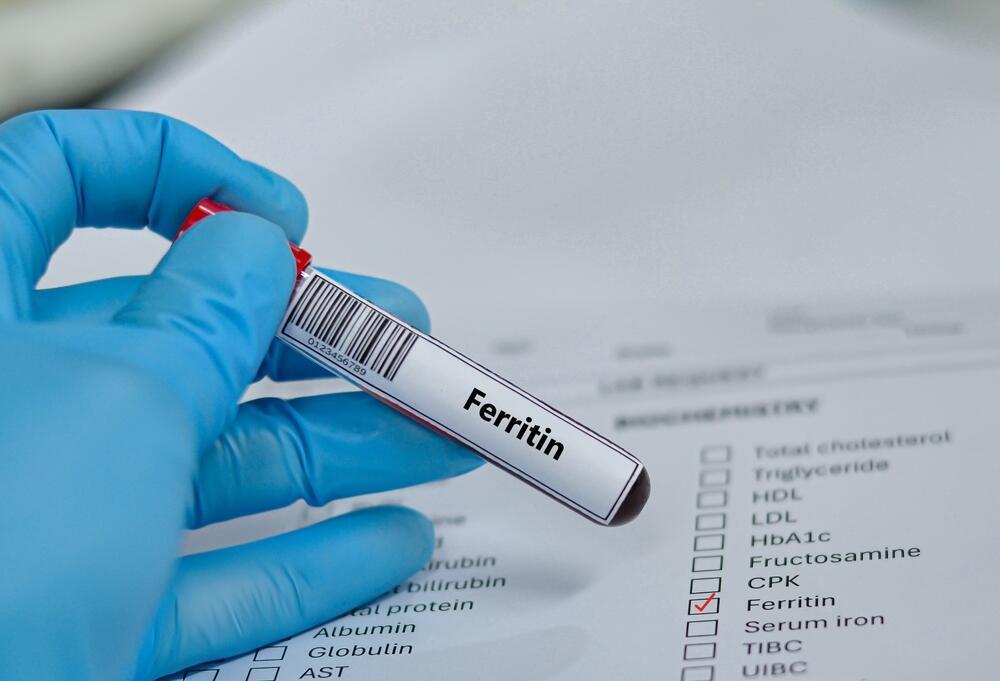
The guidelines recommend moving from a statistical reference range to a 'clinical decision threshold'
(Photo: shutterstock)
Weakness and fatigue are extremely common complaints, and they have many possible explanations. Taking iron unnecessarily can cause side effects and, in some circumstances, harm.
The new ASH guidelines focus on diagnosis, not treatment. Separate treatment guidance is still being developed. That means people should not begin taking iron supplements on their own simply because they recognize their symptoms or have a ferritin result near one of the new thresholds. Testing and treatment decisions should be made with a physician after appropriate evaluation.
There is another important caveat. Most of the recommendations are conditional. The clinical benefit of moving the threshold from 15 to 30, or in some circumstances to 50, has not been directly established through trials in which patients were diagnosed and treated according to competing ferritin cutoffs.
The recommendations are based primarily on evidence about the diagnostic accuracy of those thresholds, together with physiological data and indirect evidence regarding the effects of treatment. And once iron deficiency is identified, finding why it developed is essential.
Heavy menstrual bleeding, an iron-poor diet, blood donation, impaired absorption and gastrointestinal bleeding are only some of the possible causes.
The new guidelines therefore amount to more than changing a number on a laboratory report. For people like Yael, who experience persistent fatigue and impaired quality of life but have repeatedly been told that their test results are normal, they could change what doctors recognize as a possible iron deficiency and when they begin investigating it.
Because the guidance is new, it may take time before updated thresholds are incorporated into the reference ranges displayed by health funds, hospitals and other laboratories.
Good medicine also means being willing to revise old assumptions when the evidence changes, and keeping the patient, rather than a laboratory asterisk, at the center of the diagnosis.
- Dr. Merav Barzilai, specialist in internal medicine and hematology at the Blood Bank, Rabin Medical Center–Beilinson Hospital