

The overhaul of childhood vaccinations in the United States, announced last week by U.S. President Donald Trump, is also raising concerns in Israel. Senior Israeli experts warn it could influence how vaccine policy is shaped here, sway public opinion and harm public health.
“Decisions should be based on data, and that is not what is happening here. The available data do not support Trump’s decisions, unequivocally,” Prof. Yasmin Maor, head of the Infectious Diseases Unit at Wolfson Medical Center and chair of the Israeli Society for Infectious Diseases, told ynet.
Gallery
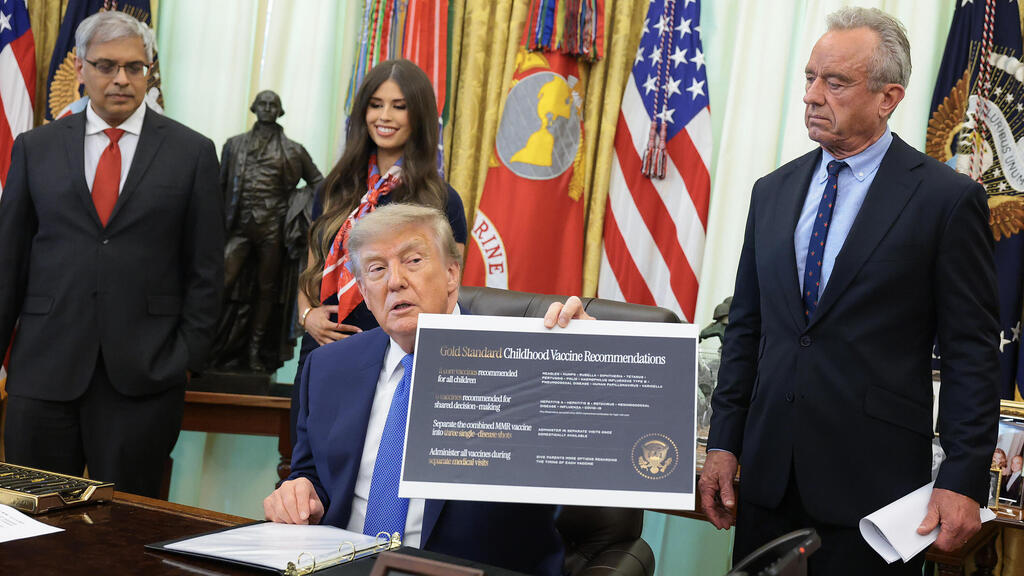
President Trump launched the initiative without new scientific evidence to justify it
(Photo: Anna Moneymaker/Getty Images)
“I also don’t think it is Trump’s role to reach these conclusions. That is the role of professionals,” Maor added. “Vaccination is ultimately not a political decision. It is supposed to be a professional one.”
In an executive order signed last week, Trump called for narrowing the list of vaccines routinely recommended for all children, providing the combined measles, mumps and rubella vaccine, or MMR, as three separate vaccines and, where possible, avoiding the administration of multiple childhood vaccines during the same doctor’s visit. Doctors and infectious disease experts say there is no new scientific evidence justifying such a move and warn it could leave children unprotected against preventable diseases.
“The public needs to remember that many of the diseases we vaccinate against have almost disappeared, so they are no longer in front of us to remind us how terrible they are, how many people die from them and how many are left with disabilities,” Maor said. “The purpose of vaccination is to prevent illness and death, and that is what should guide us.”
She said the full consequences of scaling back vaccinations in the United States may become apparent only years from now.
“With hepatitis B, we will not see the disastrous results now, but in five to 10 years, because conditions such as cirrhosis, liver failure and liver tumors take time to develop,” she said. “It’s not that you stop vaccinating and see something terrible the next day. It takes a long time, and afterward it is very difficult to turn back the clock. People who become sick and die because of these decisions cannot be brought back.”
Fears of falling vaccination rates
The most unusual part of the order concerns the MMR vaccine. For decades, children in the United States and around the world have received a single vaccine that protects against measles, mumps and rubella. In Israel, the routine combination also protects against chickenpox. Trump’s order calls for plans to make the three MMR components available separately and recommends greater separation between vaccine visits.
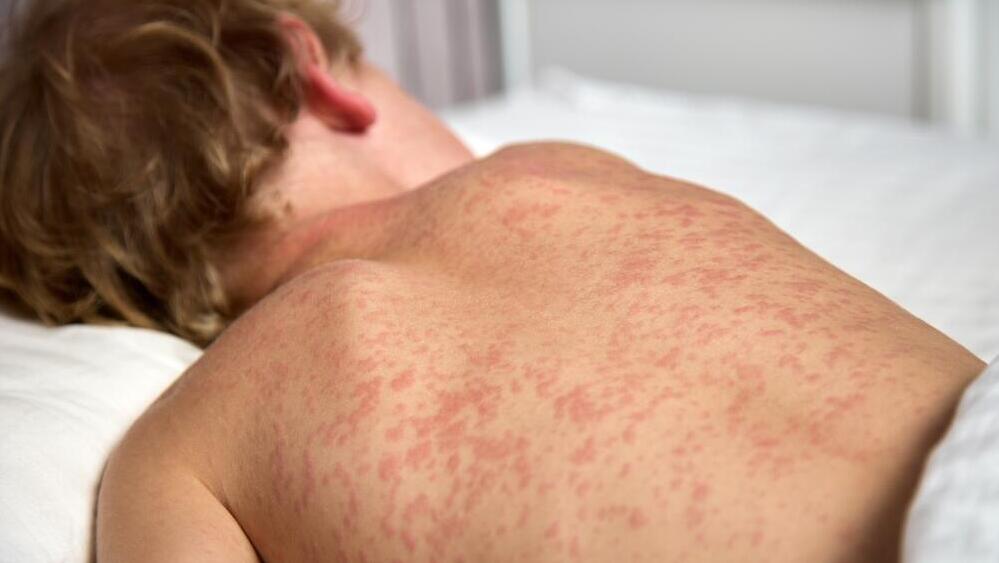
'There is no reason for a 1- or 2-year-old child to die of measles when we have such a good vaccine'
(Photo: Shutterstock)
Prof. Ilan Dalal, chairman of the Israel Pediatric Association and head of the Pediatrics Division at Wolfson Medical Center, warned of the consequences.
“The meaning is clear: Vaccination coverage will fall significantly,” he said. “There are already measles outbreaks in some parts of the United States, just as there are here. This disease is so contagious that it does not take a very large decline in vaccination rates for it to spread. There is no reason for a 1- or 2-year-old child to die of measles when we have such a good vaccine.”
 Prof. Yasmin MaorPhoto: Shlomi Mizrahi
Maor also believes separating the vaccines could mean some children never complete the vaccination schedule. “Every split means a parent has to take another day off work and come in again,” she said. “There are studies showing that this does not increase vaccination rates, it only lowers them. It is not only a matter of principle, but of everyday life. A family with three children, or 10 children, will not be able to make that many visits to a well-baby clinic.”
Prof. Galia Grisaru, head of the Pediatric Infectious Diseases Unit at Dana-Dwek Children’s Hospital at Sourasky Medical Center, explained why the preferred approach is generally to combine vaccines.
“Parents sometimes ask why we give a five-in-one vaccine, but it is not really a burden on the immune system. The immune system is exposed to hundreds of thousands of antigens from the environment every day,” she said. “Modern vaccines contain very limited antigenic components, so the burden is far lower. Combining vaccines reduces the number of injections a child receives and increases the likelihood that the child will complete the entire vaccination schedule.”
 Prof. Galia GrisaruPhoto: Sourasky Medical Center
Timing also matters, she said. “A great deal of thought goes into deciding to give one vaccine at 2 months and another at age 1, during the period when a child is most vulnerable to those diseases,” Grisaru said. “If we split the vaccines and give each component at a different time, we expose children to the very diseases we are trying to prevent.”
Maor added that administering vaccines together provides adequate protection and does not significantly increase the rate of side effects.
Will Israel follow the same path?
The current recommendations follow broader changes led by U.S. Health Secretary Robert F. Kennedy Jr., who has long questioned aspects of vaccine safety and policy. The U.S. childhood immunization schedule was already restructured earlier this year after a federal review ordered by Trump, with vaccines divided into categories including those recommended for all children and those subject to shared clinical decision-making.
“Until about two years ago, the United States had a very serious and responsible vaccine committee,” said Maor, who herself serves on Israel’s vaccine advisory committee. “The discussions were thorough and the material presented to the committee was extremely serious.”
“What has happened over the past two years is that committee members were replaced by people who are openly opposed to vaccines, and the way the discussions are conducted — their seriousness and the material on which they are based — has changed completely,” she said. “Today, we can no longer say that we can simply look to that committee for guidance. Every decision coming from there has to be examined independently.”
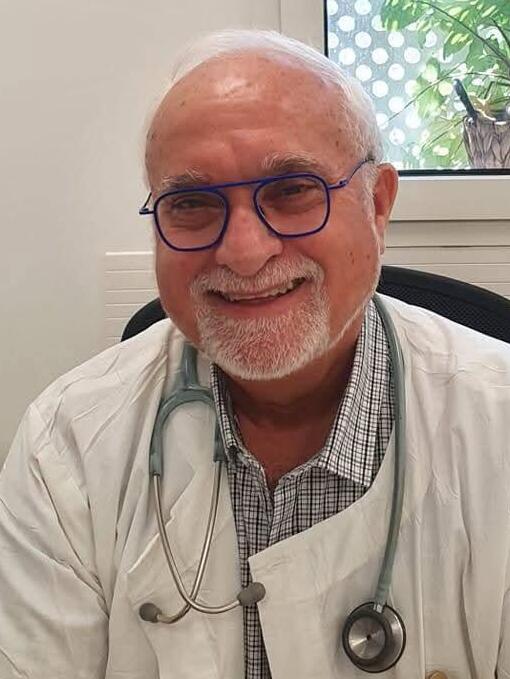 Prof. Ilan Dalal Photo: PR
The Israel Pediatric Association is also concerned about the U.S. changes and plans to issue a position paper on the matter. “When you want to kill something, you don’t always have to say so explicitly,” Dalal said. “Trump does not say he is against vaccines, but in practice he is taking steps that will damage accepted vaccination policy. Saying that some vaccines should be given only after a shared decision by the doctor and parents is an elegant way to ‘kill’ routine vaccination and harm public health.”
If the U.S. vaccination program shifts further from routine recommendations toward optional use, he said, “there will be an even more significant decline in vaccination rates, and children and adults will get sicker. What is happening in the United States is contagious in another sense as well — there is a tendency to imitate what happens there, and it would be extremely bad if that happened in Israel too.”
Sowing doubt among the public
Maor warned that U.S. policy could strengthen political forces in Israel seeking to undermine existing recommendations.
“We saw last year how elements on the far right wanted Israel to leave the World Health Organization because that was the trend in the United States,” she said. “Fortunately, we have not reached the point in Israel where the composition of the vaccine committee has been changed, but these voices are already being heard in the corridors, and that is very troubling and frightening.” She said public willingness to get vaccinated in Israel could also be harmed.
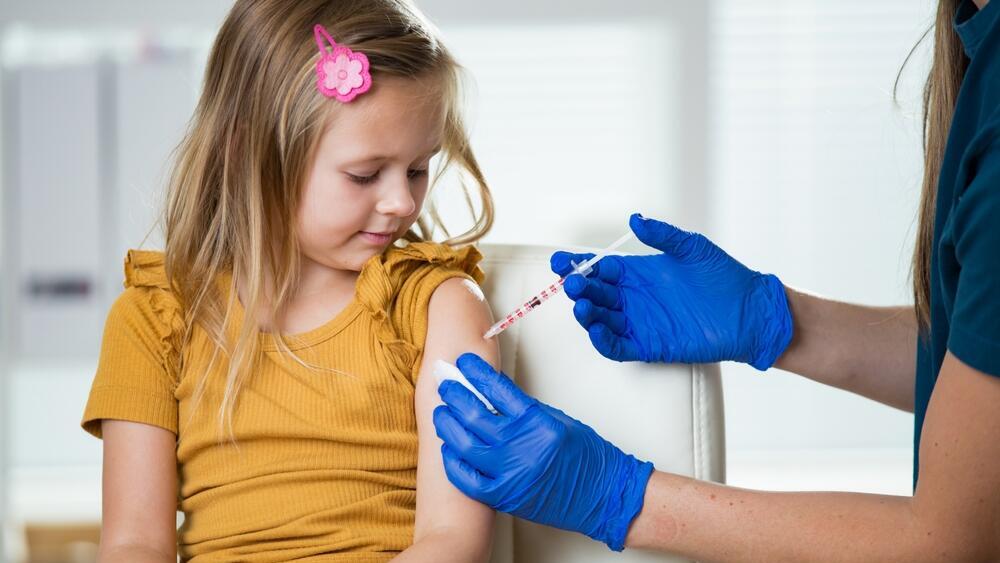
Vaccines protect children but are undermined by misinformation, myths and rumors
(Photo: Shutterstock)
“The people most likely to ‘buy into’ this information are those who were already opposed to vaccines, and it reduces our ability to persuade them,” she said. “It also creates doubt among people who are not necessarily vaccine opponents. We can see the catastrophic consequences of failing to vaccinate in the measles outbreak — children have died from it, deaths that could have been prevented.”
Grisaru said parents should make vaccination decisions based on reliable information. “We still hear the myth that the measles vaccine causes autism, even though it has long been disproved, and it is very difficult to eradicate,” she said. “It is important for people to get their information from established, reliable sources rather than questionable ones.”