


Almost everyone has experienced heartburn at some point: a burning sensation that rises from the upper abdomen into the middle of the chest, sometimes reaching the throat and often accompanied by a sour or bitter taste in the mouth. In most cases, it is a passing discomfort, appearing after a heavy meal, coffee, alcohol or lying down too soon after eating, then disappearing without much further thought.
But just because heartburn is so common does not mean it is always harmless. When it keeps returning, disrupts sleep, affects eating habits or becomes part of everyday life, it can develop into a significant problem and sometimes indicate an underlying condition that requires medical evaluation and treatment. What causes heartburn, when is it considered normal, and when should it prompt a visit to the doctor?
Gallery

When does heartburn become more than an occasional discomfort requiring investigation and treatment?
(Photo: Shutterstock)
When heartburn feels like a heart problem
"Heartburn is a burning sensation in the chest that rises from the abdomen toward the throat," explains Dr. Dan Livovsky, director of the neurogastroenterology and motility service at Shaare Zedek Medical Center in Jerusalem. "It's important to distinguish it from other burning sensations, such as those felt in the middle of the abdomen or elsewhere in the stomach. When we talk about heartburn, the sensation originates in the esophagus and is typically felt in the chest."
In most cases, he says, the sensation is associated with gastroesophageal reflux disease, commonly known as GERD or acid reflux. "Acidic stomach contents rise into the esophagus through the lower esophageal sphincter, a kind of valve that is supposed to prevent them from coming back up," Livovsky says. "The connection between acid in the esophagus and the burning sensation is well established through physiological, mechanistic and epidemiological evidence. For most people, that's the main symptom."
However, acid exposure does not always produce the classic burning sensation. Some people experience chest pain instead, while others feel pain or burning that extends higher into the throat. The term "heartburn" itself reflects the location of the sensation in the chest, even though the heart is not necessarily involved.
 Dr. Dan LivovskyPhoto: Shaare Zedek Medical Center
"These pains can be very similar to pain originating from the heart," Livovsky emphasizes. "That's why, when chest pain occurs, it's very important to rule out heart disease, lung disease or another potentially more dangerous cause before calling it heartburn. Once an evaluation has ruled out a cardiac cause, chest pain can certainly be one of the recognized symptoms of gastroesophageal reflux disease."
It is also important to distinguish heartburn, which is a symptom, from the condition that causes it.
"Heartburn is the symptom," explains Amir Klein, director of the Gastroenterology Institute at Rambam Health Care Campus in Haifa. "In most cases, it's caused by gastroesophageal reflux, but nothing in medicine is 100%. Bile reflux is another possibility, for example, and there are ways to diagnose that as well."
What causes heartburn?
"One of the common causes of reflux-related heartburn is a hiatal hernia," Livovsky explains.
Normally, two anatomical structures work together to prevent stomach contents from moving upward into the esophagus. The first is the diaphragm, the muscle separating the chest from the abdomen. Muscle fibers known as the diaphragmatic crura surround the esophagus where it passes through the diaphragm, helping close the passage between the esophagus and stomach. The angle formed at this junction also contributes to the body's natural protection against reflux.
The second structure is the lower esophageal sphincter, a thickened ring of muscle at the lower end of the esophagus that remains closed most of the time. Together, these structures form the body's barrier against reflux.
 Prof. Amir KleinPhoto: Rambam Health Care Campus
"In a hiatal hernia, the upper part of the stomach, along with the lower esophageal sphincter, moves upward through the opening in the diaphragm into the chest," Livovsky explains. "That separates the sphincter from the diaphragm muscles that support it, weakening the protection against reflux. In other cases, the problem is the sphincter itself, which may be weak. Certain medications or diseases can also affect its function."
Sometimes the anatomy is normal, but changes in pressure inside the abdomen interfere with this protective mechanism.
"In people with obesity, for example, or in pregnant women, pressure inside the abdominal cavity is higher," Livovsky says. "That pressure pushes upward and can overcome the anti-reflux mechanism even when it is structurally normal."
Yet not everyone who experiences heartburn necessarily has acid reflux. In a small proportion of patients, the condition is known as functional heartburn, in which the burning sensation persists despite tests showing no evidence of gastroesophageal reflux disease.
"In these cases, we're dealing with a sensory disorder involving communication between the brain and the esophagus," Livovsky explains. "It belongs to a group of disorders involving communication between the digestive and nervous systems. It's not very common, but it's important to recognize functional heartburn, especially when conventional treatment doesn't help, because it requires a different approach."
Separately, some people experience heartburn even when the material coming back up into the esophagus is not acidic. Another possible explanation is an esophageal motility disorder, in which the muscles responsible for moving food and liquids down the esophagus do not function properly.
How common is heartburn?
Occasional heartburn is extremely common, but gastroesophageal reflux disease affects a smaller proportion of the population.
"We're talking about roughly 10% to 14% of the population," Livovsky says. Klein also notes that research suggests about 10% of people experience heartburn at least once a week.
These estimates are supported by large-scale studies. A meta-analysis involving 102 study populations and more than 460,000 participants found that when reflux was defined as heartburn or regurgitation occurring at least once a week, the average prevalence was 13.3%. Another international meta-analysis estimated the global prevalence of gastroesophageal reflux disease at approximately 14%.
But experiencing heartburn does not automatically mean a person has a disease requiring treatment.
"Acidic material can rise from the stomach into the esophagus and cause this sensation, but that doesn't necessarily mean there's a disease that needs treatment," Livovsky says. "We begin to consider symptoms troublesome when they affect quality of life, interfere with the ability to function, cause complications or make eating difficult."
Once heartburn becomes more than an occasional nuisance, its impact can extend well beyond the burning sensation itself.
"People may need to take medication, sometimes for extended periods, visit doctors frequently and undergo diagnostic procedures, some of which are invasive and not particularly pleasant, to identify the condition accurately and offer the best possible treatment," Klein says.
Still, even people diagnosed with reflux do not necessarily require aggressive treatment.
"Not every case of heartburn requires a gastroenterologist, and certainly not surgery," Livovsky emphasizes. "Some people with reflux will need regular or long-term medication, but only a small proportion will require more invasive treatments."
Who is most at risk?
One of the strongest known risk factors for reflux is excess body weight.
"The best-established risk factor is obesity," Livovsky says.
Epidemiological research supports that association. The large meta-analysis cited earlier found that obesity was associated with a greater likelihood of reflux symptoms. Higher rates were also observed among people aged 50 and older and among smokers.
According to Klein, age and obesity are among the most significant risk factors, although there is an important distinction between the likelihood of experiencing reflux symptoms and the likelihood of developing more severe forms of the disease.
"Men tend to develop more aggressive forms," he says.
Smoking also plays a role, although the evidence regarding smoking and alcohol is not entirely consistent.
"When it comes to smoking and alcohol, there is evidence in both directions, but the association with smoking appears to be better established," Klein says. "Smoking also affects the secretion of saliva. Saliva helps neutralize acidity in the esophagus, so reduced saliva production can contribute to greater acid exposure. Smoking is also a risk factor for reflux complications and esophageal cancer."
Research on alcohol is less conclusive, although a meta-analysis of observational studies found an association between alcohol consumption and an increased risk of reflux. The association was stronger with higher quantities and more frequent drinking.
Can weight-loss drugs make heartburn worse?
Certain medications can also influence reflux symptoms. Livovsky points to weight-loss drugs, which have become increasingly popular in recent years.
"It's somewhat paradoxical," he says. "Weight-loss medications can be a risk factor for reflux and make heartburn worse, even though they also cause weight loss, which generally improves reflux."
Evidence has been accumulating about a possible association between reflux and GLP-1 receptor agonists, a class of medications that includes Ozempic and Wegovy.
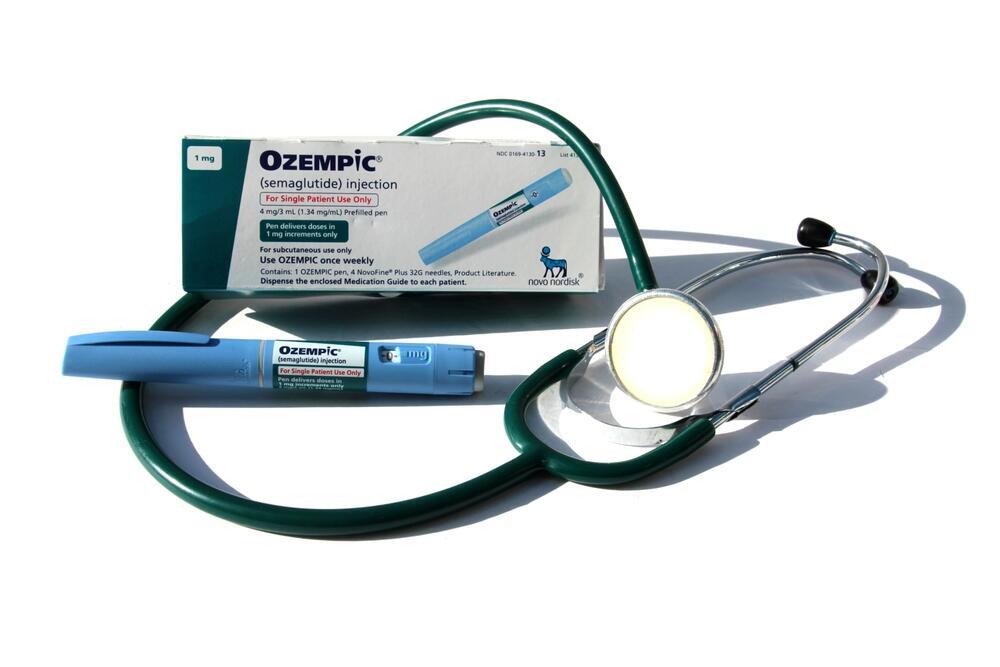
Weight-loss medications can help reduce body weight but may also aggravate reflux symptoms
(Photo: Shutterstock)
A large study published in 2025 that followed people with type 2 diabetes found that patients treated with GLP-1 medications had a higher risk of developing gastroesophageal reflux disease than those receiving a different class of diabetes medications.
One possible explanation is that GLP-1 drugs slow the rate at which the stomach empties. Food therefore remains in the stomach longer, potentially making it easier for stomach contents to flow back into the esophagus.
However, the study was observational. Its findings demonstrate an association, not proof that these medications directly cause reflux in everyone who takes them.
Stress can also influence heartburn, although through a different mechanism.
"Stress can make us experience heartburn more intensely," Livovsky explains. "When we're under stress, any stimulus in the digestive system, including acidity, can feel stronger. Our threshold for sensing these stimuli becomes lower. That doesn't necessarily mean there's more acid. It means we're experiencing what's already there more intensely."
When heartburn leads to complications
For most people, heartburn does not cause serious complications. However, prolonged exposure of the esophagus to stomach contents can eventually produce physical damage. Complications are more common when reflux goes untreated, although Klein notes that they can sometimes develop even in patients receiving treatment.
"Some people develop esophagitis, which is inflammation of the esophagus," Klein explains. "In these cases, a gastroscopy can reveal actual damage to the esophageal lining, including redness, erosions and sometimes ulcers. These can cause pain and bleeding."
Persistent damage may also lead to scarring.
"Over time, scar tissue can cause a narrowing near the junction between the esophagus and stomach," he says. "This kind of narrowing can make swallowing difficult."
Another possible complication, which develops over time in some patients and is more common among men, is Barrett's esophagus.
"In this condition, the type of cells lining the esophagus changes in an area repeatedly exposed to stomach contents," Klein explains. "It's considered a precancerous condition, and in a small proportion of cases, esophageal adenocarcinoma can develop over the years."
How is reflux diagnosed?
Diagnosis begins with a careful description of the patient's symptoms. Alongside the characteristic burning sensation, another common sign of reflux is regurgitation, when stomach contents move upward toward the mouth.
"Sometimes liquid actually comes up, and the patient experiences a sour or bitter taste in the mouth," Klein says. "Those are the two main symptoms."
When symptoms are typical and no warning signs are present, doctors can often make an initial assessment based on the patient's medical history and begin treatment accordingly.
However, if the symptoms are unclear, persist despite treatment or suggest a potentially more serious condition, additional testing may be necessary.
"Difficulty swallowing, pain when swallowing, bleeding or weight loss are red flags for us," Klein explains.
In such cases, and when doctors need to determine whether the esophagus has already been damaged, one of the main diagnostic procedures is gastroscopy, also known as upper gastrointestinal endoscopy.
During the procedure, a thin, flexible tube equipped with a camera is inserted through the mouth, allowing the doctor to examine the esophagus and stomach directly.
"The goal is to make sure we're not missing something more dangerous, identify inflammation if it's present, assess its severity and rule out complications," Klein says.
However, a normal gastroscopy does not necessarily rule out reflux. In fact, many patients with typical reflux symptoms have no visible abnormalities during the examination.
"In most patients, we don't find inflammation during gastroscopy, and the examination appears normal," Klein says.
"In those cases, we need to move on to diagnostic tests such as acid monitoring, which quantitatively measures how much acid reaches the esophagus."
One option is a wireless monitoring capsule called Bravo. The capsule is attached to the lower esophagus during a gastroscopy and measures acidity over a period of time. It eventually detaches on its own and passes naturally through the digestive tract.
Other monitoring methods involve passing a thin catheter through the nose into the esophagus for approximately 24 hours. Some of these tests can detect both acidic and non-acidic reflux, helping doctors investigate patients who continue to experience symptoms even when their measured acid exposure is not abnormal.
But what happens when these tests also fail to identify an explanation for the burning sensation?
This is where functional heartburn becomes a possibility.
"There are diagnostic criteria that allow us to establish that this is indeed the condition," Livovsky says. "Reaching that diagnosis usually requires evaluation by a specialist in neurogastroenterology."
What helps relieve heartburn?
Treatment depends on how often symptoms occur, how severe they are and whether the esophagus has already sustained damage.
For mild cases, the first step may involve changing everyday habits.
"The most basic treatment, especially for people whose complaints are not severe or don't occur every day, is adjusting their lifestyle," Klein says. "If someone is overweight, losing weight is advisable. If they smoke or drink a lot of alcohol, they should stop or cut back."
The timing of meals and sleeping position can also make a difference. People who experience nighttime reflux are generally advised to avoid eating shortly before going to bed.
"Some people are mainly bothered by reflux when they lie down at night, sometimes to the point that it wakes them from sleep," Klein explains. "In those cases, raising the head of the bed, for example with an adjustable bed or a suitable elevation that creates an angle, can be very helpful."
Food choices can also matter, although not everyone reacts to the same triggers.
Chocolate, caffeine, alcohol, spicy foods and acidic foods may worsen reflux symptoms in some people.
"There are foods we know can affect the sphincter between the esophagus and stomach, such as chocolate, alcohol and caffeine," Klein says. "Some people also benefit greatly from reducing acidic or spicy foods. There are many things worth trying, and for some patients they can make a significant difference."
Current professional recommendations do not require everyone with reflux to eliminate a long list of foods. Instead, dietary adjustments should be tailored to the individual triggers that appear to worsen each patient's symptoms.
From antacids to surgery: Which treatments work?
When heartburn occurs only occasionally, over-the-counter medications that neutralize stomach acid may provide relief.
"Antacids are available without a prescription at pharmacies, as chewable or dissolvable tablets and liquid preparations, and they can be taken as needed," Klein says. "They're mainly appropriate for people whose symptoms aren't very severe, provided there are no red flags. Some people manage very well with lifestyle changes and occasional treatment of this kind."
When symptoms become more significant or occur frequently, stronger medication may be needed.
The main drug class used to treat reflux is proton pump inhibitors, or PPIs, which substantially reduce acid production in the stomach.
"There are medications such as Losec, Omepradex, Lanton and Dexilant," Klein says, referring to brand names used in Israel. "They're very effective both at reducing symptoms and healing inflammation if esophagitis has already developed."
PPIs are considered a well-established treatment for gastroesophageal reflux disease, particularly when inflammation of the esophagus is present.
Current recommendations emphasize adjusting the duration and dosage of treatment to the individual patient. Once symptoms are well controlled, the goal is to use the lowest dose that remains effective.
But what happens when medication does not provide sufficient relief, or when patients cannot or do not wish to rely on long-term drug treatment?
In selected cases, more invasive treatments may be considered.
"Surgical treatments are generally reserved for patients who don't respond sufficiently to medication or who cannot take medication over the long term," Klein explains.
One of the longest-established surgical procedures is fundoplication.
"We create a kind of wrap around the lower esophagus using part of the stomach, which strengthens the mechanism that's supposed to prevent reflux," Klein says.
"There are several versions of the operation, including complete and partial wraps, and the choice depends on the patient and the medical considerations involved. Because a hiatal hernia can be a major cause of reflux, some patients also require hernia repair during the procedure."
In recent years, endoscopic techniques have expanded the range of treatment options, offering ways to strengthen the barrier between the stomach and esophagus without conventional laparoscopic surgery.
"There are now endoscopic techniques, two of which are available in Israel, in which the procedure is performed through the mouth using an endoscope," Klein says. "The goal is to strengthen the area between the esophagus and stomach without performing the usual operation. It's a significant development in the field."
However, invasive treatments are not appropriate for everyone experiencing heartburn. Before considering surgery or an endoscopic procedure, doctors must establish that reflux disease is genuinely present and that it is responsible for the patient's symptoms.
For most patients, the path to relief begins with understanding what is causing the burning sensation, recognizing when symptoms require medical attention and choosing treatment based on a confirmed diagnosis rather than assuming that all heartburn is the same.