


It is small, quiet and usually unnoticed, until something goes wrong. The thyroid gland, located at the front of the neck, plays a central role in regulating metabolism. When it is not functioning properly, the effects can be felt across the body, including the heart, digestive system, weight, energy levels, mood, sleep, menstruation, fertility and pregnancy.
Hypothyroidism and hyperthyroidism, meaning underactive and overactive thyroid function, are among the most common hormonal disorders, especially among women. Yet diagnosis is not always straightforward. Symptoms may be vague, develop slowly and be mistaken for fatigue, stress or aging.
Gallery

Thyroid dysfunction can affect energy levels, weight, heart health and mood
(Photo: Shutterstock)
To better understand when thyroid problems should be suspected, we spoke with Prof. Revital Dresner-Pollak, head of the Department of Endocrinology and Metabolism at Hadassah Medical Center, and Dr. Meir Frankel, director of the Endocrinology, Diabetes and Metabolism Unit at Shaare Zedek Medical Center.
One gland, whole-body impact
“Thyroid hormones act on every cell in the body,” Prof. Dresner-Pollak explains. “That is why when the gland is underactive or overactive, the effects are broad and can involve almost every system and organ.”
The thyroid produces the hormones T4 and T3, but the gland itself is controlled by another hormone, TSH, which is secreted by the pituitary gland. “TSH is the hormone that tells the thyroid how much to work and how strongly,” Dr. Frankel says.
When the thyroid does not produce enough hormones, TSH levels rise as the body tries to push the gland to work harder. When the thyroid is overactive and produces too many hormones, TSH levels fall. “Because of this relationship, TSH is the main marker we use to understand whether the thyroid is balanced,” Frankel says. “It is usually the first test we start with.”
 Prof. Revital Dresner-PollakPhoto: Hadassah Medical Center
Dresner-Pollak says the control mechanism is important because even mild thyroid imbalance can produce a wide range of symptoms. “Since thyroid hormones affect every cell in the body, even a slight deviation in thyroid function can appear as many different symptoms, sometimes in several systems at once,” she says. “That is why doctors need to consider the broader clinical picture, rather than relying on a single blood-test result."
From initial diagnosis to advanced testing
One point many people do not know is that T4 is not the final active hormone. “T4 is not the final active hormone,” Dresner-Pollak says. “Inside the cells, it is converted into T3, and that is the hormone that actually affects metabolism and cellular function.”
This helps explain why thyroid disorders can look so different from one person to another. Symptoms may involve the heart, digestion, muscles, nervous system, mood, reproductive system, fertility and pregnancy.
“When the thyroid goes out of balance, there is not always one clear symptom,” she says. “Sometimes there is a combination of complaints from different systems that do not seem connected.”
Hypothyroidism
What is it?
A condition in which the thyroid does not produce enough thyroid hormones, slowing the body’s metabolic activity
Common causes
- Autoimmune disease, Hashimoto’s
- Thyroid removal
- Radioactive iodine treatment
- Neck radiation for another condition
Diagnosis
- Blood tests: TSH, T4 and T3
- High TSH usually indicates hypothyroidism
- Additional tests, antibodies, ultrasound or mapping, only when needed
Common symptoms
- Fatigue and weakness
- Weight gain or difficulty losing weight
- Constipation
- Feeling cold
- Hair loss
- Low mood and difficulty concentrating
- Menstrual irregularities
Treatment
- Hormone replacement therapy, usually a daily pill
- Treatment is not always needed in mild cases
Which blood tests can detect a thyroid disorder?
The basic blood tests used to assess thyroid function are TSH, T4, and T3, all of which are available through healthcare services. “The central lab test is TSH,” Frankel says. “Usually that is where we begin. If we see an abnormal result, we add more tests to understand the source of the thyroid hormone imbalance.”
Still, Frankel says test results should be read with caution and in context. “There are different devices in different labs, so reference ranges vary from lab to lab,” he says. “In general, normal TSH values are around 4 to 4.5, but it is always correct to look at the reference range of the specific lab where the test was done.”
That means a value considered normal in one lab may be interpreted differently in another. Results should be assessed in the patient’s clinical context and against the local reference range. “When the values are within the lab’s normal range, they are considered normal for the general population,” Frankel says. “However, there are groups in which we look at the values differently.”
During pregnancy, for example, doctors may apply stricter targets. Patients who have had thyroid cancer may also be kept at lower TSH levels, even if their results appear to fall within the general normal range. In older adults, Frankel adds, the treatment target may also differ from that used for younger people.
When are additional tests needed?
Additional tests, such as thyroid antibodies, ultrasound or thyroid mapping, are not done routinely for everyone. “We move on to additional tests only if the blood tests are abnormal,” Frankel says. A broader workup is usually performed when thyroid function tests show underactivity or overactivity and doctors need to determine why.
But the evaluation is not based on lab tests alone. “We also examine the patient physically,” Frankel says. “If we feel something unusual in the neck, if the gland is enlarged or asymmetric, we send the patient for imaging.”
He stresses that there is a difference between tests that evaluate thyroid function and tests that assess thyroid structure. “Imaging is related to thyroid nodules, which are an anatomical issue, and not necessarily related to the gland’s function,” he says.

Evaluation is not based on lab tests alone
(Photo: Shutterstock)
Hypothyroidism vs. hyperthyroidism: What’s the difference?
Both underactive and overactive thyroid disorders are most often caused by autoimmune disease, meaning the immune system attacks the gland itself. “The most common autoimmune diseases in the body are thyroid diseases,” Frankel says. “They are actually the most common autoimmune diseases in the population.”
The most common cause of hypothyroidism is Hashimoto’s disease. In that condition, inflammation gradually damages the thyroid’s ability to produce enough hormones. Other causes of hypothyroidism include thyroid removal, radioactive iodine treatment or radiation to the neck that damages the gland.
Hyperthyroidism is also most often caused by an autoimmune disease, Graves’ disease, though there are other causes. “There can also be one or more nodules in the thyroid that work autonomously and overproduce hormones,” Frankel says, “or temporary thyroid inflammation that causes transient hyperthyroidism.”
The distinction matters because the cause affects treatment and follow-up.
Between immunity and genetics
There is no single clear answer for why autoimmune thyroid disease develops at a particular point in time. “There is no one clear answer for what causes the body to attack itself,” Frankel says. Still, some risk patterns are known. People who already have one autoimmune disease are at greater risk of developing another. Certain medications may also encourage autoimmune processes, including some biological drugs used in cancer treatment.

The thyroid is located at the front of the neck, but its impact extends far beyond that area
(Photo: Shutterstock)
As for stress, Frankel says the picture is more complicated. “There are cases where the connection looks very direct,” he says, “but the medical literature has not found clear proof of a definitive causal link between stress and the outbreak of autoimmune thyroid disease.”
Hyperthyroidism
What is it?
A condition in which the thyroid produces too much thyroid hormone, speeding up the body’s metabolic activity
Common causes
- Autoimmune disease, Graves’ disease
- Thyroid nodules that function independently
- Temporary inflammation of the thyroid
Diagnosis
- Blood tests: TSH, T4 and T3
- Low TSH usually indicates hyperthyroidism
- Additional tests, antibodies, ultrasound or mapping, only when needed
Common symptoms
- Rapid heartbeat
- Unintentional weight loss
- Nervousness and difficulty sleeping
- Tremor
- Frequent bowel movements
- Feeling hot
- Shortness of breath during exertion
- Menstrual irregularities
Treatment
- Medication
- Radioactive iodine treatment
- Surgery to remove the thyroid
- After radioactive iodine or surgery, lifelong medication is required
How much of a role does genetics play?
Family history also plays a role, though not in a simple genetic pattern. “There is no clear genetics that can be pointed to as a definitive cause,” Frankel says. “But we definitely see it more within families.” He describes this as a familial pattern rather than classic single-gene inheritance. In most cases, there is no one genetic test that can predict who will develop thyroid disease.
Symptoms and treatment
Symptoms of hypothyroidism can vary widely. “There is a very broad spectrum of symptoms in underactive thyroid,” Dresner-Pollak says. “Some people have a lab abnormality consistent with hypothyroidism, but have no symptoms at all.”

Fatigue, weight changes and sleep disturbances may be signs of a thyroid disorder
(Photo: shutterstock)
When symptoms do appear, they may be nonspecific. Common signs include persistent fatigue, constipation, weight gain or difficulty losing weight, hair loss, menstrual irregularities in women, difficulty concentrating and low mood. “Quite often these are symptoms that develop gradually,” she says, “and therefore diagnosis may be delayed.”
What are the signs of an overactive thyroid?
Hyperthyroidism tends to look different. Dresner-Pollak says typical symptoms include rapid heartbeat, frequent bowel movements, nervousness, sleep difficulties and tremor. Other possible signs include shortness of breath on exertion, chest pain during exertion, unintentional weight loss and menstrual irregularities.
In most age groups, the distinction between hypothyroidism and hyperthyroidism is relatively clear. But in very old adults, symptoms can be misleading. “There is a special form in very old age,” Dresner-Pollak says. “Over the age of 75, hyperthyroidism can appear as apathy, lack of energy and reduced activity, rather than nervousness, tremor and palpitations as we usually see in younger people.” This can delay diagnosis because the symptoms may be mistaken for aging or other medical conditions.
How long does it take for symptoms to develop?
“In overactive thyroid, diagnosis is generally faster,” Dresner-Pollak says. “The clinical picture is usually clearer, and the symptoms appear more sharply.”
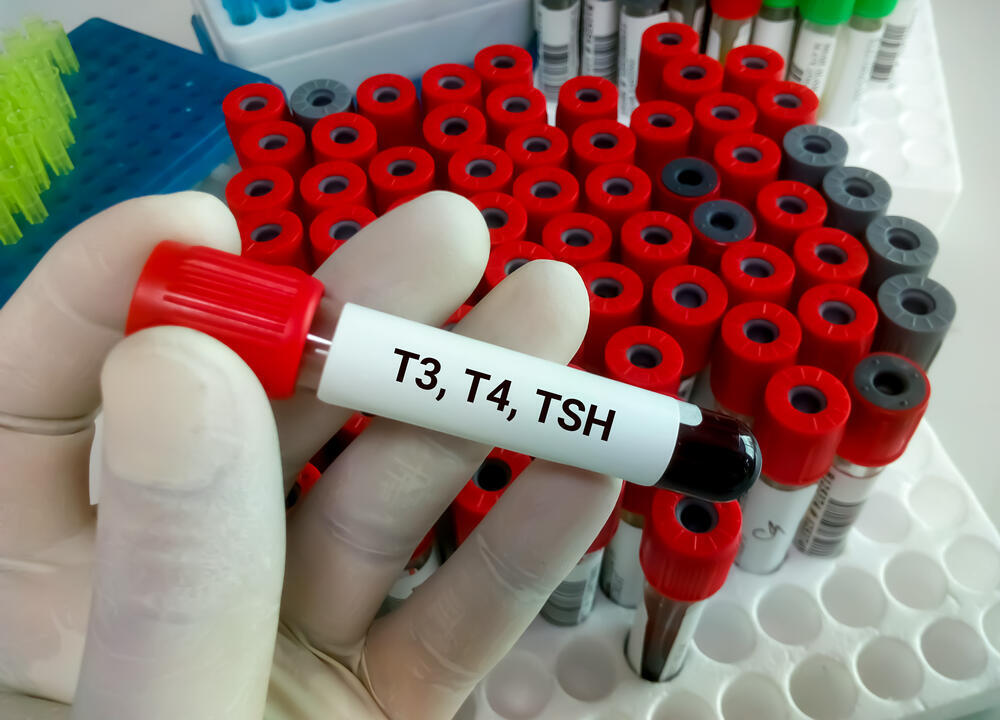
Simple blood tests can provide an initial picture of thyroid function
(Photo: Shutterstock)
Hypothyroidism often develops more slowly, especially when caused by autoimmune disease. “In the early stages, the gland still maintains a certain level of activity,” she says. “Gradually, over time, its activity declines.” That process can take months or even years, and the pace varies from person to person.
How is hypothyroidism treated, and is it lifelong?
Treatment for hypothyroidism is usually straightforward. “In underactive thyroid, the treatment is relatively simple: we give the hormone that is missing,” Frankel says. “We do not treat the disease that caused it. We give therapy that replaces the thyroid’s function.”
Most patients receive T4 as a daily pill with the dose tailored to their blood-test results and symptoms. “The goal is to restore hormonal balance in a way that suits the patient, not just to produce a normal-looking number on a lab report,” Frankel says.
Not every mild case requires immediate treatment. “If the hypothyroidism is mild, treatment is not always necessary,” he says. “The decision depends on how abnormal the tests are and whether there are symptoms, and how much they affect quality of life.”
How is hyperthyroidism treated?
“When it comes to overactive thyroid, there are several treatment options, and the choice depends very much on the diagnosis,” Frankel says. Options include medication, radioactive iodine, usually given as a one-time treatment, or surgery to remove the thyroid. “In cases of radioactive iodine treatment or surgery, we are essentially causing the gland to become underactive,” he says.

Improvement after starting treatment is not immediate, and full hormonal balance may take time
(Photo: Shutterstock)
That means the patient will later need lifelong replacement therapy. Frankel says the decision is made together with the patient after weighing the benefits, drawbacks and long-term implications of each option.
How soon does treatment start working?
Improvement after starting treatment is not immediate. “There are many processes in the body affected by thyroid hormones,” Frankel says. “So even after treatment begins, it can take several weeks until a person feels fully balanced.”
The improvement is gradual and depends on the severity of the original imbalance and the patient’s individual response.
Diet, supplements and alternative medicine: What is actually proven?
Despite widespread discussion of diet and supplements, Frankel says there is limited scientific evidence that specific nutrition plans can balance the thyroid. “No controlled studies are showing that a certain diet balances the gland,” he says. “A balanced diet is recommended, including a reasonable amount of iodine, but it is not the basis for treating thyroid disorders.”
Medical treatment is based on hormonal balance, not on specific dietary changes. “We do not rely on diet as a way to balance thyroid function,” he says. He also warns against unsupported promises. ““There is a lot of alternative medicine around thyroid disease,” Frankel says, “but there is no evidence that eating a specific food, or avoiding one, can bring the thyroid back into balance.”
The thyroid affects almost every system in the body, and a disorder in its function can appear through a long list of symptoms, some obvious and some easy to miss. Accurate diagnosis, monitoring and individualized treatment allow most patients to return to hormonal balance and significantly improve their quality of life.