

Letters and other witness accounts of Jews in the Warsaw ghetto—the records of a community destroyed in the Holocaust—have gone on display for the first time.
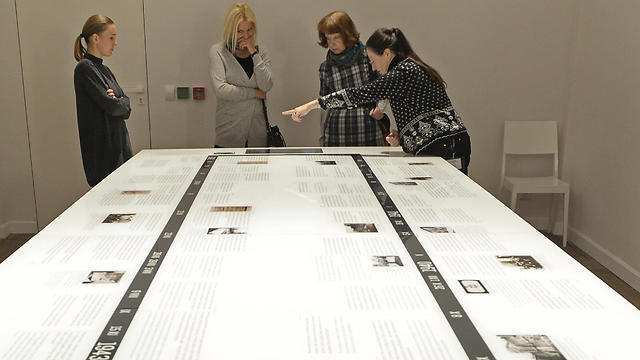
The exhibition, titled "What we were unable to shout out to the world," opened at the Jewish Historical Institute in Warsaw this week. It includes letters, journals, official records and other documents in Polish and Yiddish as well as an old metal jug used to hide documents from the Emanuel Ringelblum archive.
3 View gallery
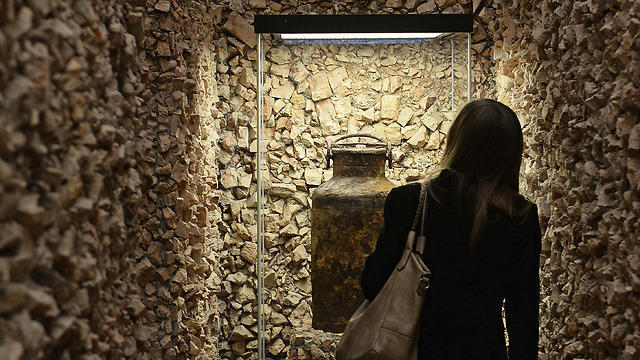
An exhibition opened at a Warsaw museum showcasing documents from the city's ghetto
(Photo: AP)
Ringelblum, a Jewish historian and social activist, and some 50 to 60 helpers collected the documents during World War II to preserve a record for posterity of Jewish life in the Warsaw ghetto during the German occupation of Poland. They gathered on Saturdays, and came to be known as the Oneg Shabbat, meaning "Joy of the Sabbath."
They hid their trove in 10 metal cases and two metal milk cans, evidence that was recovered after the war.
Ringelblum and all but three of those who helped him were killed in the Holocaust.
The Germans imprisoned 400,000 Jews in the Warsaw ghetto, where they suffered severely from starvation and diseases before most were deported to the Treblinka death camp and murdered.