

Bnei Brak in Uzbekistan: In a Muslim country in Central Asia, one of the most unusual connections of the era is taking place, in which Muslim workers produce tallit and tzitzit for IDF soldiers.
This is a story about a smart economy that connects the Middle East to Central Asia, between ancient Jewish tradition and economic development in the shadow of the Abrahamic covenants, about stubborn faith and zero tolerance for hatred – which begins with textiles, and ends with a much bigger question: how, in the most unexpected place, a stable bridge was created between worlds that seem unconnectable. Surprising even those who think they have seen it all.
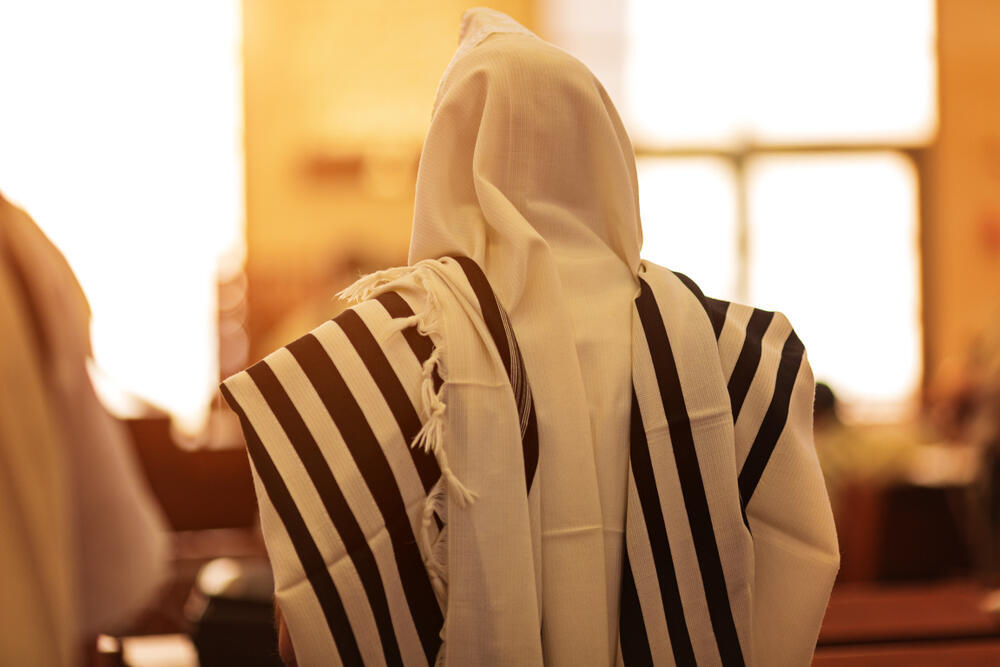
About 200 km east of Tashkent, on the outskirts of an industrial zone, hundreds of Muslim workers sit down every morning near production lines. They cut, sew and pay attention to every millimeter of hardware, kippahs, tallit, kilts and tzitzit vests. The target: IDF soldiers and Jews around the world.
The one who saw the borders opening up in the most unexpected place is Shlomo Colombo, 39, an ultra-Orthodox businessman who lives on the Bnei Brak-Miami line and owns four textile factories in Uzbekistan. For him, this is not just a financial transaction.
"Every product that comes out of here strengthens a soldier in the field," he says, "gives work a completely different meaning. The workers also know very well how to separate politics from work and understand the significance of their part in this important work."
A meeting of worlds and Louis Vuitton finishing
A four-hour drive from Tashkent leads to one of the four factories of the Melech Tex company. The largest of them. Inside: a modern assembly line, hundreds of local workers, concentrated silence. About 500 employees are employed by the company, some full-time, others through subcontractors.
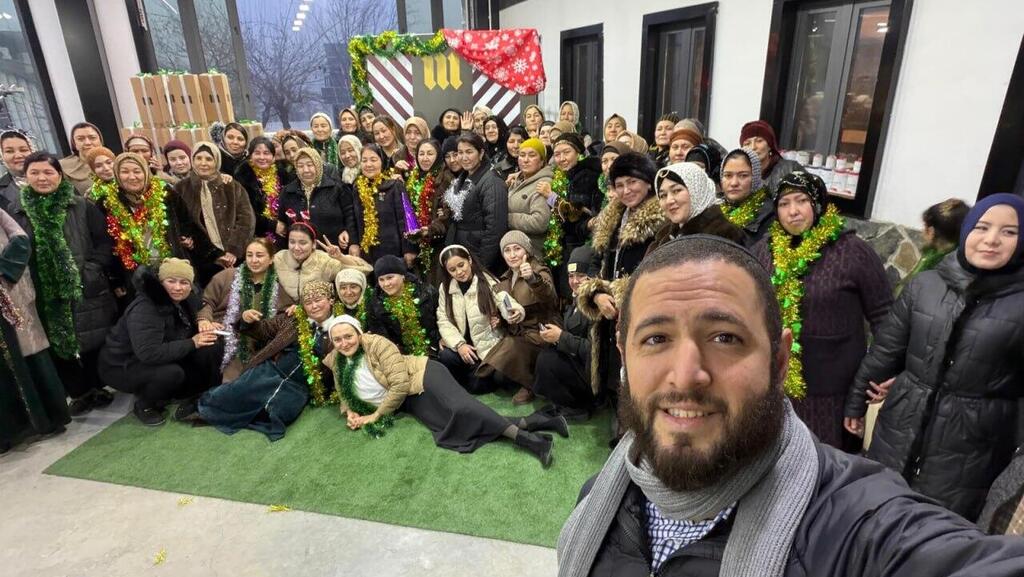
Shlomo Colombo with some of the workers
(Photo: Shlomo Colombo)
"The conditions here are better than the local market, and the pay and treatment of workers are excellent," says Colombo. "They receive training, are free on their own holidays and on Jewish holidays. They are very curious and open to learning. They want to work."
At his side is Avraham Haim, 44, his right-hand man and the one who spends most of his time between the factories in Uzbekistan and at his private home in Tiberias. "The Uzbeks are simple people in the best sense of the word. Family-oriented, respectful and proud of what they do."
His wife, Natalie Cashman, who started as Colombo's interpreter and is now the production supervisor and acting manager, also has warm words for the factory workers. "They themselves say that this is not just another job or another industrial product that they are working on. They are all people of faith and understand that they are part of something bigger. It warms the heart to see and hear that."
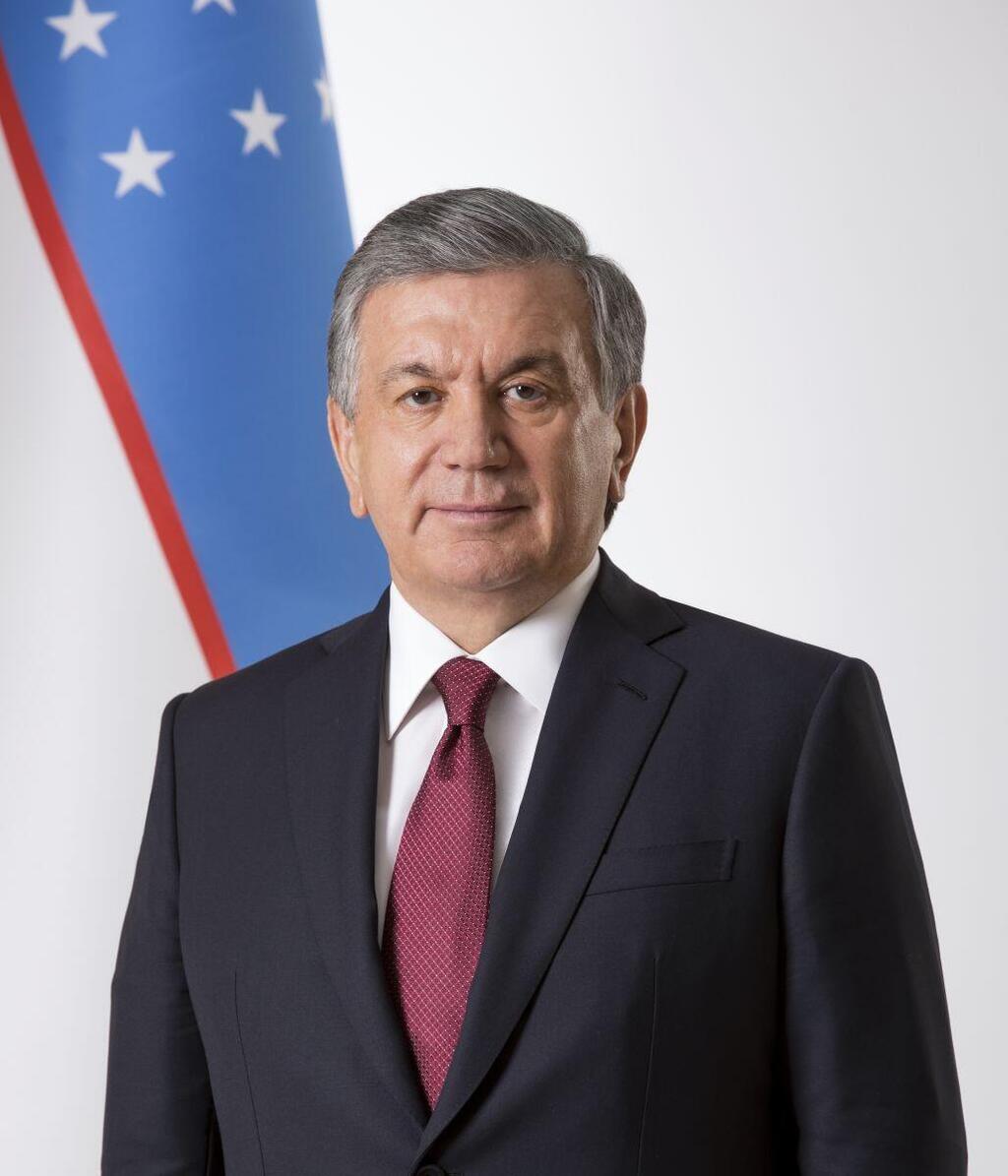
Uzbekistan President Shavkat Mirziyoyev
The choice of a Muslim country may raise eyebrows, but Colombo is confident in his step. "We were looking for the highest quality cotton in the world," he says. "Uzbekistan emerged as a powerhouse in the field. But beyond that, I discovered a country with warm people, a lot of respect for investors, zero tolerance for antisemitism and a president who is a fan of Israel who promotes an open economy and welcomes foreign initiatives and investments. As an investor and owner of the only factory in the world owned by a Jew that produces wool outside the borders of Israel, I felt good."
He talks about the warnings he received about it being a Muslim country, the risks and politics there. "They said, 'You're crazy, why would you invest in a Muslim country?' They also said, 'The authorities will take your property,' and tried to drag me to other countries. I told them, 'Righteous, you don't understand.' And truly, in the mirror of history, I have seen foreigners sting countries more than the other way around."
Haim shares that the factories produce everything - from the thread to the fabric. The equipment is imported from Italy, the finish is "at the level of Louis Vuitton," Colombo emphasizes, and the halachic supervision is among the strictest: among them the Haredi Badatz and the supervision of Rabbi Shlomo Mahfoud and Rabbi Aryeh Levin. There is a clear red line: the tying of the tzitzit is done only in Israel, "according to halachic law."
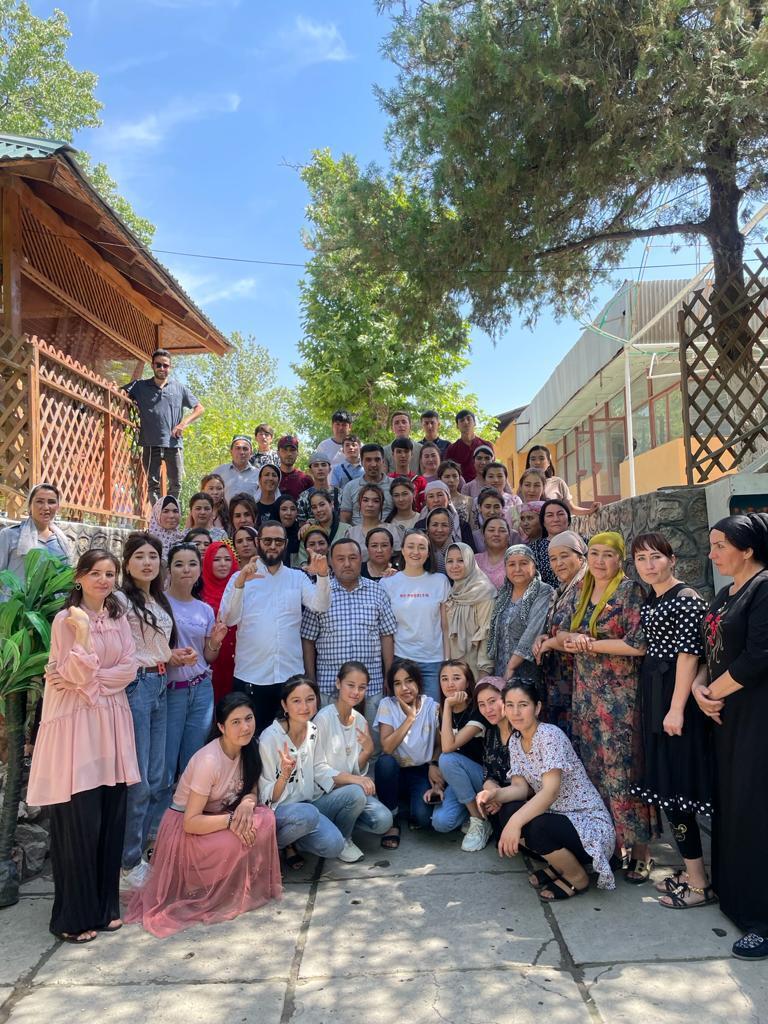
(Photo: Shlomo Colombo)
"The workers here produce — and we complete the sanctity in Israel," Chaim asks to clarify.
Both talk about the day after October 7 and how "demand exploded." "We were the first to provide khaki tzitzit vests for regular soldiers and white for reservists," says Haim. "We cleared all the production lines. We flew goods by air train while competitors were stuck with goods."
However, there were also difficulties: suppliers who refused to sell khaki-colored threads "because it goes to the Israeli army." The solution was creative, fast and above all, stubborn. "In the end, we teamed up with our manufacturer, who is more friendly to Jews and Israel, and ordered the threads from him. We didn't stop for a moment."
Throughout the conversation, Haim often dips his answers into smiling anecdotes, and more than once Colombo had to focus him in a friendly way so that he could finish the line of thought. Sometimes one starts a sentence and the other finishes. "He's my little brother," Colombo testifies with closeness.

Tashkent
(Photo: Itamar Eichner)
"You know, they say that anyone who keeps the tzitzit commandment will be served by all nations and that when the Messiah comes, he will have 28,000 slaves," Haim continues with a smile. "I'm not really knowledgeable, but there is some kind of calculation like that. What I do know for sure is that since October 7, we have produced over a million tzitzits for soldiers.
"Once, an American donor contacted us and ordered tens of thousands of tzitzits through one of the associations, which of course we made in Uzbekistan. I told her that I was very jealous of her. Because every minute that the tzitzit is worn, they say, is equivalent to 313 mitzvot, which is 613 mitzvot. I told her, 'Do the math: Let's say you distributed 50,000 tzitzits, times the minutes in the day of those soldiers, times the mitzvot that thanks to you they are fulfilling. That's billions of mitzvot." I don't think there is a place where you can list this huge number of commandments and rights you have."
Shulamit, Colombo's wife, joins the conversation, "We are probably getting closer to world peace," and reminds the two of a message published during the war in the "Be'er Sheva Together" WhatsApp group about a shooting incident at a Namer armored personnel carrier from which the fighters managed to escape unharmed.
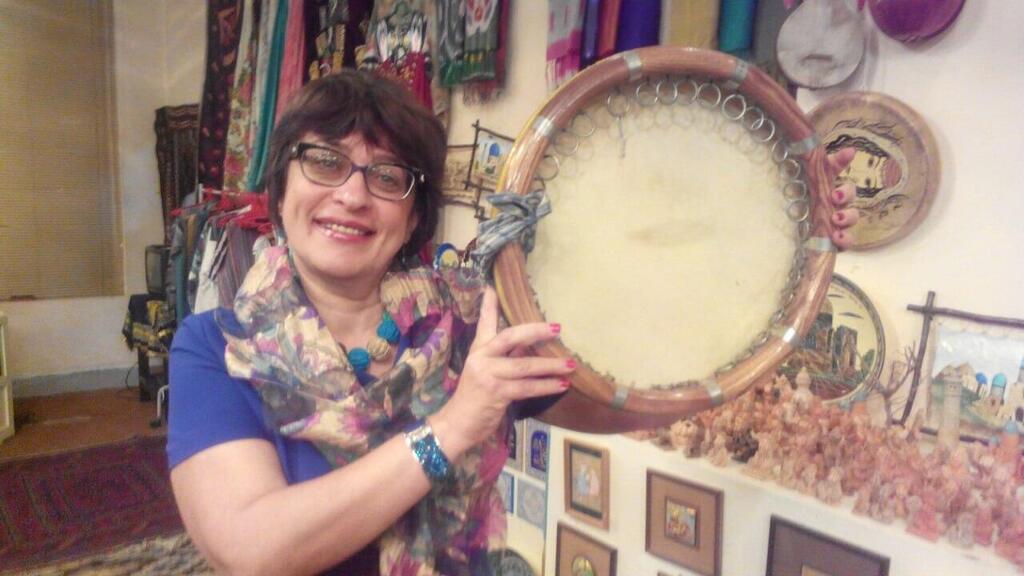
(Photo: Victoria Martinov)
"In the end, what remains of the burnt-out Namer is the tzitzit, holy books and tefillin that remained intact," the moving message reads.
"We immediately recognized the tzitzit on our vest. Do you understand the crazy feeling?" Colombo says, mentioning another published case, about a civilian who fought face-to-face with terrorists on October 7 in Kibbutz Re'im. "When our forces reached him, they saw a wounded man wearing civilian clothes and a gun, surrounded by about 20 dead terrorists. They were sure he was a terrorist. Just before they shot him, a soldier shouted, 'Don't shoot. He has a turban.' It was our green turban."
"When you see that what is created in our factory in Uzbekistan really saves a person's life, there are not enough words to express the tremendous emotion," Shulamith says. "We all sang Am Israel Chai during the war. Here you see it with your own eyes."
A pro-Israel president in a country with zero tolerance for antisemitism.
"Most of the Uzbek people are friendly to us," says Haim, "there is an extreme minority that makes a bit of noise on social media, but the government there and the president, and most of the sane people, do not allow expressions of hatred, and stop the event as soon as it starts."
A few incidents that the two experienced after October 7 illustrate the hard line of the authorities. For example, a "Free Palestine" demonstration in front of a government office in Tashkent was immediately dispersed and its participants were arrested. In another case, a passenger on a flight from China to Uzbekistan cursed Colombo for being Jewish.
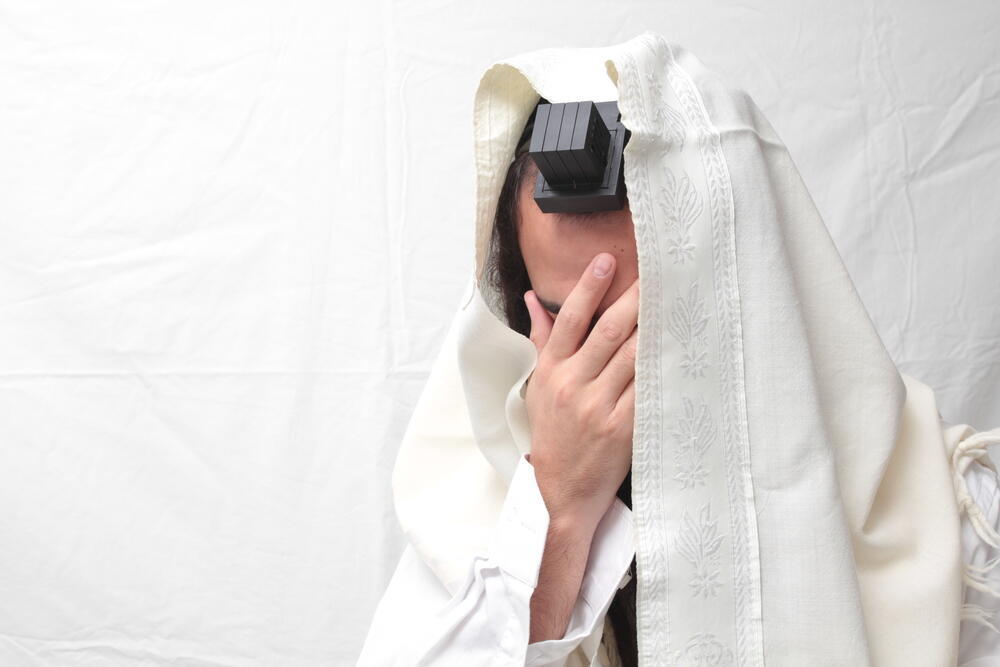
(Photo: David Cohen 156 / Shutterstock)
"Upon landing, he was handcuffed and taken off the plane," says Colombo. "The policeman told me: Either deportation or trial. I chose deportation. This is Uzbekistan. A country with zero tolerance for antisemitism. In a country like this, I am calm when I invest millions. At that moment, I gave Avraham permission to inject any amount into this country. Frankly, as an Israeli citizen, I am not sure that such an incident would have been handled this way. Since then, I have been the ambassador of this wonderful country without anyone asking me to do so."
He once asked to enter a hotel and a cafe and the employees refused to serve him. "The son of the hotel owner said, 'My father does not allow Israelis to enter,' even though we were acquaintances. I involved the tourist police, who threatened to revoke his license for selection. He apologized and I never returned to this hotel. And as for the employee who told me in a cafe, 'I am not willing to sell to Israelis,' even before I complained, the chain's management had already received a complaint from one of the many customers who intervened in my favor and condemned the employee's conduct. The employee was fired immediately, and they apologized and did everything they could to make us understand that this was not their way and that the employee was a 'bad seed.'"
Haim adds, "Here, the president's line is that no one interferes in politics that does not belong to the Uzbek people and does not concern them, with the intention that the good relations between the countries will not be destroyed. On the contrary, after October 7, flights from Uzbekistan to Israel increased because workers from there replaced Palestinian workers in all kinds of industrial fields in the country."
The workers behind the machines
Behind the roaring machines and the piles of white and khaki fabrics lie human stories that are no less surprising than the product itself. For many of the workers at the Melech Tex factories, this is their first encounter with Jews — and certainly with Jewish textiles, with all its halachic and spiritual meanings.
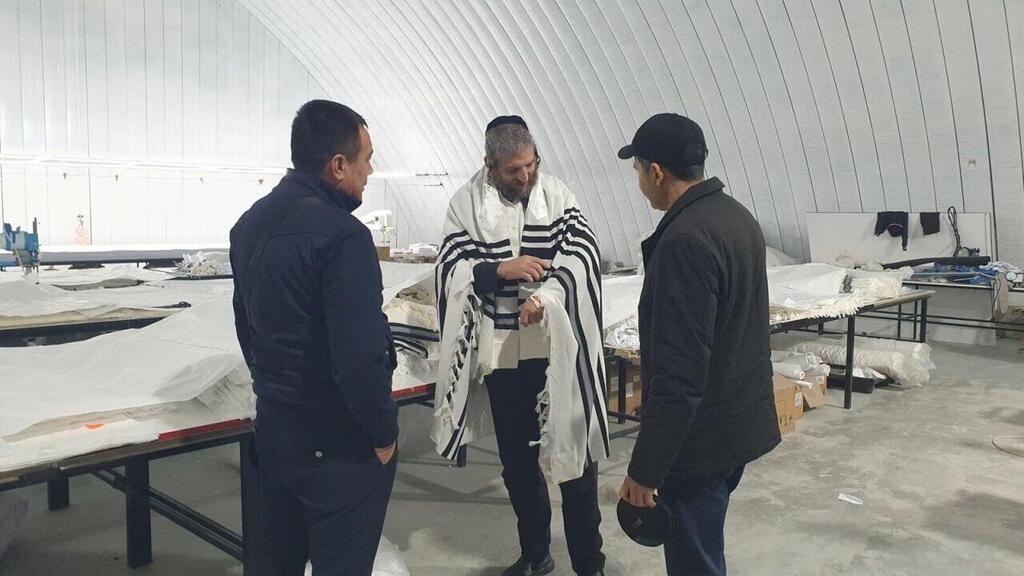
(Photo: Avraham Haim)
"At first, I didn't understand why they were checking us down to the last millimeter," says one of the seamstresses, a mother of four, who refrains from giving out identifying details about herself. "For us, it was perfect sewing. Today, I understand that every detail here is related to faith, identity and something deeper. It gives me respect for my work."
"It's not just a garment," a worker next to her puts it bluntly, "it's something that passes on from us. When it comes to God - even if the religion is different - it's exciting."
In a Muslim country where religion is present in everyday life, this understanding quickly seeps in. The factories have designated prayer rooms, working hours are adjusted for Fridays, and some workers say that the local imam even blessed them for their partnership. "Helping Jews in sacred work - it's a mitzvah," Colombo says. "This is definitely a different discourse from the discourse we are used to in this country."
A growing economy, quiet diplomacy and mission
Uzbekistan, a Muslim country in Central Asia with about 37 million inhabitants, is in the midst of an economic boom. Industry, agriculture, infrastructure and technology are attracting foreign investment, and relations with Israel, established as early as 1992, are expanding and tightening, creating collaborations away from the spotlight.
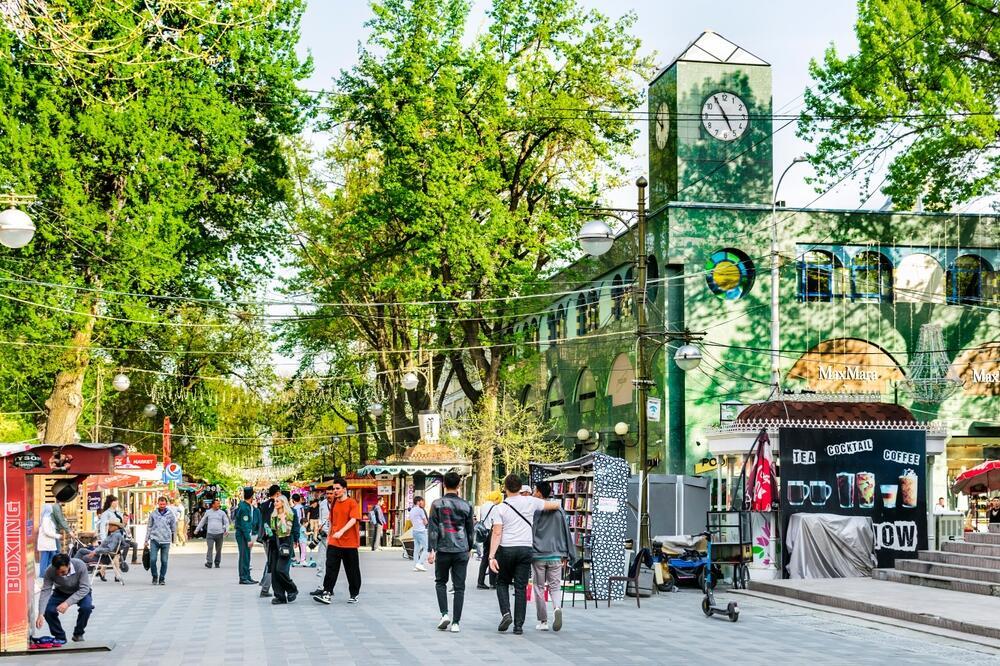
Tashkent
(Photo: Marina Rich / Shutterstock)
Dr. Victoria Martynova, a specialist in Central Asian countries and a research fellow at Ariel University, sees the Melech Tex case as a clear example of unofficial public diplomacy. “Israeli businessmen, ultra-Orthodox, have found deep common ground with religious Muslims in Uzbekistan. They understand the cultural nuances and act with mutual respect. It is not self-evident - and it is working."
According to her, the company's output constitutes about 25% of all economic cooperation between the two countries. "While Israeli government initiatives in the region have been limited, regional ties like these are developing at an impressive pace."
These things are also being reinforced in the international arena. Against the backdrop of expanding regional ties and signing large-scale economic agreements, Uzbekistan is positioning itself as a pragmatic, pro-Western Muslim country, with zero tolerance for extremism - and especially for antisemitism. Colombo concludes with a smile, "Maybe we are not Trump or Bibi, but we initiated business normalization and business peace before them".
And yet, the choice to produce Jewish textiles in a Muslim country also arouses discomfort in Israel.
Colombo does not deny this. "Of course, there are those who raise an eyebrow. But we sometimes forget that Isaac and Ishmael were cousins. In Uzbekistan, there is business and no politics. There is no extremism. There is a lot of respect."
For him, the combination of economic efficiency and spiritual mission is not a contradiction. On the contrary. "The goal is for every soldier, every Jew, to receive what he needs and to spread light. That is my mission."
His personal background only clears the picture. He was educated in Haredi yeshiva institutions, enlisted in the IDF after his marriage out of a sense of mission, and went into the business world without formal training. "I had a tremendous passion and a great desire to be part of the country, to build something beautiful, successful, with meaning. And also to bear the burden and act out of sanctification of the name of God."
There were Israeli enterprises that did not survive there. How do you explain your success?
"I'm only talking about myself. When you get to a place, connect with the right people, employ the people with whom you know what's going on there at any given moment and don't send a contractor who cuts a slice for themselves when they're not involved - you succeed. Not just in Uzbekistan, but in many places around the world."
Today, the company's products are marketed not only in Israel, but also in the United States, Canada, Europe and South America. And yet, he says, the truly moving moments are not measured in numbers. "I think of a soldier in a distant outpost, or a Jew on the edge of the world, who opens a box and sees a tallit made in Uzbekistan. These are the moments when I tell myself, 'the effort was worth it.'"
Threads of faith, bridges of man
Ultimately, this is a story about textiles — but not only. It is a story about threads that connect religions, cultures and people who never thought they would meet on a single assembly line. Which proves that sometimes, precisely in the most unexpected places, the strongest human connections are discovered — ones that manage to cross borders, politics and fear, and leave only one thing at the center: a faith that manages to touch hearts from all over the world.