

An Israeli man living in Berlin has filed a civil lawsuit against a local hummus restaurant after alleging that a waiter refused to serve him because of his Hebrew accent and Israeli identity. Elias, 35, moved to Berlin about two years ago and works in data analysis. He told ynet that until the incident, he had generally felt comfortable in the German capital and had never encountered hostility in restaurants because he was Jewish or Israeli.
“As an Israeli living in Berlin and far from home, I often look for restaurants and hummus places with food that reminds me of home,” he said. “Sometimes I go to Israeli places, and I’ve also visited Syrian and Lebanese places and an Iraqi hummus restaurant. Until this incident, I had never encountered hostility because I was Jewish or Israeli.” That, he said, made what happened particularly jarring.

The incident occurred on a Sunday morning in mid-February, when Elias and his partner were walking through Prenzlauer Berg and spontaneously decided to find somewhere nearby for hummus.
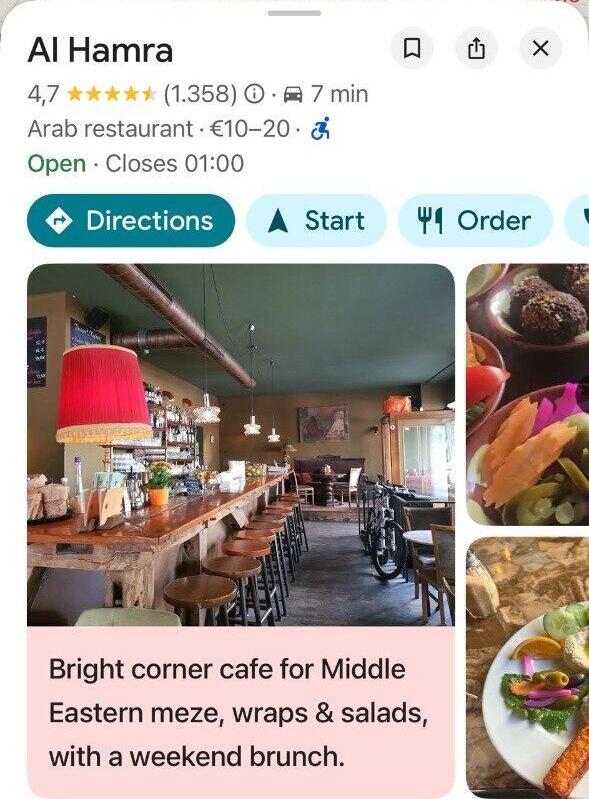
They found Al-Hamra on Google and went inside. “I saw a place that looked nice, with couches and everything, a Middle Eastern atmosphere,” Elias said. “We sat down and everything was normal until I asked the waiter what the difference was between two hummus dishes.”
According to Elias, the waiter looked irritated and corrected his pronunciation in German, telling him how the word should be pronounced. “At first I didn’t understand what he wanted and just repeated the question,” Elias said. “Then he said that ‘hummus’ was an Israeli word, that we were in a Palestinian place and that here you say it differently.”
At that stage, Elias said, he had not told the waiter that he was Israeli. “I told him that this was simply my natural accent. Then he said, ‘It makes me…’ and made a disgusted face and a dismissive gesture with his hand.”
Elias said he and his partner were stunned. His partner then told the waiter that if he did not want to serve customers with an Israeli accent, they did not want to remain there. Elias then directly identified himself as Israeli. “I asked him, ‘I’m Israeli, you don’t want to serve me?’ And he simply pointed toward the door and said, with a face full of hatred, ‘Then please don’t.’”
According to Elias, the waiter then sarcastically suggested they go to Café Benedict across the street. “I told him in broken German that this was discrimination, that he didn’t want to serve me because of my origin and that this is illegal in Germany.”
Other Israelis reported antisemitism at the restaurant
Elias said he still tried to defuse the situation. “I remember I even tried to calm things down and make clear that I had nothing against his political views, and that we had come to eat, not to have a political discussion,” he said. The waiter, according to Elias, replied: “But I have something against your political views.”
When Elias asked how he could possibly know what his political views were, the waiter allegedly replied that he knew because otherwise Elias would not pronounce “hummus” the way he did.
“He opened the restaurant door wide and stood beside it so we would leave,” Elias said. “At that point my partner felt the situation was escalating and wanted us to go. The other people in the restaurant simply looked away and did not intervene.”
Elias said the incident left him humiliated. “I remember my partner and I were in shock. Nothing like this had ever happened to me before,” he said. “It was a very degrading and humiliating experience, being thrown out of a restaurant, a public place, simply because of my Hebrew accent and Israeli identity.”
He said the encounter was the first time he felt he had personally experienced antisemitism. “You’re not seen as an individual at all, and all the hostility and hatred toward Israel and Jews is projected onto you,” he said.
At first, Elias said, he tried to put the incident behind him. He later decided he could not ignore it, particularly because he feared the same thing could happen to other Israelis. He also said he later found online reviews dating back years that described similar allegations of discrimination against Israelis at the restaurant.
Asked whether he felt threatened during the encounter, Elias said the atmosphere was intimidating. “The experience was very unpleasant and threatening, mainly because of the obvious disgust and hatred the waiter displayed as soon as he recognized my Israeli accent,” he said.
“When he ‘directed’ us to Café Benedict across the street, I felt as though he was telling us, ‘Go be with people like you, not here.’”
Elias said the waiter was the only employee he saw. He appeared confident enough that Elias initially thought he might be the owner, though he stressed that he could not know that for certain. A relatively large group of diners was seated nearby, he said, but did not intervene.

Pro-Palestinian protest in Berlin
(Photo: RALF HIRSCHBERGER / AFP)
Despite the experience, Elias said he has no intention of avoiding Arab restaurants. “I refuse to live in fear or let hatred dictate where I go,” he said. “But the incident at the restaurant did affect the freedom and naturalness with which I spoke Hebrew in public.”
Several weeks later, Ofek, an organization that assists victims of antisemitism and discrimination, sent a formal complaint to the restaurant on Elias’ behalf. According to Elias, the restaurant did not respond.
A second letter was then sent by his attorney. He said that, too, went unanswered. “We sent the restaurant two detailed letters requesting an explanation, compensation and an apology, first through Ofek and then through my lawyer,” Elias said. “There was no response either time, so I don’t expect that suddenly to change.”
He has since filed a civil lawsuit against the restaurant in a Berlin court under Germany’s General Equal Treatment Act, or AGG, which prohibits discrimination on grounds including ethnic origin and religion.
“My goal is to make clear that public spaces and restaurants in Germany have to be accessible to everyone regardless of origin, including Jews and Israelis,” Elias said. “You cannot run a restaurant in Berlin and refuse to serve guests because of their origin or their accent.”
Because the restaurant did not respond to his complaints, Elias said, he decided legal action was necessary. “I want to show that this kind of discrimination has legal consequences and send a clear message that Jewish and Israeli life must remain an integral part of the city,” he said. He also said he wanted other Jews and Israelis facing antisemitism abroad to defend their rights rather than remain silent.
For Elias, the incident reflects what he sees as a broader deterioration in the climate for Israelis and Jews in Berlin since October 7. “Support centers for victims of antisemitism such as Ofek show in their data that the situation changed drastically after October 7, and that the exclusion of Jews and Israelis from everyday life is increasing,” he said. “For me personally, that is exactly the change. I experienced that statistic firsthand.”

Pro-Palestinian activists demonstrate at Berlin’s Brandenburg Gate in Germany
(Photo: REUTERS/Annegret Hilse)
Elias said he believes antisemitism often operates through assumptions of collective responsibility. “To assume what my political views are solely because of my Israeli accent is exactly a classic form of antisemitic thinking,” he said. “It assumes that all Jews in Israel think exactly the same way and that each of them can be held collectively responsible for any criticism related to Israel.”
He said he had also heard about Israeli-owned restaurants in Berlin that had closed after prolonged harassment. “That made me very sad, both because they were excellent places where people had invested a lot of heart and because Berlin is supposed to be a tolerant city that accepts everyone regardless of origin,” he said. “There should be no place for this kind of hatred here.”
Elias said the encounter has made him more cautious, though it has not changed his intention to remain in Berlin. “I still go everywhere and I don’t allow myself to be afraid, but I’m more alert and careful than before,” he said. “In retrospect, I definitely feel that this incident strengthened my sense of being Israeli, of being more Jewish. An experience like this changes something in you, without question.”

Pro-Palestinian students who occupied a Berlin Humboldt University building last year
(Photo: Michele Tantussi / Getty Images)
He said he continues to live openly as a Jew and an Israeli, visiting synagogues, kosher supermarkets and Israeli community centers. “I don’t hide anything,” he said. “But since this incident, I have simply become more cautious and aware of my surroundings because I realized that I can encounter displays of antisemitism without warning.”
Elias said he has no plans to leave Berlin. “Israel is always the homeland and home, but Berlin is where I live today, along with many thousands of other Israelis and Jews,” he said. “I have no plans to leave, and I certainly won’t let hatred and antisemitism dictate where I live.”
In his lawsuit, Elias described the episode in simple terms. “My girlfriend and I only wanted to eat hummus,” he said. “It was humiliating to be asked to leave simply because of my Hebrew accent and background. I believe food should build bridges and bring people closer together, and that makes this especially painful.”