


Jewish community leaders in the United States, Canada and Europe describe an increasingly “toxic” atmosphere amid events in Israel and rising antisemitism, with some expressing fears of a mass-casualty attack against Jews. The picture emerges from conversations with rabbis, a senior Israeli official who assists communities with intelligence, a Jewish Agency official and an Israeli diplomat in a European capital.
A rabbi in a New York community said he conducts emergency drills for the entire congregation on Shabbat, even if doing so means violating Sabbath restrictions. The drills include testing escape routes for children and access to secure areas inside the synagogue. He said he fears a terror attack. “The atmosphere is so toxic that it is clear to all of us that it will happen. I don’t sleep at night because of the possibility of a massacre,” the rabbi said. On Yom Kippur, shots were fired at the Sons of Jacob synagogue in Belleville, Canada.
Gallery
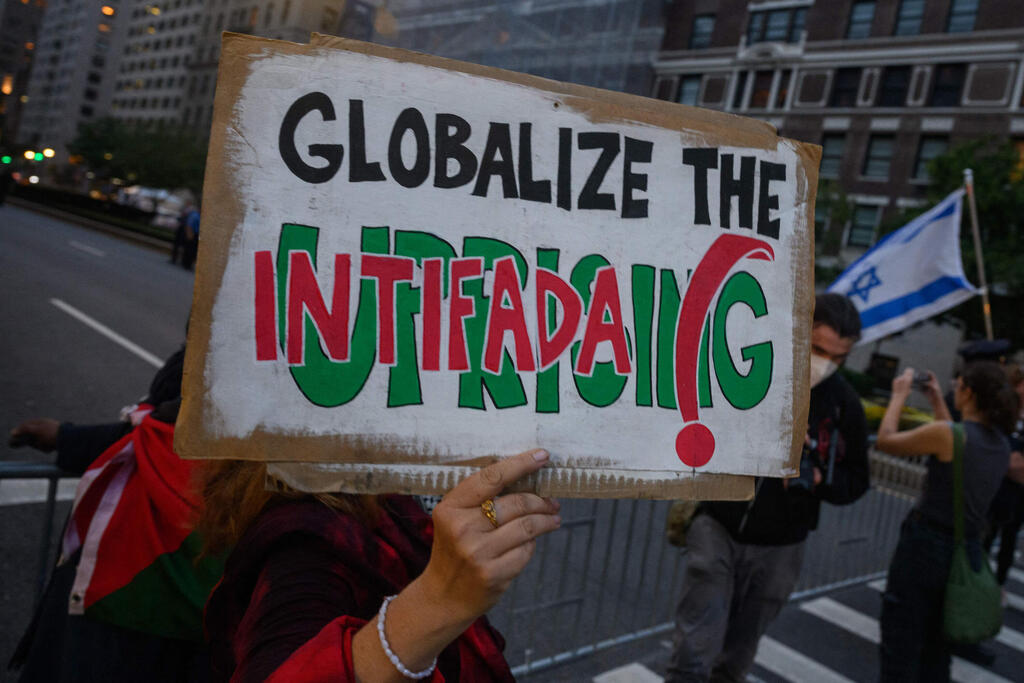
A sign in New York calling for a global intifada
(Photo: Alexi J. Rosenfeld / Getty Images North America / AFP)
A senior Israeli official who helps Jewish communities in the United States prepare intelligence measures aimed at preventing attacks against Jews, in close coordination with U.S. federal agencies, said that “in the United States they euphemistically call it hate crime,” adding that the phenomenon is growing.
He argued that the climate is being intensified by “people like Mamdani” and is particularly visible on social media. “This is pure antisemitism. They hated us before this, and they will hate us afterward,” he said.
He does not believe the situation would fundamentally change even if Israel altered its policies. According to him, the U.S. administration is taking the issue very seriously and nearly every relevant agency is cooperating with Jewish communities.
He added that Israel is actively sharing intelligence that helps prevent attacks against Jewish communities in the United States, Australia and Europe.
‘The antisemitic genie is out of the bottle’
A senior Jewish Agency official described a more complex picture that varies from country to country.
“About a week ago, a conference call was held to assess the situation in Germany,” he said. The conclusion was that there was tension and worried discussion, but “definitely not panic.”
The same applies to communities in the United States, he said: “We have not heard of panic.”
In France, there is tension ahead of the presidential election, along with concerns about the rise of the far left, which he said has forged an alliance with radical Muslims. He added that many Jewish communities around the world are experiencing increased tension, though not all of them.
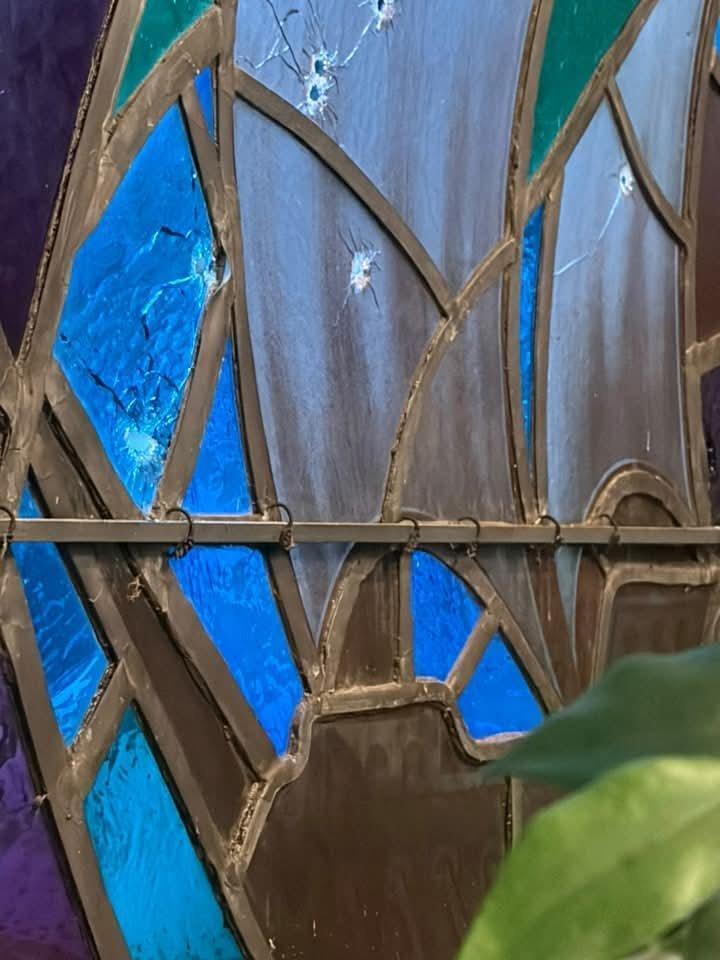
Bullet-damaged windows at the Sons of Jacob synagogue in Belleville, Canada
The official said that in some major cities, Jews are afraid to wear a kippah, tzitzit, Haredi clothing or shirts displaying Israeli or Jewish symbols.
Security awareness has also increased following repeated attacks on synagogues and Jewish communal institutions. In some places, though not many, security guards are stationed outside, most of them community volunteers. Police protection is also sometimes provided during Jewish holidays, depending on the city and the position of local authorities.
In the United States, he said, tensions are particularly high in cities such as New York and Los Angeles. Because Jewish communities and organizations are highly decentralized, however, it is difficult to form a comprehensive national picture.
In the United States and Canada, he added, conditions are more severe in some states and provinces than in others. Hostility on university campuses is also concentrated at a number of institutions that frequently make headlines. While the situation at those campuses is very serious, he said, it does not reflect the atmosphere at every university.
Of particular concern, he said, is the informal treatment of Jews in labor unions, hospitals, professional conferences and the arts and cultural worlds.
There is no official boycott of Jews, he said, but hostility toward Israel often spills over onto Jews, creating what he described as a bleak atmosphere marked by fear and anger.
At the same time, there has been no wave of migration to other countries, meaning assessments are based largely on sentiment rather than migration data. Officials familiar with the issue said the areas of North America where Jews currently feel most at risk include greater Detroit, New York, Toronto and Montreal.
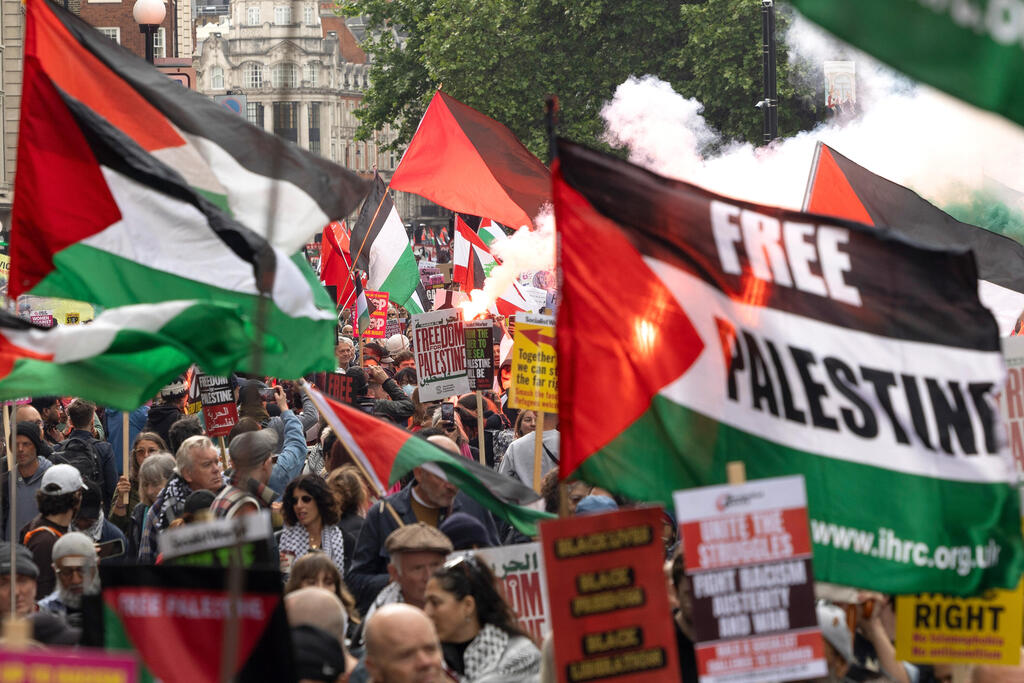
Anti-Israel demonstration in London
(Photo: Brook Mitchell / Getty Images)
Jewish community figures in one Western European country acknowledged that they see no future for their community there after what they described as “the antisemitic genie coming out of the bottle.”
Many are sending their children to study in Israel or North America. Some businesspeople are looking for ways to move their businesses elsewhere, though doing so is far from simple.
Religious and communal life continues, but under heavy security and amid constant concern. In the capital of that Western European country, Jews have been instructed not to walk around wearing kippahs because of fears they could be targeted by extremists.
Most invitations to community events no longer include the venue. The location is sent only to confirmed participants, usually a day before the event.
An Israeli diplomat in one European capital said many Jews feel fear and anxiety, and some are considering leaving. Some send their sons to serve in the Israeli military, while others have purchased homes in Israel.
According to the diplomat, the atmosphere feels similar to that experienced by German Jews in the 1930s.