

In 2023, gender-segregated Yom Kippur prayers nearly brought Tel Aviv to a standstill. Now the city, often hailed as Israel’s bastion of secularism, finds itself in the middle of a quieter but no less charged dispute: a legal struggle over the status and character of its synagogues.
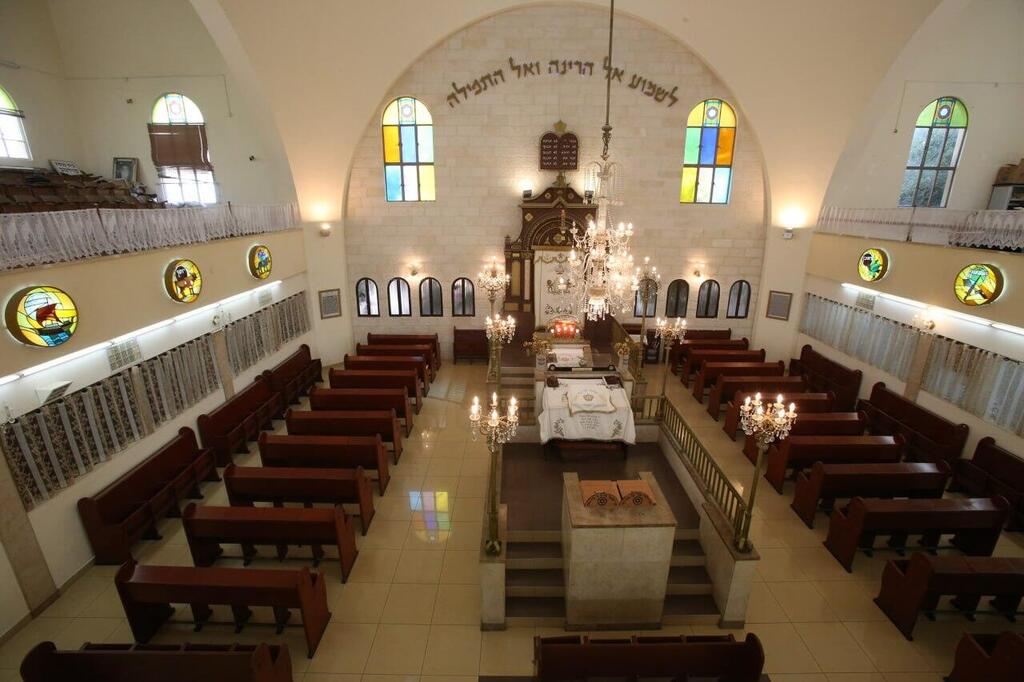
Tel Aviv has hundreds of synagogues, many dating back before the founding of the state. Some were built on privately purchased land, others on plots allocated by the city. About 130 of them, however, suffer from faulty or incomplete registration, leaving the land listed under municipal ownership.
That bureaucratic detail has given the city leverage. In recent months, officials began quietly approaching dozens of synagogues with new lease agreements that commit them to operate on the principle of equality—“without distinctions of gender or faith.” Congregations worry that such language could be used to challenge their Orthodox practices. Some agreed to sign; those who refused have been hit with eviction lawsuits.
The new contracts stipulate that each synagogue must provide services to “all residents of the neighborhood and nearby areas without distinctions of age, gender, or faith,” and that the style of prayer must be set by its managing committee accordingly. No activity deviating from this purpose would be allowed.
Among the institutions affected are the Great Synagogue on Modigliani Street, once led by Rabbi Shlomo Goren, the IDF’s famed chief rabbi who blew the shofar at the Western Wall in 1967, and Rabbi Israel Meir Lau’s synagogue on Smuts Street.
Courtroom battles
Those resisting the city’s demands are already finding themselves in court. In one case, the rabbinical court ruled that Tiferet Zvi Synagogue on Herman Cohen Street was a religious endowment, preventing a municipal takeover. The city has appealed to the High Court of Justice to overturn that decision.
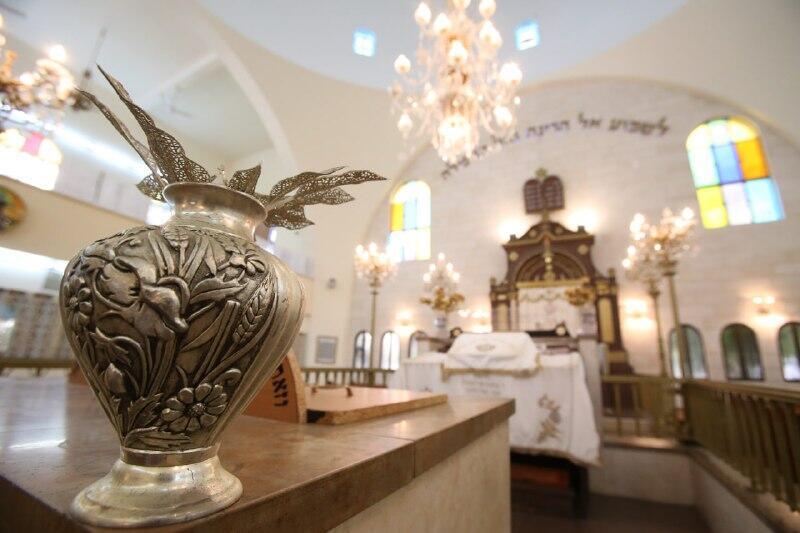
Tiferet Tzvi Synagogue in Tel Aviv
(Photo: Shaul Golan)
City Hall argues synagogues are public resources akin to community centers, and therefore it must oversee their use. One official put it bluntly: “It cannot be that in a completely secular neighborhood a synagogue stands empty except on Saturdays, when ultra-Orthodox worshippers arrive from outside, instead of the building being used for local needs.”
Worshippers counter that the equality clause would erase the Orthodox character of their congregations, outlawing gender separation and potentially obliging them to accommodate non-Orthodox or even non-Jewish prayer.
Heated exchanges
At a recent eviction hearing over the Antopol Martyrs Synagogue on Saadia Gaon Street, the tension was palpable.
Municipal asset official Moti Teitelbaum told the court: “We’re in an operation,” suggesting registration problems existed only with synagogues, not with mosques. He added that even if some synagogues refused to sign, “others will operate them as synagogues.” City attorney Alon Grossberg quickly distanced the municipality from that statement, clarifying that buildings could in fact be repurposed “if a synagogue is no longer needed because the population has changed.”
Judge Tal Fishman-Levy stepped in, likening synagogues to kindergartens. “If a kindergarten closes, the city reallocates it to new needs—same idea,” she said.
Attorney David Shub, representing dozens of congregations, pushed back sharply. “You demanded a shocking clause: that the synagogue provide services to all residents without distinction of gender or faith, and that prayers be adjusted accordingly. If the neighborhood is secular, should the synagogue pray facing Rabin Square instead of Jerusalem? ‘Without distinction of faith’—does that mean if a Christian enters, prayers must be in a Christian style?”
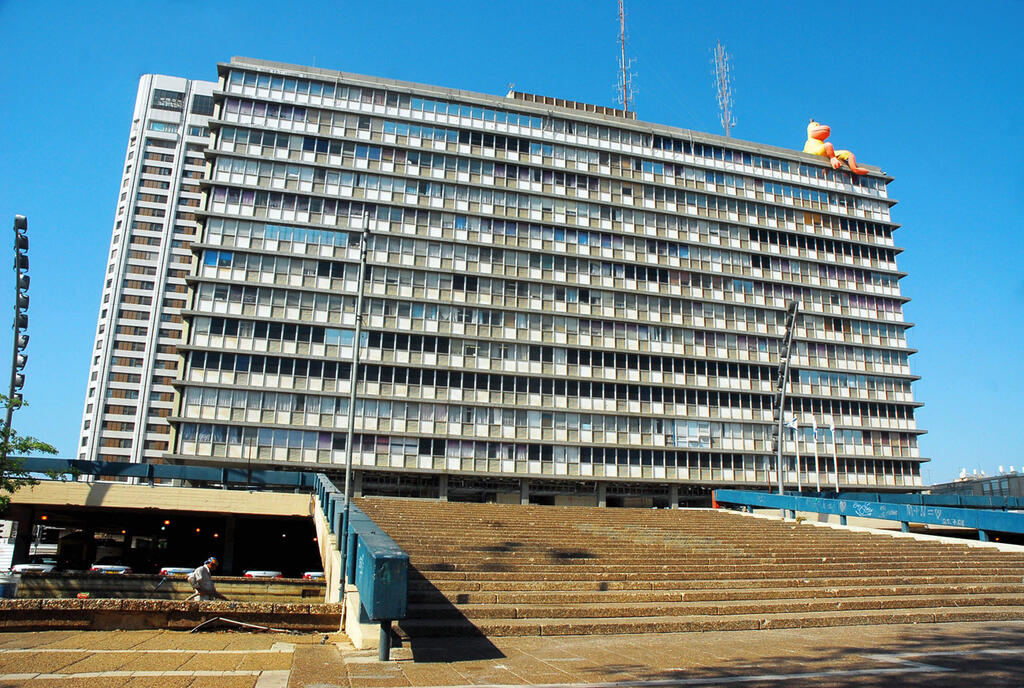
Tel Aviv municipality building
(Photo: Dana Koppel)
Teitelbaum replied: “You’re twisting the words. It says the committee decides the prayer style. They won’t put Buddha there—it’s a Jewish committee, not Christian or Muslim.”
Shub warned that the language could still be weaponized. “Until someone opposed to the synagogue sues, pointing out correctly that you pledged to provide services without distinction of gender or faith. Then I’ll be forced to abolish the women’s section,” he said.
Grossberg answered that the clause was about accessibility, not theology. “In some places ultra-Orthodox took over and prevented locals from praying; in another, someone was barred for watching TV on Shabbat. The city must ensure services are open to residents, and these contracts give us the tools,” the city attorney said.
Teitelbaum invoked the nation’s founding ethos: “The Declaration of Independence says ‘without distinction of religion, gender and age.’ Here it doesn’t even say religion, because it’s clear this is for Jews. You opposed writing explicitly that synagogues must be Orthodox—what more do you want?”
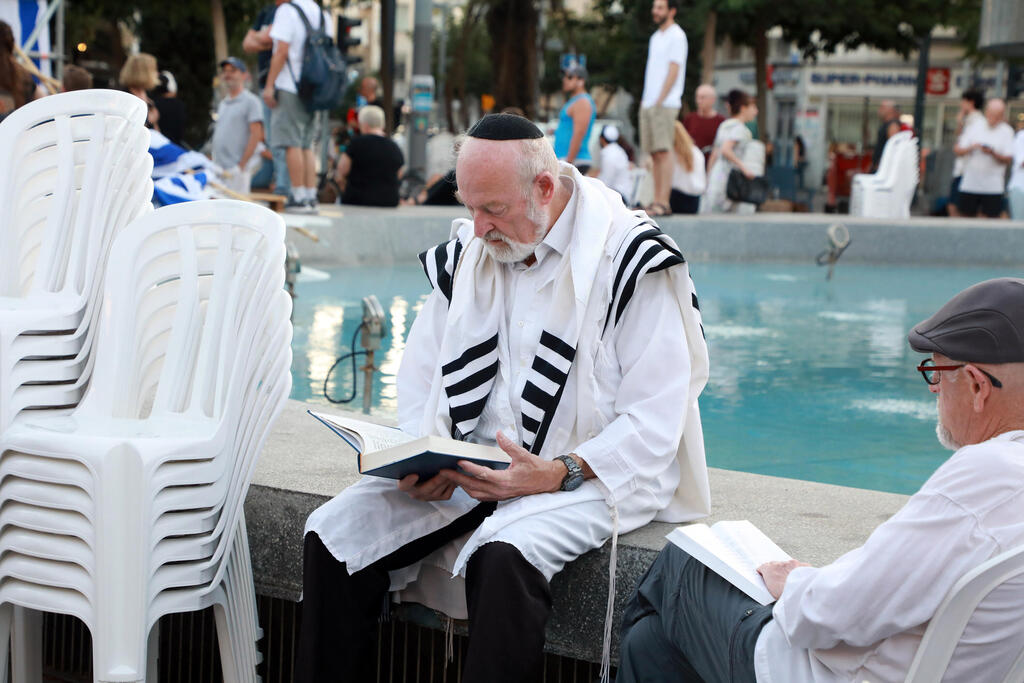
A man praying before Yom Kippur in 2023
(Photo: Dana Koppel)
Shub ended with a broader warning. “Even within Orthodoxy today there are many boundaries. Some synagogues allow women to lead prayers or read from the Torah and still define themselves as Orthodox. You’re forcing synagogues to adjust to whoever walks in,” he said.
Municipality pushes back
In response to criticism, the Tel Aviv Municipality said: “Contrary to the claims, this is not an ‘operation’ but a clause in new lease agreements for synagogues, updated periodically. Its purpose is to prevent discrimination or exclusion of residents who wish to participate in synagogue activity.”