


The Conference of European Rabbis has issued an urgent appeal to Polish and Israeli authorities, calling for an immediate halt to a planned construction project in Lublin’s Górki Czechowskie Park. The appeal comes in light of revelations that the site contains a mass grave where an estimated 880 Jews were murdered during the Holocaust.
The letter, addressed to Poland’s current and former presidents, Lublin municipal officials, Israel’s Chief Rabbis, and the Israeli Foreign Ministry, urges that the site be formally recognized as a Jewish cemetery—which would halt any further development.
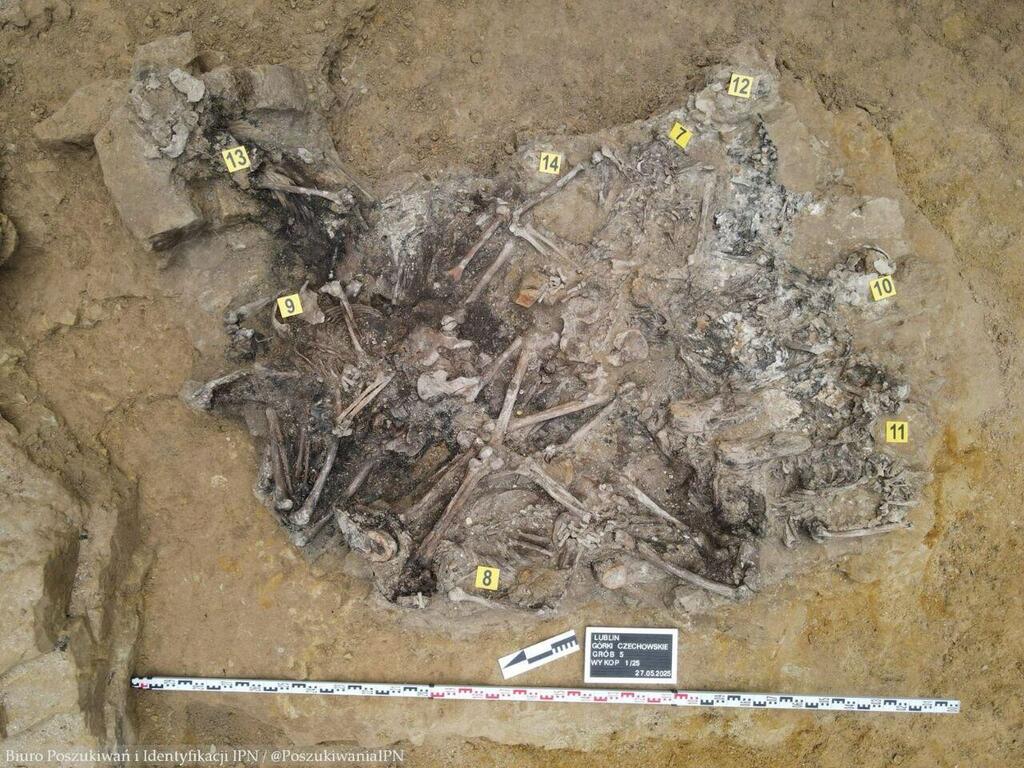
The area in question, once a military training ground, was transferred to the municipality with plans for a high-end residential complex featuring villas, 110 housing units, a playground and a shopping center. However, extensive historical research, eyewitness testimony, official documentation, and archaeological findings have identified the land as the location of Nazi executions carried out between March 26 and March 28, 1942. Additional evidence suggests the site also contains victims from the communist era.
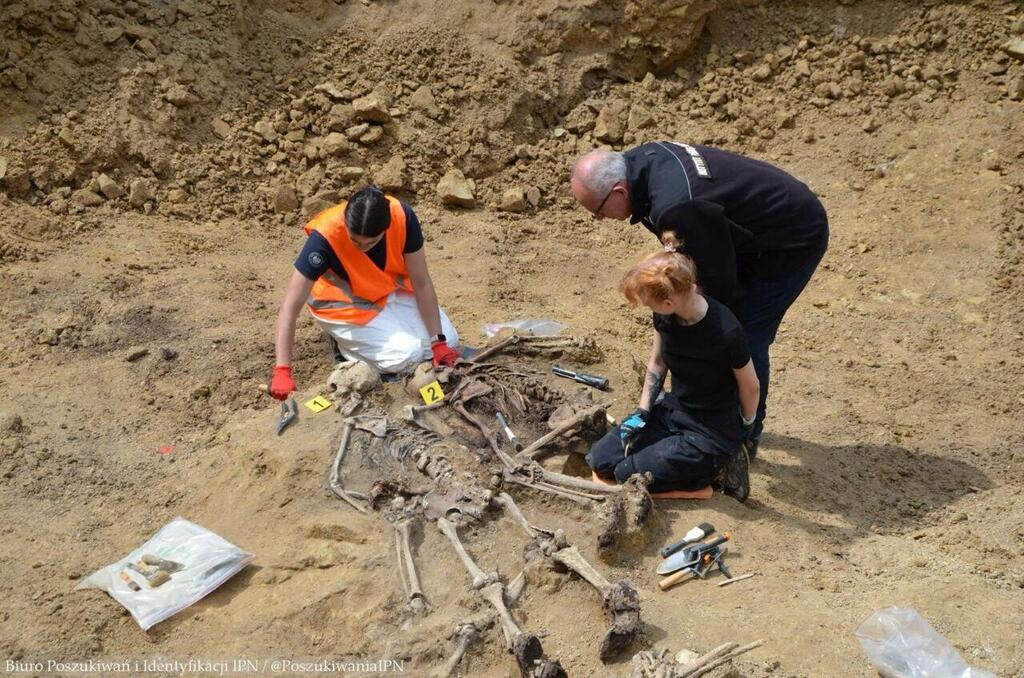
(Photo: IPN)
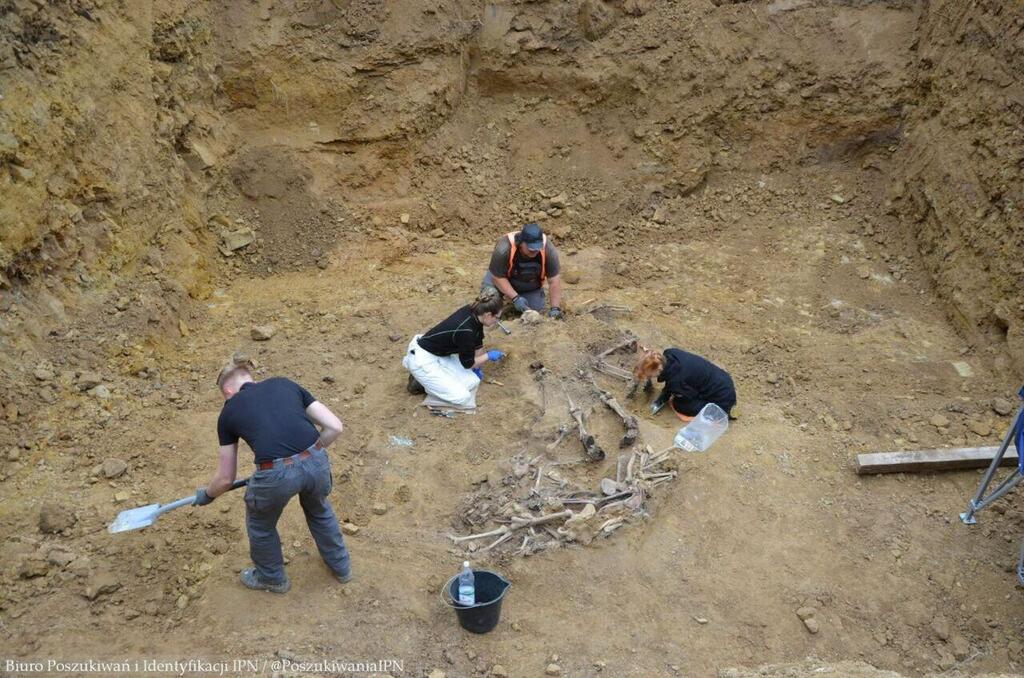
Despite this, Poland’s Institute of National Remembrance (IPN) recently exhumed approximately 60 sets of human remains and claimed they belonged to non-Jewish Poles—an assertion seen by critics as an effort to justify relocating the remains and allowing the construction to proceed.
Led by Rabbis Menachem Margolin and Aryeh Goldberg, and supported by activists such as Meir Bulka of the J-NERATIONS organization, the Conference is demanding DNA testing to determine the victims’ identities, citing strong historical evidence that they were Jewish. One key source is the testimony of Shimon Tierstein, who witnessed the massacre firsthand.
(Photo: IPN)
Activists allege that Polish authorities are deliberately avoiding DNA testing for fear that confirmation of Jewish identities would require the site to be legally recognized as a Jewish cemetery—forcing a permanent halt to development.
“This is not the first time a Jewish mass grave has been found in Poland,” said Bulka. “But this is one of the largest, and the authorities are not doing enough to preserve the site or honor the memory of the murdered.”
Development work was briefly suspended in 2020 following pressure from environmental and heritage groups, but the municipality has since revived the project. Additional evidence—such as archival television footage and aerial imaging—continues to affirm the presence of mass graves. Construction has nonetheless resumed. Bone fragments discovered during the work were reportedly sent for forensic analysis, though the findings have yet to be disclosed.
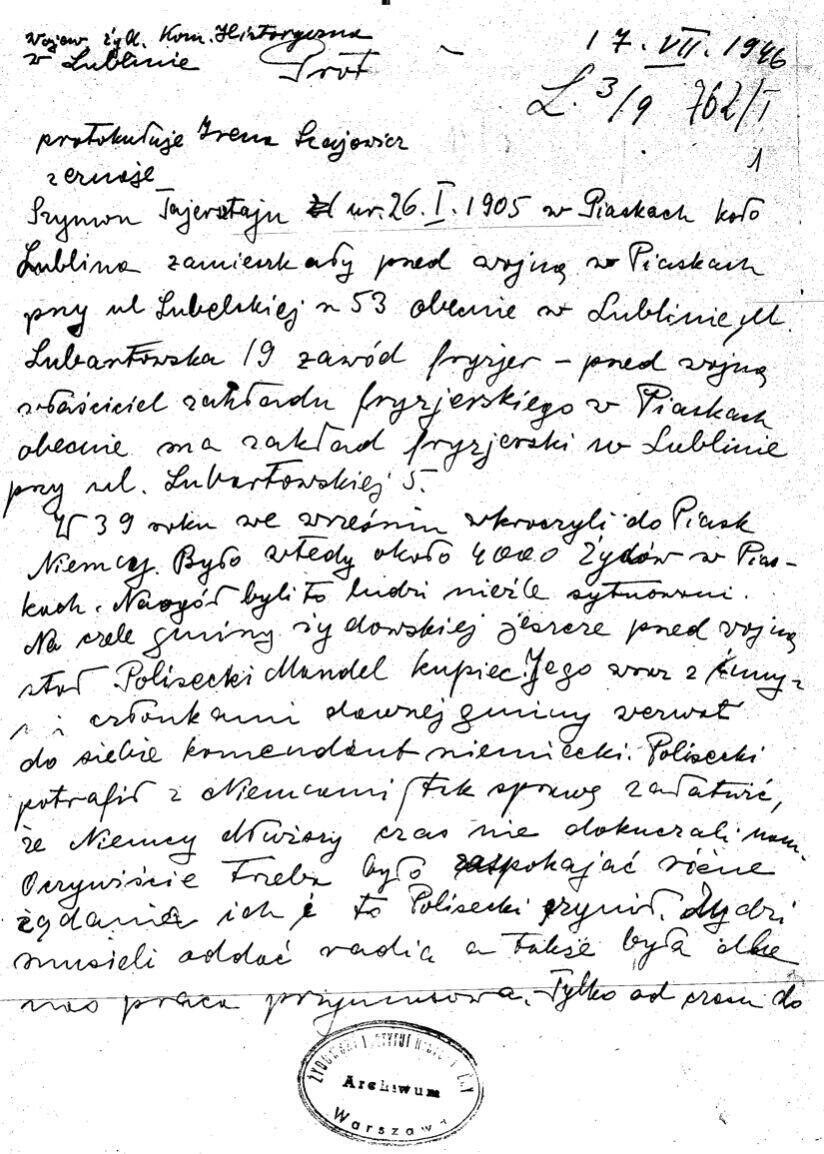
Testimony from Shimon Tierstein about the killing of Jews in Lublin
The Conference of European Rabbis remains steadfast in its demand for action. In its latest communication, it warned: “The continuation of this construction is a desecration of the sacred. It must be stopped immediately until the findings are fully clarified.”