

Russia refrained from launching missile and drone attacks on Uman during the Rosh Hashanah holiday, when tens of thousands of followers of Rabbi Nachman of Breslov arrived in the city. At the same time, however, sources familiar with the matter say Moscow conducted a broad online campaign aimed at intensifying tensions between the Hasidic pilgrims and Ukrainian residents and increasing expressions of hatred toward Jews across Ukraine.
During the holiday, accounts controlled by Russia on X and TikTok circulated messages containing antisemitic themes and material designed to stir unrest inside Ukraine.
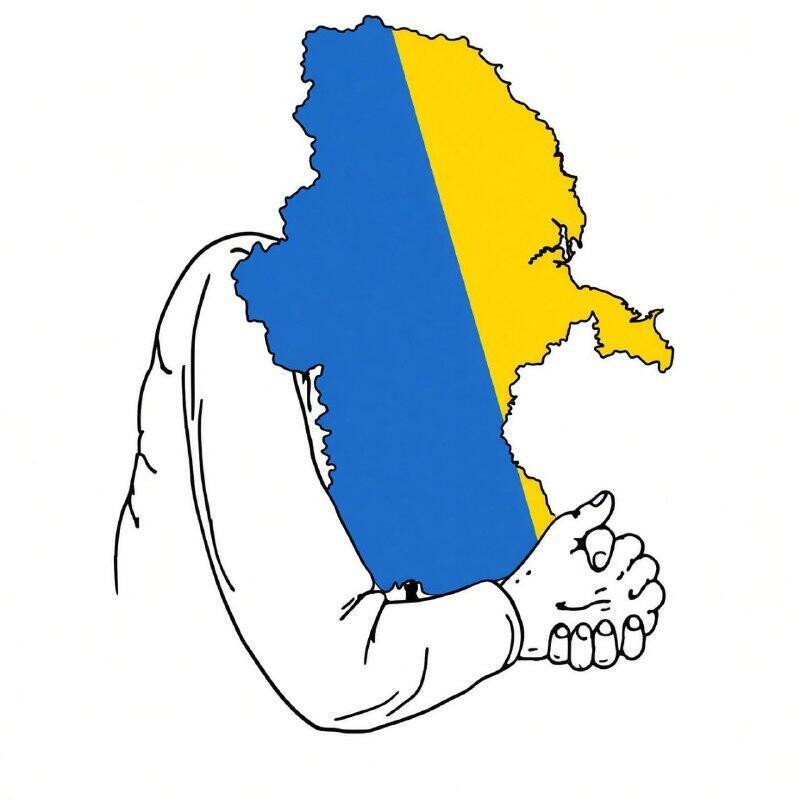
Among the claims promoted by the Russian accounts were that many of the Hasidim intended to move permanently to Ukraine and that “the Hasidim are receiving special payments from the Ukrainian government.”
Other posts claimed that a plan was taking shape under which Uman would break away from Ukraine and become an “independent entity.” There is no truth to those claims, which were intended to serve Russian objectives.
The campaign also exploited one of the most sensitive issues in Ukrainian society: attempts to avoid military service in the war against Russia.
One post said: “Ukrainians are being dragged off the streets [by military police] while Uman celebrates. 45,000 pilgrims are flooding the city while recruitment officers abduct men for the front.”
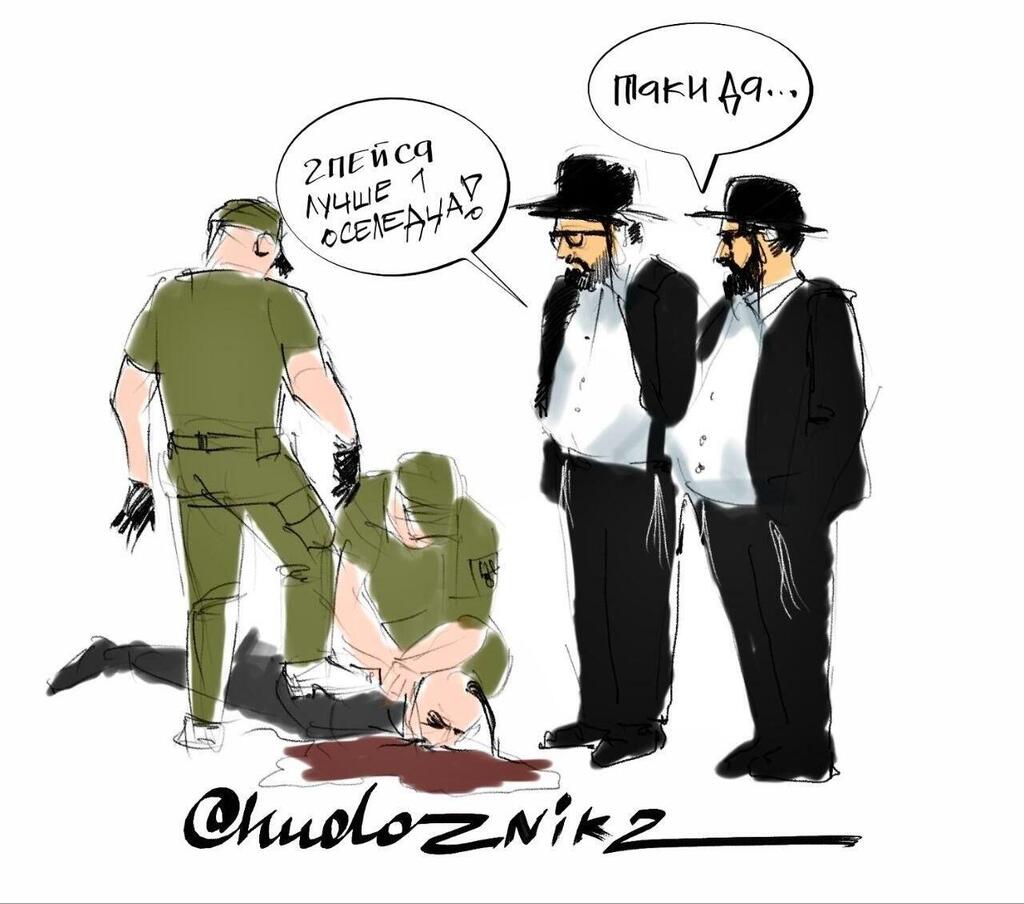
Jews watch the arrest of a Ukrainian draft dodger
Another illustration showed Ukrainian soldiers handcuffing a draft dodger at a bus stop while two Jewish men looked on indifferently.
A further theme in the Russian influence campaign was aimed at discouraging Ukrainians from supporting their country’s accession to NATO. One illustration circulated online showed U.S. President Donald Trump changing Ukraine’s name on a map to “Jewkraine.”
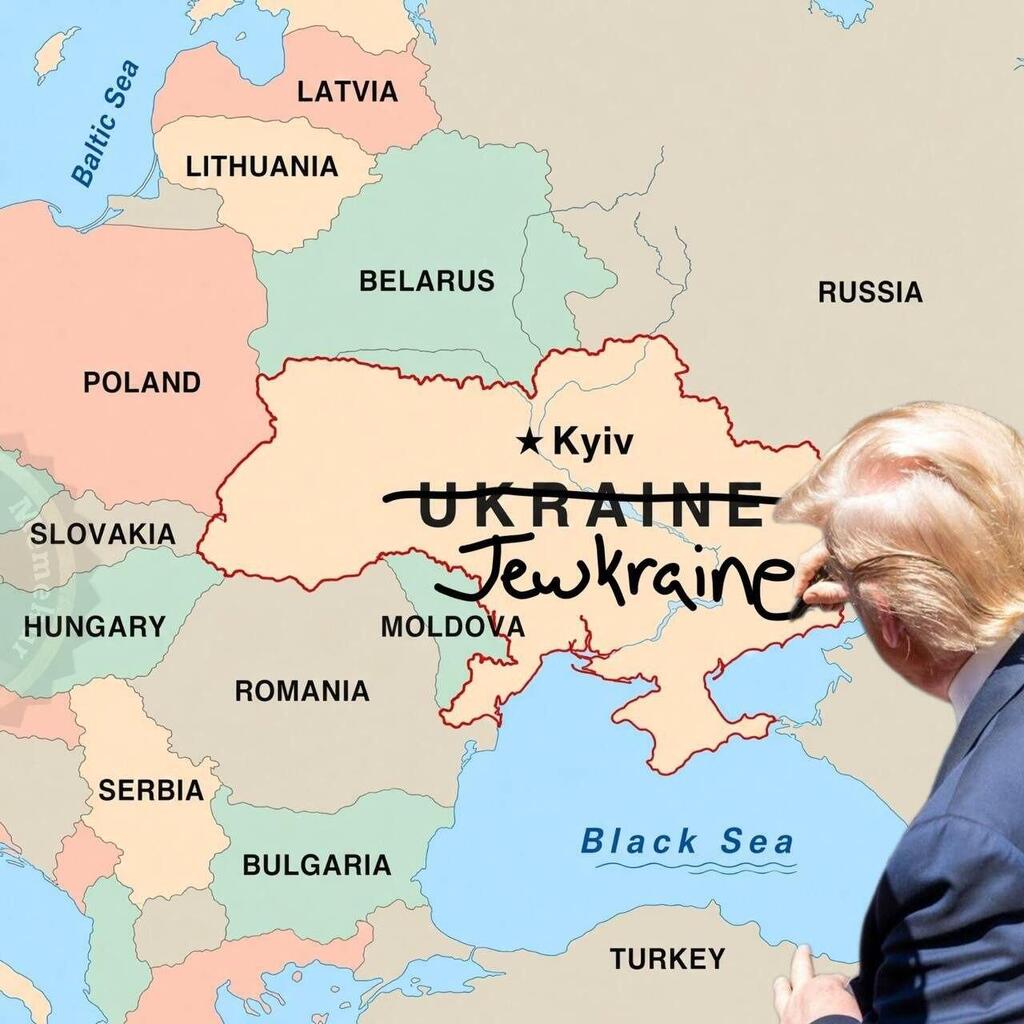
Trump changing Ukraine’s name on a map to 'Jewkraine'
Ukraine’s Center for Countering Disinformation, which operates under the country’s National Security and Defense Council, warned of the Russian influence campaign even before the holiday.
“The goal is to destabilize Ukraine and encourage antisemitism,” the center said.