


Seventy-eight years after the fierce battles of 1948 and the fall of Gush Etzion on the eve of Israel’s independence, rare personal belongings of the bloc’s fighters and defenders are now being revealed to the public.
The items, many of them pieces of clothing preserved for decades in the Gush Etzion Archive, are being presented as part of an educational initiative led by the Gush Etzion Regional Council in cooperation with the archive. The exhibition, which will travel between schools, seeks to bring the history of the bloc into classrooms through direct, tangible encounters with the past.
Gallery
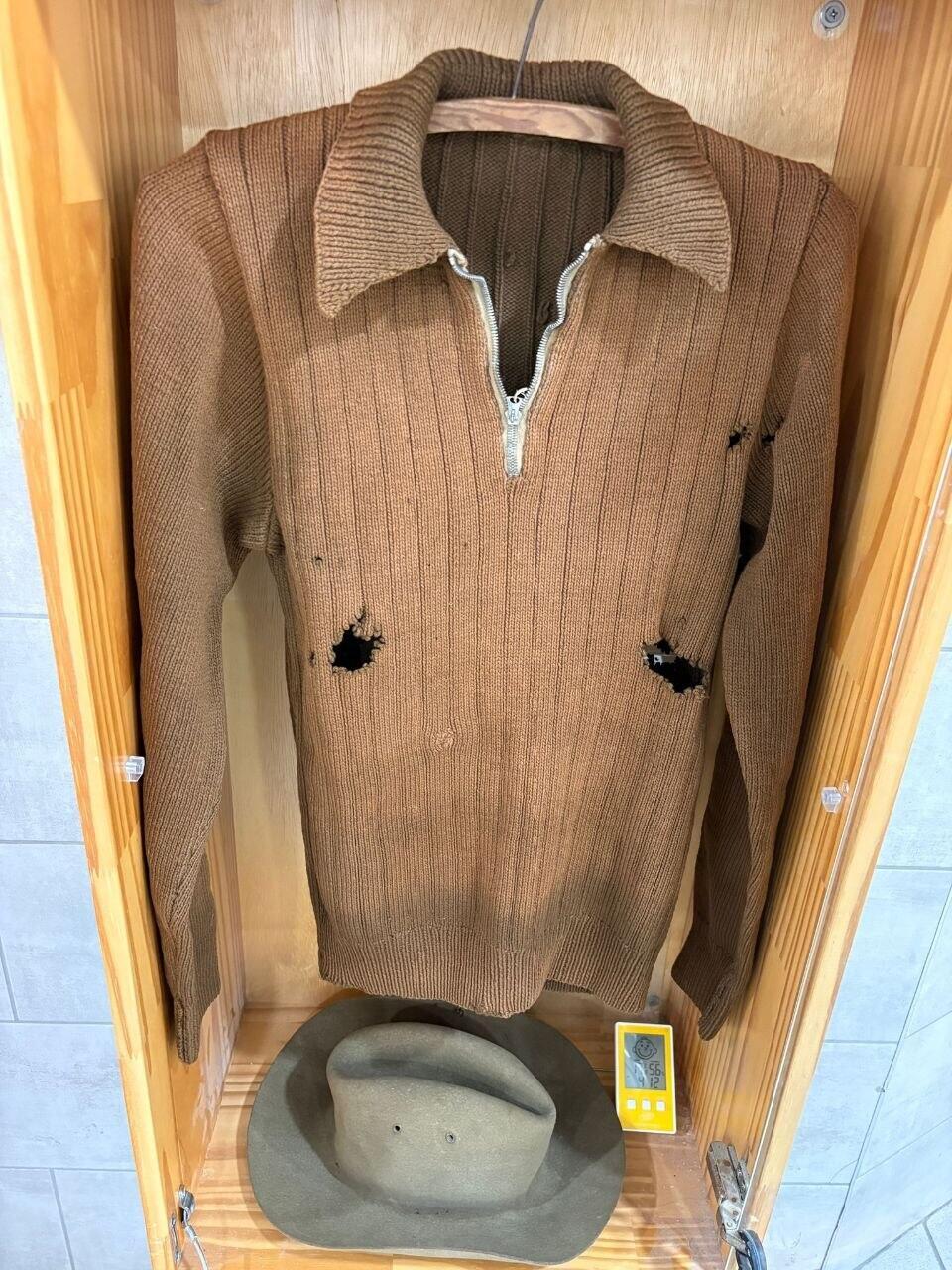
Uriel Ofek’s sweater, pierced by bullets on the way to Gush Etzion during the War of Independence
(Photo: Gush Etzion Archive)
Among the items on display is the original hat of Major Moshe (Mush) Zilbershmidt, the last commander of Gush Etzion, who was killed while covering the retreat of his soldiers during the fighting in the War of Independence.
Alongside it is the story of Uriel Ofek, a Palmach fighter and combat medic who later became a well-known children’s author. His personal brown wool sweater, pierced by bullets in several places, is part of the exhibit.
The sweater tells the story of a moment that likely saved his life. It had been folded and placed on the seat of a truck from Kibbutz Revadim as part of the “Convoy of Ten,” which was delivering food and supplies to the besieged Gush Etzion bloc. During the journey, Ofek left the vehicle to treat a wounded person. When he returned, he found the sweater riddled with bullet holes from gunfire that had struck the truck. While saving another life, he had unknowingly saved his own.
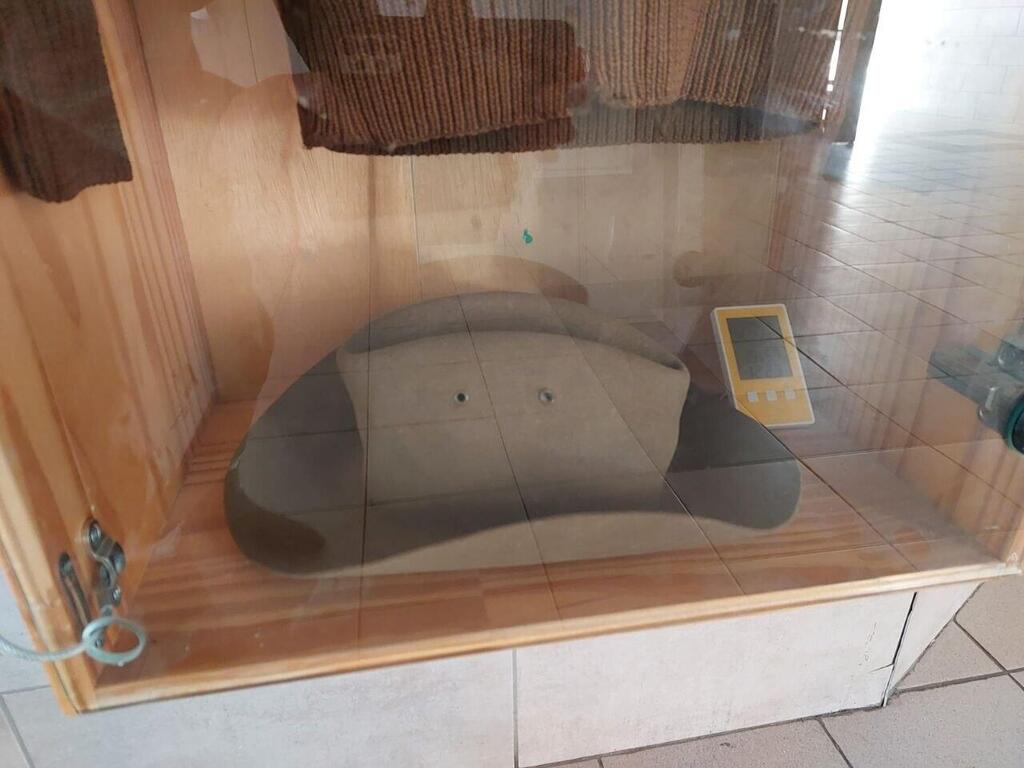
The hat of Major Moshe (Mush) Zilbershmidt, Gush Etzion commander who was killed in the 1948 war
(Photo: Gush Etzion Archive)
Another item in the exhibition is a necklace found among the ruins of the bunker at Kfar Etzion after it was blown up on the dozens of fighters and wounded who had taken shelter inside on the fourth day of the Hebrew month of Iyar, one day before the declaration of independence.
According to accounts, the necklace belonged to Zlafa Karasu Yehezkeli, the oldest fallen soldier in IDF history, who was 55 when she was killed. The object stands as a silent testimony to the final moments of the battle and the lives that were cut short.
The exhibition was recently launched at Neve Hashahar School in Neve Daniel and forms part of a broader effort by the regional council to deepen the study of Gush Etzion’s legacy within the education system. As part of the initiative, heritage content is being integrated into school curricula, with designated staff members in each school leading the program and connecting students to the local story.
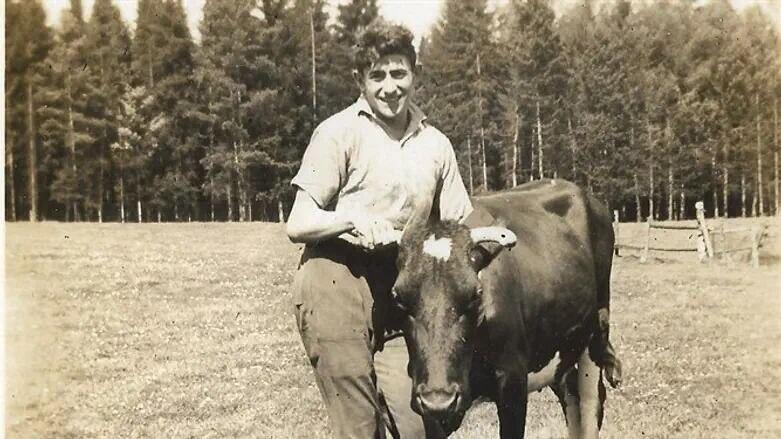
Moshe (Mush) Zilbershmidt
Council officials describe the effort as a shift from preserving history in archives to embedding it in everyday educational spaces, allowing students not only to learn about events but to encounter them in a more immediate and personal way. The traveling exhibition, which will remain at the school in the coming months before moving to others, is accompanied by educational activities and lesson plans and is open to the public by prior arrangement.
Yael Koren, niece of Major Moshe (Mush) Zilbershmidt, said the experience of seeing the items displayed publicly was deeply moving.
“For me, it is very emotional to see Mush’s hat, the last commander of the bloc during the War of Independence, being shown to the public for the first time,” she said. “For us, he is much more than a historical figure. Mush was a modest man, an admired commander and someone with exceptional composure, who was raised on values of Zionism and tradition and dreamed of building the country.
“It is especially moving to know that the younger generation will be able to encounter him through these personal items, not only to learn about him from books, but to truly connect to his character, to understand the story of Gush Etzion’s battles in depth and to feel the spirit that continues to accompany us to this day. For me, it is also a very personal moment, in which the figure of my beloved uncle is given new life before the eyes of students.”
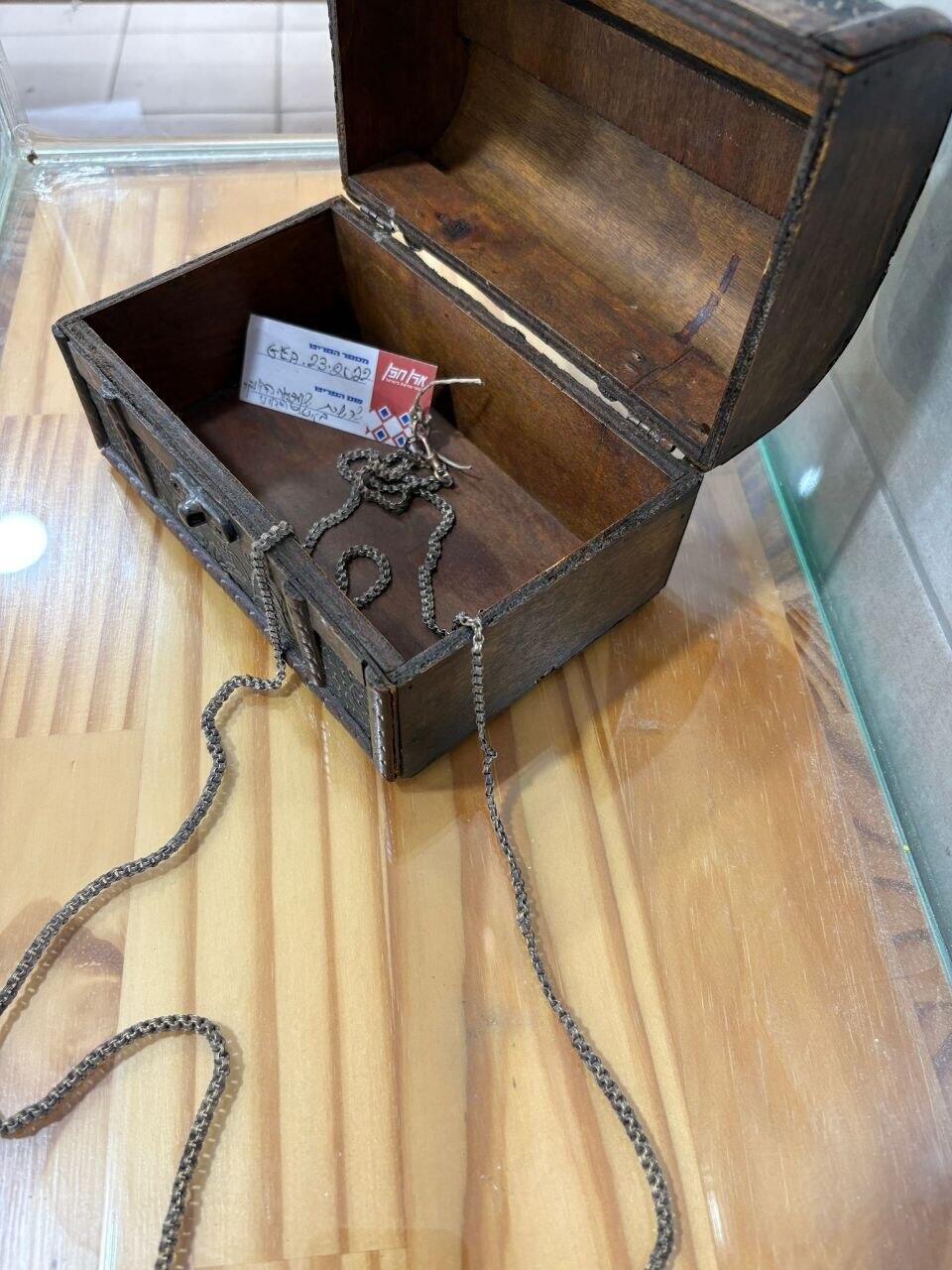
The necklace believed to have belonged to Zlafa Karasu Yehezkeli, the oldest fallen soldier in IDF history
(Photo: Gush Etzion Archive)
Gush Etzion Regional Council head Yaron Rosenthal said the exhibition creates a direct link between past and present.
“As someone who lives and breathes the story of Gush Etzion, there are moments when even I am moved again,” he said. “To see Mush’s hat, the sweater of Uriel Ofek that survived the convoy and the necklace from the bunker is not just history, it is a living encounter with people and with heroism. There is a great privilege here, and no less responsibility, to pass this story on to the next generation in a way that is alive and meaningful.”
Shuki Sharir, director of the Gush Etzion Archive, said the exhibition marks the first time many of the items have been shown publicly.
“For years these items were preserved with us as a quiet testimony,” he said. “After extensive effort and professional work, we have the privilege of exposing them to the wider public. Seeing students encounter history through the objects themselves, connect to the story and learn it in a living way, is a significant moment for us.”