

Rosh Hashanah 2025 begins Monday evening, Sept. 22, 2025 (the eve of 1 Tishrei) and ends Wednesday evening, Sept. 24 (after 2 Tishrei). Unlike most Jewish holidays, which are observed for two days only outside of Israel, Rosh Hashanah lasts two full days in Israel as well.
Holiday Times
Candle lighting and holiday entry – Sept. 22 (Monday evening):
Jerusalem 6:00 p.m.; Tel Aviv 6:17 p.m.; Haifa 6:09 p.m.; Be'er Sheva 6:18 p.m.; Tiberias 6:07 p.m.; Safed 6:09 p.m.; Eilat 6:06 p.m.; Kiryat Shmona 6:04 p.m.; Gaza 6:09 p.m.
Holiday ends – Sept. 24 (Wednesday evening):
Jerusalem 7:10 p.m.; Tel Aviv 7:12 p.m.; Haifa 7:11 p.m.; Be'er Sheva 7:11 p.m.; Tiberias 7:09 p.m.; Safed 7:09 p.m.; Eilat 7:10 p.m.; Kiryat Shmona 7:09 p.m.; Gaza 7:13 p.m.

Why two days?
In the Torah, Rosh Hashanah is a one-day holiday, observed on 1 Tishrei.
In ancient times, however, the new month was declared based on the testimony of witnesses who saw the new moon. Even in Jerusalem, the seat of the Temple, the exact date was sometimes uncertain until witnesses arrived. To avoid doubt, Jewish communities began observing two days. The practice became established and remains in place today.
The main laws of Rosh Hashanah
Yom Tov
Rosh Hashanah follows all the laws of a Jewish holiday, including restrictions on work, festive meals, special prayers, Torah readings and the rituals of Kiddush (blessing over wine) and Havdalah (closing ritual).
Shofar blowing
Central to Rosh Hashanah is the blowing of the shofar. The mitzvah is performed during the day, starting at sunrise, and is incorporated into the morning prayers before and during the Musaf service.
For people who are unable to attend a prayer service (for reasons such as military duty, travel or hospitalization), or when the shofar can be heard in limited hours, it may be fulfilled anytime from dawn until sunset, even without a quorum for prayer.

Shofar blowing
(Photo: Tomertu / Shutterstock)
In terms of Halacha (Jewish law), women are not obligated in the mitzvah of shofar blowing, as it is a time-bound positive commandment. Still, Jewish women for generations have accepted the practice and, according to Ashkenazi custom, may also recite the blessing over it.
The sounds of the shofar:
The Torah requires hearing shofar blowing at least three times; each blowing is made of three sets of blasts, a simple sound called 'tekiyah', broken sounds called 'shevarim' or 'teruah', and again 'tekiyah'.
Altogether, it is enough to sound 30 shofar blasts. Meaning, three times 'tekiyah, shevarim, teruah, tekiyah' (tsr”t), three times 'tekiyah, shevarim, tekiyah' (ts”t), and three times 'tekiyah, teruah, tekiyah' (tr”t).
This is the first round of blowing, which takes place after the Torah reading and before Musaf.
The blessings “who has sanctified us with His commandments and commanded us to hear the sound of the shofar” and “shehecheyanu” are recited before the 30 sounds.
Those who hear this initial set of blasts have fulfilled their obligation. This is particularly important for soldiers, the sick, the elderly, and parents with small children who may not be able to remain for the extended service of 100 blasts traditionally sounded during Musaf.
The shofar is usually made from a ram’s horn, as stated in the Mishnah, which rules that all horns are valid except those of a cow. The horn is hollowed and processed, but it must remain whole, uncracked and uncoated.
A holiday of prayer
The high holidays in general, and Rosh Hashanah in particular, are days of prayer. The season begins already in the Hebrew month of Elul with the custom of rising early to recite Selichot, special penitential prayers.
Sephardic Jews begin these prayers from the first day of Elul, while Ashkenazi Jews begin on the Saturday night before Rosh Hashanah, or one week earlier.
Unlike Yom Kippur, which centers on confession, repentance, forgiveness and atonement, the theme of Rosh Hashanah prayers is the kingship of G-d and His rule over the world.
The prayers are collected in a special 'machzor' (holiday prayer book), which replaces the regular siddur used on weekdays and Shabbat.
On both days of Rosh Hashanah, the Torah is read from the Book of Genesis. The first day recounts the birth of Isaac.
According to rabbinic tradition, the ancestors were born in Tishrei, making this reading a sign of hope for childless couples. The haftarah (prophetic reading) tells the story of Hannah, who after years of barrenness, gave birth to the prophet Samuel.
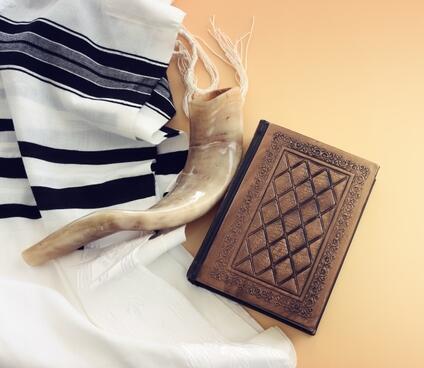
Machzor, Shofar and Tallit
(Photo: Tomertu / Shutterstock)
The Torah portion also recounts the story of Hagar and Ishmael, linking the day not only to Israel but also to neighboring nations connected to Abraham.
On the second day, the Torah reading is the sacrifice of Isaac (Akeidat Yitzhak). Its motifs of remembrance, covenant, divine promise and the ram’s horn are central to Rosh Hashanah.
The haftarah comes from the Book of Jeremiah, a prophecy of consolation that recalls G-d’s promise to redeem His people. It includes Rachel’s lament for her children and the assurance: “Refrain your voice from weeping and your eyes from tears, for there is reward for your work… and they shall come back from the land of the enemy."
As on all Yom Tov holidays, two Torah scrolls are taken out. Five are called to read in the first scroll, and a sixth to the 'maftir' reading in the second scroll, which describes the special Rosh Hashanah sacrifices in the Book of Numbers.
Traditionally, the community honors rabbis, cantors and the shofar-blower with these aliyot (Torah call-ups). In some congregations, the aliyot are auctioned off, with proceeds going to charity or synagogue needs.
Tashlich
Another widespread custom is Tashlich, observed by many communities on the afternoon of the first day of Rosh Hashanah.
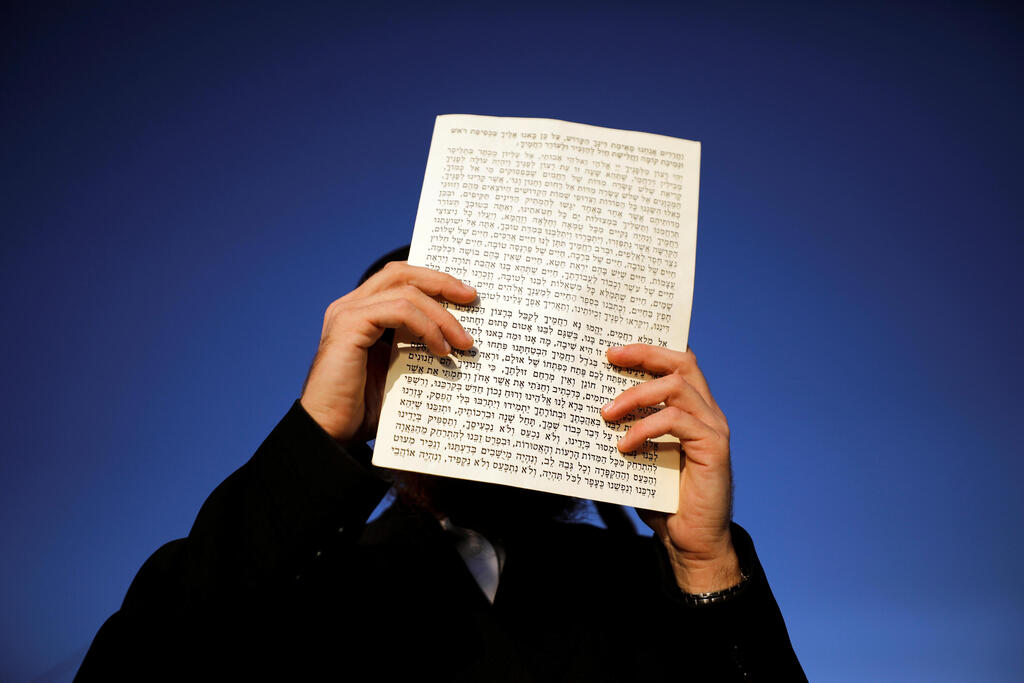
A Jewish worshipper performs the Tashlich ceremony, whereby Jews symbolically cast away their sins ahead of Yom Kippur
(Photo: Reuters)
Worshipers go to the sea or a place of flowing water and symbolically “cast off” their sins. Flowing water represents life, and if fish are present they symbolize fertility and good fortune.
The custom originated among Ashkenazi Jews in medieval Europe, was embraced by the kabbalists of Safed, and from there spread widely to Sephardic and other Jewish communities. The prayers of Tashlich may be brief or extended with additional supplications.
Holiday greetings
Traditional greetings include “May you be inscribed and sealed in the Book of Life for a good year” (Ketiva v’chatima tova) or simply “Shana tova” (a good year). As on other holidays, “Chag sameach” (happy holiday) is also appropriate.
Rosh Hashanah at home
The Book of Nehemiah describes Rosh Hashanah not only as a time of prayer and repentance but also of festive meals and joy. This aspect of the holiday centers on the home and family.
Preparing for the holiday: On the eve of Rosh Hashanah, special emphasis is placed on physical preparation, such as haircuts, shaving, bathing, immersion in a ritual bath and wearing holiday clothing.
Beyond the regular preparations for Shabbat or other holidays, these practices are underscored particularly on Rosh Hashanah, implying that the Jewish people approach the Day of Judgment with confidence in G-d, not with excessive fear.
Lighting candles: On the first evening, candles are lit with the blessings “to kindle the light of Yom Tov” and "Shehecheyanu".
Jewish law prohibits preparing on the first day of the holiday for the second day. Thus, table setting, food preparation and candle lighting for the second night are done only after nightfall.
The simanim (symbolic foods)
Customs vary: some eat them immediately after kiddush, others after the blessing over bread (hamotzi). Some recite special "Yehi Ratzon" (“may it be G-d's will”) prayers before eating, others afterward. Some bless the fruits and vegetables individually, with the blessings "Boreh Pri Ha'etz" and "Boreh Pri Ha'adma", and some do not, because they are included in the meal blessing.

(Photo: Shutterstock)
The most widespread custom is dipping a piece of challah in honey after the hamotzi, blessing "May it be your will, our G-d and G-d of our ancestors that we should have a good and sweet new year.”
Some wait to recite this with an apple dipped in honey, which has become the iconic Rosh Hashanah food.
The practice of dipping bread in honey continues throughout the high holidays, and some maintain it until Hoshanah Rabbah, the final day of Sukkot.
In addition to apples and honey, Jews traditionally eat a variety of symbolic foods at the Rosh Hashanah table, each accompanied by a short prayer (yehi ratzon – “may it be G-ds' will”) expressing hopes for the year ahead.
Fish: A sign of fertility and abundance. The prayer: “May we be fruitful and multiply like fish.” Some eat the head of a fish or lamb, to symbolize that we should always be the head and not the tail. For the lamb, some say a prayer to remember Akedat Yitzhak (the sacrifice of Isaac).
The Gemara mentions several additional foods:
Kara (gourd or squash): “May our harsh decrees be torn up.”
Rubia (black-eyed peas or cowpeas): “May our merits increase.”
Kartei (leeks): “May our enemies be destroyed or cut off.”
Salka (beets or Swiss chard): “May our sins be removed.”
Tmarim (dates): “May our sins come to an end”, or “May our enemies perish.”
As Jewish communities spread across the globe, not every food was available everywhere. Substitutions and local variations developed. One of the most widespread additions is the pomegranate, accompanied by the prayer: “May our merits be as numerous as the seeds of the pomegranate.”

(Photo: Elad Gershgorn)
Language itself sometimes created new customs. In German and Yiddish, the word for carrot (meren) also means “to multiply,” leading Jews in Central and Eastern Europe to eat carrots as a symbol of blessing.
From there, countless creative additions were introduced, especially in Hasidic communities, where rabbis often published guides with new food-symbol pairings.
Rabbinic commentators have generally emphasized that there is no magical power in the foods themselves. The true significance lies in the prayers recited and the way the ritual stirs the heart toward reflection and hope for a good year.
Shehecheyanu blessing on the second night
Strictly speaking, the blessing 'shehecheyanu' is not required on the second night of Rosh Hashanah, since it is considered a continuation of the first day.
To preserve the custom, however, families often place a new fruit on the table at candle lighting or kiddush and intend to eat it later, allowing them to recite the blessing.
Some also fulfill this by wearing a new garment. In many synagogues, the shofar-blower wears a new item of clothing so that the blessing can be said before the blasts on the second day.
The daytime of Rosh Hashanah
Like other holidays, Rosh Hashanah is marked with festive meals during the day. According to the Jerusalem Talmud, one should not sleep during the day of Rosh Hashanah, but rather spend the day in prayer and meaningful activity.
Later authorities, including Rabbi Isaac Luria (the Ari), taught that after midday it is permitted, and even preferable, to rest, since sleep restores strength and is better than wasting time on idle talk. " But they that wait for G-d shall renew their strength".