

The growing anti-Israel climate in South Africa is leaving many Jews fearful for their safety and even considering immigrating to Israel or moving elsewhere. Rotem Barashi, a Jewish medical student who studied at the University of Cape Town, left her program because of antisemitism on campus. She immigrated to Israel and is now continuing her medical studies at Reichman University.
Describing the atmosphere on campus in one of the countries most hostile to Israel, Barashi said, “The dean would send weekly emails accusing Israel of killing children in Gaza. The peak came during ‘Israel Apartheid Week,’ when the university invited Hamas representatives to campus. There were anti-Israel protests every day. At some point, whenever I asked a question in the degree’s group chat, people replied with a Palestinian flag, called me a baby killer or said I didn’t deserve to be a doctor. The moment Hamas representatives walked into my classroom, I understood I had to move to Israel.”
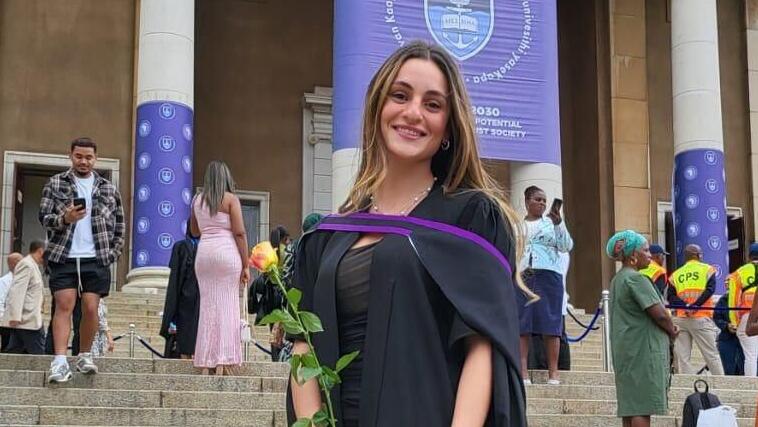
Barashi was born in Jerusalem and moved to South Africa with her parents at age seven. She grew up in a warm Jewish community and attended a Jewish school. “It’s a large and strong community. I felt protected,” she said. But the fallout from Oct. 7 changed life for thousands of Jews in the country.
“They’re not running away,” she said. “But many are definitely thinking about it. I don’t think Jews have much of a future in South Africa. The situation keeps deteriorating. Jews there feel increasingly marginalized and less part of society. I believe everyone will eventually move to Israel or another country. My parents also plan to return to Israel once my sister finishes high school in two years. The goal is for all of us to be here together.”
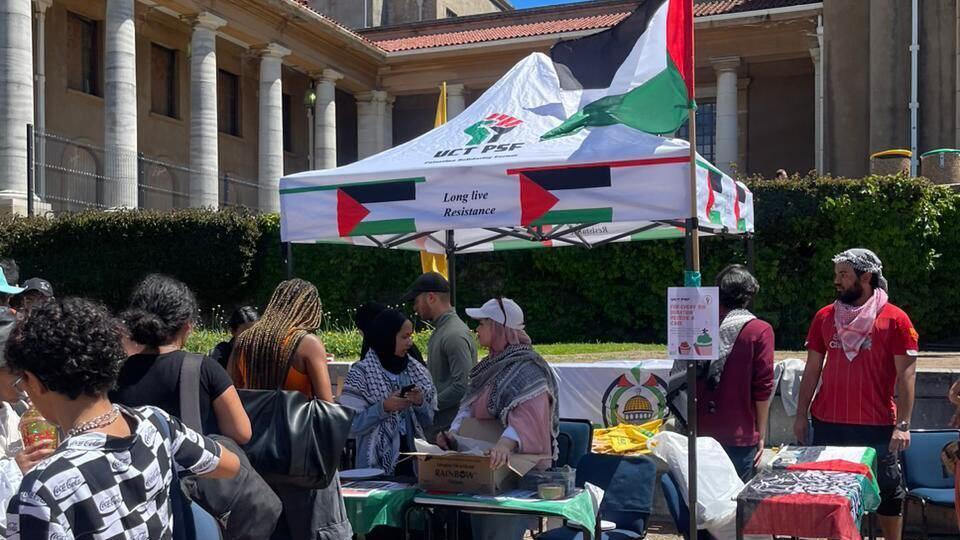
Anti-Israeli stalls in Cape Town
She noted that problems existed even before Hamas’ Oct. 7 terror attack. “Even before the war, the campus had CSO security officers, the community’s security organization, who came in during periods of tension or protests,” she said. “But during one anti-Israel protest, a pro-Palestinian student assaulted a CSO guard. We expected the university to support the organization and ensure our safety, but the opposite happened. After the incident, and without a clear explanation, the university leadership ruled that CSO personnel would no longer be allowed on campus. So during the war, there was no one to physically protect us.”
Barashi completed a bachelor’s degree in anatomy, biology and chemistry at the University of Cape Town. “By the end of the degree, I started feeling the atmosphere shift,” she said. “Friends I had grown up with cut ties with me and disappeared. I cried a lot.” The situation deteriorated quickly. “After Oct. 7, there was no security, and Jewish students simply stopped coming to campus.”
The peak came during Israel Apartheid Week at the start of the war. “It’s a week when students explain why everyone should oppose Israel, set up booths, hand out materials with anti-Israel messages and talk to students to persuade them to adopt their beliefs and ways of thinking. I personally stayed away because I knew I’d react emotionally and confront them,” she said.
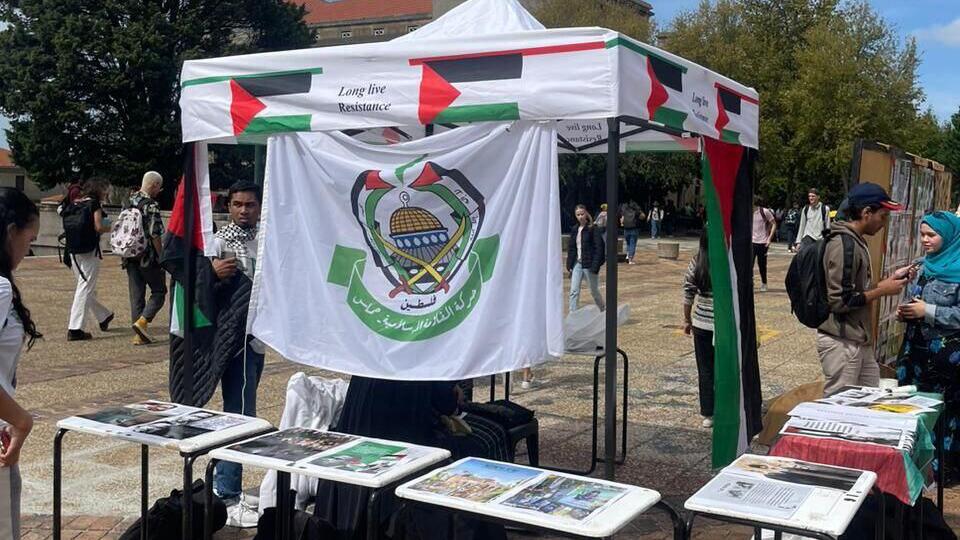
Pro-Palestinian 'information booth' in Cape Town
At that point, Rotem and her mother flew to Israel to volunteer at Sheba Medical Center. “We came for two weeks and I ended up staying two months,” she said. “It felt like taking a deep breath after years.” But returning to Cape Town was unavoidable. She began a master’s-level medical program in 2024 and quickly sensed that the university would not support her.
When protests reached her own classroom, Barashi realized she could not continue studying there and turned to Prof. Arnon Afek, dean of the Dina Recanati School of Medicine at Reichman University, whom she had met while volunteering at Sheba. “He told me then about the new medical school being established at Reichman, and it sounded like a distant dream,” she said. “But after what happened on campus, I no longer had the privilege of waiting. I sent him all the documentation, screenshots, emails from the university and asked him to consider an immediate transfer route.”
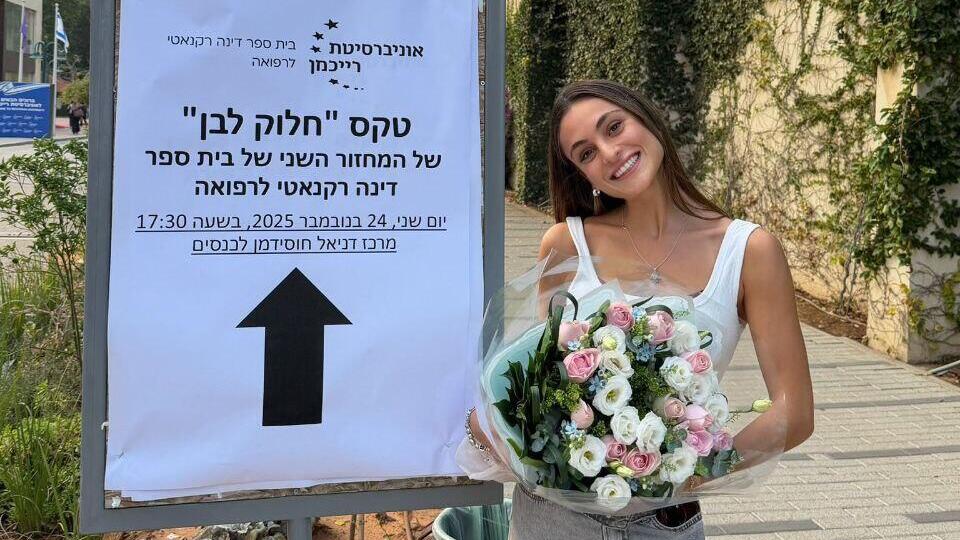
Rotem Barashi at Reichman University
Some of her Jewish friends in South Africa did not understand her decision. “I know many people who left like I did, but many who stayed as well,” she said. “Most were born and raised there. They felt the tension, but not as intensely. For them, it was a political debate. For us Israelis, it was a direct blow to our identity.”
Barashi arrived in Israel last month and is now a first-year student at the Dina Recanati School of Medicine at Reichman University. “When I got the message that I’d been accepted to study in Israel, I felt like I could breathe again. If I hadn’t found a way to Reichman University, I probably would have left the medical field altogether,” she said.
Her dream now is to become a surgeon at Sheba Medical Center. Prof. Arnon Afek, dean of the Dina Recanati School of Medicine at Reichman University, said, “Rotem faced shocking antisemitism led by a dean at a South African university. We could not stand by and abandon her.”